

Key Takeaways
- The International Baccalaureate (IB) curriculum develops critical thinking, independent learning, research, academic writing and time management skills.
- The IB offers four programmes: PYP, MYP, Diploma Programme (DP) and Career-related Programme (CP).
- The IB Diploma Programme includes six subject groups and three core components: Theory of Knowledge (TOK), Extended Essay (EE) and Creativity, Activity, Service (CAS).
- IB students can apply to universities in India and abroad, subject to each institution’s eligibility criteria and admission requirements.
- The curriculum supports university readiness through research projects, presentations, collaboration and interdisciplinary learning.
- IB students may need additional preparation for entrance examinations with specific syllabi.
- The IB curriculum offers international exposure and varied assessment methods, but its workload, assessment requirements and costs can be challenging.
- Parents should compare schools based on faculty, academic support, university counselling, fees, learning support and extracurricular opportunities.
- MIT Gurukul offers the PYP, MYP, DP and CP programmes, alongside sports, arts, clubs and university counselling to support students’ academic and personal development.
The IB curriculum prepares students for university by building critical thinking, independent research, academic writing and time management, the skills first-year courses demand, alongside a broad subject base and a widely recognised qualification.
What Is the IB Curriculum and How Does It Work?
What Does IB Stand For?
IB stands for International Baccalaureate, a non-profit organisation offering schools a flexible, inquiry-based framework.
Which IB Programmes Are Available for Students?
- IB Primary Years Programme (PYP): ages 3 to 11, Nursery to Grade 5 at MIT Gurukul.
- IB Middle Years Programme (MYP): ages 11 to 16, Grades 6 to 10.
- IB Diploma Programme (DP): ages 16 to 19, Grades 11 and 12.
- IB Career-related Programme (CP): ages 16 to 19, combining DP subjects with career-related study.
What Makes the IB Curriculum Different From Other School Curricula?
FactorIB CurriculumTraditional CurriculumLearning approachInquiry-basedOften subject-focusedAssessmentContinuous and finalPrimarily examinationsSkillsResearch, critical thinking, communicationSubject knowledgeGlobal perspectiveStrong focusVariesProjectsIntegrated projects and investigationsVaries by curriculum
How Does the IB Curriculum Prepare Students for University?
- Critical thinking: Theory of Knowledge (TOK) asks how we know what we know.
- Independent learning: students plan, research and reflect with guidance.
- Research and writing: the Extended Essay is a research paper of up to 4,000 words.
- Workload management: six subjects plus the core build planning habits.
- Presentations and teamwork: TOK presentations and CAS build communication.
What Are the Benefits of the IB Curriculum for University Admissions?
- Academic skills: research, writing and analysis support university study.
- Global applications: the IB Diploma is recognised by universities in over 110 countries, according to the school’s FAQ.
- Indian universities: the Association of Indian Universities rates the IB Diploma at the same level as Class 12 of CBSE, ICSE, NIOS or State Boards.
- Universities abroad: many European universities require the full Diploma.
The IB’s final May 2025 bulletin reports an 81.9% Diploma pass rate (IB). The key benefits of ib curriculum study are:
- Develops critical thinking
- Encourages independent learning
- Builds research skills
- Strengthens communication skills
- Promotes time management
- Encourages global awareness
- Supports interdisciplinary learning
What Are the Benefits of IB Curriculum for Students in India?
- Indian aspirants: the Diploma’s broad subject structure suits many degree paths.
- Applying in India: IB students can apply to Indian universities, subject to each institution’s rules.
- Skills beyond knowledge: research, communication and independence help in any course.
- Entrance examinations: students may need extra preparation for exam-specific syllabi.
Check each university’s current eligibility and subject requirements, because rules vary by institution and programme.
How Does the IB Curriculum Help Students Apply to Universities Abroad?
- Worldwide recognition: universities value the Diploma’s rigour and its core.
- USA: Higher Level courses are considered equivalent to American Advanced Placement courses, and some universities offer first-year credit.
- UK: Higher Level courses are broadly equivalent to British A-Level courses.
- Canada, Australia and Europe: requirements vary, and many European universities require the full Diploma.
Universities set their own entry rules, but IB curriculum for universities abroad is widely respected. Useful skills include academic writing, research, critical thinking, independent study, communication, time management, problem-solving and global awareness.
What Is the List of All IB Courses and Programmes?
The four programmes are PYP, MYP, DP and CP. DP subjects fall into six groups: Studies in Language and Literature, Language Acquisition, Individuals and Societies, Sciences, Mathematics and The Arts. The core has three parts: Theory of Knowledge (TOK), Extended Essay (EE) and Creativity, Activity, Service (CAS).
What Are the Advantages and Disadvantages of the IB Curriculum?
Pros: Learning through inquiry, gaining international awareness, conducting research, mastering critical thinking and communication, and supporting balanced development.
Cons: The curriculum is demanding, requires strong time management, has complex assessment requirements, may need extra teacher support, varies by school, and involves higher costs.
How Does IB Compare With Other Curricula for University Preparation?
FeatureIBCBSEICSEInquiry-based learningStrongModerateModerateInternational orientationStrongModerateModerateResearch focusStrongVariesVariesCritical thinkingStrongStrongStrongGlobal university preparationStrongStrongStrongAssessment approachVariedExam-focusedExam and internal
No curriculum is universally better. Preparation depends on the student’s goals, subjects, university and country.
How Can MIT Gurukul Help Students Benefit From the IB Curriculum?
- Learning environment: an IB World School on a 125-acre Pune campus with 700+ students from 30+ countries, offering PYP, MYP, DP and CP.
- Holistic development: over 21 sports, arts, community service and Model UN.
- Critical thinking and communication: debate, robotics and environment clubs alongside TOK and CAS.
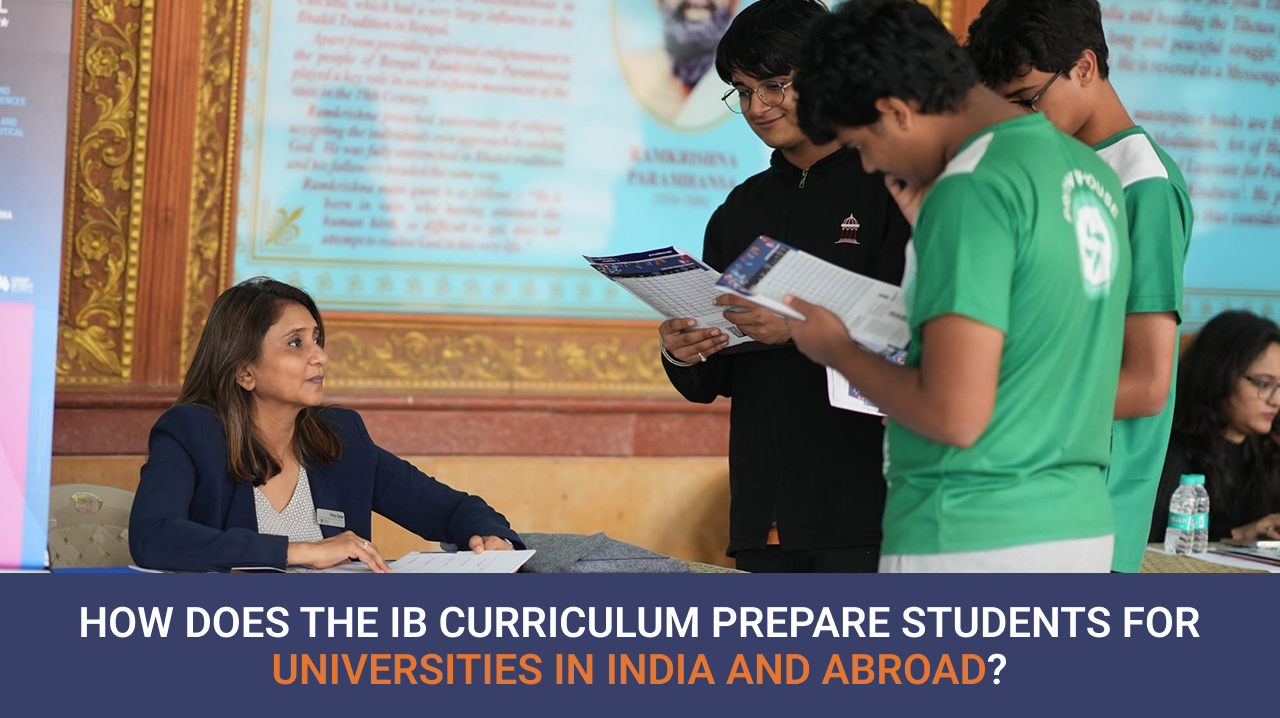
- Higher education support: in-house counsellors, psychometric assessments and an annual University Fair through its university counselling programme.
Parents can evaluate any IB school on programmes, faculty, academic support, university guidance, activities, wellbeing, facilities and admission requirements.
What Skills Do IB Students Need Before Entering University?
Top eight skills:
1. critical thinking
2. research
3. academic writing
4. communication
5. time management
6. collaboration
7. problem-solving
8. independent learning
Organisation matters because six subjects and the core run together, and the Extended Essay builds research and writing.
What Should Parents Consider Before Choosing an IB School?
- Programme suited to the student’s age
- Required IB subjects
- Academic and university counselling
- Fees and additional costs
- Learning support
What Facts Should Parents Know About the IB Curriculum?
- IB stands for International Baccalaureate.
- IB offers four main programmes.
- The Diploma has six subject groups plus TOK, Extended Essay and CAS.
- IB students can apply in India and abroad, subject to university requirements.
Key Takeaways: How Does IB Prepare Students for University?
- IB builds academic and transferable skills.
- Research and independent learning are central.
- Subjects should match future university plans.
- Parents should evaluate the complete programme a school offers.
Conclusion
Choosing an IB school is a long-term decision about skills as much as scores. MIT Gurukul offers the full IB continuum in Pune, with structured university counselling and a values-led, international community, making it a strong option for families planning for universities in India and abroad.
Frequently Asked Questions About the IB Curriculum
What is the IB curriculum?
An inquiry-based framework of four programmes.
What are the main benefits of the IB curriculum?
Critical thinking, research and independence.
What are the disadvantages of the IB curriculum?
A demanding workload and sometimes higher fees.
Is IB good for university preparation?
Yes, it builds research and writing skills.
Can IB students apply to universities in India?
Yes, subject to each university’s rules.
Can IB students apply to universities abroad?
Yes, subject to each university’s rules.
What is the list of all IB courses?
The four IB courses are the PYP, MYP, DP, and CP, each designed to support students at different stages of learning.
What subjects are included in the IB Diploma Programme?
Six groups, plus TOK, EE and CAS.
Is IB harder than other school curricula?
It is demanding but well supported.
Does IB help students develop critical thinking skills?
Yes, through TOK and inquiry.
How does the IB curriculum prepare students for university?
Through research, writing and independence.
Is MIT Gurukul an IB school?
Yes, an authorised IB World School.