


Finest boarding school for students of Mumbai: MIT Vishwashanti Gurukul
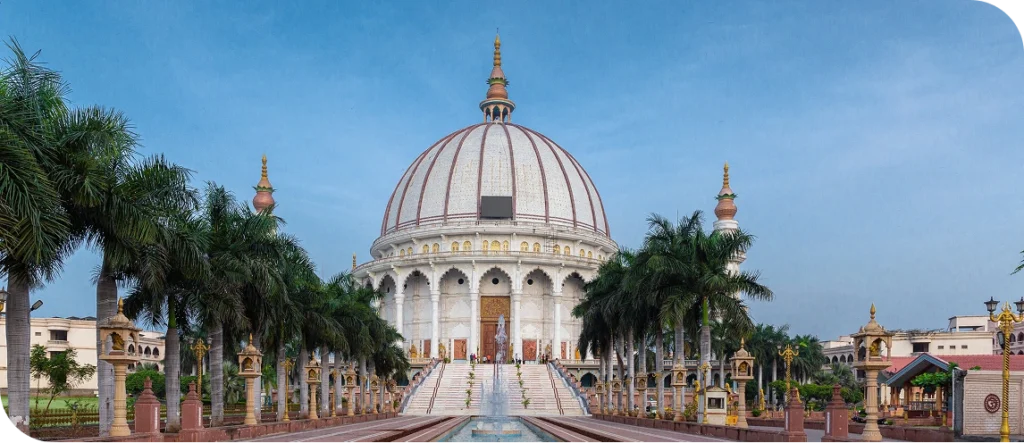
Finest boarding school for students of Mumbai: MIT Vishwashanti Gurukul Are you searching for boarding school in Mumbai and its nearby areas? Then, you should choose MIT Vishwashanti Gurukul. Well-known for astounding street life and food, Mumbai is one of the prominent cities in India. Mumbai is also known as the ‘City of Dreams’ as it is flooded with ample employment opportunities for individuals. However, there is an equivalent competition in the abode. In such a scenario, schooling and educational background create a real difference for the candidates amidst competition. As the competition among students is increasing gradually, parents are becoming cognisant to provide the best in class education to their students. In Maharashtra, the city of Pune is the ultimate hub for education. The city has a learning environment and it houses several eminent schools and colleges. It is also known as the Oxford of the East due to its educational ambience. The city is totally safe for the outsiders and it houses innumerable boarding schools offering world-class education. So, you should definitely consider schools in Pune. If you are looking for the best boarding schools in Mumbai or near Mumbai, then you don’t have to search more as MIT Vishwashanti Gurukul brings end to your search. The school is known for its unique learning environment that provides a world-class education to the students while following the traditional principle of learning. MIT Vishwashanti Gurukul: Top boarding school in India MIT Vishwashanti Gurukul sited at Pune, is one of the finest boarding schools in India. It follows the IB and CIE curriculum. The school aims at providing excellent academic growth and holistic development of all students through its resource-based education. It is a one-of-its-kind school that follows the traditional Guru Shishya Parampara whereby emphasis is laid on maintaining a strong bond between the teachers and the students. The education system of school is a perfect mixture of technological advancements and rich Indian heritage. This has allowed the school to create well-balanced and winning personalities. The highly experienced faculty of the school strive to mould the students as responsible and proactive citizens. Why MIT Vishwashanti Gurukul is the best boarding school? Robust infrastructure, homely ambience, international curriculum, value-based education, host of facilities and conducive learning ecosystem are some of the factors that make MIT Vishwashanti Gurukul the first choice of several parents. The school is beautifully constructed over 125 acres campus providing amazing facilities & amenities to the students. There are airy and spacious classrooms with advanced learning tools. The student to teacher ratio is kept 18:1 so that every student gets individual attention. There is a colossal library to foster learning. Different seminars and workshops are also organized regularly to accustom students with ongoing world trends and issues. There is an infirmary in the school along with a doctor and an attendant to take care of the health of students. An ambulance is also available at the school campus to handle emergencies. There is a refectory in the school premises that serves healthy and delicious food and it is regularly inspected by the dieticians. The school also offers 24-hour surveillance and other security facilities. So, send your child to MIT Vishwashanti Gurukul and mould him/her under world-class amenities.
Best boarding school near Mumbai
Best boarding school near Mumbai Mumbai is one of India’s chief metropolitan cities where people from across the country tread in search of jobs to fulfill their dreams. There is definitely a lot of career scope in the city but it is equally burgeoning with the competition. The only way to edge the competition is by showcasing extraordinary skills and sound educational background. Schooling also plays a key role in shaping the future of individuals. Though Mumbai is a densely populated city, the schools in the city are not sufficient for all the children living in the abode. Secondly, the schools in Mumbai generally do not follow the western learning method, which is the need of the hour. Furthermore, the city is so much populated that the strength of students in each class is too much thereby making it difficult for the teachers to give individual attention to students. The parents are also busy in their work and they are unable to spare much time to teach their kids. That is why parents living in Mumbai prefer sending their children to best boarding school in Mumbai or nearby areas. If you are also into the search, then bring it to an end at MIT Vishwashanti Gurukul. Best boarding school in Maharashtra: MIT Vishwashanti Gurukul MIT Vishwashanti Gurukul has been ranked as number 1 school which follows international curriculum in Pune by Times Education Survey 2018. It is affiliated to IB and CIE board and follows international learning standards. With value-based education, it is one place that promises the complete development of children. Here, your child can play, learn, get involved in various activities and most importantly, learn the values of life under one roof. These learnings prepare the child to face challenges and handle difficulties situations in life. The ambience of the school is such that it eases students’ mind and allow them to concentrate better. Being a Gurukul school, it follows age-old principles like ‘Guru-Shishya Parampara’ whereby the students gain knowledge under the supervision of teachers, who act as their mentors. Why it is a good choice to send your child to a boarding school? A boarding school makes the children more responsible as they learn to fight their own battles. Children become disciplined and they learn to follow a proper routine. Children are away from distractions like mobiles, games and other addictions, which are very prevalent in a city like Mumbai. Boarding schools prepare children for adult life. Why choose MIT Vishwashanti Gurukul? When looking for best boarding school in Mumbai or nearby areas, you should bank on MIT Vishwashanti Gurukul. There are several reasons to choose the school: The school is built at the sprawling 125-acres area and has a world-class infrastructure. There is a homely ambience in the school with facility of 24*7 security. It follows international learning standards and also focuses on inculcating traditional values. It focuses on the overall development of the child. The classrooms are airy, spacious and well-equipped. A planned education system is followed which has been divided in three steps as per the age of students. It includes IB primary for students of 3-11 years, IB middle years for students between 11-16 years of age and IB diploma for students of 16-19 years of age. The ratio of student-teacher is 1:18, which is ideal for a good interactive class. So, what are you waiting for? Apply for admissions at MIT Vishwashanti Gurukul right away.
An International Residential School in Maharashtra,India
Focusing on the All-Round Development of Our Students MIT Vishwashanti Gurukul is one of the prestigious names among the best boarding schools in Maharashtra in Maharashtra bestowed to the conducive ambiance, value-based learning pedagogy and a host of facilities that we offer. We have been in the Times Education School Survey among the best residential schools in Maharashtra as we believe in the holistic development of the students. We encourage our students to focus on academics along with focusing equally on personality and character development. Our students excel in academics, play games and participate in various activities. They have a global perspective, yet they are rooted to their culture and heritage. This makes us the best residential school in Maharashtra. In this competitive era, all-round development of the student is the need of the hour. By all-round development, we mean physical, mental, intellectual and spiritual development of the student. A child can be best prepared for the adult life by inculcating all the essential life skills along with imparting knowledge, wisdom, alertness, character and awareness in them. For this, both the parents as well as the school have to play their part. However, sending your child to a boarding school is the best way to make him/her capable to face the challenges of life. Since your child is away from home when he goes to boarding, so he/she starts getting trained to be self-reliant from a younger age. Furthermore, the child can learn to be more disciplined and organized in a boarding school as it has a schedule for all the residents. At MIT Vishwashanti Gurukul, our student’s schedule includes a rich mix of activities like meditation, classroom studies, games, sports and other co-curricular activities which ensure holistic development of the students every single day. We also organize weekend outings and other events in the hostel that exposes the child to the outer world and enhances their intellectual level as well as bond-building skills. Being one of the top boarding schools in Maharashtra, we offer a homely environment to the students where they are safe and secure. The students are motivated to unleash their potentials to the fullest. It goes without saying that parents are children’s first teacher. For the first few years, parents provide their child wise and loving guidance to make them feel safer. And, as responsible parents, whatever you can afford, you do for your child, be it nurturing or schooling. Developing a child into an all-round individual is complex process that requires a lot of effort from both parents and school. It is said that the impact of school is much more significant than the family. Sure enough, a school equips your child with all the skills needed to solve real problems they face later in their lives. Many parents think that the school is only responsible for academic performance of the students. This might be true for some school, but a good school focuses on the all-round development of its students, which goes beyond academic success. Also, a Top Boarding School in Maharashtra in Maharashtra ,India always introduces new trends in the education that helps its students stay innovative in this technology driven world. They are always ready to make experiment with their teaching strategies to get more out of it. Therefore, it is always advisable for parents to explore the wide number of international residential schools in India. There are thousands of international residential schools across the India, which proclaim themselves to be the best of the best. When it comes to the top international residential school in Maharashtra, MIT Pune’s Vishwashanti Gurukul School stands apart. Affiliated by International Baccalaureate Organization, MIT Pune’s Vishwashanti Gurukul offers its academics fully based on international curriculum, which is a gateway to universities all over the world. An international boarding school in Maharashtra guides its students with the highest quality education that help them achieve excellence in anything. This school accepts students from different social and cultural backgrounds that will further inculcate in your child the spirit of acceptance and open- mindedness. If you are searching for the top international residential school in Maharashtra,India for your child, then Vishwashanti Gurukul School is the best option for you. If you are looking through the top 10 international schools in Maharashtra, then MIT Vishwashanti Gurukul is the conclusion to your search. We provide excellent boarding facilities such as world-class infrastructure, 24*7 ambulance, security, healthy refectory and medical facilities that ensure a comfortable stay for each student. The Gurukul way of learning is the real essence of the school. We believe that the student-teacher bond is essential for a seamless learning process. That is why the gurus at MIT Vishwashanti Gurukul encourage their students to innovate and they believe in the potentials of their students. Even in the hostels, the students are trained under the guidance of their mentors. The students learn to be disciplined, self-reliant, aware, responsive and open-minded. They also master the art of bond building which is a vital trait to excel in adult life. All these make MIT Vishwashanti Gurukul the best boarding school in Maharashtra. So, what are you waiting for? If you want your child to be developed into a well-balanced individual and a responsible citizen, then send him/her to MIT Vishwashanti Gurukul. We are the trusted boarding school in Maharashtra with fees affordability to nurture your child’s education. Why Choose MIT Vishwashanti Gurukul? MIT Vishwashanti Gurukul stands as a beacon of holistic education rooted in Indian values with a truly global vision. As a proud and esteemed member of the MIT Group of Institutions with a global academic vision, we bring decades of academic excellence and innovation to school education. We prepare our students to thrive in a dynamic and interconnected world. What sets us apart as one of the top IB Schools in Maharashtra is our status as a full IB Continuum School. We offer IB PYP, IB MYP, and IB DP programs to ensure a seamless and inquiry-driven educational journey from
How does primary education influence a child’s emotional intelligence?
Ever noticed how some children handle tricky situations, express clearly and bounce back after a setback, while others struggle? That difference comes down to one powerful skill known as Emotional Intelligence. Marks matter and so do emotions. Success is not just about academics; it is about understanding people, managing feelings and building strong relationships. That is where emotional intelligence in early childhood emerges as a game changer. The early years (ages 3-12) are not just about ABCs and numbers; they are where children learn how to feel, react and connect. This is exactly why parents exploring the best primary schools in Pune now look beyond academics. They want schools that shape confident and emotionally aware individuals. So, how exactly does primary education influence emotional intelligence? What is Emotional Intelligence in Children? At its core, emotional intelligence (EI) is the ability to understand, feel and manage emotions of their own and of others. In the context of emotional intelligence in early childhood, it forms the foundation of how children interact with the world. Here is what it includes: Self-awareness: Children learn to recognise their emotions, whether they feel happy, sad, angry, or excited and understand why. Self-regulation: They learn to manage emotions instead of reacting impulsively. Think fewer tantrums, more thoughtful responses. Empathy: Children begin to understand how others feel and respond with kindness and respect. Social Skills: They build friendships, communicate effectively and learn teamwork. Motivation: EI helps children stay positive, resilient and eager to learn, even when things get tough. Emotional Expression: They learn to express feelings clearly and appropriately instead of bottling them up. In simple terms, EI helps children become emotionally smart humans and not just academically smart students. How Primary Education Supports Emotional Intelligence Development? Primary education plays a massive role in shaping these skills. The right environment transforms how children understand emotions. Here is how schools make it happen – Social Interaction in Classrooms: Daily interactions teach children how to share, collaborate and resolve conflicts. These real-life moments build emotional awareness naturally. Teacher Guidance and Mentorship: Teachers act as role models. Their behaviour shows children how to respond calmly, communicate respectfully and handle emotions positively. Play-Based and Experiential Learning: Activities like storytelling, role-play, and group games allow children to explore emotions in a fun, safe way. This is one of the key early childhood education benefits that boosts emotional growth. Safe and Supportive Environment: When children feel supported and safe, they open up. An encouraging classroom environment motivates them to express feelings without fear. Communication and Language Development: Schools help children put feelings into words. Instead of frustration, they learn to express their concerns. Value-Based Education: Lessons in empathy, kindness, respect, and responsibility become part of everyday learning. This is why parents researching the best primary schools often prioritise institutions that blend academics with emotional development. How Does Emotional Intelligence Development Differ Across Learning Environments? Not all learning environments shape emotional intelligence in the same way. Here is a quick comparison: Parameter Holistic Primary Education Traditional Education Other Learning Approaches Learning Approach Child-centric and experiential Teacher-led Mixed approach Emotional Development Strong focus on EI and SEL Limited focus Moderate Social Skills Encouraged through collaboration Less emphasis Balanced Classroom Environment Supportive and inclusive Structured Varies Student Expression Open and encouraged Restricted Moderate Schools that focus on holistic learning like many International Primary Schools Pune tend to nurture emotional intelligence more effectively. Why Is Emotional Intelligence Important in Early Education? Let’s talk about facts. Emotional intelligence plays an impactful role in a child’s future. Impact on Academic Performance: Research shows that emotional intelligence significantly influences academic performance, with studies indicating up to an 8.4% improvement in student achievement through social-emotional learning programmes. Early Brain Development: According to neuroscience and early childhood development research, the first 1,000 days of a child’s life are critical for brain development; highlighting how early years strongly shape emotional and social growth. This makes primary education a critical stage. Better Social Relationships: Children with strong EI build healthier friendships often communicate better and handle conflicts more effectively. Improved Mental Well-being: Emotionally aware children handle the challenges better, which reduces anxiety and boosts their confidence. Future-Ready Skills: Employers today value soft skills like communication, adaptability and teamwork. When schools nurture emotional intelligence early, they empower children to become confident and compassionate individuals. Conclusion Selecting the right school is not just about academics; it is about shaping who your child becomes. The right primary education builds knowledge with confidence, empathy and resilience. When you explore international primary schools, look for environments that prioritise emotional intelligence in early childhood alongside academics. Those early years truly define how children think, feel, and connect with the world. At MIT Gurukul, the focus goes beyond textbooks. The aim is to nurture emotionally strong, self-aware and socially confident individuals who are ready to thrive in every aspect of life. FAQs 1. What is emotional intelligence in children? Emotional intelligence in children refers to their ability to understand, manage and express emotions effectively. It includes skills like empathy, self-awareness and communication which help children navigate social situations, build relationships and respond to challenges in a balanced and thoughtful way. 2. Why is primary education important for emotional development? Primary education lays the foundation for emotional growth by exposing children to social environments, guided learning and structured experiences. During these formative years, children develop essential life skills like empathy, self-control and communication which shape their personality and behaviour in the long run. 3. How do schools help develop emotional intelligence? Schools create opportunities for interaction, collaboration and guided learning through activities such as group work, storytelling and play. Teachers mentor students, encourage expression and model positive behaviour, helping children understand emotions, resolve conflicts and build meaningful relationships with peers. 4. Can emotional intelligence impact academic success? Yes, emotional intelligence significantly influences academic performance. Children who manage emotions well tend to stay focused, handle stress better and remain motivated. These skills improve learning outcomes, classroom participation and overall academic achievement while also
What is the difference between IB and CBSE schools in Pune?
Choosing the right school board is not just a checkbox decision; it is a whole vibe. It shapes how students think, learn and even dream about their future. If you are a parent exploring options or a student trying to figure out what fits best, you have probably come across two major players: the International Baccalaureate curriculum and the CBSE board. Both are popular choices, especially when it comes to CBSE schools in Pune and IB institutions across the city. But here is the catch: they are not even playing the same game. While the IB approach focuses on global exposure and inquiry-based learning; CBSE leans into structure, clarity and exam readiness. So naturally, parents comparing the IB programme and the best CBSE schools often ask: Which one actually works better? Let’s break it down. What is the IB Curriculum? The International Baccalaureate curriculum is not just about textbooks; it is about understanding the why behind everything. It is designed for students aged 3 to 19 and builds a strong foundation for global learning. Here’s how it works: 1. Programme Structure The IB system includes: Primary Years Programme (PYP) Middle Years Programme (MYP) Diploma Programme (DP) 2. Inquiry-Based Learning Students don’t just memorise, they question, explore and discover concepts on their own. 3. Concept-Driven Approach Instead of focusing only on subjects, IB connects ideas across disciplines. 4. Skill Development Focus It builds: Critical thinking Research skills Communication abilities 5. Global Perspective Students learn to think beyond borders, cultures, and perspectives. 6. Continuous Assessment Forget last-minute cramming. IB uses projects, presentations, and internal assessments throughout the year. In short, the IB programme prepares students not just for exams but for life. What is the CBSE Curriculum? Now let’s talk about CBSE, the OG choice for many Indian families. You will find some of the best schools in Pune CBSE following this curriculum, and for good reason. Here is what defines CBSE: 1. National Framework Governed by the Central Board of Secondary Education, the CBSE curriculum follows a standardised curriculum across India. 2. Structured Learning CBSE curriculum offers a clear syllabus, defined textbooks and a systematic approach. 3. Strong Academic Focus Emphasis on: Mathematics Science Languages 4. Competitive Exam Preparation Designed to align with exams like JEE, NEET and other entrance tests 5. Standardised Assessments Board exams play a major role in evaluating student performance CBSE keeps things clear, focused and goal-oriented and it is perfect for students aiming for traditional academic success in India. IB vs CBSE Schools in Pune: A Detailed Comparison Let’s put things side by side for better clarity: Parameter IB Schools CBSE Schools Learning Approach Inquiry-based and experiential Structured and teacher-led Curriculum Flexibility High Limited Skill Development Critical thinking, research and collaboration Exam-oriented knowledge Global Perspective Strong international exposure Mostly national focus Assessment Style Continuous and project-based Standardised exams and boards So yeah, the difference is pretty clear – IB focuses on how you learn, while CBSE focuses on what you learn. Why Are Parents in Pune Comparing IB and CBSE Schools? This is not just a trend; it is a real shift in how families think about education. 1. Rising Demand for International Education The international baccalaureate curriculum has expanded rapidly, with IB programmes are offered in over 160 countries worldwide, highlighting their strong global presence and recognition. In India too, the number of IB schools has steadily grown over the past decade, especially in urban cities like Pune. 2. Competitive Exams vs Global Opportunities Families aiming for IITs or medical colleges often prefer CBSE schools because the syllabus aligns with entrance exams like JEE and NEET. On the flip side, students planning to study abroad lean towards the IB programme which universities worldwide recognise and value. 3. Focus on Skill-Based Learning Modern workplaces demand more than marks. According to global education and employment reports, employers prioritise – Critical thinking Communication Problem-solving The international baccalaureate curriculum strongly aligns with these future-ready skills, making it an attractive option. Education today is not just about academic excellence; it is about preparing students to adapt, think independently and thrive in a global environment. Final Thoughts Choosing between the International Baccalaureate curriculum and CBSE schools is not about picking the better option; it is about choosing what fits your child’s future vision. If your child thrives on curiosity, enjoys exploring ideas and dreams of studying or working globally, the IB programme offers a dynamic and future ready pathway. But if your focus leans towards strong academic foundations, structured learning and cracking competitive exams, the best CBSE schools provide a solid and reliable route. At MIT Gurukul, the focus goes beyond boards and textbooks. The goal is simple to help every student discover their strengths, build confidence and grow into well-rounded individuals who are ready for whatever comes next. The right education is not just about where you study; it is about who you become. FAQs 1. Which is better between IB or CBSE for students in Pune? IB is suitable for students who aim for global exposure and holistic learning. CBSE works best for those students who focus on structured academics and competitive exams. Also; IB encourages independent thinking and creativity and CBSE strengthens conceptual clarity and discipline that help students to build a strong academic foundation for future growth. 2. Is IB more difficult than CBSE? IB is not necessarily harder; it is just different. It focuses more on research, analysis, and continuous assessment rather than memorisation. Students often spend more time on projects, presentations and real-world applications, which can feel challenging initially but gradually build confidence, a deeper understanding and long-term academic skills. 3. Which curriculum is better for studying abroad? The IB programme is widely recognised by international universities and usually preferred for global education pathways. It develops the required essential skills such as critical thinking, research and communication that align with international academic expectations and admission processes. 4. Are CBSE schools better for competitive exams like JEE and NEET? Yes. The syllabus in CBSE schools
What are the key features of the IB MYP at these schools?
Honestly, choosing the right school today feels a bit like scrolling through endless options on Netflix. Everything looks good but what actually fits your child? The moment you start exploring international curricula, one name keeps popping up – the IB MYP. But what makes it so popular? And why are parents actively searching for the IB Middle Years Programme Pune? Let’s break it down with real insights into what makes the IB MYP such a powerful learning experience. What is the IB Middle Years Programme? The IB MYP (Middle Years Programme) is not just another academic curriculum. It is designed for students aged 11-16 years, right at that stage where curiosity is high and potential is limitless. Here is how it works – Designed for Grades 6-10: It bridges the gap between primary education and advanced programmes like the IB Diploma. Focuses on concept-based and inquiry-driven learning: Students don’t just study; they question, analyse, and explore. Connects subjects to real-world applications: Maths is not just numbers; it becomes problem-solving for real-life situations. Includes Service as Action projects: Students engage with communities and learn responsibility beyond textbooks. Encourages interdisciplinary learning: Subjects don’t exist in isolation, but they connect, overlap, and make learning meaningful. Prepares students for future pathways: Whether it’s IB DP or other global curricula, MYP builds a strong foundation. It teaches students how to think, not just what to learn. Key Features of the IB MYP at Leading Schools Now, let’s get into the real game-changers like the features that make IB MYP stand out. 1. Inquiry-Based Learning This is where learning flips completely. Instead of memorising answers, students ask questions like: “Why does this happen?” “What if we change this variable?” “How can this be solved differently?” This inquiry based learning approach keeps students curious, actively participating and engaged in their own learning journey. 2. Concept-Based Curriculum Forget isolated topics. IB MYP focuses on big ideas. For example, instead of just learning about photosynthesis, students explore concepts like systems, change and interaction. That is what concept-based learning looks like – a learning that sticks because it connects across subjects and real life. 3. Interdisciplinary Learning Imagine combining – Science with Geography and Technology Maths, Design and Real-world problem solving That’s interdisciplinary learning in action. Students don’t see subjects as separate silos – they learn to connect the dots. 4. Service as Action This is not your typical community service essentiality. Students actively participate in projects like – Environmental initiatives Social awareness campaigns Community support programmes It builds empathy, responsibility and leadership skills that matter beyond school. 5. Personal Project Every IB MYP student completes a Personal Project and this is where individuality shines. Students: Choose a topic they are passionate about Research deeply Create something meaningful It could be anything from developing an app to writing a book. This project builds independence and confidence like nothing else. 6. Global Contexts Learning doesn’t happen in a vacuum. IB MYP connects lessons to global themes like: Identity and relationships Globalisation Sustainability This global perspective helps students think beyond borders, something essential in today’s world. 7. Skill-Based Assessment No more last-minute cramming. IB MYP evaluates students through: Projects Presentations Continuous assessments This approach focuses on understanding, not memorisation. And honestly, it makes learning less stressful and more meaningful. How Do IB MYP Schools Stand Out From Other Schools? Parameter IB MYP Schools Traditional Schools Other International Schools Learning Approach Inquiry-based, student-centric Teacher-led Mixed Skill Development Critical thinking and collaboration Exam-focused Balanced Global Exposure Strong international outlook Limited Moderate Assessment Style Continuous and criteria-based Standard exams Mixed Student Engagement High, especially in projects and research Moderate Moderate The difference is clear. IB MYP schools focus on developing thinkers, not just test-takers. Why Are Parents Choosing IB MYP Schools? Let’s talk numbers and reality. Growth of IB Schools Globally: More than 8,900 programmes are offered across more than 6,100 schools in over 160 countries. Focus on Future-Ready Skills: Employers today value – Critical thinking Communication Problem-solving IB MYP builds these skills early, giving students a clear edge. Strong Academic and Career Outcomes: Students from IB schools usually adapt better to higher education because they are already well-trained to think independently and research effectively. Research shows that IB students have 18-22% higher acceptance rates at top universities in some global comparisons. Increasing Parent Preference: Parents are no longer chasing just marks; they want holistic growth. That’s why many are exploring the top IB MYP Schools in Pune. Education today is not about information. It is about transformation. IB MYP ensures students are prepared not just for exams, but for life. Why MIT Gurukul Stands Out? When exploring the best IB Middle Years Programme in Pune, MIT Gurukul naturally stands out. Here’s why: A thoughtfully designed IB MYP framework Strong focus on inquiry, concepts, and real-world application A learning environment that balances academics, creativity and well-being Exposure to global perspectives while staying rooted in values It is not just about being an IB school. It is about delivering the IB experience the right way. Final Thoughts Education is no longer just about scoring marks. It is about preparing for a world that is constantly evolving and expanding. The IB MYP does not just teach subjects by focusing on academic needs; but it builds thinkers, creators and problem-solvers. Don’t just look at facilities or brochures. Look at how the school teaches. The right learning approach does not just shape academic success; it shapes your child’s future. FAQs 1. What age group does the IB MYP cover? The IB MYP is thoughtfully designed for students aged 11 to 16 years; typically covering Grades 6 to 10. 2. What makes IB MYP schools different from traditional schools? IB MYP schools focus on inquiry, critical thinking, and real-world learning, unlike traditional exam-driven education systems. 3. How does the Personal Project enhance student learning in IB MYP? It builds independence, research skills and creativity by allowing students to explore personal interests in depth. 4. Are IB MYP schools a
How does the IB PYP promote holistic learning in children?

What if your child walked into a classroom where the first question wasn’t “What’s the answer?” but “What do you think?” Imagine a space where lessons don’t begin with textbooks, but with curiosity. Where children don’t just learn about the world, but they question it, explore it and try to improve it. Sounds different, right? That’s because it is. This is exactly what the IB PYP curriculum brings to the table. It flips traditional learning on its head and turns everyday classroom moments into meaningful experiences. If you have been exploring the IB Primary Years Programme Pune, you have probably sensed that this approach is doing something most systems don’t. This approach shapes your child’s personality and not just their report cards. Let’s unpack how it actually works and why it’s getting so much attention from parents today. What is the IB Primary Years Programme (PYP)? Think of the IB PYP as a learning journey, not a syllabus. It focuses on how children learn and not just what they learn. Here’s how it works: Designed for ages 3-12: It supports children from pre-primary to Grade 5, covering the most formative years. Inquiry-based learning: Children ask questions, explore ideas, and discover answers instead of memorising facts. Student-centred approach: The classroom shifts focus from teacher-led lectures to student-driven learning. Real-world connections: Lessons connect with real-life situations to make learning more meaningful, engaging and relatable. PYP Exhibition: Students showcase their understanding through projects that reflect research, creativity and collaboration. IB Learner Profile development: Children grow into thinkers, communicators, risk-takers and principled individuals. At institutions like MIT Gurukul, this framework doesn’t just exist on paper, but it comes alive in classrooms. Key Features of the IB PYP Curriculum That Support Holistic Learning So what makes the IB PYP curriculum such a strong foundation for holistic growth? Let’s dive into the features that actually make a difference. Inquiry-Based Learning: Children learn by asking questions, exploring ideas and discovering answers on their own. Concept-Based Curriculum: Instead of isolated topics, students understand big ideas that connect across subjects. Transdisciplinary Learning: Subjects blend into themes like identity, environment, and society, making learning seamless. IB Learner Profile Development: Students grow into caring, reflective, open-minded, and principled individuals. Focus on Social and Emotional Learning (SEL): Strong emphasis on communication, empathy, and collaboration enhances emotional development in early childhood. Student Agency: Children take ownership of their learning by making choices, expressing ideas, and leading discussions. This is why parents exploring International Primary Schools Pune often lean towards IB, as it simply feels more aligned with how children actually learn. How Does the IB PYP Promote Holistic Development in Children? Let’s compare how IB PYP stands apart from traditional systems: Parameter IB PYP Traditional Curriculum Other International Curricula Learning approach Inquiry-based and child-centric Teacher-led Mixed approach Emotional development Strong focus on SEL Limited emphasis Moderate Skill development Creativity, communication and collaboration Academic knowledge Balanced Global awareness Strong international-mindedness Mostly national focus Moderate Assessment style Continuous, observation-based Exams and tests Mixed Here’s the real takeaway: IB PYP doesn’t treat children as passive learners. It treats them as active participants. For example, instead of simply teaching environmental science, a class might explore: “How can we reduce waste in our community?” Students research, discuss, collaborate, and present solutions. That’s not just learning, but that is real-world thinking in action. Why is Holistic Learning Important in Early Childhood? Why does holistic learning matter so much, especially in the early years? Here’s why: Early Brain Development: Research shows that nearly 90% of brain development happens before the age of 5. These early years shape how children think, learn, and interact for life. Importance of Social-Emotional Skills: Children with strong emotional intelligence perform better academically and socially. This is where emotional development in early childhood becomes critical. Future-Ready Skills: Global studies consistently highlight creativity, critical thinking and collaboration as essential future skills. Parental Preference for Well-Rounded Education: More parents now prioritise balanced growth over rote learning. Holistic education is not a luxury anymore; it is a necessity. Children need environments that nurture curiosity, resilience and emotional intelligence alongside academics. What Makes MIT Gurukul Stand Out? Many schools adopt IB. But how they implement it makes all the difference. At MIT Gurukul, the approach feels intentional. Classrooms encourage discussion and not silence Teachers guide, rather than dictate Students explore ideas, not just complete assignments Emotional well-being gets as much importance as academics MIT Gurukul positions itself as a strong choice as it perfectly blends structure with flexibility, something every child needs. At MIT Gurukul, your child doesn’t just learn, but they explore, question and grow every day. Take the first step towards a future-ready education. Book a campus visit today and experience the difference firsthand. Final Thoughts Children don’t just need education. They need the right kind of education. The IB PYP curriculum doesn’t aim to create toppers. It aims to create thinkers, problem-solvers and emotionally aware individuals. And in a world that is constantly changing, that matters more than ever. FAQs 1. What age group is the IB PYP designed for? The IB PYP is designed for children aged 3 to 12 years, covering pre-primary to Grade 5. It focuses on building foundational skills during early development while supporting both academic growth and emotional development in early childhood. 2. How does the IB PYP differ from traditional primary education systems? The IB PYP focuses on inquiry-based, student-led learning; while traditional systems rely on teacher-led instruction. It prioritises conceptual understanding, real-world application and holistic growth rather than memorisation and exam-based performance. 3. What role does the PYP Exhibition play in a student’s learning journey? The PYP Exhibition acts as a culminating project where students showcase their learning through research, collaboration and presentation. It builds confidence, communication and critical thinking skills for reflecting the true essence of the IB PYP curriculum. 4. Is the IB PYP suitable for children planning to continue IB in higher grades? Yes, the IB PYP provides a strong foundation for continuing into the IB
Which IB schools in Pune offer modern facilities?
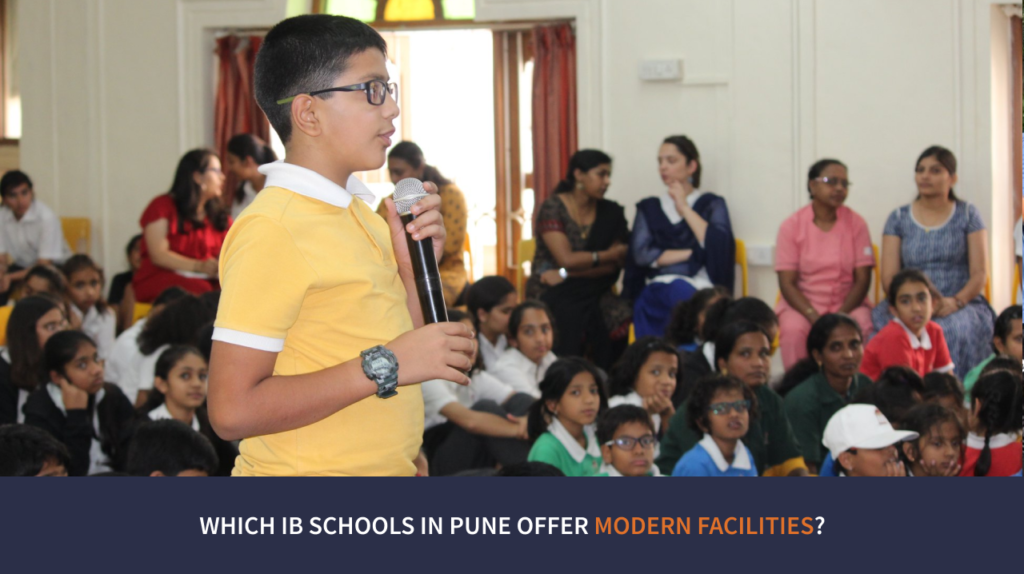
Nowadays, parents want a school that offers well-rounded development to their children. They want a school that focuses on social, emotional, and cognitive development. And Pune has emerged as a vibrant hub for international education. It is home to some of the finest schools in the country. The IB Schools in Pune are known for their expansive infrastructure and top facilities combined with inquiry-based learning. Choosing a school with the right infrastructure is crucial because, in the IB framework, the campus itself is a learning tool. Why Modern Facilities Matter in IB Schools IB programmes focus on fostering creativity, innovation, and critical thinking. To support this, schools must provide spaces that stimulate the mind. A standard lecture hall is insufficient for a student expected to design a robot or conduct complex chemical experiments. IB schools in Pune with world-class facilities bridge the gap between theoretical knowledge and practical application. For instance, smart classrooms allow for interactive global collaboration, whilst advanced robotics labs enable students to test engineering concepts in real-time. Key Features to Look for in IB Schools in Pune Here are the non-negotiables for a modern IB campus that parents should look out for. Smart Classrooms – Look for interactive whiteboards and digital learning tools that make lessons immersive. Well-Maintained Laboratories – STEM learning is a pillar of the IB. Schools should have dedicated spaces for physics, chemistry, biology, and robotics. Safe Campus – A campus should not only look good but also be secure. Security systems and boarding facilities should be top-tier. Sports and Arts Facilities – A true IB education balances academics with physical and creative pursuits. Look for big grounds and art studios with appropriate gear and instruments. Top IB Schools in Pune with Modern Facilities If you are searching for international baccalaureate schools in Pune that tick these boxes, here is a curated list of reputed institutions – 1. MIT Vishwashanti Gurukul Located in Loni-Kalbhor, this institution is a unique blend of modern technology and traditional Indian values. It stands out for its expansive campus and boarding facilities, which are among the best in the region, providing a safe, home-like environment. The school also places a heavy emphasis on sports, ensuring students develop physically as well as intellectually. 2. Mahindra International School This Hinjawadi-based school offers a diverse environment with facilities designed to support small class sizes and personalised learning. It offers well-equipped design technology labs and creative arts spaces. 3. Indus International School Pune Indus International is renowned for its academics and focus on leadership. Their campus facilities support this vision with riding arenas, modern boarding houses, and extensive IT infrastructure that supports a digital-first approach to learning. 4. Symbiosis International School Symbiosis shares its campus with the university, giving students access to impressive infrastructure. Their library resources and sports grounds are extensive, providing a collegiate feel that prepares older students for university life. Tips for Parents Choosing an IB School in Pune When you visit a school campus, keep a keen eye on how the facilities are actually used, not just how they look. Ask the following questions when choosing – Do students get regular time in the robotics lab, or is it just for show? Are the smart boards high-quality and working? Is the sports ground maintained and gear in good condition? What is the quality of student work in corridors and classrooms? The answer to these questions will prove to be the evidence of whether the infrastructure is working the way it should or not. Conclusion The top IB Schools in Pune provide an excellent infrastructure that supports student growth and development. By prioritising schools that invest in modern libraries, labs, and creative spaces, you are ensuring your child has the tools they need to succeed. Whether it is the values-driven environment of MIT Vishwashanti Gurukul or the corporate-style campus of others, the right facilities will make all the difference in your child’s holistic growth!
Building Trust & Success: The Power of Teacher-Student Relationships
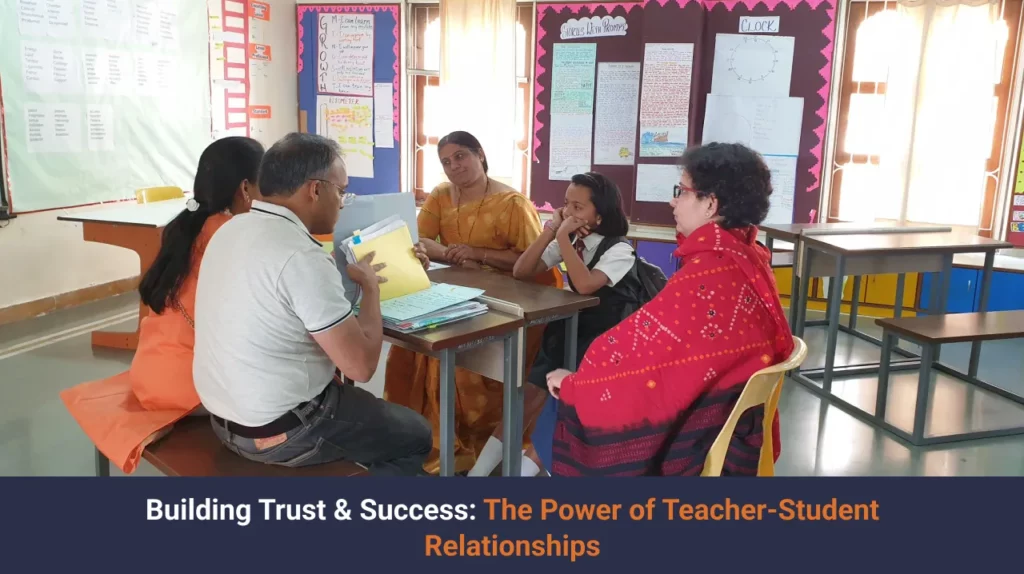
It is the supreme art of the teacher to awaken joy in creative expression and knowledge– Albert Einstein This beautiful quote by one of the greatest scientists, Albert Einstein, rightly reflects how important it is to have a good teacher for a child. It is not just about the knowledge that one receives and applies in life, but also the creative expression that a child develops over the schooling years, which will help him/her in emotional development and make wiser decisions later in life. But the give and take of knowledge can not be possible without the strong bond between teachers and students. While academic achievements are often measured in grades and scores, the importance of the teacher-student relationship goes beyond this as it incorporates virtues, values and habits of lifelong learning of the students. Also, a positive student-teacher bonding makes them feel safe, supported, and inspired to put in their best effort. Much educational research has indicated that positive teacher-student interaction examples – little efforts of encouragement, attention, and personalised direction, often lead to a long-term impact on student engagement. This guide will highlight why the teacher-student relationship matters in education so much in the first place, and describe how trust, communication, and motivation are the driving forces of both academic and personal development. The Core of a Strong Teacher-Student Relationship 1.1 Trust and Mutual Respect Trustworthiness is considered to be one of the highest virtues behind a successful teacher-student relationship. Trust allows a student to be more open and freely experiment in learning. Whereas mutual respect keeps the classroom environment welcoming and interactive. It is essential to understand that both trust and mutual respect go hand in hand and promote a healthier relationship between the two. It promotes students to feel freer to express themselves and inquire, as opposed to fearing being judged. Trust is something that develops over time when the teacher shows consistency with fairness and kindness among students, and when trust develops, respect automatically follows. For teachers, it is essential to have an understanding that forceful disciplinary acts often restrict the students’ responses and inhibit their curious minds. Whereas a positive classroom environment enriches the lives of both the teacher and students as they start viewing education as a cooperative journey and not a one-sided process. So, mutual respect and building trust in the teacher-student relationship have benefits beyond academics as it helps a child learns to value fairness and empathy. 🔗 Read more: Importance of Discipline in Education 1.2 Communication and Understanding Communication in the teacher-student relationship is the bridge between knowledge and empathy. An active listening teacher makes students feel important. For instance, rather than ignoring the emotional and academic doubts of a student when a teacher actively listens and understands the reasons why the student is actually struggling, it develops a sense of care that is beyond the textbook. Active listening in a classroom not only allows teachers to understand where a student lacks academically, but also helps them understand the student’s emotional needs. Similarly, empathy in teaching builds a supportive environment for students in which they feel free to share their challenges, be it related to studies or emotional well-being. So, it is no longer a hidden fact that there are multiple benefits of good communication between teachers and students. As it leads to a less stressful environment, it further promotes motivation and increased interest in learning among students. When they feel that teachers are easily accessible, they will be likely to engage better, ask questions, and understand the subjects well. 🔗 Read more: Role of Social Media in Education 1.3 Consistent Encouragement The encouragement of a teacher may change the life perspective of a student. In the process of positive reinforcement in education, students begin to see themselves as capable of succeeding in different arenas of life. Words of gratitude, such as “Well done,” or “You are improving,” create self-belief in a student. A teacher boosts the morale of a student, a concept deeply etched in student life. Teachers feed into persistence by rewarding big and small efforts. Encouraging students in the educational process boosts the students’ confidence, participation, and willingness to take on challenges. Even an introverted or hesitant learner most of the time blooms under successive support and feedback from that teacher. Academic Benefits of Healthy Relationships 2.1 Improved Learning Engagement How a teacher bonds with their students has a direct relation to the active student engagement in learning. Students who feel connected engage willingly, ask questions, and share ideas. This builds classrooms where learning is active, not passive. The importance of the teacher-student relationship in learning is apparent in the way it induces curiosity in education. When encouraged, students transcend memorisation to authentic comprehension. Teachers employing interactive methods render classes engaging and stimulate student involvement in class. In this kind of environment, students not only grasp concepts better but also start relating learning to fun, an element imperative to sustained academic interest. 2.2 Better Academic Performance Teacher support and academic performance have been well accounted for in the literature. Supportive teachers fill in the guidance necessary to work through more challenging topics and to motivate students when the drainage conditions seem to be too easy tasks. Teachers have always had better success and performance backed by partnership and trust from the students’ assessments and projects. Constructive feedback and mentoring from a teacher will be quite direct in affecting matters related to their academic growth. Sometimes, good professors can mean the difference between average and superior performances. A strong teacher-student relationship in academic success factors is priceless and therefore shapes both immediate results and long-term career aims. 2.3 Development of Critical Life Skills The classroom is a place where learning beyond academics takes place, and a conducive environment plays a crucial role in developing life skills among students. Things like group projects, preparing presentations, and classroom discussions over different topics help students learn teamwork, understanding and accepting different views and develop problem-solving skills in students.
Parents’ Guide to Understanding the IB PYP, MYP & DP Programmes
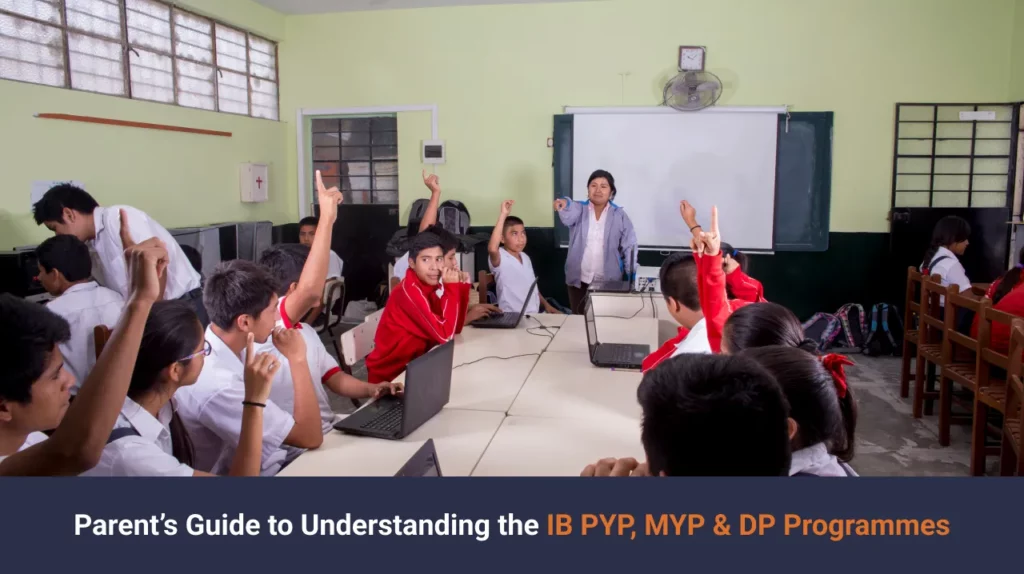
Introduction The International Baccalaureate schools in Mumbai (IB) offer three distinct yet interconnected pathways in education: The Primary Years Programme (PYP), The Middle Years Programme (MYP), and The Diploma Programme (DP). The IB is renowned across the world for its rigorous academic standards and holistic approach to education, which equips students for life beyond tests. However, what precisely is involved in each of these programmes? This guide will help you make the best decision for your child’s education by guiding you through the fundamentals. Overview of the IB Framework The IB Learner Profile, which consists of ten qualities including values, compassion, and open-mindedness, is the foundation of the IB framework. It aims to cultivate globally minded youth. Students are encouraged to think critically, ask questions, and relate what they have learnt to real-world problems. This method produces lifelong learners who are self-assured, sympathetic, and prepared to tackle global issues. IB Primary Years Programme (PYP) Explained The PYP is intended for students in kindergarten through grade five, ages three to twelve. Its main goal is to inspire a love of learning in young brains by providing them with interesting, developmentally appropriate experiences. “How the World Works” and “Who We Are” are two of the six transdisciplinary themes that are featured in the curriculum. These themes provide context for everyday occurrences and connect learning across courses. Through inquiry-based instruction, practical exercises, and group projects, kids investigate these topics. Teachers foster social skills, curiosity, basic literacy, numeracy, and understanding, and examinations emphasise comprehension and application rather than memorisation. The PYP provides a solid basis for subsequent education, facilitating kids’ seamless transition to the MYP and beyond. IB Middle Years Programme (MYP) Overview For students in Grades 6–10 or 11–16, the MYP serves as a bridge between the PYP and the Diploma Program. Eight topic areas make up the MYP curriculum, which places a high priority on conceptual knowledge and practical applications. Students investigate subjects from both academic and interdisciplinary perspectives; for instance, they study the ethics and science of water sustainability. Students demonstrate their freedom and creativity by pursuing a topic of personal interest in their personal project, which is the culmination of the MYP. A combination of written assignments, oral presentations, and coursework is used for assessment, which aids in the development of students’ research and critical thinking abilities. IB Diploma Programme (DP) Guide The Diploma Programme is popularly considered the gold standard for university preparation and is intended for students in Grades 11 and 12, or 16 to 19. The six subject groups that the Diploma programme guide helps students choose from include languages, the arts, sciences, and mathematics. Three other essential components of the programme are the Theory of Knowledge (TOK), Creativity, Activity, Service (CAS), and the Extended Essay, which is a self-directed research project. In contrast to CAS, which fosters personal development via extracurricular activities and community service, TOK encourages students to consider it. Exams, coursework, and practical work are all part of the DP’s evaluation process. Students who complete the DP have an advantage in admissions because universities around the world recognise its intellectual depth and concentration on study and thinking. Conclusion The IB framework provides a thorough, internationally renowned method that strikes a balance between the development of critical life skills and academic success through its three developmental programmes. As we know, selecting the best educational path for your child is a big decision. The MYP develops critical thinking and teamwork abilities; the DP gets pupils ready for the demands of college and beyond, and the PYP fosters early curiosity. When looking at international baccalaureate schools in Mumbai, knowing about the PYP, MYP, and DP programmes can help you identify one that will not only educate your child but also genuinely motivate them to become a considerate, flexible, and caring global citizen.