

What if your child walked into a classroom where the first question wasn’t “What’s the answer?” but “What do you think?”
Imagine a space where lessons don’t begin with textbooks, but with curiosity. Where children don’t just learn about the world, but they question it, explore it and try to improve it. Sounds different, right? That’s because it is.
This is exactly what the IB PYP curriculum brings to the table. It flips traditional learning on its head and turns everyday classroom moments into meaningful experiences. If you have been exploring the IB Primary Years Programme Pune, you have probably sensed that this approach is doing something most systems don’t. This approach shapes your child’s personality and not just their report cards.
Let’s unpack how it actually works and why it’s getting so much attention from parents today.
What is the IB Primary Years Programme (PYP)?
Think of the IB PYP as a learning journey, not a syllabus. It focuses on how children learn and not just what they learn. Here’s how it works:
- Designed for ages 3-12: It supports children from pre-primary to Grade 5, covering the most formative years.
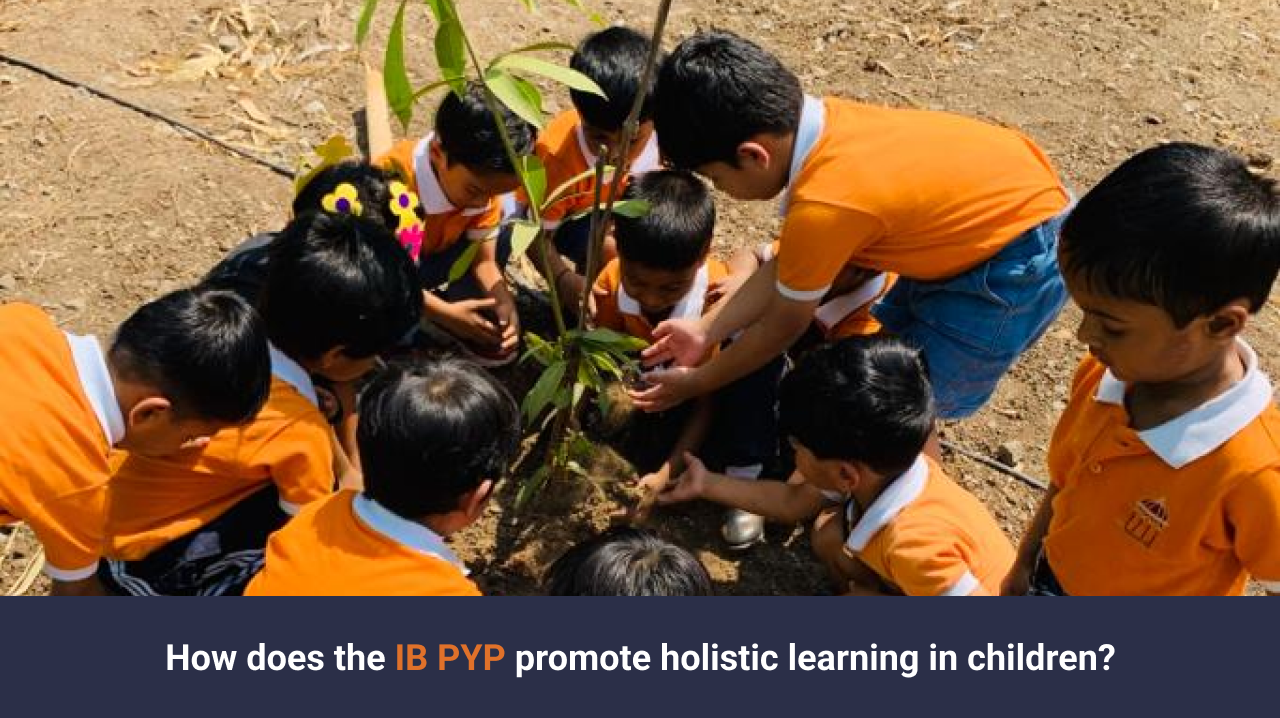
- Inquiry-based learning: Children ask questions, explore ideas, and discover answers instead of memorising facts.
- Student-centred approach: The classroom shifts focus from teacher-led lectures to student-driven learning.
- Real-world connections: Lessons connect with real-life situations to make learning more meaningful, engaging and relatable.
- PYP Exhibition: Students showcase their understanding through projects that reflect research, creativity and collaboration.
- IB Learner Profile development: Children grow into thinkers, communicators, risk-takers and principled individuals.
At institutions like MIT Gurukul, this framework doesn’t just exist on paper, but it comes alive in classrooms.
Key Features of the IB PYP Curriculum That Support Holistic Learning
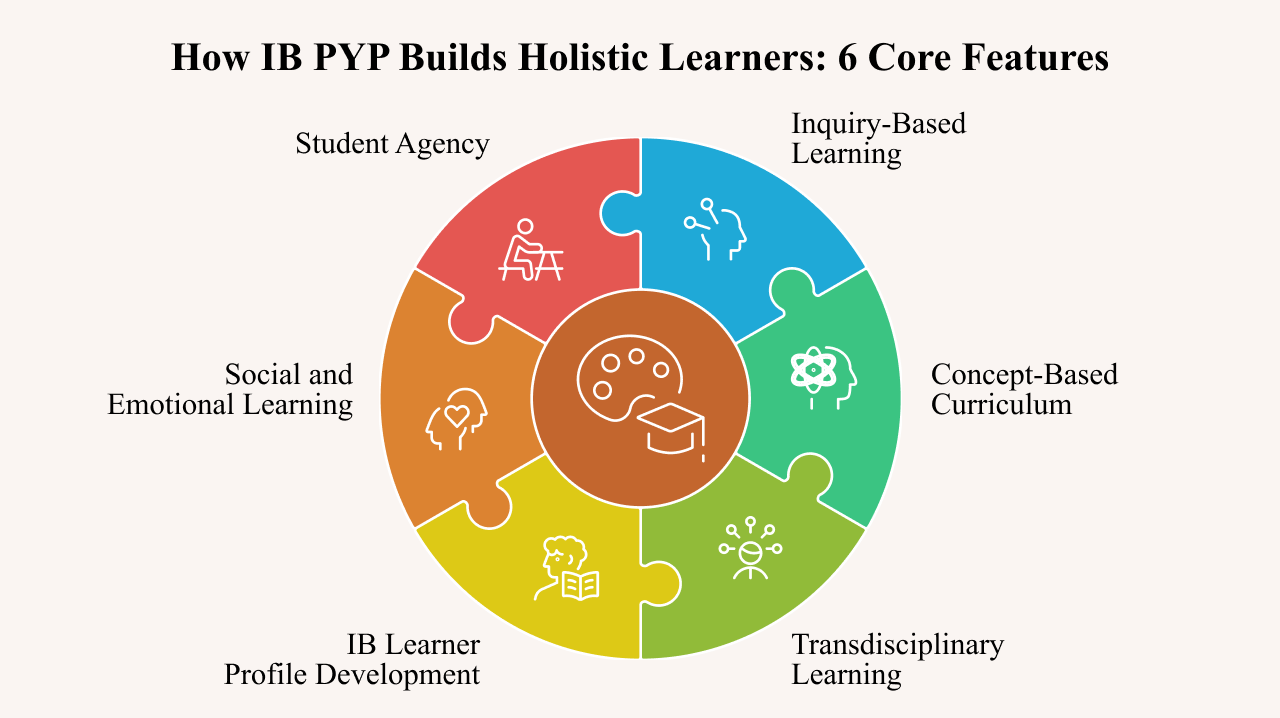
So what makes the IB PYP curriculum such a strong foundation for holistic growth? Let’s dive into the features that actually make a difference.
- Inquiry-Based Learning: Children learn by asking questions, exploring ideas and discovering answers on their own.
- Concept-Based Curriculum: Instead of isolated topics, students understand big ideas that connect across subjects.
- Transdisciplinary Learning: Subjects blend into themes like identity, environment, and society, making learning seamless.
- IB Learner Profile Development: Students grow into caring, reflective, open-minded, and principled individuals.
- Focus on Social and Emotional Learning (SEL): Strong emphasis on communication, empathy, and collaboration enhances emotional development in early childhood.
- Student Agency: Children take ownership of their learning by making choices, expressing ideas, and leading discussions.
This is why parents exploring International Primary Schools Pune often lean towards IB, as it simply feels more aligned with how children actually learn.
How Does the IB PYP Promote Holistic Development in Children?
Let’s compare how IB PYP stands apart from traditional systems:
| Parameter | IB PYP | Traditional Curriculum | Other International Curricula |
| Learning approach | Inquiry-based and child-centric | Teacher-led | Mixed approach |
| Emotional development | Strong focus on SEL | Limited emphasis | Moderate |
| Skill development | Creativity, communication and collaboration | Academic knowledge | Balanced |
| Global awareness | Strong international-mindedness | Mostly national focus | Moderate |
| Assessment style | Continuous, observation-based | Exams and tests | Mixed |
Here’s the real takeaway: IB PYP doesn’t treat children as passive learners. It treats them as active participants.
For example, instead of simply teaching environmental science, a class might explore: “How can we reduce waste in our community?” Students research, discuss, collaborate, and present solutions. That’s not just learning, but that is real-world thinking in action.
Why is Holistic Learning Important in Early Childhood?
Why does holistic learning matter so much, especially in the early years? Here’s why:
- Early Brain Development: Research shows that nearly 90% of brain development happens before the age of 5. These early years shape how children think, learn, and interact for life.
- Importance of Social-Emotional Skills: Children with strong emotional intelligence perform better academically and socially. This is where emotional development in early childhood becomes critical.
- Future-Ready Skills: Global studies consistently highlight creativity, critical thinking and collaboration as essential future skills.
- Parental Preference for Well-Rounded Education: More parents now prioritise balanced growth over rote learning.
Holistic education is not a luxury anymore; it is a necessity. Children need environments that nurture curiosity, resilience and emotional intelligence alongside academics.
What Makes MIT Gurukul Stand Out?
Many schools adopt IB. But how they implement it makes all the difference. At MIT Gurukul, the approach feels intentional.
- Classrooms encourage discussion and not silence
- Teachers guide, rather than dictate
- Students explore ideas, not just complete assignments
- Emotional well-being gets as much importance as academics
MIT Gurukul positions itself as a strong choice as it perfectly blends structure with flexibility, something every child needs. At MIT Gurukul, your child doesn’t just learn, but they explore, question and grow every day. Take the first step towards a future-ready education. Book a campus visit today and experience the difference firsthand.
Final Thoughts
Children don’t just need education. They need the right kind of education. The IB PYP curriculum doesn’t aim to create toppers. It aims to create thinkers, problem-solvers and emotionally aware individuals. And in a world that is constantly changing, that matters more than ever.
FAQs
1. What age group is the IB PYP designed for?
The IB PYP is designed for children aged 3 to 12 years, covering pre-primary to Grade 5. It focuses on building foundational skills during early development while supporting both academic growth and emotional development in early childhood.
2. How does the IB PYP differ from traditional primary education systems?
The IB PYP focuses on inquiry-based, student-led learning; while traditional systems rely on teacher-led instruction. It prioritises conceptual understanding, real-world application and holistic growth rather than memorisation and exam-based performance.
3. What role does the PYP Exhibition play in a student’s learning journey?
The PYP Exhibition acts as a culminating project where students showcase their learning through research, collaboration and presentation. It builds confidence, communication and critical thinking skills for reflecting the true essence of the IB PYP curriculum.
4. Is the IB PYP suitable for children planning to continue IB in higher grades?
Yes, the IB PYP provides a strong foundation for continuing into the IB MYP and Diploma Programme. It builds essential skills like inquiry, analysis and independent thinking to make transitions smoother and more effective for long-term academic success.