

Choosing the right school board is not just a checkbox decision; it is a whole vibe. It shapes how students think, learn and even dream about their future. If you are a parent exploring options or a student trying to figure out what fits best, you have probably come across two major players: the International Baccalaureate curriculum and the CBSE board.
Both are popular choices, especially when it comes to CBSE schools in Pune and IB institutions across the city. But here is the catch: they are not even playing the same game. While the IB approach focuses on global exposure and inquiry-based learning; CBSE leans into structure, clarity and exam readiness.
So naturally, parents comparing the IB programme and the best CBSE schools often ask: Which one actually works better? Let’s break it down.
What is the IB Curriculum?
The International Baccalaureate curriculum is not just about textbooks; it is about understanding the why behind everything. It is designed for students aged 3 to 19 and builds a strong foundation for global learning. Here’s how it works:
1. Programme Structure
The IB system includes:
- Primary Years Programme (PYP)
- Middle Years Programme (MYP)
- Diploma Programme (DP)
2. Inquiry-Based Learning
Students don’t just memorise, they question, explore and discover concepts on their own.
3. Concept-Driven Approach
Instead of focusing only on subjects, IB connects ideas across disciplines.
4. Skill Development Focus
It builds:
- Critical thinking
- Research skills
- Communication abilities
5. Global Perspective
Students learn to think beyond borders, cultures, and perspectives.
6. Continuous Assessment
Forget last-minute cramming. IB uses projects, presentations, and internal assessments throughout the year.
In short, the IB programme prepares students not just for exams but for life.
What is the CBSE Curriculum?
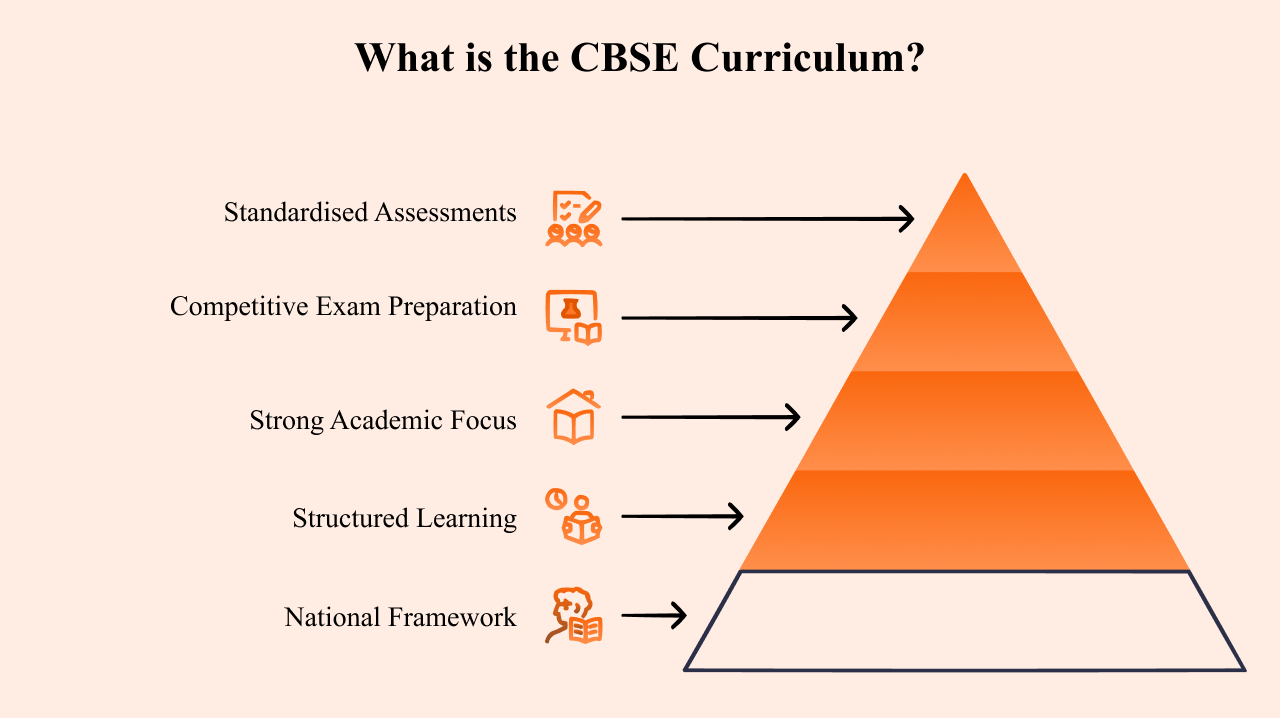
Now let’s talk about CBSE, the OG choice for many Indian families. You will find some of the best schools in Pune CBSE following this curriculum, and for good reason. Here is what defines CBSE:
1. National Framework
Governed by the Central Board of Secondary Education, the CBSE curriculum follows a standardised curriculum across India.
2. Structured Learning
CBSE curriculum offers a clear syllabus, defined textbooks and a systematic approach.
3. Strong Academic Focus
Emphasis on:
- Mathematics
- Science
- Languages
4. Competitive Exam Preparation
Designed to align with exams like JEE, NEET and other entrance tests
5. Standardised Assessments
Board exams play a major role in evaluating student performance
CBSE keeps things clear, focused and goal-oriented and it is perfect for students aiming for traditional academic success in India.
IB vs CBSE Schools in Pune: A Detailed Comparison
Let’s put things side by side for better clarity:
| Parameter | IB Schools | CBSE Schools |
| Learning Approach | Inquiry-based and experiential | Structured and teacher-led |
| Curriculum Flexibility | High | Limited |
| Skill Development | Critical thinking, research and collaboration | Exam-oriented knowledge |
| Global Perspective | Strong international exposure | Mostly national focus |
| Assessment Style | Continuous and project-based | Standardised exams and boards |
So yeah, the difference is pretty clear – IB focuses on how you learn, while CBSE focuses on what you learn.
Why Are Parents in Pune Comparing IB and CBSE Schools?
This is not just a trend; it is a real shift in how families think about education.
1. Rising Demand for International Education
The international baccalaureate curriculum has expanded rapidly, with IB programmes are offered in over 160 countries worldwide, highlighting their strong global presence and recognition. In India too, the number of IB schools has steadily grown over the past decade, especially in urban cities like Pune.
2. Competitive Exams vs Global Opportunities
Families aiming for IITs or medical colleges often prefer CBSE schools because the syllabus aligns with entrance exams like JEE and NEET.
On the flip side, students planning to study abroad lean towards the IB programme which universities worldwide recognise and value.
3. Focus on Skill-Based Learning
Modern workplaces demand more than marks. According to global education and employment reports, employers prioritise –
- Critical thinking
- Communication
- Problem-solving
The international baccalaureate curriculum strongly aligns with these future-ready skills, making it an attractive option.
Education today is not just about academic excellence; it is about preparing students to adapt, think independently and thrive in a global environment.
Final Thoughts
Choosing between the International Baccalaureate curriculum and CBSE schools is not about picking the better option; it is about choosing what fits your child’s future vision.
If your child thrives on curiosity, enjoys exploring ideas and dreams of studying or working globally, the IB programme offers a dynamic and future ready pathway. But if your focus leans towards strong academic foundations, structured learning and cracking competitive exams, the best CBSE schools provide a solid and reliable route.
At MIT Gurukul, the focus goes beyond boards and textbooks. The goal is simple to help every student discover their strengths, build confidence and grow into well-rounded individuals who are ready for whatever comes next. The right education is not just about where you study; it is about who you become.
FAQs
1. Which is better between IB or CBSE for students in Pune?
IB is suitable for students who aim for global exposure and holistic learning. CBSE works best for those students who focus on structured academics and competitive exams. Also; IB encourages independent thinking and creativity and CBSE strengthens conceptual clarity and discipline that help students to build a strong academic foundation for future growth.
2. Is IB more difficult than CBSE?
IB is not necessarily harder; it is just different. It focuses more on research, analysis, and continuous assessment rather than memorisation. Students often spend more time on projects, presentations and real-world applications, which can feel challenging initially but gradually build confidence, a deeper understanding and long-term academic skills.
3. Which curriculum is better for studying abroad?
The IB programme is widely recognised by international universities and usually preferred for global education pathways. It develops the required essential skills such as critical thinking, research and communication that align with international academic expectations and admission processes.
4. Are CBSE schools better for competitive exams like JEE and NEET?
Yes. The syllabus in CBSE schools aligns closely with these exams, making preparation more straightforward. The curriculum focuses on core subjects, problem-solving techniques and conceptual clarity which are crucial for cracking national-level entrance exams and achieving strong performance in highly competitive environments.