


Benefits of Drawing for Children’s Development

Drawing for Children’s Development Shyness, hesitation, and unwillingness to talk are some of the most common aspects that we notice in children. It can be quite difficult to break that barrier, and that is where drawing plays a significant role; it is more than just a fun activity and has multiple benefits that add to their overall development in the long run. The most amazing benefits of drawing relate to children’s increased ability to transform their creative and imaginative ideas on paper. In addition, it improves their motor skills. Benefits Of Drawing For Children Finer Motor Skills Education is ineffective until and unless it is holistic and engages children in the active learning process. Drawing is one of the most significant and popular ways to engage students. A popular misconception suggests drawing is merely to pass the time and a leisurely activity; however, it has multiple benefits and significantly impacts their finer motor skills. For instance, when they draw geometrical shapes, designs and patterns, it helps to improve their hand-eye coordination and motor control. In fact, it provides immediate visual feedback, allowing children to improve their technique and get the desired result. Boosts Creativity and Imagination Young children are in the process of developing their literary and vocabulary skills, so it might be a little difficult to express themselves in words. On the other hand, one of the most crucial advantages of drawing is that it gives them a platform to express themselves. It improves visual thinking skills, which expands their imagination It increases their ability to recognise patterns. Improved Cognitive Development Engaging in drawing sessions opens their mind to various possibilities; for example, combining two colours leads to creating a new one and develops their visualisation power. Furthermore, the benefits of drawing for students ultimately result in cognitive development. As a result, they can visualise whatever they are asked to draw or want to draw and present a unique and individualised picture. Also Read: > The Art Scenario at MIT Gurukul > Five Best Ways to Make Learning Fun and Exciting for your students > 6 Benefits of Outdoor Play For Kids Emotional Expression and Communication Children are sensitive, vulnerable, and easily affected; therefore, it becomes hard for them to communicate their feelings. While some may cry until they get proper attention, others tend to keep quiet, but drawing can be their medium to express their feelings. Furthermore, that is where we can find the most critical benefits of art, wherein children draw a picture to indicate their turmoil, happiness, sadness, fear or anger. Patience and Persistence Whether drawing a house, a tree, or anything else, they know that creating something beautiful or what they have in mind requires focus. It’s not just being mindful about not letting the colour go beyond the outline of the drawing. Rubbing the outline and redrawing it until they get the desired result; in effect, it teaches them patience and persistence. Self-esteem and Confidence The traditional education system attempts to mold all children into ideal students whose ultimate achievements would be reflected in their academic results. However, all children are different, and drawing provides a platform to express individuality. Moreover, noteworthy benefits of drawing as a hobby include elevated self-esteem and confidence, allowing one to celebrate their uniqueness. Consequently, it leads to taking an interest in their academics, ultimately improving their overall performance. In Conclusion, Drawing has multivarious benefits and more than just co-curricular or pass-time activities; therefore, MIT Gurukul emphasises drawing classes. Furthermore, it encourages drawing as a primary part of curricular activities, helping to improve student’s confidence and imagination.
Human Body Parts Names In English With Images | Human Body Diagram

Introduction We’re excited to take you on a fascinating tour into the complex world of human body parts! For pupils, comprehending the amazing mechanics of our bodies is not only intriguing but also essential to gaining a comprehensive understanding of biology. Imagine being able to understand the complexities underlying each pulse, each breath, and each eyeblink. This website strives to serve as your comprehensive reference, presenting an in-depth examination of the amazing parts of the human body together with colorful pictures and diagrams. Join us as we set out on an illuminating journey to discover the wonders that make us who we are, whether you’re an inquisitive student or an aspirant medical professional. What Is the Human Body? The complex human body, made up of cells, tissues, organs, and systems, functions in unison to sustain life. Understanding its components is important for healthcare and advantageous for everyone’s general well-being. Understanding human anatomy enables smart decisions for a healthy existence amid rising health awareness. Bones In the Human Body The skeletal system is the basis of our physical existence. The human skeleton, which consists of 206 different bones, gives the body form, protects the organs, and allows for mobility. The sturdy femur and the delicate inner ear bones for hearing both play a crucial role in our everyday activities. A Glimpse of Human Body Parts Names With Images 1. Head and Neck Skull: The brain’s protective covering, which guards our most critical organs. Eyes: Our sense of vision helps us recognize colors, forms, and movement in the environment. Nose: The nose is the organ that gives us the ability to smell and flavor. Mouth: The place where digestion starts with the chewing motion and saliva production that prepares food for future digestion. 2. Chest and Abdomen Heart: The muscle pump that powers the circulatory system that distributes nutrients and oxygen throughout the body is the heart. Lungs: Essential organs that allow humans to breathe and maintain life by exchanging oxygen. Stomach: A muscular pouch where food digestion takes place, the stomach uses acid and enzymes to break down the meal. Liver: Performs vital metabolic and detoxifying tasks that are needed for preserving body equilibrium. 3. Arms and Hands Shoulders: The joints that link the arms to the body and enable a variety of arm motions. Biceps and Triceps: Muscles make the arms strong and flexible, making lifting and pushing easier. Hands: Dexterous tools with complex touch sensations that are useful for activities demanding fine control of movement and sensory awareness. 4. Pelvis and Legs Pelvis: A basin-shaped structure that connects the legs and supports the spine, distributing weight and ensuring stability. Hips: Ball-and-socket joints, which enable motions like walking, running, and leaping, are essential for lower body mobility. Thighs: Leg-movement and stability-supporting muscles in the thighs that help in standing and walking. Feet: Comprised of bones, muscles, and ligaments that support our body weight, feet are complex structures that provide movement and balance. Human Body Diagram Here is a simplified representation of the human body that shows the main body components and where they are situated. This figure is a helpful place to start when trying to understand how the many components of the human body are organized. [INSERT_ELEMENTOR id=”5216″] Conclusion The human body is proof of the wonders of nature’s engineering. This extensive introduction to human body parts has given us a peek at the many different pieces that go into making us who we are. We may better enjoy the symphony of life that plays within us if we are aware of the names, functions, and relationships of different bodily components. Explore each category in further detail, and learn about the mechanics that underlie their operations. Remember that this information is a path to a better, more informed existence, whether you’re an aspirant healthcare professional, an inquisitive student, or just someone eager to comprehend the wonders of your own body. FAQs Accordion #1 Lorem ipsum dolor sit amet, consectetur adipiscing elit. Ut elit tellus, luctus nec ullamcorper mattis, pulvinar dapibus leo. 1. How many body parts are in the Human body? The human body contains 78 organs. 2. How do muscles work together with bones? Tendons connect muscles to bones, allowing muscles to contract and pull on bones to move the body. 3. What role do the lungs play in breathing? The body can inhale oxygen and release waste gases thanks to the lung’s ability to exchange carbon dioxide and oxygen. 4. What are the four types of human body? 5. What is the function of the skin? The skin acts as a barrier, controls body temperature, and contains sensory receptors that allow people to feel touch, pain, and temperature.
IB Schools In Singapore VS IB Schools In India: Which Is Best.

The advent of IB Schools in India has challenged the post-colonial educational system in this diverse country. The International Baccalaureate education system is more challenging to the students when compared to schools with different syllabi. The challenging nature of IB schools gives the students more opportunities to use their critical thinking skills rather than just memorising the content from the textbooks. Other than the challenging curriculum, IB Schools focus on their students’ holistic development in sports, cultural activities and soft skills. With so many options available to parents, it is important for them to understand what every school offers and its benefits. It is a common notion that the education system in India could be better when compared to other developed or developing countries. People have recognised this gap and have started enrolling their children on international schools and international boarding schools. We are often informed that the education system in Singapore is regarded as the best and tends to draw comparisons between the two countries education systems. In this article, we understand the difference between Indian Schools in Singapore, more specifically, IB Schools in Singapore and IB Schools in India. We compare the two education systems using a few parameters to give a proper understanding of the two countries. Here are a few parameters and the differences between Indian IB Schools and International Baccalaureate Singapore Schools. Parameters IB Schools In Singapore IB Schools In India Facilities The facilities in terms of infrastructure in Singapore are advanced and equipped with modern technology. IB Schools have a unique cultural take on infrastructure. The schools here accommodate many diverse cultures and are one of a kind. These days, schools in India too are equipped with state-of-art technologies and do not compromise on the safety of their students, as most IB Schools also double as boarding schools. Geographic Variety Singapore is a multi-cultural society which plays a significant role in defining the geographical variety of the schools. The schools here are primarily found in cities and towns. The vast area of India allows IB Schools to experience establishing themselves in different landscapes. However, IB Schools are mostly found only in Tier 1 cities. This situation is now changing with more schools established across the country. Affordability The overall cost of living in Singapore is more expensive when compared to India, which makes education expensive as well. Education in the best IB Schools in Singapore is costly compared to the best IB schools in India. International Schools in India are far less expensive in India when compared to Singapore. Parents can enrol their children in the best international schools in Pune at a lower cost when compared to the best IB schools in Singapore. Quality Of Education The quality of Education in Singapore is the best in the world. Education quality in IB Programee Singapore Schools is impeccable, which makes the students independent and ready to face the real world. The quality of education in India could be better compared to Singapore, but it is taking giant strides towards improving aspects of education that were neglected in the past. We hope this article has helped you understand the difference between IB Schools in Singapore and IB Schools in India.
How To Speak English Confidently.
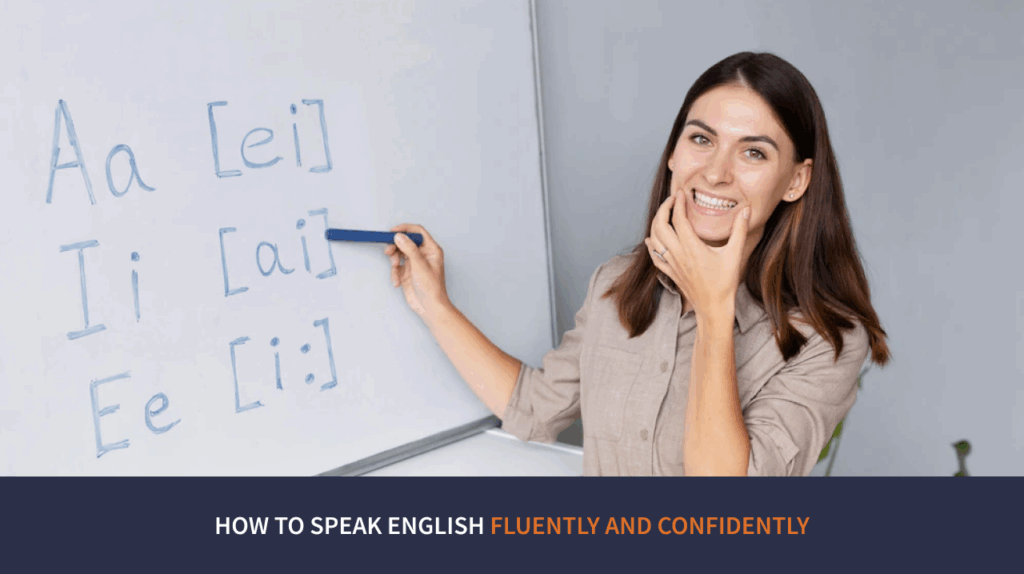
Clarity in speech, point of view and ability to express oneself without hesitation are some of the core elements of a good speaker. However, to achieve that desired feat of becoming a good speaker, one must master the language they want to communicate in. English being one of the most spoken languages worldwide, has been the most in-demand mode of interaction for the longest time. Therefore, institutes and organisations favour those who are adept at speaking fluent English. Besides, fluent English communicators who have a good presence of mind and problem-solving skills stand out from the rest. How to Speak Confidently in Public? There is a huge difference between speaking in front of a small group of people and speaking in front of an audience. The prerequisites vary; hence it is only natural that one may become nervous. The key is to practice, pause, identify challenges, and relax while speaking. Before attempting to speak in public, one must learn how to talk confidently in general. It is essential to calm your nerves before speaking in public; you can try breathing exercises or listen to music. Fumbling or speaking too fast are signs of anxiety and nervousness. If you realise that you are doing either of the two, then take a pause and breathe. Also, you can strategically plan your pauses, giving your audience time to grasp and understand your words. Practice effectively using useful methods, such as recording yourself talking and checking your expressions and gestures. Maintain eye contact with the audience and use gestures to emphasise your points. One of the best ways to reduce your nervousness while speaking publicly is by using real-life incidents from your life, which will help you direct your emotions at that moment. Avoid sounding like you are reading from a script. Establish a connection with your audience by including stories from life, including your hardships, struggles and achievements, helping them relate to your speech and presentation. Apart from the nervousness that most people may feel, there are challenges unique to each individual that they must identify and overcome. Incorporate humour in your speech, which does not necessarily mean making fun of others, which can also sound offensive. Also Read Who Invented Zero Effects Of Sleep Deprivation For Students Importance Of Parent Teacher Meetings At School Advantages of Speaking Confidently and Clearly in Public The biggest advantage of public communication skills for students lies in personal growth, including increased confidence levels and critical thinking. Helps in becoming great listeners. Provides personal satisfaction in being able to speak in front of a crowd. It boosts self-esteem. It empowers one to voice their opinions. Five Useful Tips for Students to Improve Communication in Public Be an Active Listener While learning how to talk confidently, it is equally important to ‘’listen’’ and not just ‘’hear’’. And that is where active listening matters the most; that helps to observe verbal and non-verbal messages. Know Your Audience You must be aware of the kind of people who will comprise the audience, depending on which you must prepare the presentation or speech. Take Part in Debates Mock tests help us prepare for the actual tests; similarly, you must participate in events such as debates, which will help polish your communication skills. Prepare Well Research and collect accurate information about any particular topic about which you will give a speech. Incorporate the Feedback Teachers will provide feedback about your speaking skills, which you must observe and adapt to improve and eliminate mistakes. Advantages of Good Social Communication Skills Helps Students Good social communication skills enable students to collaborate with their peers. It motivates them to share their perspectives and keep an open mind to what others say. It increases their self-esteem. It encourages them to seek knowledge so that they can engage in valuable exchange of information. It nurtures independent thinking, helping to develop a strong sense of self. In Conclusion, Speaking confidently in English publicly has varied advantages, such as improved self-confidence and critical thinking. That is why teachers at Gurukul World School emphasise extempores and debates that help boost communication skills.
Importance of Skill Development in Education

Introduction The idea of skill development has become increasingly popular in the dynamic world of contemporary education as a means of launching pupils beyond the confines of traditional academic learning. Although traditional education undoubtedly gives students a plethora of information, skill growth equips them with real-world proficiencies and talents that are essential for succeeding in today’s complicated environment. There is much more to education than just reading textbooks and attending lectures. It acts as a link between academic understanding and practical implementation. The importance of developing students’ talents in the classroom cannot be overstated. It equips pupils with the skills necessary for overcoming problems, navigating hurdles, and successfully understanding the material. Collaboration, effective communication, problem-solving ability, and digital literacy are now considered fundamental skills for both personal and professional growth. In-depth discussions of the particular high-demand talents, an examination of the many facets of skill enhancement, and an explanation of the mutually beneficial link between schooling and the acquisition of practical proficiencies are all covered in this guide. Why is skill development important in education? Skill development is the backbone of modern education. It goes beyond the traditional rote learning and helps students to use knowledge in real world situations. While textbooks teach concepts, skill development ensures children can think critically and communicate effectively. It nurtures creativity, teamwork, problem solving and leadership qualities that matter far more outside classrooms. In today’s evolving learning space, learners who innovate and collaborate can lead with confidence. When schools prioritise skill-building; they prepare students not just for exams but for life. In essence, skill development ensures education shapes future-ready individuals who learn and grow for success in dynamic and competitive environments. How Do You Develop Your Skills? Skill development is the process of acquiring new knowledge and honing existing abilities in a given industry. It is essential to learn, practice, get feedback, adapt to change, solve issues, communicate well, manage your time well, and be persistent. This procedure is crucial for growing personally, making professional progress, and staying current in a quick-paced atmosphere. It comprises practice, formal education, and keeping up with current information. Developing new skills, polishing current ones via experience, and maintaining motivation are essential elements. People may overcome challenges, improve their proficiency, and succeed in several areas of life by honing their abilities. What Does Education Mean by Skill Development? Education for skilling involves the process of expansion, which helps students become more employable and prepares them for lifelong learning. Students require practical skills in addition to academic knowledge to deal with the demands of the contemporary work environment. These skills may fall under a variety of categories, including cognitive, social, emotional, and practical skills. The development of skills is a crucial component of education because it equips people with the resources they need to deal with issues in life and be successful in several fields. Key elements of educational skill development include 1.Cognitive Skills: These include thinking, problem-solving, and critical analysis. Developing cognitive skills helps people understand information, make wise decisions, and adapt to new situations. 2.Communication Skills: Effective communication skills are crucial in both personal and professional situations. This calls for the ability to communicate ideas, listen intently, and communicate both orally and in writing. 3.Innovation and creativity: People who are encouraged to be creative are better equipped to think creatively, develop original ideas, and find innovative solutions to problems. 4.Social and emotional skills: These involve identifying and managing emotions, forging wholesome bonds, and collaborating with others. They are necessary for both effective individual and group functioning. 5.Digital literacy: In today’s digital age, understanding technology and online platforms is essential. Understanding how to use digital tools, being aware of online safety, and responding to quickly evolving technology. Why is Skill Development Important in Student Life? 1.Enhanced Employability: Students who have relevant skills are more appealing to employers, providing them an advantage in the employment market. 2.Critical Thinking: The development of skills encourages critical thinking, empowering pupils to assess situations and arrive at wise judgments. 3.Adaptability: In the ever-evolving world of today, flexibility is essential. Students can adapt to new technology and changing sectors with the support of skill development. 4.Confidence Boost: Gaining proficiency in skills gives pupils more self-assurance, which motivates them to approach new difficulties with a positive outlook. 5.Life Skills: Essential life skills like time management, financial literacy, and effective communication are taught through skill advancements. 6.Entrepreneurial Spirit: Fostering abilities may stoke an entrepreneurial spirit and encourage pupils to innovate and create new possibilities. Soft Skills: The Foundation of Success 1.Communication Skills: It’s important to be able to communicate effectively in all aspects of life. Students’ capacity to communicate ideas clearly and listen intently is improved via skill evolution. 2.Leadership and Teamwork: Students who learn these skills are better prepared to operate in diverse teams, a necessary skill in today’s business. 3.Creativity and Innovation: Students can think creatively and innovatively in a variety of sectors thanks to skill growth. 4.Problem-Solving: Teaching kids problem-solving techniques gives them the confidence to overcome obstacles, a talent that is useful in any field. Skill Development in Education Systems 1.Integrating Skills in Curricula: Schools should include the skill of education for expansion in their curricula to provide students exposure to both theoretical and practical knowledge. 2.Extracurricular Activities: Extracurriculars offer a great setting for developing skills. Schools must provide a variety of activities that accommodate all ability levels. 3.Teachers’ Role: Teachers are essential to the development of skills. They should help students discover their talents, support them in their endeavors, and mentor them as they hone their abilities. How Can Parents Help in Their Child’s Skill Development 1.Encouragement: Parents should inspire their kids to pursue a variety of passions and interests. 2.Support: Providing tools and assistance for activities that develop skills, like music lessons or coding classes, may have a big impact. 3.Balanced Approach: A child’s growth trajectory is ensured by balancing academic achievement with skill growth. 4.Setting Examples: Parents should lead by example by pursuing lifelong learning and continuously improving their
International Schools In Singapore Vs. International Schools In India
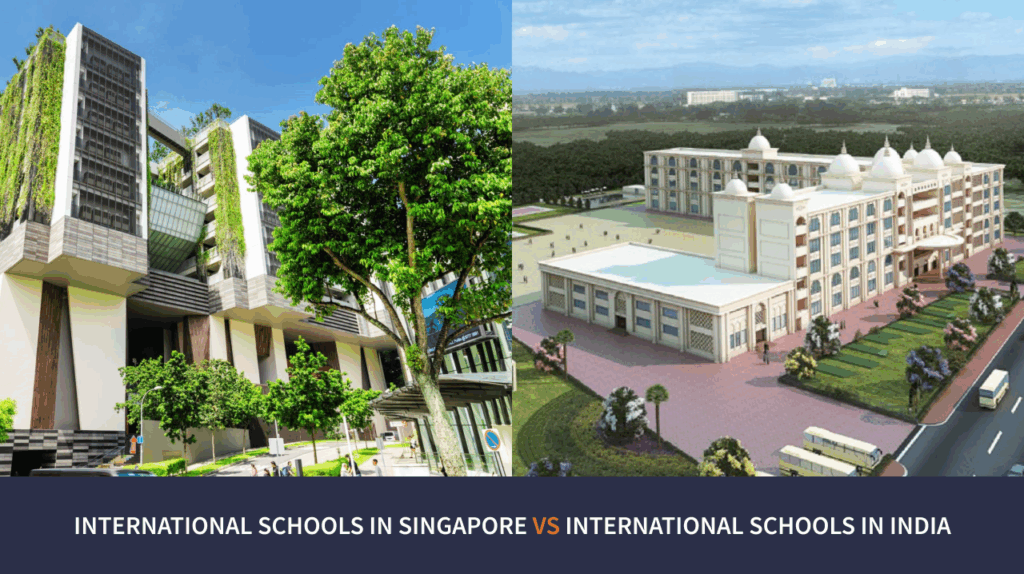
The world is a global village that thrives on interconnectivity and innovation; therefore, the demand for competent and skilled individuals is ever-increasing. That is where high-quality international education is a critical factor that ensures to develop well-rounded students who can contribute to society and the nation as a whole. But does that mean students need to be sent off abroad for higher studies? For instance, the top international schools in Singapore are renowned for facilitating top-notch educational facilities. On the other hand, India has surpassed its neighbouring countries in elevating education standards. Therefore, it is only fitting to briefly examine the key aspects of international schools in both Singapore and India: International Schools in Singapore International Schools in India Cost of Education The best international schools in Singapore’ annual fees can range between $14,000-$50,000. Besides, including various technology, development, and standard miscellaneous fees can amount to $60,000. The annual fees differ from school to school; irrespective of the amount, they all strive to maintain the highest benchmark of quality international education. For instance, international schools in Pune comprise annual fees ranging from 184,800 to 677,200 (in INR). Curriculum Diversity In the primary school stage level, students are introduced to subject-based learning, where students learn through subject-based learning. Furthermore, they learn subjects such as mathematics, languages, science, art, music, and social studies. As they progress to higher classes, they learn through (the Common Core Curriculum) which comprises critical human and emerging digital skills. The curriculum of international schools, such as the IB schools in Pune, is diverse and has a holistic approach. Furthermore, the schools implement a broad, balanced, conceptual, and connected curriculum. Cultural Exposure Foreigners account for nearly 30 per cent of the total residential population. Therefore, the IB schools in Singapore create an enriching classroom environment. As a result, students can explore the diverse cultures of their classmates. Inculcating tolerance and mutual respect for different cultures is one of the primary goals of primary schools in Pune. Language Options English-based bilingual education system is central to international schools in Singapore. English is the medium of instruction, while the official mother tongue of each student – Mandarin Chinese for Chinese, Malay for Malays and Tamil for South Indians – is taught as a second language. English is the medium of instruction in most international schools in India. However, they also offer various foreign languages like French, Spanish, German, Japanese etc. Teaching Faculty Highly qualified teachers provide individualized attention and ensure students acquire global knowledge. International school teachers continuously update themselves with the latest technology and pedagogy. No wonder Vishwashanti Gurukul World School focus on utilising appropriate methodologies depending on the student’s requirements. Extracurricular Activities Nurturing and developing students’ talents through extracurricular activities is a unique strategy. So, the schools conduct various sports competitions, debates, music and artistic events. Curricular activities such as coding events and talent showcases are essential to the academic process. In addition, boarding schools affiliated with international school boards ensure proper care of students. In Conclusion, International schools in India invest in well-structured curricula and pedagogies that aim to prepare future-ready students. And that is where the Gurukul World School has made a tremendous contribution in terms of facilitating students to different cultures and helping students gain a deeper understanding of global diversity.
Parent’s Guide To School Admission Procedure In Pune

Finding the right school for your kids can be a grueling task; with the admission procedure being tedious and complex, the entire process can be overwhelming. We at Vishwashanti Gurukul World School believe in making the admission procedure easy for parents to focus on getting their children a world-class education. In this article, we talk about how our school has streamlined the application process and the entire admission process. As an international school, we have a step-by-step procedure for your child’s admission, and each step is carefully crafted so that you, the parents, can get your queries resolved at every stage. Also Read The Finest Practices Followed by Best Preschool in Pune to Make Communication Effective With Children. Can Teachers and Parents Work Together to Facilitate the best learning Experience for Kids. 5 Reasons Why You as a Parent Should Consider IB Education for Your Child Pre-Admission Procedure Interaction With The School Admission Office – Parents are requested to meet the administrators at the school’s office. This step ensures that all the details regarding the school’s timings, semesters, etc, are provided to the parents. Submission of Enquiry Form – The parents must submit an enquiry form, the ward’s birth certificate, and the latest academic report card to the school’s admission department. Written Test – As a top IB School, we like to know our student’s academic understanding even before they enrol with us. The written test is for students enrolling to grade six and above. The test will contain Mathematics and English. An aptitude test will be conducted after the written test, for which the date will be mentioned on the registration form. Meeting With The Coordinator or The Principal – The teachers and the management at Vishwashanti Gurukul World School believe that a parents teacher meetings even before the child’s first day of school are crucial. This step helps the teachers understand the student and the family for a smooth transition. Post-Admission Procedure After meeting with the principal or the coordinator, parents are expected to follow the following steps to complete the school admission and application processes. After the admission is granted, the parents should pay the fees and submit the documents mentioned below. The fee charged is only for the academic year. Vishwashanti Gurukul World is also a boarding school which is why the parents need to provide the latest medical certificate and fill out a medical form. Apart from a medical form, the parents must fill out the admission form. The school requires an indemnity bond to be submitted by the parents, along with a computer access agreement. Students enrolling in classes nine and eleven should fill out a subject choice form. The application will be accepted only after the above-mentioned forms are submitted. The fees can be paid through WIRE/RTGS/NEFT/ECS. Parents are requested to provide the correct and complete name of the student while paying the fees. The proof of payment should be emailed to admissions@www.www.mitgurukul.com The fee, once paid, is non-refundable. Note: Shortlist/ waiting list does not mean guarantee of admission. Parents should keep in mind that admission is subject to seat availability. The admission window for nursery students to enroll starts in January every calendar year. Kindergarten fees can be paid in two installments as per the fees policy. Primary School and High School students, i.e. students studying in grades 1 through 12, can pay their fees in four instalments as per the fees policy. Questions regarding the above steps will be clarified by the admissions office so that you can feel content at every stage without any doubts. The teachers and staff are dedicated to making the admission process as streamlined and smooth as possible. List of Documents Required for Indian Residents Current School Transcript. A transcript is a document that acts as proof of education. Parents can request this document at the present school’s office. Latest Medical Report. This document is vital during emergencies, and the parents are expected to give the latest medical certificate to the school’s administrators. 12 passport-size photographs. In the photographs, both ears of the student should be visible. Letter of recommendation from the present school’s principal or class teacher. Transfer Certificate or School Leaving Certificate (Orginal Copy). PAN Card of the parent (Photocopy). Aadhar Card of the student and the parents (Photocopy). List of Documents Required For Overseas Students Passport of the student ( Photocopy). Original to be shown at the time of verification during the admission process. Valid Visa documents of the student ( Photocopy). Original to be shown at the time of verification during the admission process. Students of Indian origin should submit their OCI or POI Card (Photocopy). FRO Documents are to be submitted. Latest Medical Certificate ( Photocopy) Transfer Certificate or School Leaving Certificate ( Orginal) Current School Transcript. A transcript is a document that acts as a proof of education. The document can be requested at the present school’s office. Recommendation letter from the present school’s principal or class teacher. 12 passport-size photographs. In the photographs, both ears of the student should be visible. We have discussed in detail the entire admission procedure and the documents required to complete the admission to Vishwashanti Gurukul World. Hope you find this article helpful! To start your child’s admission process, click here.
5 Major Parenting Challenges Most Of Parents Face

Parenting is one of the most challenging jobs in the world, no matter which part of the globe you are from. Being a parent is an acquired skill that requires impeccable judgment, expectation management,and much more. In this article, we look at five major parenting challenges most parents face and parenting tips to deal with these challenges in the most effective and efficient ways to deal with the same. We hope that the existence of this article assures you that you are not the only one facing these problems and are something parents face universally. Five Major Parenting Challenges Expectation And Reality – All of us expect our children to behave the way we have taught them to or study the way we teach them to, but in reality, our children can think on their own and adapt in their own way while facing problems independently. Peer Judgment – Parents should avoid changing their actions or parenting methodology solely on the basis of others’ opinions. This action will not only hamper your child’s holistic development but can also impair your judgment towards your child’s upbringing. Erratic Behaviour – Children throwing tantrums is one the most common problems that parents have to deal with; this issue is not only a very chaotic problem but is also one of the most emotionally draining situations. Disobedience – Children not listening to you can be frustrating and is more common than you think. Disobedience can have a long-lasting impact on parents and children as children can develop a habit of not listening, which leads to a lack of communication skills. Eating Habits – The most frustrating part of parenting young children is getting them to eat healthily. No matter how we look at it, providing our children with healthy food is one of the most essential parts of parenting. How To Overcome Parenting Challenges? Letting Go – As parents, we need to understand that our children have their own thoughts and that you cannot control everything they do. It is crucial to let your children explore things on their own and to learn from their mistakes while exploring. Empathy – It is vital that parents are empathetic towards their children. This allows the parents to think before acting harshly towards their children. Parents must also not compare their children to others; this can severely dent the child’s confidence. Consequences – Children must be made aware by their parents that all their actions have consequences, and they alone should face the consequences, whether good or bad. Talking And Showing Up – Most problems arise in children due to a lack of attention from their parents. Parents must talk to their children and understand their feelings, mental and physical health regularly. Showing up to simple things like parent-teacher meetings can go a long way./span> Healthy Eating Habits – Parents should explain the importance of healthy food for kids in a fun manner. Parents should talk to the children about how each food can help them become stronger and wiser, which might tip them towards eating healthy. With this, we hope you have the necessary understanding of how these problems are universal and the ways to mend them are simple yet effective.
Building Lifelong Skills in Pune’s International Schools

Simply excelling at academics is never enough. It is equally important for the students to equip themselves with lifelong skills to make their future highly prosperous. These Lifelong Skills for Students help them boost their overall learning process. They can also excel at whichever field they want to pursue without having to undergo any kind of hindrance in life. So how do you ensure that your kids acquire the desired lifelong skills? Well, it is the school where the kids learn all their lessons from an early age and being a parent, it is your responsibility to enrol your kids in one school that fosters lifelong learning. This will help your kids grow into responsible individuals. They will also be able to make the most out of their life. So, let us talk about some of the most important lifelong skills that are inculcated in the students by the International Schools in Pune: Also Read: * Six Tips For Establishing Good Homework Habits In Your Child * Best General Knowledge Q&A For Kids & Students * 10 Significant & Meaningful English Proverbs Helpful For Students Critical thinking: The ability to think critically is really important for students. It helps them in enhancing their problem-solving skills. They can approach every problem in life in a much better way. Critical thinking abilities can also set new boundaries for students. They can boost their self-confidence and also develop a sense of innovativeness. Communication: Knowing how to communicate properly is another essential lifelong skill for students. If they cannot communicate effectively, they will be left behind in the rat race. With proper communication skills, students can build better relationships and enjoy more productivity. Their stress level is also going to reduce considerably. Collaboration: Collaborative skills are vital for a child’s mental and emotional growth. Whether it is a classroom or workplace environment, knowing how to collaborate is important and acquiring collaborative skills can help them acquire an edge over their competitors. The students can participate in various group activities. They can also be taught their lessons in a highly collaborative manner. Adaptability: Adapting to changing situations is important in this competitive world. Once the students get to know how to deal with the changes that they face in life, they will face no trouble at all in dealing with the challenges that life throws at them. Instead, they will be able to make the most out of every opportunity that comes their way. Creativity: Creativity is another lifelong skill that can encourage students to think beyond the ordinary. It will also make them more competitive. There are multiple ways in which students can be made to work on their creative and innovative skills. They can take part in different projects and activities that require them to think creatively. They can also be part of various activities through which their innovative skills are triggered. And these are some of the primary Lifelong Skills for Students that they should master at an early. So, before admitting your kids to an international school in Pune, you must research the emphasis given by the school on lifelong skills. Only then will you be able to provide your kids with a well-rounded education
List Of Different Types Of Shapes In Maths | Images

Mathematics, geometry, and shapes have always been fascinating to learn and think about. In our everyday lives, we see the application of different types of shapes, right from the dosa we eat to the tennis ball we play with. There are many different kinds of shapes, each distinct from the other in one way or the other. Each type of shape is used in our daily lives and works in tandem with mathematics. Concepts like trigonometry can determine the heights of buildings and other structures without any tools. Finding the volume of a water tank is, again, a combination of basic mathematical operations and shapes. Knowing different types of shapes might seem trivial, but it is helpful to know their applications. In this article, we discuss the types of shapes in maths and understand how they are applied in our daily lives. What are Shapes in Maths Before we know the various kinds of shapes, it is crucial to understand what shapes mean in mathematics and general. A shape is any closed figure of angles, line segments, points, and sometimes circles. Forms can be two-dimensional or three-dimensional. Let us now understand about different shapes and their names. List of Different Types of Shapes In Maths Circle: A round shape that is equally shaped. A circle as a shape has many sub-sets and has innumerable applications. The bottle cap is a circle, and so is the tyre of a bicycle. Triangle: As the name suggests, this shape has three angles. Triangles are of many kinds, each having a different distribution of curves and are generally pointy. A slice of pizza is the most common daily object with a triangle shape. Square: Squares are the most common shapes. These shapes in maths have various applications, from a flooring tile to a container box. A square has four sides, and each size is equal. A square also has four angles. Rectangle: Hailing from the square family, the rectangle also has four sides. However, in this type of shape, the opposite sides are equal. The most common rectangle object is a Television. Pentagon: This shape has five sides. A pentagon is usually drawn with two parallel lines as a roof, two lines on the side and one on the bottom. Hexagon: A hexagon is a six-sided shape. A hexagon can be observed in honeycombs and air filters. Hexagon has many variants, making these types of shapes very unique. Octagon: An octagon is an eight-sided polygon. This shape is ornamental and can be found in jewelry and decorative items. Ellipse: An ellipse is a circle that is bulged on the sides. The bulge makes the shape not a perfect process, which extends the size of the shape. The planet Earth is elliptical, and so are convex lenses. Parallelogram: A parallelogram is close to a rectangle where the opposite sides are equal; however, the interior opposite angles are equal, unlike a rectangle where all four angles are equal. Rhombus: This shape is similar to a square as all its four sides are of equal lengths. A square has all its angles equal to 90 degrees, but in a rhombus, only the opposite angles are equal. Trapezoid: This unique shape is a quadrilateral and is two-dimensional. In this shape, there are two parallel lines. A trapezoid can have different lengths on all four sides. Kite: This shape also has four sides where only the opposite sides are equal, and these sides are adjacent to each other. The recreational object kite derives its name from this shape. Regular Polygon: A regular polygon is a shape with equal sides and interior angles. Examples of regular polygons are square and equilateral triangles. Irregular Polygon: In this shape, not all sides are equal, or not all angles are equal. Examples of an irregular polygon are a rectangle, an isosceles triangle, and a rhombus. Cylinder: A cylinder is a three-dimensional shape. This shape has two circles on the opposite sides as its base. The most common application of a cylinder is a water tank or a CNG Cylinder. Sphere: This is a solid, three-dimensional shape. It is a solid version of a circle, and its most famous application is as a ball. Cube: A cube has six square faces and is a three-dimensional shape. The most common application of this shape are playing dice. Cuboid: This shape is a three-dimensional rectangle. This shape has six rectangular faces. The common use of a cuboid is a pencil box. Cone: A cone is a solid, three-dimensional shape. This shape starts from a flat, broader base to a narrow point. Ice cream cones apply the concept of this shape. Pyramid: A pyramid is a three-dimensional shape with a polygonal base. The sides are flat triangles. The list contains different types of shapes and their names. The world of mathematics is vast and unique, making shapes enjoyable. Questions On Shapes: 1. What shape has all sides of equal length and all angles of 90 degrees? Answer: A square. 2. Which shape has three sides and three angles? Answer: A triangle. 3. What is a polygon with five sides called? Answer: A pentagon. 4. Which shape has no straight sides and all its points are equidistant from the center? Answer: A circle. 5. A shape that has a curved surface and no straight edges. Answer: A sphere.