


Top 5 Engaging Maths Riddles With Answers For Students

Critical thinking and problem-solving skills are indispensable to a student’s learning process. Critical thinking abilities allow students to improve their ability to think in the right way. They can solve problems more systematically. The students can also deal with challenges that might come their way. Inculcating critical thinking and problem-solving abilities in students will broaden their perspective and will also allow them to acquire intellectual values like precision, consistency, relevance, etc. This will further help them in their academics, and their overall confidence level will also improve to an extraordinary extent. Now the question is how exactly will you enhance the student’s problem-solving and critical thinking abilities? Well, encouraging them to solve mathematical riddles can be a great way of achieving this goal. Math riddles can help improve the decision-making skills of students. They can broaden their perspectives and look at problems in different ways. Maths riddles also help students stimulate a sense of creativity. They will be able to delve deeper into the problem to get to the root of it. This will help them to become a lifelong learner, and it will also have a direct impact on their academic performance. Here are a few sample maths riddles with answers for the students: Riddle 1: I am a shape with three sides. All my sides are equal in length. What shape am I? Answer: A triangle. Riddle 2: I have a face and two hands but don’t tell the time. What am I? Answer: A clock. Riddle 3: Which Weighs More? What weighs more: a pound of feathers or a pound of rocks? Answer: Neither. They both weigh the same – one pound. Riddle 4: What has four legs but can’t walk? Answer: A table. Riddle 5: I’m tall when I’m young and short when I’m old. What am I? Answer: A candle. Also Read: Latest (2023) Group Discussion Topics & Tips For Students How To Write An Application To The Principal Importance Of Discipline In Student’s Life Conclusion/Call to Action These are just a few funny math riddles with answers that can help students improve their learning abilities and concentration skills. So, being a responsible parent or a teacher, it is your responsibility to get your students involved in math riddles. This will improve the effectiveness of their overall learning process. The learning process will also become fun. A great way to have a constant supply of easy math riddles would be to share your riddles with your friends and acquaintances every now. That way, everyone has new riddles to solve every day. You will also be able to keep the students engaged with various riddles regularly. The students can have a lot of fun solving the riddles. Their learning process will also be a better one. Math riddles also have a big role to play in enhancing cognitive skills in students. Math riddles often require the students to use their logical and reasoning skills to solve problems. This can further improve their cognitive abilities. Successfully solving math riddles can enhance the confidence level of kids. It can also be a stress reliever for students. For a constant supply of the best math riddles, keep visiting us.
Importance of Mental Health and Self-Care for Students

The pandemic made everyone realise the importance of mental health and the impact that it can have on one’s life. Though the education system was aware of the importance of self-care even before the pandemic, the continuous lockdown and lack of social interaction significantly negatively impacted the children’s mental health. Even after the end of the pandemic, it took some time for everyone, especially students, to return to being their social selves. We as a society also realised how important it was to communicate and express our concern towards our mental health and well-being. The importance of mental health for students expands beyond their mental well-being and extends towards their physical and emotional development. What is Mental Health? Mental health is the state of a person’s mental well-being and is as important as one’s physical health. Importance of Mental Health for Students Here in this section, we discuss the importance of mental health for students. Physical Well-Being – Mental health plays a significant role in developing one’s physical health, as mental health issues prevent students and children from engaging in physical activities Emotional Well-Being – In this competitive world, emotional well-being is paramount. Stable emotional health plays a significant role in presenting oneself personally and professionally. Poor mental health can lead to deteriorating emotional well-being. Social Well-Being – Interacting with people offline and online to help improve knowledge and develop new skills essential for good mental well-being. Self-Esteem – Mental health issues lower confidence, becoming a major problem in socialising needed in this social world. Lower self-esteem in students leads to lower grades and poor social life, which can lead to poor mental health in the long run. Positive Outlook – Positive outlook and mindset is one more factor that makes a strong argument towards understanding the importance of mental health. Having a positive outlook can help students have a better social life and can help them have a better learning curve in academics. Productivity – Positive mental health can help students increase the productivity of students. Increased productivity also means efficient and effective use of time, which helps students develop discipline. Stress Dealing – Stress can be a major factor affecting mental health. It is important to manage stress for better mental health. Positive mental health can help students face stress and find ways to deal with it. Coping Mechanism – Good mental health can result in students having better judgement and can help in developing better-coping mechanisms. Clarity of Thoughts – Having clarity of thought is very crucial in a student’s life. Clarity of thought means that the students can use their time more efficiently, which is crucial given their busy schedules. Overall Health – Mental health profoundly affects the overall health of everyone and especially students who lead a stressful schedule. How to Maintain Positive Mental Health for Students? Positive Conversation – Teachers and parents can have a positive conversation with their children to understand their well-being and empathise with their situation. Assuring students of your support goes a long way in their recovery process, Physical Activity – Physical activities improve one’s physical health and can contribute towards a positive mental state. Conducive Atmosphere – Developing a conducive and safe atmosphere to counter mental health issues can be very rewarding and assuring. What is Self-Care? Self-care is a process of taking take of ourselves by ourselves. Self-care is very underrated yet effective in keeping our physical and mental health in great shape. Importance of Self-Care for Students. With the importance of mental health discussed above, let us understand the importance of self-care for students. Academic Pressure – For students, academic pressure can be a major factor that affects their mental and emotional well-being. Taking enough self-care by getting enough sleep, physical activity and taking breaks from studies is a great way to relieve academic pressure. Mental Well-Being – Knowing the importance of self-care is very important for a student’s well-being. Taking care of themselves helps them recognise their mental health state and gives them the ability to communicate in a better way. Social Well-Being – Being able to communicate and socialise is a major part of being a student, and with self-care, the students’ confidence increases, which lets them perform better. Physical Health – Self-care and discipline help in having better overall physical health. Lifelong Habits – A self-care routine develops a lifelong habit that helps develop discipline, which further helps the student’s mental health. Also Read: How to Increase Memory Power 5 Smart Ways to Incorporate Problem-Solving and Critical Thinking Skills in Students 10 Harmful Effects of Junk Food for Kids | How to Avoid Junk Food Top 10 Qualities of a Good Leader Every Student Learn & Embrace How to Maintain Positive Mental Health for Students? Routine – Having a routine is a great way to develop self-care habits. Get Enough Sleep – Getting a good night’s sleep goes a long way while trying to cultivate a self-care routine. Communication – As parents and teachers, it is vital to communicate with the students, teach them the benefits of self-care, and guide them in developing better practices. Now that we have discussed all the aspects relating to the importance of mental health for students and self -care it is paramount that parents and teachers make it easy for their children to express themselves without any fear or discomfort.
First Year at Boarding School: Tips for a Smooth Transition | MIT Gurukul
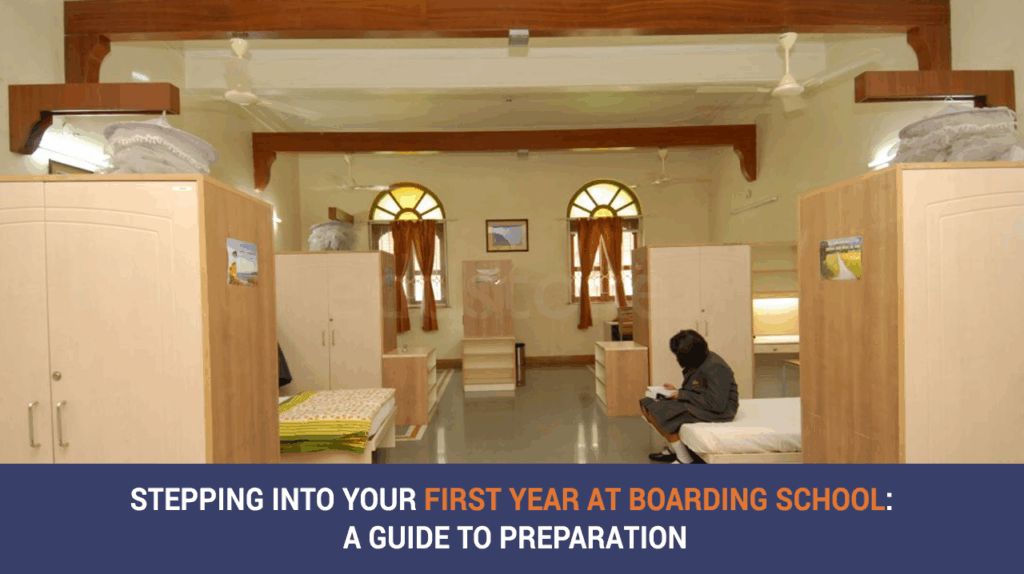
Away from home and parents, going to a new place to study and live, the mere thought itself can be intimidating for many children and teens. Everyone might not be as confident and capable of getting along with others; hence, studying in a boarding school can be difficult for them. However, boarding schools such as the Vishwashanti Gurukul World School have a distinguished environment that ensures comprehensive development and self-motivation. But that is not the only reason the school has succeeded in making a name for itself; let us look at its overall facilities. Boarding School (Vishwashanti Gurukul World School) Nurturing young minds through a combination of the Guru-Shishya Parampara and modern technologies and pedagogies is an innovative approach by the Vishwashanti Gurukul World School. Furthermore, it aims to provide high-quality international education, helping them prepare for future challenges. Besides, if you are looking for a boarding school that strives to maintain the student’s educational needs and well-being, Vishwashanti Gurukul World School is the perfect choice. Furthermore, the school’s residential boarding facilities are top-notch, including spacious rooms with ample lighting and sufficient study areas, enabling students to focus and study. Boarding School Culture Some of the well-known education boards in India have provided affiliation to many boarding schools, helping to establish integrity and accomplish quality benchmarks. Therefore, schools with boarding facilities have become a desirable destination for ensuring superior education for children of all ages. Besides, living on campus while attending school provides an opportunity for them to learn to live and learn with their peers. Therefore, they get to improve their self-confidence and social skills. Also, boarding schools have a stipulated timetable for students to complete their daily tasks. For example, they must complete their homework and assignments and stick to their routine, which inculcates self-discipline in the long run. Ten Tips for Preparation for First Year at Boarding School Bring Plenty of Clothes, School Supplies, etc. Running out of toothpaste or school stationaries can cause you to ask around your peers or warden for help, who would offer you the required assistance. But it is much better to come prepared; hence make a checklist and include all the necessities, including a medicine kit, toiletries, shoes and socks, personal grooming things, etc. Get Involved Although it could be a little daunting at first, there is no harm in participating in activities, especially when you have to spend a considerable amount of time there. Besides, there are plenty of co-curricular activities, and you can choose anyone of them depending on your interest. Maintain Good Hygiene Staying in a hostel or boarding facility of a school has many rules and regulations that one must follow. And one of the most vital ones is maintaining good hygiene; for instance, brushing your teeth and using the bathroom facilities judiciously is essential. Also Read: > Importance Of Effective Time Management For Student’s Life > How To Learn Maths Easily: 6 Simple & Effective Tips > Importance Of Reading Books In Student’s Life Connect With Your Roommate/s Living together with people and avoiding talking or ignoring them is impossible, so try to bond with your roommate. You don’t have to force yourself; just initiate a conversation, and you might find many common things between you two. Seek Help Education boards in India ensure that schools have appropriate student support systems in schools and boardings. So, whenever you encounter an issue, make sure to ask for help from the warden or any authoritative personnel. Don’t Skip Your Meals Your parents won’t be there to request you or call you incessantly to come and have dinner or pack your lunch. Boarding staff are duty-bound to groom and look after you, but you must also ensure to have your meals on time accordingly. Get Enough Sleep Make a habit of going to sleep at scheduled times, as it will help you wake up early, energised and rejuvenated for a new day. Manage Homesickness Staying away from parents may lead to homesickness from time to time, and it is okay to miss home. But you must manage it by being active, talking to new peers and keeping in contact with family members. Set Small Goals Set small goals, such as completing a project, studying a chapter or reading a book and exploring off-campus opportunities. Consequently, it will keep you motivated and engaged and enhance your learning journey. Relax and Have Fun Boarding school is an incredible time and place to self-discover, so embrace the transition from home to a new place slowly and steadily. Consequently, it will help you relax and have fun. Boarding School Safety and Security at Vishwashanti Gurukul World School The school has specific policies, guidelines and standards that protect children from any kind of harm. Furthermore, the availability of a student support system ensures to provide emotional, academic, physical and mental support and assistance. In addition, zero tolerance for ragging or violence ensures students can study, play and thrive freely without any hesitation and fear. In Conclusion Boarding schools provide a new way of exploring education and life for children, and that is why Vishwashanti Gurukul World School’s boarding facilities have invested heavily to ensure high-quality education and proper care and grooming
Importance Of Forest Essay For Students

Walking through the traffic while inhaling the gases released by vehicles sometimes makes us sick and dizzy. Now imagine what it could do if there were nothing to absorb the harmful gases. That is where the significance of forests and trees comes in, as it purifies the atmosphere and provides us with oxygen to breathe. Urban trees in the U.S. remove an estimated 711,000 metric tons of air pollutants each year (O₃, PM₁₀, NO₂, SO₂, CO), improving air quality and public health. In fact, the importance of forest resources can be indicated by the fact that all living beings’ survival largely depends on global terrestrial biodiversity. Unfortunately, that has not stopped anthropogenic activities and pollution from hampering the forests. As a result, animals have been losing their habitat, and it also leads to soil erosion. Why Is Forest Important? Forest lands comprise 31 percent of the total land on the Earth’s surface, covering over 4.06 million hectares of land. Furthermore, it is critical for sustaining life on the planet, providing oxygen, food, shelter, fuel, etc. Importance of Forests Forests are home to more than half of the world’s land-based species of animals, plants, and insects. Global wildlife populations (mammals, birds, fish, amphibians, reptiles) have declined by 73% on average since 1970. Forests are instrumental in maintaining the oxygen and temperature levels of the atmosphere. Forests prevent soil erosion and floods. Forests have particularly rare plants with medicinal value that helps in fighting diseases. They absorb harmful gases, helping to fight global warming. Also Read Who Invented Zero Top 10 Impressive & Interesting English Speech Topics for Students Effects Of Sleep Deprivation For Students Importance Of Parent Teacher Meetings At School Importance of Forest Essay Forests are a natural habitat for animals, birds, insects and plants; they provide shelter and food. However, it is just as essential for the survival of human beings because the trees and plants supply us with oxygen, without which we won’t be able to breathe. In fact, when we read the importance of forest essay, we can observe that many factors go into making forests an integral part of Earth’s sustenance. For instance, ninety percent of the planet’s species rely on plants, trees or shrubs. Furthermore, one can read the importance of forest essay to find out vital details such as one acre of mature trees can provide oxygen for eighteen people. More importantly, they act as an air purifier, helping to absorb carbon dioxide and pollutant gases such as sulphur dioxide. Forests provide green cover, which absorbs the Sun’s radiation, helping to keep the temperature down and regulating it through evapotranspiration and breeze. Also, the significance of forests can be highlighted in the fact that it regulates rainfall and helps maintain the water table and cool climate. Moreover, it plays an integral role in the water cycle process; the forests facilitate water evaporation, condensation, and precipitation. In addition, they provide nourishment to the aquifers, which helps replenish groundwater supplies. Besides, trees enable rainwater to trickle down the trunk and into the soil, preventing the stormwater from carrying pollutants into the ocean. Apart from the environmental benefits, there are many economic advantages, which we can count among one of the 10 importance of forest. Every part of a tree is useful to humans, including the bark, seeds, fruits, logs, pulps, stem, etc. No wonder, throughout different time periods, people have been using it in their daily activities, whether in the form of medicine or to make paper to write. As the years rolled by, we learned new ways to utilise forests for various needs, including land, raw materials, wood, medicine, rubber, etc, thereby increasing the importance of forests. What Are Forest Resources? Forest resources are varied goods and services that we acquire from forests and other woodlands. People use these goods and services for multiple purposes, including economic activities, recreational activities, and subsistence. Moreover, the importance of forest resources can be identified from the increasing demand for timber, food, fuel and other materials. For example, timber is one of the most popular and essential resources, as it is vital for furniture and paper production. What Is Forest Conservation? Forest conservation is the practice of maintaining the natural resources within a forest as it is beneficial for both humans and the environment. Therefore, it involves strategies to mitigate the harmful effects of human activities and environmental pollution. For example, deforestation is one of the primary causes of reduction in green belt or forest areas across the world. Therefore, strategies to preserve and protect the forests are essential; afforestation and preservation of natural resources are among important strategies along the following: Complete avoiding of deforestation is not possible; therefore, selective cutting of trees and not cutting young or premature trees is vital. Forest fires have been deadly in the past, contributing to the burning down of large masses of forested areas. These occur due to natural or man-made causes; the importance of forests lies in protecting the forests against such instances through well-planned precautions. In Conclusion, Forests are integral to our survival, and we depend on their sustenance, which is exactly what MIT Gurukul often reminds its students. The renowned institute, famous for its multidisciplinary approach, inculcates the significance of forests from the early years itself. As a result, they develop a sense of responsibility and awareness towards the environment, which they also implement in their daily lives.
6 Benefits of Outdoor Play For Kids (Why It Is Very Important)
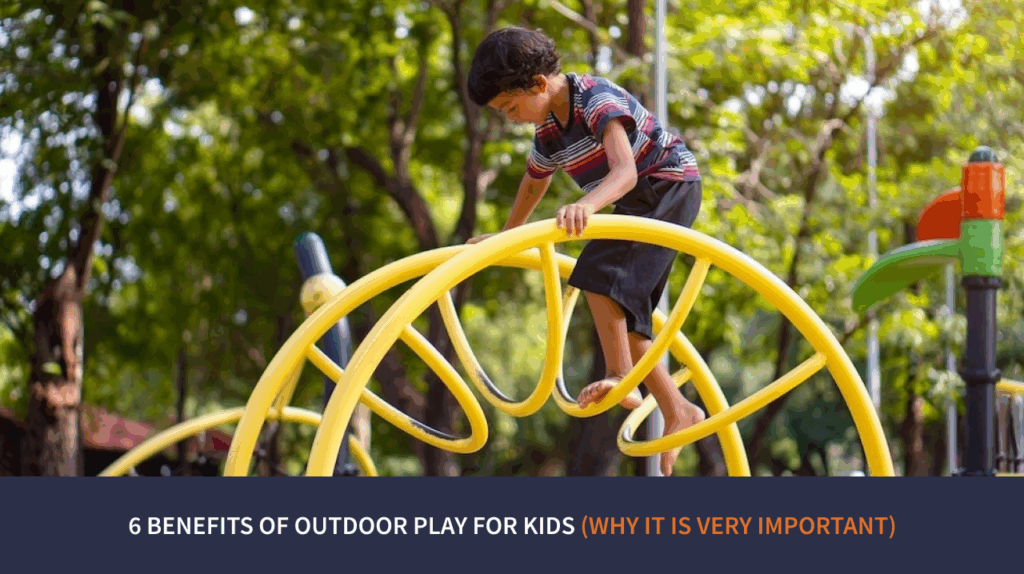
Playing cricket, football or any other sports during the evening was common among children and young adults of the previous generation. But that does not seem to be the case with today’s and next-generation children. On the contrary, spending six to seven hours daily on electronics, such as smartphones, television, and laptops, is a growing trend. However, this over-reliance on electronics is detrimental to physical and mental health, affecting children’s overall development. That is why outdoor playing is crucial because it improves their physical health and maintains their mental well-being. Six Benefits of Outdoor Play for Kids Physical Health and Development Emphasizing academics solely without little to no focus on physical activity proves to be harmful to kids in the long run. On the other hand, when they spend time outside engaging in different activities throughout their elementary and preschool years, it provides varied benefits. One of the best advantages is that it improves their physical strength, prevents them from obesity and regulates their immune function. Besides, kids who are active throughout their childhood are more likely to exercise regularly later in life. Therefore, encouraging outdoor play helps to develop a mindset of maintaining a healthy physical lifestyle in adulthood. Cognitive Growth and Creativity The connection between physical and mental health is undeniably significant; therefore, playing outside improves their memory and cognitive skills. For instance, participating in outdoor games requires them to focus, stimulating their neuron growth. Similarly, they improve their motor skills while participating in various group tasks and activities. Playing outside also fosters creativity and positively impacts their thinking, understanding, and communication ability. Emotional Well-Being and Mental Health While watching tv or playing video games, kids use two to three senses; however, they experience more sensory engagement while playing outside regularly. Furthermore, it improves their emotional well-being in the following ways: It helps build a sense of independence as they can explore and experiment with new games. Outdoor plays are unstructured, allowing children to discover new things about them; therefore, it is one of the most useful extracurricular activities. Winning or losing in outdoor games allows kids to experience a range of emotions in response to success and failures. Social Skills and Communication The age of technology has pushed children into isolation as they feel comfortable sitting at home with their gadgets. On the contrary, playing outside helps children develop social skills, including empathy, cooperation and teamwork. Moreover, when playing outside, children naturally communicate with each other, as the environment is less competitive, leading to a fun-filled activity. Besides, they become aware of their feelings and what their peers feel. Sensory Exploration and Learning Outdoor playing requires kids to use most of their senses, including vision, touch, and listening, which boosts their sensory stimulus. Also, be it jumping, climbing or sliding, they have fun, boosting their intellectual development. Appreciation for Nature and Environment Stewardship Parents can take their kids to the nearest park and beach and engage in activities, including building nature sculptures with twigs, cones and rocks. Also, it is a fun learning opportunity for them to appreciate nature and teach them how to take care of the environment. In Conclusion, Playing outside has multivarious benefits, which help improve children’s physical and mental health. Furthermore, it helps them focus and build immunity against diseases as opposed to playing games for hours on mobile or laptop.
5 Easy & Quick Ways to Memorise Multiplication Tables

Multiplication is one of the most basic operations required to perform calculations of basic mathematical problems and is used in performing advanced mathematical problems. Multiplication Tables play an essential role in the primary phase of every child’s education, and rightly so. We are always asked to memorise multiplication tables but are never introduced to the various methods developed over time to remember these tables. This article explains the various practical methods experimented with and developed to memorise multiplication tables. Before we understand the different techniques to learn tables, let us understand why memorising tables is essential. As mentioned above, multiplication tables are basic operations, and children must recall answers to multiplication problems. Recalling the answers quickly is essential to perform advanced mathematical problems. With the importance of multiplication tables discussed, let us now understand a few difficulties associated with memorising multiplication tables. A few common problems students face are recalling answers to specific tables, the speed at which the answers are remembered and understanding the various methods used to derive solutions. Where Are Multiplication Tables Used in Daily Life? Learning multiplication tables can be used in solving many day-to-day problems. Some of the few areas where the concept of multiplication can be applied are- While calculating prices of various groceries and other commodities. While mass, area and volume of multiple objects. These are just a few basic day-to-day applications of multiplication, and there are many more applications that the students can explore. How To Learn Tables? It is amazing how many methods are available to address the question, “ How to learn tables?”. Below, we look at various multiplication facts that have helped develop techniques to remember multiplication tables. Method 1: Visualise Pattern Visualise Pattern is a basic method that can be used to learn the multiplication of tables effectively yet easily. In this method, students are advised to imagine the problem with objects of daily use to understand the concept better. This method promotes a fun way to learn tables that can be included by the teachers and student effectively in a student’s study timetable. Method 2: Mnemonics and Memory Tricks Memorising tables can be boring and challenging to children, which is why we have noted a few tricks that will help students remember the tables easily. Here are a few tricks that might help your child remember the tables in a fun way – For 2X – Teach your children to understand this table; we must add the number twice. For example, 2×3 = 6; 3+3=6 For 4X, it is important to teach your children that it is as good as doubling the answer derived by adding the given number twice and adding the number by itself. For example, 4X5=20; 5+5=10, 10+10= 20. For 5X, a foolproof method to know if the answer is right is to check if the answer contains 5 or 0 in its units place. For 8X, it is as simple as doubling three times. For example, 8X3= 24; 3+3=6, 6+6 =12, 12+12 = 24. For 10X, just tell your child to add the 0 to the number 10 is multiplied by. For example, – 10X2= 20, 10X9=90. This method helps in time management and allows students to arrive at answers effectively and swiftly. Method 3: Chunking and Grouping This is a more advanced method of understanding the concept of multiplication and can be learned in tandem with understanding the concept of division. It is also a method that showcases the relationship between multiplication and division. For example, 2×4=8 and 8/4, where 4 is the divisor, and 8 is the dividend = 2. Also Read: > Importance Of Effective Time Management For Student’s Life > How To Learn Maths Easily: 6 Simple & Effective Tips > Importance Of Reading Books In Student’s Life Method 4: Times Tables Songs and Rhythms Songs and rhythms are a great way to learn anything, and this method can be used to learn multiplication tables in a fun way! Songs and rhythms call for the use of memory power and also significantly answer the ever-elusive question, “ How to memorise multiplication tables?”. Here is a list of a few songs and rhythms to learn multiplication tables- The 2 Times Table Song. You’ve got a friend in Three. The ants go marching. You can also come up with your song and start learning multiplication tables in a fun way! Method 5: Regular Practice and Games Apart from the above-mentioned tips and tricks, regular practice and playing games based on real-life application of multiplication is also a very effective way of learning multiplication tables. Additional Tips: What Are Other Strategies for Learning Tables? Writing the tables every day for effective memorisation. Understanding the basics of multiplication. Using the application of multiplication in everyday activities. We have understood the various memorisation tips and tricks and the importance of multiplication tables. We can now teach and use the five fun techniques mentioned above to better understand multiplication tables and their application in our daily lives.
How To Write Exams: 5 Easy Tips For Students to Write Exams Like Pro

As the looming specter of examinations draws near, a sense of apprehension often grips students, casting a shadow of doubt over their capabilities. However, this need not be the case. With the right study tips for exams, coupled with dedication and consistency, even the most formidable exams can be conquered. Excelling in exams is not solely reliant on a single factor; it emerges from a harmonious interplay of various elements. While meticulous preparation takes center stage, other aspects such as the presence of mind, stress and time management, composure, and effective answer presentation also wield considerable influence. The art of exam writing is, in itself, a skill that every student should cultivate – a stepping stone toward achieving exceptional exam results. Time management and exam preparation synergize to naturally bolster one’s confidence. Anxiety is often rooted in the fear of the unknown, but comprehensive preparation dispels uncertainty, paving the way for confidence to flourish. Outlined below are a range of techniques, guidelines, and time-tested tips to write exams. 5 Exam Tips Writing Tips For Students Tip 1: Understand the Exam Format and Guidelines Before getting started with exam preparation, it’s imperative to have a crystal-clear understanding of the exam format and guidelines. This foundational step helps students tailor their study approach to the specific requirements of the assessment. Whether it’s multiple-choice questions, essays, or practical tests, comprehending the format aids in organizing study materials and optimizing learning strategies. Tip 2: Preparing Strategically Effective exam preparation extends beyond the marathon study sessions often associated with last-minute cramming. Strategic preparation involves breaking down the syllabus into manageable sections, setting realistic study goals, and creating a well-structured study plan. This approach not only prevents overwhelm but also facilitates a deeper understanding of the subject matter. Students can foster long-term retention and a comprehensive grasp of the subject by taking time to periodically review the topics. Tip 3: Mastering Time Management Time is the most precious resource during exams. Mastering time management involves practicing the art of allocating appropriate time to each question or section. To achieve this, students can engage in timed mock tests, honing their ability to gauge the time required for different tasks accurately. Furthermore, employing techniques like the Pomodoro Technique—alternating focused work with short breaks—can boost productivity and prevent burnout. Tip 4: Crafting Effective Responses The hallmark of an exceptional exam taker lies in their ability to communicate effectively. Whether it’s an essay or a short answer, the response should be clear, concise, and well-structured. Students should focus on addressing the question’s key points while supporting their arguments with relevant examples or evidence. A succinct introduction and conclusion add polish to the response, leaving a lasting impression on the examiner. Practice is key; by consistently engaging in writing exercises and seeking feedback, students can refine their writing skills and develop a compelling style. Tip 5: Managing Stress and Maintaining Focus Exam stress is a common adversary, capable of derailing even the most well-prepared individuals. Learning to manage stress and maintain focus is as vital as any other exam skill. Sleeping the night before can be a challenge for any student. A student may be bothered by thoughts like, ‘How to write exams’, ‘Will I pass the exam’, etc. However, a good night’s sleep is important to retain memory and avoid stress. Now, here’s a tip: steer clear of too much exam talk with your buddies. Their stress vibes can rub off on you, and that’s the last thing you need. Instead, grab some “me time,” snuggle into bed, and doze off with the comforting thought that all your hard work and prep are leading you straight to success. Also, you can rely on yoga, morning exercise, and meditation to ward off the negative effects of exam stress on your body and mind. We understand that grappling with the most effective methods for preparing and revising essay-based exams can be a challenge. Yet, with consistent effort, you can ensure that when the day of the exam arrives, you’ll be equipped to seize success. Maintaining a positive outlook is a foundational aspect not only of effective essay writing but also of your broader journey through college or university. Have faith in your readiness – you’re more than capable of handling this challenge. Beyond securing grades, these skills cultivate traits that are invaluable in real-life scenarios: adaptability, critical thinking, effective communication, and emotional intelligence. As the next exam season approaches, let these exam tips for students be your compass to navigate the intricate terrain of exam writing. Remember, success is not solely defined by the outcome but by the journey of growth and learning. Experience stress-free education with MIT Gurukul. At MIT Gurukul, a leading international school in Pune, we proudly stand out as an exceptional IB school. Embracing the cherished Guru-Sishya Parampara, we foster empathetic leaders through our distinctive curriculum.
IB Board vs CBSE vs ICSE: Which Board Is Better | Comparison Guide

The early stage of education is a vital element in developing the right personality for any child. So, parents have to look for an institution that offers the right education, extracurricular activities, teachers, and more. It ensures their child learns in and from the best environment to build their life. However, when looking for the right institute for your child’s education, there are a few things to consider. One of them is which board of education is the right choice for the child. There are three significant education boards- IB(International Baccalaureate), CBSE( Central Board of Secondary Education), and ICSE(Indian Certificate of Secondary Education). This guide will help parents find the best among these for their children. Overview of IB (International Baccalaureate) International Baccalaureate started in 1968 with headquarters in Switzerland and is an international education board. The board provides 4500+ school affiliations globally. It governs standard education worldwide in different schools offering education to children from 3 to 19 years old. Overview of CBSE (Central Board of Secondary Education) CBSE is one of the most popular and prestigious education systems in India founded in 1962. The board has Hindi and English as their official language and headquarters in Delhi. The majority of schools in India have CBSE as their main board handled by the Government. CBSE board offers education from nursery to senior secondary school i.e. 12th standard. Overview of ICSE( Indian Certificate of Secondary Education) Indian Certificate of Secondary Education started in 1958 has English as their core and medium of Instruction. The board conducted by Council for the Indian School Certificate Examination(CISCE) offers 10th and 12 standard education. It offers a practical and analytical approach to its curriculum. ICSE boards can be found in many schools in India. The board or council handling ICSE is a private board and institution. What is the difference between IB Board, CBSE Board, and ICSE Board? All three major boards operating in India have different sets of distinctive points. They have their own set of rules, regulations, pros, and cons. One of the key differences is their conducting bodies, CBSE is under the control of the government of India, ICSE is under the control of a private entity in India while IB is under the control of an international private entity in Singapore. These boards can be distinguished over different factors that will help parents to find the best school for their children. Therefore, here are a few factors on how you can distinguish between boards: Subjects offered Curriculum Conducting Body Key features Assessment and evaluation Fee Schools, and more. Major differences between IB, CBSE, and ICSE boards To help you differentiate between different boards, we are comparing different factors of the boards. Here is the difference between Ib and CBSE and ICSE as per vital factors: Curriculum The curriculum is vital to understand what they offer and what your child will be exposed to. CBSE, ICSE, and IB schools have their own standard and approach for developing curriculum. While both ICSE and CBSE have an indo-specific approach as they are Indian boards. Ib on the other hand follows a more global approach in their curriculum. To help you understand better, here is the difference between the curriculum of all boards: Aspect IB Board ICSE CBSE Syllabus International Curriculum India-Specific Curriculum India-specific curriculum Structure PYP, MYP, DP Primary, Secondary, and Senior Secondary Primary, Secondary, Senior Secondary Focus Holistic education, global perspectives Balanced approach on languages, science, humanities, and activities Academic-oriented, national-level focus Flexibility Encourages interdisciplinary learning Strict adherence to Prescribed Syllabus Prescribed syllabus Assessment and Evaluation The IB, CBSE, and ICSE boards have different assessments and evaluation is important to consider when selecting. All three boards have different evaluation and assessment systems as follows: CBSE The classes are evaluated and assessed in two terms Term 1 and Term 2, both terms hold equal importance and marks are calculated with equal weightage in the end. For students in X, XI, and XII, internal assessment and practical exams are also considered. ICSE ICSE uses grades to assess students up to 10th standards. 1 grade is lowest and 9th is highest. Along with studies, social and community work, and extracurricular activities are also focused on mark sheets. For X, XI, and XII standard assessment similar to CBSE is followed. IB IB uses external and internal assessments. The external assessment includes essays, data-response questions, text-response questions, structured problems, multiple-choice questions, short-response questions, and case-study questions. Internal assessments include oral work in languages, laboratory work in the sciences, fieldwork in geography, investigations in mathematics, and artistic performances. IB offers the same scores for higher-level (HL) and standard-level (SL) courses. Students gaining more than 3 or 3 grades in language and literature and subjects completed in different languages are granted a bilingual diploma. Syllabus All three boards have different syllabus but ICSE and CBSE are somewhat similar. CBSE and ICSE boards provide Indo-specific syllabus while IB focuses on globally standardized syllabus. Recognition and Acceptance All the boards vary in their recognition and acceptance across the globe. ICSE schools in Pune offering ICSE board certification are recognized in India and have validation across the globe. The board is recognized in India and abroad for higher education and other purposes. CBSE being India’s largest board and government operated is recognized worldwide by universities and more. IB is the global education board itself, so universities worldwide including India accept IB. Fee Structure Fee Structure is one of the important factors that parents consider when selecting a school. Ib board vs CBSE vs ICSE, all have significant differences in their fee structure. The fee structure can be further categorized and distinguished as follows: Category ICSE IB CBSE Books Cost Higher Expensive Moderate School Admission Fee Higher Expensive Moderate Tuition Fee Higher Expensive Moderate IB Board Key Features Is Ib harder than CBSE? This is a common question among parents. If you compare the Indian structure of other boards with the international exposure of IB, it might be complex but has
Importance of Effective Time Management for Student’s Life

Importance of Effective Time Management for Student’s Life Time management is an essential skill that holds immense significance in a student’s life. As they navigate through academic commitments, extracurricular activities, and personal responsibilities, effective time management becomes the key to achieving success and maintaining a healthy balance. In this blog, we will explore in-depth the importance of time management for students and delve into five proven tips to enhance their time-management skills effectively. Importance of Time Management for Students Improved Academic Performance: Effective time management enables students to allocate ample time for studying, completing assignments, and preparing for exams, leading to improved academic performance. By organizing their study sessions and creating a structured approach, they can absorb information more effectively, leading to better grades and academic achievements. Reduced Stress and Anxiety: Poor time management often leads to overwhelming workloads and last-minute rushes to complete tasks. This can result in increased stress and anxiety levels, affecting a student’s mental and emotional well-being. By planning and managing time wisely, students can alleviate stress, maintain a healthy balance, and avoid the negative effects of academic pressure. Enhanced Productivity: With effective time management, students can optimize their productivity. By prioritizing tasks and setting clear goals, they can accomplish tasks more efficiently and in a shorter span. This approach leaves them ample time for other activities and boosts their confidence and sense of accomplishment. Development of Self-Discipline: Time management requires self-discipline as students resist distractions and temptations to focus on their tasks. By practicing self-discipline in managing time effectively, students also cultivate better decision-making skills and utilize their time more productively in various aspects of their lives. Preparation for Future Challenges: Time management is a valuable life skill that extends well beyond academics. As students transition into adulthood and face professional responsibilities, the ability to manage time efficiently becomes vital for success in various career paths. Those who have honed their time-management skills are better equipped to meet deadlines, handle complex tasks, and maintain a work-life balance. Also Read: How To Increase Memory Power Latest (2023) Group Discussion Topics & Tips For Students 5 Tips For Effective Career Planning Six Tips For Establishing Good Homework Habits In Your Child 5 Best Proven Tips for Effective Time Management for Students Tip 1: Set Clear Goals and Prioritize Tasks: Encourage students to establish both short-term and long-term goals, encompassing academic and personal aspirations. Teach them how to prioritize tasks based on deadlines and importance, ensuring that urgent and essential tasks receive the necessary attention. Guide students on breaking down larger tasks into smaller, manageable steps, making them less overwhelming and more achievable. Tip 2: Create a Schedule and Stick to It: To create a well-structured schedule, introduce students to various organizational tools, such as planners, digital calendars, or time-tracking apps. Help them allocate specific time slots for studying, completing assignments, engaging in extracurricular activities, and leisure. Emphasize the importance of time management for students by adhering to the schedule consistently to develop a routine that maximizes productivity. Tip 3: Avoid Procrastination and Practice Self-Discipline: Educate students about common triggers for procrastination, such as distractions or fear of failure, and discuss time management strategies for students to overcome them. Encourage setting realistic deadlines for themselves, allowing ample time for task completion and reducing the risk of last-minute rushes. Foster a culture of self-discipline by reinforcing the importance of staying committed to their schedules and responsibilities. Tip 4: Learn to Delegate and Say No: Teach students the art of delegation, helping them recognize when they are overloaded and when it’s appropriate to seek assistance. Empower students to say no to non-essential commitments that may interfere with their academic or personal priorities, allowing them to stay focused on their goals. Tip 5: Embrace Time-Management Tools and Techniques: Introduce students to various time management techniques for students, such as the Pomodoro Technique, which can help them maintain focus and efficiency during study sessions. There are several such time management examples for students to learn effectively. Familiarize them with productivity apps, time-tracking tools, or online calendars that can aid in organizing their tasks and schedules effectively. Good homework habits will help them later in life as well. [INSERT_ELEMENTOR id=”5216″] Conclusion The significance of time management in a student’s life cannot be overstated. By understanding its importance and implementing the five proven time management tips for students mentioned above, students can transform their academic journey and overall well-being. Effective time management leads to improved academic performance and equips students with invaluable life skills essential for their future success. As educators, parents, and mentors, let us guide and support students on this journey of effective time management, enabling them to make the most of their potential and embrace a well-balanced, fulfilling life. For a conducive learning environment and comprehensive growth, consider enrolling in a residential school in Pune or an international boarding school in Pune that emphasizes time management and fosters holistic development through proper guidance and practice.
List of these 7 Most Important Life Skills Every Student Must Have

Education has become one of the most inseparable parts for each of us due to fulfilling all expectations of the world. In this aspect, different kinds of skills need to have in students to enhance their growth in future careers. All the skills have become necessary for achieving success for all students. Beyond academic skills; research skills, critical thinking skills, and many others must be enhanced for a student’s mental and physical growth. Life Skills for Students Students need all the essential skills for succeeding in life and competing in the world. In this context, such skills include questioning, communication, research, and critical thinking skills in research and others. Learning skills include collaboration and teamwork, emotional intelligence, time management, and more. Research skills for students help them to understand and develop new ideas and also gain knowledge regarding the aim of research and its effectiveness. All the essential skills provide a wider view of life skills for students’ well-being and future development. It joins the students with society and enhances their mental and physical growth. List of 7 Important Student Skills 1. Critical Thinking Students must acquire critical thinking skills as it provides the facility for analyzing, evaluating, and systemizing information. This skill empowers the students to make the right decisions. Students who have great critical thinking skills can recognize logical fallacies, evaluate the credibility of all sources and understand differences of opinions. One can easily solve issues outside the classroom and take a step toward success by utilizing this skill. 2. Communication Skills Effective communication is a part of the good academic skill that enhances the mental power of a student. Communication is the first step to achieving success in life; an effective communicator can easily understand the topic of concern to others, which helps all understand the topic’s effectiveness. The concerned skill can be improved through a few steps: Keeping the audience in mind Getting them involved Making eye contact Estimating self-confidence Considering effective methods for delivering the message 3. Collaboration and Teamwork Appropriate team management skill and collaboration power is excessively important for the present situation. In the interconnected world, all students must learn about team bonding, collaboration, viewpoints of different team members, and other attributes.Collaborating experience enhanced their creativity and increased their power of mutual understanding. With the help of the best teamwork, it can be easy to make appropriate decisions and develop communication with all the others. 4. Adaptability and Flexibility According to the changing and transforming world, all students need to fulfill adaptability and flexibility skills with resilience. For the students to become open to new ideas and creativity, it is important to acknowledge this skill. It also provides flexibility in their thinking process and makes them willing to develop changes in traditional processes. Moreover, they should demonstrate the skill of resilience for bouncing back all the difficulties and learning from failures. 5. Digital Literacy Digital literacy has become the most important part of today’s educational system. All of the students must need to learn this skill to enhance extra knowledge regarding studies. In the digital era, proper knowledge of digitization is very important, so students need to learn it as a foremost task. To become successful, students need to follow some steps with the help of digital literacy skills, and those are Analyzation Accessing information Managing the information Integrating Evaluating 6. Time Management Time management is another important skill that students need to use for their mental growth. It makes all the students manage their time doing any job and studying the academic course. Students can learn academic responsibilities, personal commitments, and extracurricular activities through effective time management skills. With the help of time management ability, one can easily reduce stress and be able to prioritize the task first. 7. Emotional Intelligence Emotional intelligence is a type of life skill for students that make them empathetic, understand other feelings, and carry one’s emotion perfectly. Students who have high emotional intelligence are able to improve their self–awareness, empathetic view, and self-regulation. It helps them to develop better interpersonal relationships with others as well as resolve conflicts easily. Also Read: Latest (2023) Group Discussion Topics & Tips For Students How To Write An Application To The Principal Importance Of Discipline In Student’s Life How Students Can Develop These Skills: 5 Easy Tips All the students may have developed these skills efficiently and properly through some steps. Those steps are: Maximizing verbal and nonverbal communication Showing curiosity about each topic Developing the power of imagination Becoming a good leader Balancing between academic and extracurricular activities [INSERT_ELEMENTOR id=”5216″] Conclusion In this context, it can be summarized that improvement in sophisticated and effective skills among students is very important. Academic skills are important, but other extra skills must be incorporated into the students. Additionally, those skills can change students’ behavior and mental growth. It enables them to succeed in the future and makes them empathetic also.