

How Does Pre-Primary School Help Kids Develop Communication Skills?
For parents, the moment when their children utter their first word or form a sentence can be heartwarming. From the early childhood stage, communication plays an essential role as one of the building blocks in the process of childhood development.
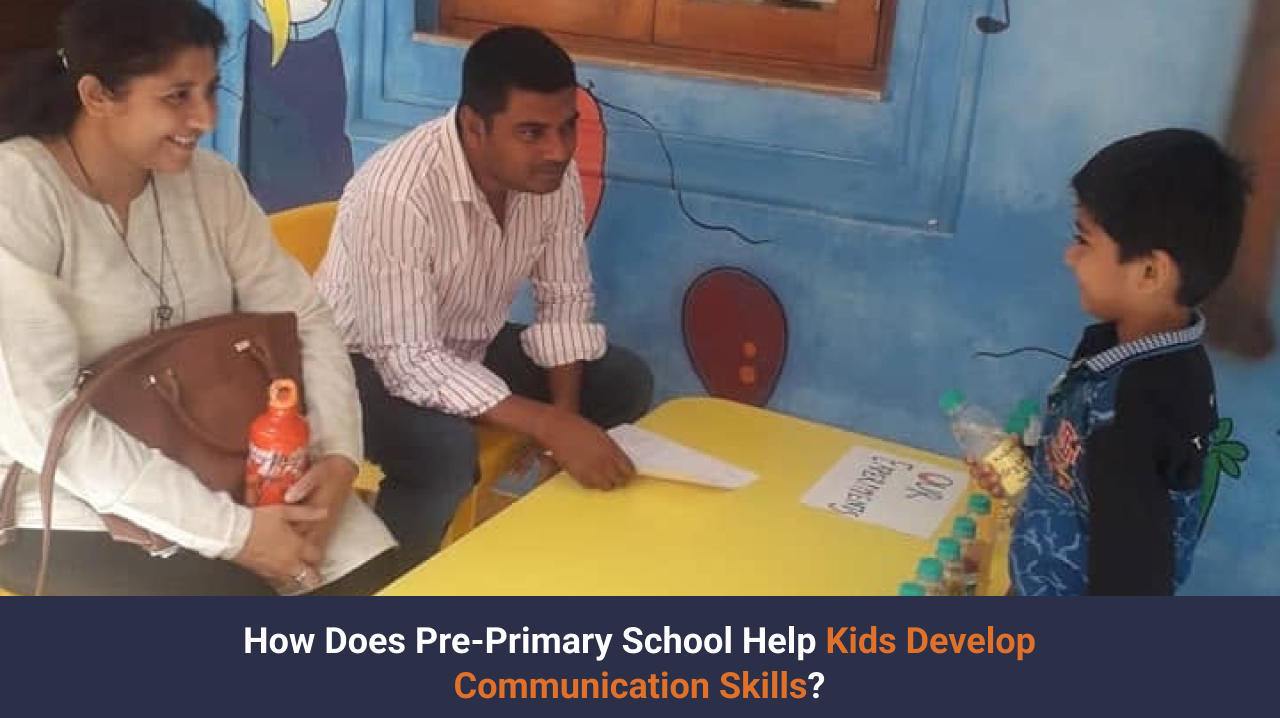
A child that is able to communicate will be able to express their views and understand what others want to communicate with them. They will also be able to communicate with the external world beyond the family.
By participating in discussions, games, songs, storytelling, and communication craft ideas for preschoolers, children develop their verbal and non-verbal communication skills.
Why Are Communication Skills Important for Preschoolers?
- Through class discussions: The environment created by teachers allows children to talk freely, respond, and wait for their turn to speak.
- Through storytelling: Listening to stories is easy and fun for young children to acquire a rich vocabulary at an early age.
- Through cooperative activities: The children talk as they play games with each other, which helps them learn to cooperate and be interactive.
- Through singing songs and rhymes: Repetition helps in remembering things and getting pronunciation right.
- Through role play: Children act out conversations in specific situations they know, thus gaining confidence and practicing their abilities to speak.
- Through show-and-tell sessions: Kids describe things, events, and build their vocabulary while doing so.
How Does Pre-Primary School Develop Communication Skills?
- Through classroom conversations: Teachers create an environment that makes it easy for the children to communicate freely, answer questions and wait for their turn to speak.
- Through storytelling: Listening to stories is an easier and fun way to develop a strong vocabulary really early in their childhood, words that they can use later on to express themselves in conversations.
- Through group activities: Children talk when working with each other during activities and games. This promotes cooperation, turn taking and regular peer interaction.
- Through songs and rhymes: Repetition helps in remembering concepts for a long time and also improves pronunciation.
- Through role play: Children rehearse conversations in familiar situations, building comfort, imagination and vocabulary.
- Through show-and-tell activities: Children describe objects, experiences and build confidence by speaking in front of a group and arranging their thoughts.
Research conducted has found that children with poor receptive language skills are likely to be poorly prepared for school and experience poor academic outcomes later on, which is why it is so important for incorporate speaking skills for preschoolers to build a child’s vocabulary and provide them with the language environment they require to thrive in later stages of their education.
Which Pre-Primary Activities Improve Communication Skills?
Storytelling activities
- Picture-based storytelling
- Story sequencing
- Retelling familiar stories
- Character discussions
Conversation activities
- Circle-time discussions
- Question-and-answer sessions
- Daily experience sharing
- Picture description
Creative communication crafts
- Story-based drawing
- Character masks
- Puppets
- Picture cards
- Story wheels
- Emotion cards
Communication crafts for preschool shouldn’t only focus on creating an object. The real value comes when teachers use the finished craft as a prompt for children to describe, explain, question, and discuss.
Play-based activities
- Pretend shops
- Doctor-and-patient role play
- Classroom conversations
- Puppet conversations
- Building and collaborative games
What Communication Skills Can Children Develop in Pre-Primary School?
| Communication Skill | How Children Practise It | Example Activity |
| Speaking | Expressing thoughts and experiences | Show-and-tell |
| Listening | Paying attention and following instructions | Storytelling |
| Vocabulary | Learning and using new words | Picture cards |
| Pronunciation | Repeating and practising sounds | Rhymes and songs |
| Turn-taking | Waiting and responding appropriately | Group discussions |
| Questioning | Asking for information | Story discussions |
| Storytelling | Organising ideas and events | Picture sequencing |
| Non-verbal communication | Using facial expressions and gestures | Role play |
How Do Teachers Encourage Speaking Skills for Preschoolers?
- Open-ended inquiry like “What do you believe is the next step?” instead of others that have a yes or no answer.
- Let children speak freely instead of interrupting them or giving them answers.
- Integrate new terms effortlessly and explain necessary unknown vocabulary at the time of narration and tasks performed.
- Support teamwork communication efforts when trainings in pairs and groups to enable children to address each other regularly.
- Support speaking practice by encouraging them to speak in front of their peers without the fear of criticism.
- Use visual aids like flashcards, story books, dolls, and props for the children to understand better.
How Does Play-Based Learning Support Early Childhood Communication Skills?
Pretend play is a vital activity for children to experience authentic conversations. Acting in different scenarios helps them explore language, in turn facilitating listening skills and turn-taking abilities through collaboration.
While children express their thoughts during creative activities, cooperative games provide them with various possibilities to practice and acquire early childhood communication skills. Through careful observation of pretend play, educators can formulate efficient modules that promote effective conversation skills among preschoolers.
Communication Development at Home vs Pre-Primary School
| Area | At Home | At Pre-Primary School |
| Conversation | Family discussions | Teacher and peer interactions |
| Listening | Conversations and instructions | Stories, songs, and classroom directions |
| Vocabulary | Everyday experiences | Structured learning activities |
| Social Communication | Family members | Diverse peer groups |
| Speaking Practice | Informal conversations | Group discussions and presentations |
| Role Play | Parent-child play | Structured and collaborative role play |
| Feedback | Family guidance | Teacher observation and feedback |
Home and school environments complement each other, so parents are encouraged to continue communication activities outside school as well to promote early childhood communication skills.
How Can Parents Support Communication Skills at Home?
- Read stories together: Inquire about the personalities and happenings, and assist the kids in forecasting what will happen next.
- Discuss daily activities: Ask the children about their schedule and encourage detailed answers.
- Stimulate imaginative play: Use games, puppets, and toys to make a few dialogues.
- Master the art of describing pictures: Ask the kids to narrate what they have seen, naming humans, items, actions, and feelings.
- Apply communication games for preschool children: Make puppets for talking, devising cards for events, and depicting faces for expressing feelings.
- Listen without a rush: Wait for the reply without interrupting the children.
What Are the Signs of Developing Communication Skills in Preschoolers?
- Increasing vocabulary
- Asking more questions
- Following simple instructions
- Participating in conversations
- Expressing needs and feelings using words
- Listening when others speak
- Retelling simple stories
- Communicating with peers during play
- Using gestures and facial expressions appropriately
What Should Parents Look for in a Pre-Primary School That Supports Communication?
- Child-centred teaching approaches
- Regular storytelling and reading activities
- Group discussions and collaborative play
- Opportunities for children to speak and ask questions
- Creative activities such as crafts and role play
- Supportive and responsive teachers
- Age-appropriate learning materials
- Opportunities for social interaction
- A safe environment where children feel comfortable communicating
When considering residential options such as one of the international boarding schools in Pune or one of the best international schools in Pune parents should use similar criteria to choose a school that encourages communication confidence as much as a day school would.
How Can Parents and Teachers Work Together to Improve Communication?
- Discuss observations of the child’s communication development
- Talk about vocabulary and speech areas needing extra practice
- Engage in similar storytelling and conversation activities at home
- Reinforce communication habits
- Focus on recognising successes instead of concentrating on mistakes
- Stay in touch with the parents continuously
Conclusion
Building communication skills in babyhood builds the foundation for so much of what comes later in life: self-assurance, curiosity, friendship, and true excitement for learning. The families looking into different kinds of residences, like Residential Boarding Schools in India, should expect to find a similar warmth and attention when it comes to the approach to teaching children’s language use. At MIT Gurukul, we believe each child is entitled to an environment where they feel safe to express themselves, ask questions, and be listened to.
FAQs
- How does pre-primary school improve communication skills?
Through conversation in class, storytelling, group activities, songs, role plays and show and tell.
- Why are communication skills important for preschoolers?
It helps children in expressing their thoughts, gaining confidence in socialisation and laying groundwork for reading and writing.
- What activities improve communication skills in preschool children?
Storytelling, conversational activities, communication-oriented crafts and play activities like pretend shops and role-playing.
- How does play-based learning improve communication?
It helps kids in practicing their vocabulary, negotiating with their peers, and trying out languages while playing.
- How can parents improve speaking skills for preschoolers?
By reading books, having conversations related to everyday life, encouraging imaginative play and listening actively.