


Why Teaching methodology and pedagogy in International school is different from other regular school?

Why is teaching methodology and pedagogy in international schools different from other regular schools? International schools have gained more popularity in recent years due to their effective method of imparting education to students from multiple backgrounds. There are several advantages and opportunities that international schools provide to their teachers as well as students in education methods and teaching styles. Here are a few points that discuss what makes teaching methodology and pedagogy in international schools in Pune and other parts of India stand out as compared with other schools: Interesting curriculum with a different approach: Instead of opting for the age-old system of providing education to children, international schools follow a different syllabus that is largely inquiry-based. The inquiry-based learning allows teachers to make sure that their students are skilled in academics, personal talents and overall growth. This is different from the general rigid syllabus taught in other schools. For example, some of the best schools in Pune, among which MIT Gurukul is a leading institution, follow the International Baccalaureate (IB) education system. At the same time, teachers also help develop the basics and core learning values in students such as an organized study approach, a systematic daily schedule, learning to grow intellectually and emotionally etc. Small batch of students and personal interactions with teachers: As compared to most other private and public schools, IB syllabus schools offer smaller batch sizes. As a result, every student gets an opportunity to interact with their teachers whenever required, solve their doubts, ask questions or address their difficulties. Such personal interactions and special assistance make students feel valued, comfortable and heard in the classroom. It is proven that not only do their grades improve but they also grow inquisitive and do not hesitate to approach their teachers for advice. The teachers get a better chance and more time to know the specific needs of each student and may work accordingly for their improvement. At MIT Gurukul the average class size is 20 to 24, which has been found to be optimal for the best educational outcomes. Special training for teaching in international schools: Most of the teachers in international schools are given intensive training to help them grasp the international syllabus that the school follows. They are also trained to work with modern technology that is used in the classroom for a better audio-visual teaching experience. All international schools have installed smart boards or interactive portable boards, devices for online research and presentation tools. Such training methods help teachers become effective communicators and better leaders in a school setting. MIT Gurukul has continuous professional development trainings and orientations for all its teaching and non-teaching staff. Opportunity to learn new languages: English is the primary medium of communication in most international schools. However, due to the multicultural background of teachers and students, there are other languages which are taught and used to communicate with each other. Most instructors in international schools have native or bilingual proficiency in several languages. This may be an interesting opportunity for both the teachers and students to learn new languages. The top five schools in Pune like the MIT Gurukul teach more than one language to their students and expect their teachers to have some knowledge in diverse languages. These include many native Indian languages and foreign languages like French and German. Such qualified teachers with multilingual abilities are able to connect with students from different backgrounds. Exposure to different cultures from across the globe: Teachers in an international school come from different countries and multiple cultural backgrounds. While teaching, they interact with each other and learn a lot about different teaching methods, travel experiences and various approaches to situations in everyday life. Interestingly, the classroom space is no different. In international schools, students share diverse backgrounds and some of them may also arrive in a different country because their parents got a job transfer. They often share their past experiences and learning with the teachers and their classmates in their new schools. This also makes the teaching methodology interactive and a two-way discussion method. Promoting lifelong learning among students: In an international school, such as MIT Gurukul, the teaching methodology is derived based on the fact that students need to be taught not only about subjects, but that teaching must also focus on wellbeing and happiness. Also that the teaching should promote independence, critical and logical thinking, a problem-solving mindset and a collaborative work style. Hence assignments like the extended essay or the theory of knowledge are integral parts of the international schools’ curriculum. [INSERT_ELEMENTOR id=”5216″] Therefore, teaching methodology, and pedagogical traditions in international schools involve lots of everyday learning. Personal interactions, sharing of experiences among students and teachers, and hands-on approaches to learning are part of them. Such teaching methodology provides a solid grounding in overall student experience and teacher success. We encourage all parents to consider the merits of the international school teaching methodologies and enroll their children in such schools. MIT Gurukul’s parents have found our teaching methodology world class and the parents satisfaction rate for our pedagogy is 100%. Also Read International Schools: Top Five Differentiating Characteristics Ten Reasons Why MIT Gurukul is the Best School for Your Child Can Teachers and Parents Work Together to Facilitate the best learning Experience for Kids.
Can Teachers and Parents Work Together to Facilitate the best learning Experience for Kids.

Can Teachers and Parents Work Together to Facilitate the best learning Experience for Kids? A child’s success depends on many factors, one of which is an active parent and teacher involvement in their education, activities and emotional growth. Though the parents provide nurturance at home, and the teachers give mentoring in school, the best outcomes for children can come with synergy between the parents and teachers when both work in tandem for facilitating the optimum development of the child. There are many ways that teachers and parents can adopt for working and cooperating with each other, some of which are being followed by top international schools in Pune, such as MIT Gurukul. We enumerate them here: Communication: A two-way communication between teachers and parents sets the tone for the continued exchange of information about the child. Sharing of either concerns or accomplishments of the child leads to both parents and teachers being aligned to a similar understanding about the child’s growth and development. Especially for young children in kindergarten or up to the formative years till age ten, this is very crucial. Primary schools in Pune, especially the best ones like MIT Gurukul, are mindful of the fact that responsibility for open and honest communication is both on the parents and teachers. Thus they regularly observe parent interaction days as a policy. Approaching dialogue and discussions with an open mind: The information that either the teacher or the parent share with each other, needs to be understood and processed in ways that facilitate the child’s growth. Whether it is positive feedback or constructive criticism from either party, looking at different perspectives for the same and having a transparent talk about it is necessary. The attempt and focus of such discussions should be to chalk out ways in which both concerned parties, the parents and the teachers can coordinate and work as a team. MIT Gurukul, a top international school in Pune, has made available schedules of planned and regular zoom calls, telecalls and email exchanges between teachers and parents for continued interactions. [INSERT_ELEMENTOR id=”5216″] Dealing with tough situations together: Children react to schooling in different ways. While some young children adjust quickly, others may show symptoms of school refusal behaviour such as crying, being non-attentive, distracted or hyperactive, refusing to eat etc. This is a natural coping mechanism for many children and needs empathetic and sensitive handling. Hence, both parents and teachers need to come together to handle the tough situation with positive reinforcement, extra care and constant affirmation of the child’s ability to cope. MIT Gurukul, one of the top schools in Mumbai, Pune and the rest of India, has made this partnership between parents and teachers possible through training of its staff members on leadership, communication, a child-centric approach and documenting every child’s progress in detail. Consider alternate ways of combined dealing with children: For this to happen, the teachers need to be heard and understood, and parents need to feel involved in their child’s time at school. Things like a child’s food allergies, childhood asthma, or whether a child is an introvert or an extrovert when shared by parents to teachers help the teachers deal with each child appropriately. In the same way, if a child needs extra help with basic Math or English, or if their motor skills need working on more, when told by the teacher should be taken on board by the parents. Parents can then do the activities with the child at home that fill such gaps in a child’s academic advancement. At MIT Gurukul, activity sheets, simple book references and advice about specific activities are always shared by the teachers. We also respect the feedback and inputs from parents and work upon them diligently. Conclusively it can be deduced that a friendly partnership between the teachers and parents is a sure way to bring intellectual, social, emotional and cognitive development. We invite all parents to keep a tab of the open days, parent-teacher meeting schedules, zoom call sessions and planned events where you can witness the children’s artwork or cultural programs. You may also look at this information on our website at https://www.mitgurukul.com/
The Finest Practices Followed by Best Preschool in Pune to Make Communication Effective With Children.
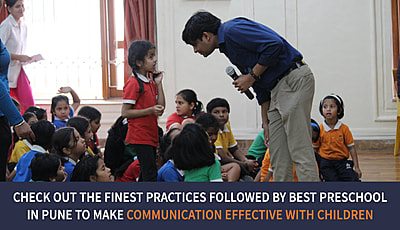
Communication is the bond that cements and holds relationships together, in families, neighbourhoods, societies, and nations. The importance of effective and positive communication with children cannot be undermined. It lays the foundation for their lifelong communicative and interactive patterns that lead to good interpersonal interactions, the ability to maintain associations and relationships, and professional success. There are ways to enhance communication beyond just words and make it deeply meaningful with children to foster understanding, empathy and sensitivity. Pre-schools in Pune, among which MIT Gurukul is a premier institution, employ the following methods for making communication effective with children: Listen to understand the children: Teachers listen attentively and understand what the child is trying to say. They listen without interrupting and nod encouragingly to make the child comfortable in sharing his/her thoughts, emotions or insights. Sometimes the teachers also kneel down so that they are at eye level with the child and can make a close emotional bond. Pick up the emotion: While communicating and listening with children, pre-school teachers and other attending staff also make an effort to tune into the emotions the child is trying to convey. Many times it is the non-verbal cues in a child that need to be understood such as tone of voice, facial expressions, body language etc. International schools in Pune, like the MIT Gurukul, also employ counsellors who are trained in child psychology and who also make informal play-way methods of assessing children’s communicative patterns to help in positive reinforcements in communication patterns. Acknowledging the child’s feelings: Empathy and sensitivity go a long way in making a child deal with any stress or unhappy state of mind. Listening to their emotions and feelings, the pre-school staff let the child get connected with her own mind. This helps the child share with confidence and develop trust in the listening adult’s ability to offer suggestions. This provides a comforting environment in which the child learns to dissipate negativity into positivity. This is also a good way to teach children how to cope with situations that may not be to their liking, by talking openly about them. Understanding the communication from the child’s point of view: We often ignore the fact that negative behaviour or communication by a child may actually be their plea to get reassurance, comfort, security and love from the parents or teachers. By showing benevolence, care and love, pre-school staff, like the team at MIT Gurukul, extract from the children the real reasons that upset them. Without judging or reprimanding they then facilitate the children to overcome the challenging situation. For this, open and free communication patterns between teachers and young students work well. Do not shame the child: Children will feel comfortable opening up about their thoughts, feelings and problems with adults who do not shame them, do not judge or put labels on their feelings, and who do not put down the child by negating their state of mind. The non-judgemental approach in communication with young children helps to make a positive impression on the children. Such children grow to be emotionally responsive, talk about their issues with a trusted individual over growing up years and harness optimism and trust. Talk to the child about many topics: Talking about birds, trees and flowers, or animal species helps to grow the child’s understanding about protecting the environment. Discussion about helping one’s mother in small chores at home like putting the books in place after studying makes them feel responsible. Communicating about different topics in this way raises the child’s social, intellectual and emotional quotient. This is helpful in the long term in developing children into responsible adults and members of society. [INSERT_ELEMENTOR id=”5216″] Conclusively it can be said that making communication effective, empathetic, meaningful and non-judgemental is crucial for the positive personality development of children. Communication patterns should be started early so they can lay the foundation for the holistic development of children for their entire life. We encourage parents to visit the school and discuss with the pre-school staff about effective communication patterns and translate the same within their home environment so that the child obtains more benefits.
How Boarding School Plays a Life-Changing Role in Reshaping Your Kid’s Future
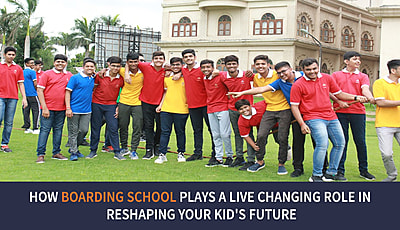
How Boarding School Plays a Life Changing Role in Reshaping Your Kid’s Future As a parent, you want the best educational opportunities that ensure lifelong success for your child. Right from school and up to higher education, your wish is to seek the most suitable institution and curriculum. Another aspect that can help develop your child and provide positive life-changing transformation is the experience of studying in a boarding school. Boarding schools involve the students staying on campus, living with other students and pastoral care staff just like a family. This experience has far-reaching benefits and must be taken into consideration when choosing a school for your child. Some of the benefits that residential boarding schools in India, like the IB curriculum based MIT Gurukul, bring to their students are: 1. World Class Education Most boarding schools follow an international curriculum or have elements of international education woven into their teaching and learning experience. At MIT we have introduced the IB curriculum for our students. Boarding schools provide state-of-the-art student support facilities such as academic counsellors, sports and art areas, safe and comfortable study spaces and home-like living arrangements. These together give the same facilities as any international institution would to its students, and thus the students gain by studying in vibrant and intellectually challenging setups. Even the teachers in a boarding school are selected from among the best in the country. Many have international teaching experiences too that bring in a varied perspective to the pedagogy. MIT incorporates all of these for its students. 2. Co-curricular and extracurricular activities Every student in the best IB schools in India, among which MIT Gurukul is one, is encouraged to have at least one co-curricular and one or more extracurricular activity apart from their educational pursuits. Living in the residential school, the students have access to sporting facilities, art rooms, and futuristic labs. They also utilise creative stations for things like sculpture and design, and participate in community service based student clubs. Students further undertake innovation based science projects and competitions, attend international conclaves, explore creative and business process writing avenues etc. These are available to them to pursue all days of the week. These myriad of offerings develop a comprehensive personality as well as an academic portfolio that makes the student an all-rounder and aids in good admits and possible scholarships as they apply to higher education institutions. 3. Discipline management and sensible independence balance Within a boarding or residential school, such as MIT Gurukul which ranks among the best schools in Pune, there is a balance created between discipline and meaningful independence. Discipline is inculcated through scheduled daily activities and set times for study, meals, recreation, group work, individual time, and morning and night rituals. The students thus grow to be aware of how discipline and punctuality help them in achieving more in all areas of their academic and non-academic pursuits. Simultaneously they also learn to make decisions independently, learn to get along and work positively with peers from different backgrounds. It also enhances their critical thinking, emotional intelligence, confidence and communication ability. These qualities are known to be crucial for success in personal and professional domains later in life. [INSERT_ELEMENTOR id=”5216″] 4. Growing life skills and broadening the student’s horizon Residential boarding schools in India provide a variety of experiences to students, more than non-residential schools. Apart from rich in-class and out-of-class activities as part of the curriculum, for boarding scholars, there are also varied after-school activities on offer. These can include personal coaching in higher and advanced levels of subjects, individual mentoring by experts in sports, creative arts, public speaking etc. There may also be certain excursions and site visit trips to industry, national laboratories, competitions etc. At MIT Gurukul, through these activities we give the students adequate exposure to develop a broader understanding of their innate strengths and to then utilise them in gaining experiences of success and fulfilment. These help in enhancing their life skills such as teamwork, leadership, and cultural sensitivity. Boarding schools thus provide a nourishing environment for the students and help them grow all their personal faculties. This strong foundation becomes the strength for the students as they embark upon higher education journeys and later step into their professional fields. MIT Gurukul, being aware of the importance of giving its students the best boarding school experience has excellent pastoral care and enough educational and other offerings. They also have a team of dedicated teachers, pastoral care staff, subject, art and sports experts and student services like the career advising to enable the students to get the best school experience of their life. We invite prospective parents and students to visit our campus and make informed decisions to enrol their children at our boarding school. You can write to admissions@www.www.mitgurukul.com to fix a schedule for your campus visit.
5 Reasons Why You as a Parent Should Consider IB Education for Your Child
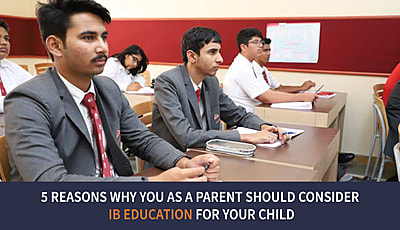
IB, or the International Baccalaureate, is a high school diploma that is fast becoming a popular pedagogical choice with Indian parents and students. This internationally recognized educational option is known for raising critical thinking, enhancing the creative approach to studies, and improving the writing ability among students. At MIT Gurukul, one of the best IB syllabus schools in India, we have adopted the IB diploma curriculum and seen the positive results of our students through this program. There are many advantages for parents to choosing the IB diploma schools for their children. Some of the main reasons to study the IB curriculum are: The breadth of study subjects: IB students study subjects from six different groups that include languages, humanities, science and Math among others. This gives them a vast canvas of knowledge and also helps them make connections between subjects. The IB curriculum enhances their depth as well as breadth of know-how and encourages a multidisciplinary approach to gaining knowledge. Students also make connections between classroom concepts and real-life applications, such as the concept of kinaesthetic as it applies on the sports field. Experiential learning: Creativity, Activity and Service (CAS) is the foundation of IB education. The function of this is to give the students varied opportunities of learning through student clubs, projects, learning by doing, and working to do service for others. Sports, co-curricular activities, field visits, laboratory experiments, presentations and transferring the learning to writing all form part of the IB curriculum. Students are also given the freedom of creative expression and to follow special interests for holistic development. At MIT Gurukul, one of the top 5 schools in Pune, we provide all these avenues to our students to bring their latent talents and innate abilities. [INSERT_ELEMENTOR id=”5216″] Independent thinking and research skills development: The Extended Essay and the Theory of Knowledge are two crucial components of the IB diploma. These writing exercises require a student to make an independent inquiry on a topic of interest, view it from various perspectives, make critical analyses and write their own perceptions, ideas and solutions for the same. The teaching also involves active two-way communication between the teacher and the students. The students have the freedom to voice their opinions and ideas respectfully, listen to others’ ideas and display mutual respect for differences in the ways each student processes the information. This develops empathy, thought analysis, listening and speaking capabilities in students. Time management capacity building: Within the academically rigorous curriculum of the IB diploma, students learn to manage time effectively for all their educational and other interests. They learn fast how to set time slots for studies, projects, student clubs, out-of-classroom interests, competitions, group assignments, and organizing events. Thus students are more likely to avoid distractions and gain quality of focus and concentration. They also learn to challenge themselves within the stimulating and exciting learning environment of the IB diploma program. Suitability for stepping into overseas higher education: The IB diploma prepares the students in ways that help them transition into their higher education in any global university or college seamlessly. This also gives them exposure to international paradigms of education and guides them towards global citizenry, which is important in an increasingly interconnected world. The IB diploma students obtain successful admits in larger numbers in the top-ranked universities in the world and are able to manage the rigours of those programs well. Conclusively, we can say that the IB diploma program has lots of advantages in helping build children’s future career paths, their personality, independent thought process, teamwork, time management and research acumen. We invite the prospective parents to visit our campus through a pre-scheduled appointment and to discuss the details of the methodology of the IB diploma at MIT Gurukul. You can write to the IB coordinator at admissions@www.www.mitgurukul.com to set a visit schedule.
8 Best Ideas to Keep Your Child Stay Organised
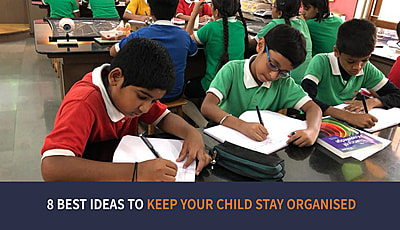
Why Staying Organized is Essential “People form habits, and the habits form their lives.” At MIT Gurukul, we concur with this adage fully and appreciate its wisdom. Being one of the top IB schools in Pune, we grasp that staying organized is a sure way to get more done in less time. It helps one achieve quality results from the daily schedules, and achieve one’s goals in a seamless manner. Getting into the habit of maintaining clutter-free environments, setting reminders and keeping timeline calendars are some ways to help a child get into the habit of making the most of their time. It leads to more productivity, higher output and better quality of one’s study or work week. Forming these organizational habits is crucial at an early stage, and some of the ways in which the home and the school can encourage and help children stay organized are as under: · Setting timetables: Time tables put tasks and activities for a child in slots of time, and help them navigate their day in a predictable, easy to follow and hassle-free manner. They also develop in the child the capability of understanding the logical sequence of study, play, extracurricular activities, and meal and rest times. Time table teaches them time management skills for the long term, which they can use in their higher education and professional years later. At MIT, one of the top residential schools in Mumbai, we give each child a personalized timetable that they are also encouraged to check and follow. · Creating Memory Aids: Memory aids include associating tasks with certain symbols, things or reminder stickers that can be displayed at places that are within the child’s vision. Examples can include associating study time with the symbol of addition and multiplication which symbolises adding knowledge and multiplying skills. Small jingles for remembering important tasks for the day like completing homework, setting clothes for the next day, packing bags etc can put the fun in the child’s schedule. · Using Checklists: Checklists are lists of items to pack, things to accomplish in a certain time, study aids that need to be collected at one place for a project etc. By making and following checklists the child ensures that all equipment or accessories are together at the beginning and does not need to keep going back to get more items once the task has started. This habit inculcates in the child logical sequencing, understanding the interdependence of things with each other and how they are all essential to form a complete whole from individual parts. This works to raise the logical understanding quality in children. · Colour coding: Colour coding subjects, activities, times of the day etc. are fun ways to teach the child to remember important schedules, activities and projects based on certain colours. Associating green for gardening, blue for watercolour work, red for arts and theatre, yellow for waking up early, black for setting the bag and uniform at night for the next day can be some colour associations. The child can also be taught to associate colours with personal qualities that help him become more organized. This can include white for being neat and tidy in one’s workspace, pink for consideration for others and maintaining work boundaries, and yellow for consistency and discipline. [INSERT_ELEMENTOR id=”5216″] · Weekly clean-ups: Among the best IB schools in Mumbai, Pune, Bangalore, Delhi and the rest of India, MIT Gurukul lays great importance on cleaning and organizing workspaces. The students are motivated to set their own study desks, tidy their residency rooms, and maintain their stationery items in workable formats. This ensures that every student grows a sense of responsibility, using resources in sustainable ways and respecting the study spaces of other students. · Using dashboards: Dashboards are pin-up boards where a child can put up their artwork. It can be used to put up reminders for important tasks, exam schedules, mark dates for their school events, their friend’s birthdays and anything else that they want to. These multipurpose boards have a great role in making the recall value for things better for the child and for them to vent their thoughts, and creative ideas and work in one place. · Peer and sibling pairing: Pairing siblings at home and making groups of two at school as organizing buddies is an unconventional yet very effective tool to help a child remain organized. By setting up timetables and schedules to work out together the sibling or school buddy becomes a point of reference for the child to work in a pair for maintaining time slots of combined activities, studies, cleaning up and setting a plan for the coming week. Doing things together also raises the motivation levels of children to keep up with their more organized buddies. · Slots on work desks or shelves: This method is also in vogue and involves making work desk drawers into daily activity material holders. The child puts the materials to be used for each day of the week into the slots at the beginning of the week and thus keeps reminded of what is to be achieved during the week. This saves time for the child at the actual time of the activity since the study or other activity materials have been gathered in one place already. Call to Action & Conclusion In conclusion, we can say that the habit of keeping organized should be developed early and its benefits go a long way till the end of a person’s life. We request parents to adopt some of these into their child’s life and help them become focused on their study approach. We also encourage parents to visit the school and discuss different methods to help their child stay organized with their respective class teachers.
Top 5 Benefits of Extracurricular Activities in Child Development
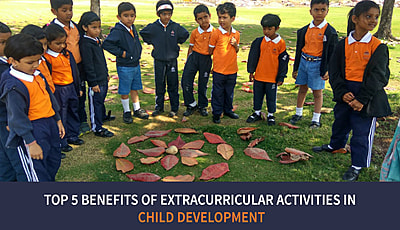
Introduction: Purposeful education is meant to nurture the latent abilities of children, bring forth their interests and abilities in creative pursuits, and help develop their overall personality. Thus a complete educational experience includes both academic as well as extracurricular activities, with both playing complementary roles to each other. It is being increasingly recognized the world over that extracurricular indulgences are beneficial for the intellectual, artistic, social as well as psychological growth of students. Some of the benefits associated with undertaking extracurricular activities include: 1. They help develop the social and moral character of children: Through sports, team-based competitions and community work; students develop qualities of focus, discipline, taking care of one’s teammates, healthy competitive spirit, and selfless giving. These become part of the students’ persona and help them navigate life while contributing meaningfully to society. MIT Gurukul, one of the best residential schools in Pune, has world-class sports facilities, art labs, music rooms and community outreach programs for the students. This reflects the school’s commitment to developing its students holistically and preparing tomorrow’s empathetic leaders. 2. They expose the children to new opportunities and interests: Participating in numerous activities, children are able to find their niche interests in new and uncommon hobbies or rare art forms. Some of these may include playing traditional country sports, bookkeeping, growing vertical gardens, campaigning for the preservation of endangered species, developing socially relevant apps etc. These look good on a child’s resume while it also makes them stand apart from their peers. At MIT Gurukul, a premier international school in Pune, professional artists, social activists, environmentalists and social and civil society organisations are regularly invited to interact with students and motivate them towards taking up such extracurricular activities. 3. They provide meaningful social outlets: Extracurricular activities very often pitch students into group projects and take them outside the classroom setting. This makes them network with students from different institutions, travel to new places and experience varied cultures, settings and lifestyles. Such exposures broaden the students’ visions and help them become flexible and adaptable in getting along with, and working with people from varied backgrounds. This helps them become successful in their professional and personal endeavours in the later years of their lives. 4. They provide a break from the monotony of studies: Extracurricular activities provide a welcome break from studies and actually contribute to better academic performance by making the students mentally and physically fit, alert and sharp. Alternating rigorous study times with the pursuit of hobbies and interests raises communication, critical thinking, and scientific expertise of the students. Such activities can include debating, public speaking, science or social science projects, planting trees, playing chess or participating in Model United Nations. They allow the students physical movement, networking with like-minded students, forming social bonds and learning through non-academic means. 5. They give the students essential life skills: Extracurricular activities give the students qualities that classroom education cannot. These include priority setting, time management, problem-solving, looking at different perspectives, analytical thinking, optimism, self-confidence and camaraderie. Mastering these skills benefit the students throughout their life, in their personal, professional, psychological and social spaces. Among the best schools in Pune, MIT Gurukul has consciously crafted a comprehensive curriculum that offers different extracurricular opportunities to the students for their benefit in the present and their success in the future. Conclusively we can say that extracurricular activities are an essential part of the educational ethos of a school, a society and a country. Though all ages are good to participate in such activities, developing an early interest in them from school days gives lasting benefits in all stages of life. Deeply committed to giving every opportunity to the students for extracurricular immersions, MIT Gurukul urges the parents to also support and encourage their wards to enthusiastically participate in such activities. To see the entire range of extracurricular activities offered at our school, please visit our website https://www.mitgurukul.com/.We also welcome parent volunteers to take art and craft classes, teach music and singing, or train the students in cooking, embroidery, languages or tech based training.
5 Common Myths About Boarding Schools
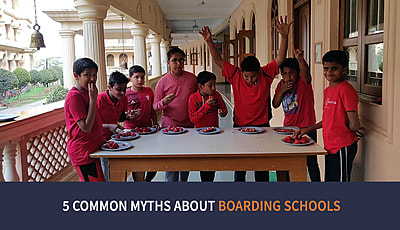
Intro: About Boarding School in India Based on the Reference Links Briefly explain 5 Myths – write up should be like these are just myths Conclusion / call to Action Introduction Boarding schools in India are a growing norm, and with many of them established in different cities and towns, students have an alternate option available for living and studying in residencies. These schools have become popular since many parents have overseas work attachments, transferrable jobs, or want their children to become independent from a young age. Being a crucial decision to enrol one’s ward in a residential boarding school in India, many times parents are exposed to certain myths about such schools. This blog attempts to bust some of these myths and present the facts about the best boarding schools in India. Myth 1: Boarding schools are meant only for rich people’s children. Though there is an additional cost to the stay, board and lodge in a boarding school, the best IB boarding schools in India are within the financial reach of a large number of parents. Thus the student population in a residential school is drawn from different parts of the country and from families of varying financial standing. At MIT Gurukul with our affordable fee we attract children from all parts of India and overseas. Myth 2: Boarding Schools are for students with behaviour problems The reality is far from the often cited reason for some parents to feel uncomfortable sending their children to boarding schools. With good pastoral care services available in boarding schools, and their location away from city centres, the home away from home atmosphere of boarding schools ensures a higher rate of motivation and long-term success for students. As per recent research done by the EF academy, 78% of boarding school students reported positive peer influence as compared to 49% in non-residential schools. Most students do not ever have any disciplinary issues and the rest are minor, growing-up phases that are addressed easily. In day schools this figure stands at 82% thus confirming that boarding schools’ structured residencies actually help develop disciplined students. Also, most boarding schools are for students with no behaviour problems. In some overseas countries, some boarding schools are specially set up for children with adjustment issues. [INSERT_ELEMENTOR id=”5216″] Myth 3: It is hard to keep in contact with the family: With the advent of technology and instruments like handheld mobile phones, internet, zoom calls and other such platforms, the students are able to keep in regular contact with their family. Within the educational calendar of the school, designated times are set for students to call their families, or for the families to contact them. There are also days every month when the parents can visit the school and meet with their wards. Myth 4: There is little or no free time for students to relax and find their individual time Students are given time within daily schedules to pursue their own interests, just sit and read or do nothing to take a break from studies and activities. This helps them find quiet periods to rest, spend time with other residency students and strengthen their friendship bonds, pursue a hobby, or connect with their families. Myth 5: All boarding and residential schools follow international curriculums Different boarding and residential schools, especially the best international schools in Pune, offer different curriculums based on student profiles and parents’ demands. MIT Gurukul offers the IB curriculum since most students aspire to study abroad after school and the curriculum helps them transition to foreign education seamlessly. Other common myths related to residential schools include the fact that all students from such schools go overseas to study, or opt for only science subjects, or that parental involvement is very less due to distance etc. In reality, students choose institutions in India and overseas for their bachelor’s, study science, commerce and humanities, and parents are encouraged to participate in school initiatives. The residential schools are excellent educational institutions that help develop future leaders and give holistic input to their students. MIT Gurukul has a comprehensive curriculum, optimal extracurricular facilities, a relaxed yet disciplined residential life and a family kind of loving and caring atmosphere. To know about the residential facilities and interact with the pastoral staff at MIT Gurukul, we invite the parents to visit the campus on open days and parent orientation programs.
Find the Best Boarding School in India in 3 Simple Steps- Blog
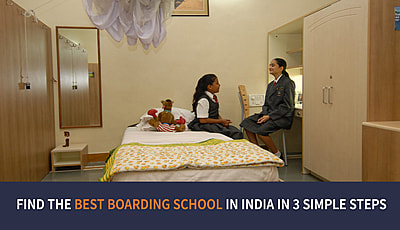
Residential schools refer to educational institutions where students study, lodge and board. These schools have emerged in the education scenario against demand from parents who have transferable jobs, overseas postings and extensive travelling work profiles. Boarding schools ensure that the children of such parents get a home away from home, learn in safe environments and develop social skills by living with other students from multicultural backgrounds. Selecting an ideal boarding school for one’s child can be a daunting task, one that involves careful consideration of many factors. Some of the important criteria that parents can use to find the most suitable residential boarding schools in India are: What does it mean if you go to boarding school? Attending a boarding school means living and studying in the same campus environment, away from home, with fellow students and teachers forming a close-knit community. It is more than just academics; it is about developing independence, discipline and resilience. Boarding life encourages time management and leadership through daily routines, sports, cultural events and peer interactions. With guidance from mentors, students learn responsibility while also building lifelong friendships. Though it may sound daunting at first, most boarders describe the experience as transformative. Boarding schools often become a second home, where learning is holistic; blending academic skills and personal growth under one roof. 1. The board that the school affiliates with: Parents can have a preference for the curriculum of a particular board they want their child to study. The main choices in India are between CBSE, ICSE, and state-specific boards. Increasingly the International Baccalaureate and the Cambridge Assessment curriculums are also becoming popular choices since most students aspire to study overseas after school. These two curriculums offer a seamless transition into the overseas education systems. Keeping this in mind, MIT Gurukul, a premier boarding school in Pune, has instituted the IB curriculum for its students. 2. School location: A residential boarding school must be built in a suitable location, preferably away from the city centre. This will enable it to offer a quiet, peaceful and safe place for students to concentrate on their studies. The location should also be accessible easily to parents through public or personal transport, so they can meet their children on designated days of the month within the school’s mandate. [INSERT_ELEMENTOR id=”5216″] 3. Safety readiness of the school: Leaving one’s ward in the hands of a school requires the parent to be sure of the safety aspects of the school. For this, one can note if the school has all safety aspects such as emergency exit plans, fire extinguishers, trained personnel and guards for safeguarding the school premises, and student-safe classrooms and labs. The residential hostel facilities should also be accessible only through student cards, and entry to any unauthorised person should be banned. Safe drinking water, hygienic food preparation facilities etc. form other aspects of the school’s safety preparedness. Among the IB syllabus schools, MIT Gurukul is considered a leading institution that prioritises student safety. 4. Other selection criteria Among some other criteria that the parents may employ to select a residential boarding school in India, they could be the choice of a same-sex or a co-ed school, fee structure, qualifications of the teachers and the certification of the hostel warden and other staff, and the overall infrastructure and facilities in the school.Making an informed choice for a residential school, where a child will spend the formative years of their life, is important for the long-term success of the child. With all intent to provide the best in the residential educational opportunity to its students, MIT Gurukul, one of the best boarding schools in india organises open days where parents can come enquire about the fees, view the campus facilities and hostel blocks.We invite prospective parents to visit our website https://www.mitgurukul.com/, register for the open days and visit our school and the on-campus hostel.
Journey of Right Learning Begins with the Right Preschool
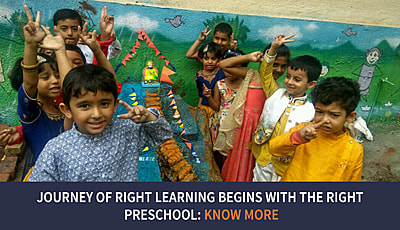
Early life experiences play a crucial role in a child’s life. Like social, emotional and psychological learning, an educational base formed at an early age is also very important. Fulfilling this need are the pre-schools, the concept of which has caught up with educationists and parents alike in the present times. A pre-school is a play-way method learning institution, generally for children between the ages of 2 years to 5 years. These are meant for foundational learning in developing basic awareness of surroundings, working with simple motor skills and laying the base for social interactions and emotional development. Preschools are the first step in a student’s long educational journey. As the initial milestone in their life outside of the home, the pre-school plays a very important part in shaping the cognitive, creative and conceptual aspects of young children. Understanding this, most Indian schools, but especially the best IB boarding schools in India, have pre-school as part of their educational offering. MIT Gurukul has one of the best preschools among comparable IB schools in India. A space allotted with appro[riate study materials, play equipment, lively classrooms and audio-visual technology have been set to attract the students’ attention to the first steps in learning. Loving teachers and benevolent care takers form the efficient teams at the preschool. Importance of Studying at a Pre-school There are many advantages of studying at a pre-school, some of which include: 01. Consistent Structure and Routine Going to preschool instils in children the habit of following a daily routine, and to learn in a structured manner. These form the basis of good habits during teen years and in adulthood. 02. Enabling Learning Environment Pre-schools provide an enabling learning environment with the right tools and equipment. The brightly decorated classrooms, play pens, child safe building blocks, colouring notebooks and audio-visual mechanisms arouse the interest in children to learn while enjoying the learning itself. 03. Teaching through variety of resources Whether it is storytelling, dancing or singing, making animal shapes with play dough, colouring and drawing, visiting a zoological park, pre-schools shape the learning behaviour, curiosity and the desire to imbibe information from multiple sources in children. This early base forms useful strengths for later research and inquiry. 04. Trained teachers and caretakers The learning of pr-schoolers is strengthened under the guidance of teachers specifically trained for preschool curriculums. They employ methodologies that make concepts very simple for the young learners. The caretaker is similarly trained in child hygiene and emotional aspects and certified for the work they do. This ensures that the children are looked after and made to feel secure. [INSERT_ELEMENTOR id=”5216″] How to select a preschool for your kid? While looking for the best pre-schools in Pune, the following will be helpful. 01. School Hours Young children should be initiated into learning at a comfortable pace. For this, it is important that the school hours at a preschool do not exceed two and a half to three hours. The duration should include some study, some play, break and rest to mimic the schedule that children have been used to at home. 02. Distance from home Young children should be made to travel a little distance to reach the school without compromising on the quality of education. This distance should be traversed in school buses specially designed for young travellers with an attendant in the bus at all times. 03. School Infrastructure School campuses should be safe for the young learners. The furniture should be ergonomic, play equipment should be painted in non toxic colours, low level taps should be installed at strategic points. Ramps must be installed for easy evacuation in case of emergency Emergency Services A doctor on call and the presence of a trained nurse at pre-schools can provide a sense of assurance to parents that the children will be taken care of in any medical requirement. Similarly, fire extinguishers and the presence of security guards at the school gate are other factors one can consider while selecting a preschool. Talking to other parents regarding their experience with a pre-school, avenues for parent involvement, access to teachers to get one’s queries answered in time, visiting the school premises to see facilities first-hand are some methods that parents can employ while looking for nursery schools in Pune and other cities of India. To see the facilities present at the MIT Gurukul preschool, and to understand the teaching methods, we encourage the parents to visit the preschool during our open days and interact with the teachers. Also Read Catch Them Young: The Importance of Early Childhood Education How do children learn in IB PYP? Benefits of Extracurricular Activities in Child Development Best Ideas to Keep Your Child Stay Organised Can Teachers and Parents Work Together to Facilitate the best learning Experience for Kids. The Art Scenario at MIT Gurukul – Developing the Creativity Index