


Top 6 Motivational Stories in English For Students with Moral Values

We have heard a short motivational story or two in our childhood. These short motivational stories in English have always helped us make crucial decisions when needed. A short motivational story in English can often come into play when you need to teach your young ones the values of ethics, but at the same time, want to make it a fun activity. Children have a very impressionable mind at a young age, and true motivational stories with moral values can profoundly impact their actions and ethical and social development. These stories can also be speech topics for children to improve their reading skills. The best motivational story in English can be any story that will make your child think and differentiate between good and evil. Animal fables can inspire a motivational story. They can also be inspired by true motivational stories with morals like that of the freedom fighters of India. Let us now take a look at a few Motivational Stories In English – 1. The Lion And The Mouse This story is about how a kind lion, even when pestered by a mouse, just warns and does not kill it. One day when the Lion is trapped in a hunter’s net, the mouse rescues the Lion and repays Lion’s kindness. Moral – This Motivational Story, in English, teaches how no good deed goes unpaid. 2. The Magic Pot This simple motivational story for students in English is an excellent example of how greed leads to problems. In this story, a poor farmer finds a magic pot that provides abundant anything. The poor farmer becomes rich using this pot. The King of the land then forcibly takes the pot from the farmer, and the greedy King multiplies his wealth. One day, tragedy strikes when the King’s father falls into the pot, and the King looks after his father and his father lookalike. This situation causes the King many problems, losing his peace of mind. Moral – This beautiful, honest, inspiring story for children teaches them that – Being greedy can lead to problems. 3. Three Little Pigs This short motivational story in English, is one of the most loved stories with great moral value. This story shows how important hard work is. Of the three little pigs, two were lazy, shied away from working hard, and worked on houses made of straws. The third pig built a brick house by working hard. A wolf blows up the two weak houses and eats the two little pigs, but the third one is safe because of his strong home. Moral – Hard Work always pays off. Also Read 5 Easy Ways To Introduce Yourself In English How To Write An Application To The Principal Journey of Right Learning Begins with the Right Preschool List Of Animals And Their Homes With Young Ones Advantages Of Reading Newspaper For Students 4. The Boy Who Cried, Wolf This motivational story in English teaches a vital lesson in life. This story is about a mischievous young boy who enjoys playing pranks on others and lying about everything. One day, while the boy and his father were walking in the woods, the boy pranked his father several times by saying that a wolf was following them. The father gave up after asking the boy not to lie a few times. On one fateful day, the boy was followed by a wolf, for real this time, but his father did not believe the boy as he was always lying to his father. The wolf attacked the boy and ate him this time, only for the father to realise later what had happened. Moral – No one will believe a liar even when he tells the truth. 5. The Ant and The Grasshopper This story involves a carefree grasshopper and a hardworking Ant. The ant collects food in the summer to prepare for the winter, while the grasshopper is fooling around in the summer, mocking the ant for its hard work. When winter arrives, the ant is warm with its tummy full, while the grasshopper is starving without food. The ant then helps the grasshopper through the winter and teaches the importance of hard work. Moral – This Motivational Short Story in English gives a message about Hard Work and Planning. [INSERT_ELEMENTOR id=”5216″] 6. The Ugly Duckling In this story, a grey duckling is ridiculed by his siblings for his ugly appearance. Unable to bear the ridicule, the duckling runs away from its family. After some time, the duckling realises it is a beautiful swan, not a duck. The snow-white feather makes the duckling happy and gains the confidence to face the world. Moral – This story is one of the best motivational stories in English and teaches us not to judge others by their looks. These motivational stories with moral values are vital for the moral development of students, and they are great as storytelling ideas for kids. The stories mentioned above are just a few of the many. Parents and teachers can tell children these stories to teach them a few good habits for their bright future.
10 Harmful Effects of Junk Food for Kids | How to Avoid Junk Food

In today’s world, fast food and junk food has become common. Its easy availability and appealing taste make it difficult to resist, leading to a concerning rise in its consumption among kids. However, many of us are not aware of the harmful effects of consuming junk foods, especially to kids. Due to their growing brains and bodies, children are more prone and vulnerable to the effects of junk foods. As a parents and educators, it is our responsibility to have an awareness and spread it to our children about the detrimental effects of the junk food. In this blog, we will explore ten harmful effects of junk food on kids and provide practical tips on how to avoid junk food, fostering a nutritious and balanced diet for our little ones. What are Junk Food and Healthy Food? Junk food and healthy food are two opposite ends of the spectrum when it comes to nutrition. Junk food refers to foods that are high in calories, fat, sugar, and sodium, but low in nutrients. These foods are often processed and packaged, making them convenient to eat but not very healthy. Examples of junk food include fast food, candy, chips, and soda. On the other hand, healthy food refers to foods that are nutrient-dense, meaning they provide a lot of nutrients for their calorie content. These foods are often whole and minimally processed, making them a better choice for overall health. Examples of healthy food include fruits, vegetables, lean proteins, whole grains, and nuts. Junk Food vs Healthy Food: Junk food: High in calories, fat, sugar, and sodium. Low in nutrients. Examples include fast food, candy, chips, and soda. Healthy food: Nutrient-dense, providing a lot of nutrients for their calorie content. Examples include fruits, vegetables, lean proteins, whole grains, and nuts. Reasons Why Children like Junk Food Flavor: Junk food is often designed to be highly palatable, with high levels of salt, sugar, and fat that can be very appealing to kids’ taste buds. Advertising: Junk food companies heavily market their products to children, using colorful packaging, cartoon characters, and enticing commercials that make unhealthy foods seem fun and desirable. Peer influence: Kids are influenced by their friends and social circles, and if their peers prefer junk food, they may feel more inclined to choose it over healthier options. Convenience: Junk food is often readily available and convenient, making it an easy choice for busy parents or when kids are on the go. Texture: Some children may have aversions to certain textures found in healthy foods, which can make them less appealing to eat. [INSERT_ELEMENTOR id=”5216″] Also Read Names Of Planets In Solar System | Names of Planets In Order How To Write An Application To The Principal Importance Of Parent Teacher Meetings At School How Junk Food Is Made – Food Contents That Make It Junk Junk food usually includes highly processed ingredients that contain high levels of added sugar, unhealthy fats and oils, artificial additives and preservatives, and refined carbohydrates. These components contribute to the unhealthy nature of junk food by providing empty calories without providing any nutritional value. Additionally, junk food is often high in salt, leading to increased risk of hypertension. The processing techniques used in the production of junk food also strip the ingredients of important nutrients and fibre that the body needs. 10 Harmful Effects of Junk Food For Kids (Childhood Obesity) Obesity and weight-related issues: Excessive junk food consumption can lead to a high intake of calories, sugar and unhealthy fats, leading to childhood obesity and other weight-related issues. Nutritional deficiencies: Junk foods lack important nutrients such as vitamins, minerals, fiber, and protein which leads to nutritional deficiencies in children. Increased risk of chronic diseases: Consistent consumption of junk food can increase the risk of chronic diseases such as diabetes, heart disease, and cancer in children. Poor dental health: High sugar and acid content in junk food can cause dental problems such as cavities and decay. Impaired cognitive function: Junk food intake has been linked to impaired cognitive function, poor memory, and reduced attention span in children. Mood swings and irritability: Junk food consumption can lead to mood swings and irritability due to the effects of sugar and other artificial additives. Addiction and cravings: Junk food is designed to be addictive, and consistent consumption can lead to cravings and behavioural addiction in children. Negative impact on self-esteem and body image: Consistent consumption of junk food can lead to weight gain and negative feelings about body image in children. Long-term Health Consequences: Consistent consumption of junk food throughout childhood can lead to long-term health consequences that may persist into adulthood. Academic performance: The negative impact of junk food on cognitive function and attention span can also lead to poor academic performance in children. How To Avoid Junk Food -4 Easy Tips to Avoid Junk Food Educating Children About Healthy Food Choices – Teach kids about healthy and nutritious food and involve them in grocery shopping and meal planning. Creating A Healthy Food Environment – Avoid stocking junk food at home, replace with healthy snacks like fruits and vegetables and limit the frequency of eating junk food. Role Modelling and Setting a Positive Example – As an adult, set a good example of healthy eating habits and avoid eating junk food in front of children. Encouraging Balanced Meals and Mindful Eating – Plan balanced meals, encourage mindful eating and ensure that kids have access to nutritious food even when eating outside the home. The Kid’s Healthy Eating Plate is a visual guide designed by nutrition experts to help children understand what a balanced and healthy meal looks like. The plate suggests that half of the meal should be made up of fruits and vegetables, a quarter should be lean protein, and the remaining quarter should be whole grains. It also encourages kids to drink water or milk instead of sugary drinks and to limit their intake of processed or fast food. Conclusion: In conclusion, junk food has
10 Positive Parenting Tips for Building a Strong Parent-Child Bond

Parenting can be both rewarding and challenging, as every child is unique and requires different kinds of attention and care. However, one thing that all parents can agree on is the importance of building a strong parent-child bond. A strong bond between parents and children promotes positive behaviour, levels of happiness, and overall well-being. As a parent, it is imperative to decipher what kind of parenting techniques work with your child and establish a strong foundation of communication, trust, and respect. In this parenting guide, we will share ten positive parenting tips that can help you strengthen the relationship with your child and create a happy, healthy family dynamic. What is Positive Parenting? Positive parenting is an approach to raising children that focuses on building a strong relationship between parent and child, while also promoting the child’s independence and self-esteem. It involves setting clear boundaries and expectations, using positive reinforcement instead of punishment, and communicating effectively with your child. Positive parenting also emphasizes the importance of modelling positive behaviours and attitudes, and taking a proactive approach to problem-solving and conflict resolution. By practicing positive parenting, parents can help their children develop into confident, resilient, and well-adjusted adults. Benefits of Strong Parent-Child Bond Emotional Well-being: A strong bond between a parent and child can contribute to the child’s emotional stability and mental health. Better Communication: When parents have a strong bond with their child, they are more likely to have open and honest communication, which can lead to a better understanding of each other’s needs and feelings. Higher Self-esteem: Children who have a strong bond with their parents tend to have higher self-esteem and confidence in themselves and their abilities. Positive Behaviour: A strong parent-child bond can lead to positive behaviour in children, including better academic performance, social skills, and decision-making abilities. Resilience: Children who have a strong bond with their parents are more likely to be resilient and able to cope with difficult situations and challenges. [INSERT_ELEMENTOR id=”5216″] Also Read Teachers and Parents Collaborating for Kids’ Learning Journey Advantages of Reading Newspaper for Students Why Is International School Education Gaining Importance Day By Day? Six Tips for Establishing Good Homework Habits in Your Child 10 Positive Parenting Tips for Parents 1. Communicate with Love and Respect: Speak to your children in a positive and respectful manner. Listen to them when they speak and take the time to engage in meaningful conversations. Encourage the expression of feelings and thoughts. 2. Spend Quality Time Together: Set aside some time each day to spend with your children. Attend parent-teacher meetings at school and participate in school activities. Take your children to parks, museums, and other fun family activities. 3. Show Affection and Physical Touch: Show your children affection through hugs, kisses, and physical touch. Let them know that you love and appreciate them. 4. Practice Positive Discipline: Use positive reinforcement and logical consequences to teach your child appropriate behaviour, rather than punishment. 5. Be a Role Model: Children learn by example. Model healthy behaviours such as exercise for kids, a healthy diet, and a positive attitude. 6. Foster Trust and Emotional Safety: Build a safe and trusting relationship with your children. Encourage them to talk to you openly about their feelings and thoughts. 7. Encourage Independence and Autonomy: Allow your children to make decisions for themselves and take responsibility for their actions. Encourage them to explore their interests and passions. 8. Practice Active and Playful Parenting: Engage in active and playful parenting. Play with your children and participate in activities with them. Encourage them to get involved in sports and other physical activities. 9. Practice Mindful Parenting: Take the time to be present in the moment and be aware of your thoughts and feelings as you interact with your children. Use mindfulness as a tool to stay calm and centered in difficult situations. 10. Celebrate and Appreciate: Celebrate your child’s accomplishments and show appreciation for their efforts, no matter how small. Remember, good parenting tips involve focusing on the positive and building a strong relationship with your child By following these parenting tips, you can create a nurturing and positive environment for your children, and help them to grow into happy, healthy, and well-adjusted adults. In conclusion, building a strong parent-child bond is crucial for the healthy development of children. It helps them feel loved, safe, and secure, which in turn boosts their self-esteem and confidence. By incorporating positive parenting tips discussed in this blog, parents can work towards creating a harmonious relationship with their child that is built on trust, respect, and effective communication. Remember that parenting is a journey that comes with its ups and downs, but by staying patient, loving, and consistent, you can become the best parent your child needs. Additionally, parents can visit https://www.mitgurukul.com/ for effective career planning for students and understand the importance of discipline. MIT Gurukul is an best IB School In pune provides personalized learning experiences which meet the unique needs and interests of each student. Implementing these ideas and resources can help you be a better parent and contribute to the wholesome development of your child.
Names Of Planets In Solar System | Names of Planets In Order

Willing to know more about the names of planets in the solar system? Well, you are at the right place as here we will provide you with a detailed description of the Planets name in english. Solar System Our solar system is a gravitational-bound system with the sun at its centre. The name planets in the solar system along with their moons periodically revolve around the sun. The solar system order of planets is Mercury, Venus, Earth, Mars, Jupiter, Saturn, Uranus, and Neptune. How Many Galaxies Exist In The Universe The exact number of galaxies in the universe has always been a mystery. However, it is believed that there are over two trillion galaxies that exist within the observable universe. So, it would be quite impossible for us to name all the planets in every galaxy of our Universe. The Name Of Our Galaxy & Explanation The name of our galaxy which includes our solar system with the planets names in order (Mercury, Venus, Earth, Mars, Jupiter, Saturn, Uranus, Neptune) is the Milky Way Galaxy. The galaxy name describes its appearance which is a band of light seen in the night sky. Names Of Planets In The Solar System – Correct Order Here we are with the names of planets in the solar system: Mercury: Order: 1st from the Sun. Size and Colors: Mercury is the smallest planet in our solar system (Diameter: 4,879 km). It has a greyish-brown colour. Orbit and Distance: The orbit is elliptical. The distance from the Sun is about 57.9 million km. Moons: No moons Atmosphere and Climate: The atmosphere mainly contains helium. Extreme temperature variations are experienced. Fun Facts: It is believed that Mercury is shrinking every day. Venus: Order: 2nd from the Sun. Size and Colours: The size of Venus is similar to Earth (Diameter: 12,104 km). It has a yellowish-white surface. Orbit and Distance: The orbit is circular. The average distance from the Sun is about 108.2 million km. Moons: No moon. Atmosphere and Climate: The atmosphere is composed of carbon dioxide, resulting in extremely high temperatures. Fun Facts: Venus rotates in a direction opposite to that of other planets. Earth: Order: 3rd from the Sun. Size and Colors: Earth is the largest terrestrial planet (Diameter: 12,742 km). Its surface is blue due to the presence of water. Orbit and Distance: The orbit is circular and the average distance from the Sun is about 149.6 million km. Moons: One moon called “the Moon.” Atmosphere and Climate: The atmosphere is composed of nitrogen, oxygen, and traces of other gases. Its climate varies from region to region. Fun Facts: Earth is the only planet which is known to support life. Mars: Order: 4th from the Sun. Size and Colours: Mars is smaller than the Earth (Diameter: 6,779km). The surface is reddish-brown. Orbit and Distance: The orbit is elliptical. The average distance from the Sun is about 227.9 million km. Moons: Two moons named “Phobos” and “Deimos.” Atmosphere and Climate: The atmosphere is composed of carbon dioxide. The climate is cold. Fun Facts: The planet has its name after the Roman god of war. Jupiter: Order: 5th from the Sun. Size and Colours: Jupiter is the largest planet in our solar system (Diameter: 139,820 km). The surface has different shades of orange and brown. Orbit and Distance: The orbit is elliptical. The average distance from the Sun is about 778.5 million km. Moons: 79 known moons. Atmosphere and Climate: The atmosphere is composed of hydrogen and helium. It has a turbulent atmosphere. Fun fact: Jupiter is so massive that it could fit all the other planets in the solar system inside it. Saturn: Order: 6th from the Sun. Size and Colors: Saturn is the second largest planet (Diameter: 120,536 km). The surface is yellowish. It also contains rings around it. Orbit and Distance from the Sun: The distance from the Sun is about 1.4 billion km. The orbit is elliptical. Moons: More than 80 known moons. Atmosphere and Climate: The atmosphere is composed of hydrogen and helium. The temperature is -288 degrees Fahrenheit. Fun Fact: Saturn’s rings are composed of numerous small ringlets. Uranus: Order: 7th from the Sun. Size and Colours: Uranus is the third-largest planet (Diameter: 51,118 km). It has a blue-green colour. Orbit and Distance from the Sun: The orbit has an elliptical shape. The distance from the sun is 2.9 billion km. Moons: 27 known moons. Atmosphere and Climate: The atmosphere is composed of hydrogen and helium. The temperature is really cold. Fun Fact: Uranus is said to have an unusual axial tilt. Neptune: Order: 8th from the Sun. Size and Colours: Neptune is the fourth-largest planet (Diameter: 49,528 km). The surface has a vibrant blue colour. Orbit and Distance from the Sun: The average distance from the sun is 4.5 billion km. Moons: 14 known moons. Atmosphere and Climate: The atmosphere is primarily composed of hydrogen, helium, and methane. It is known for its turbulent weather. Fun Fact: The surface of Neptune has the Great Dark Spot. Also Read Who Invented Zero Effects Of Sleep Deprivation For Students Importance Of Parent Teacher Meetings At School Why Students Should Know The Planets Names In Solar System Knowing the name of the planets in the solar system will help the kids to enhance their general knowledge. They will have an enhanced understanding of astronomy and space exploration. It also cultivates a sense of interest in space exploration and technology in the minds of students. [INSERT_ELEMENTOR id=”5216″] Conclusion/Call to Action – As we can see, each of the planets in the solar system has its own set of features. As we continue to learn more about these planets, we strengthen our knowledge of the universe. So, let’s continue the learning process with MIT Gurukul and delve deeper into the unknown. Faq’s Accordion #1 Lorem ipsum dolor sit amet, consectetur adipiscing elit. Ut elit tellus, luctus nec ullamcorper mattis, pulvinar dapibus leo. What is our galaxy called? Our galaxy is called the Milky
Latest (2023) Group Discussion Topics & Tips For Students | Interviewee
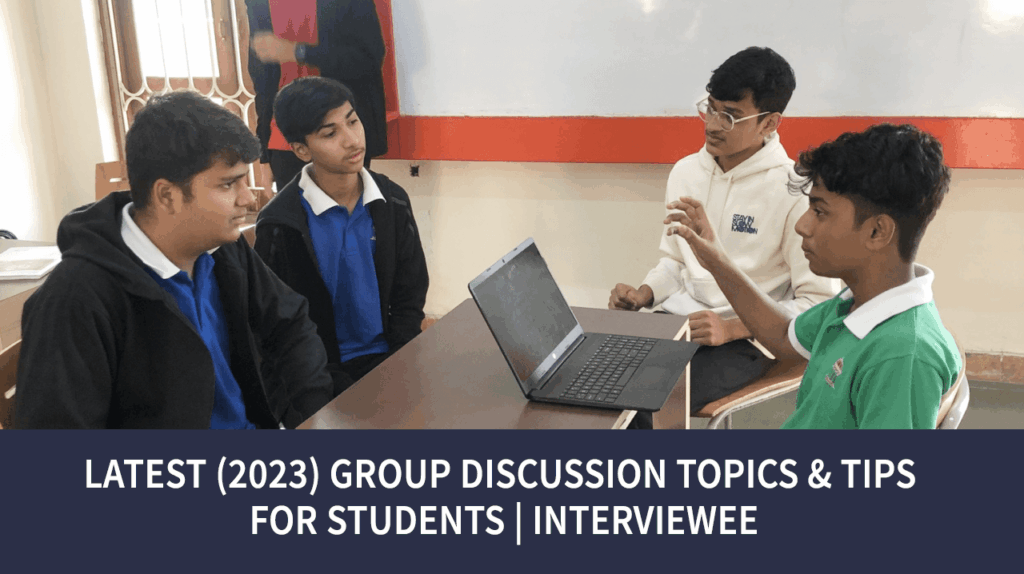
Group discussion has got a major role to play in promoting collaboration, critical thinking, and effective communication skills in individuals. By engaging in a group discussion, you will be able to share your perspective with others and collaboratively address various issues. Group discussions will also help you to act on your listening skills and articulate your thoughts in a much better way. > What is Group Discussion? Group discussion is a discussion between the participants where thoughts and ideas are exchanged respectably. It is an interactive way of coming to a collective decision about a problem. In a group discussion, the participants talk about a topic, present their facts, and also challenge various assumptions. This enhances their participation skills and also allows them to make effective communications with others. > Group Discussion Topics For Students and Interviewees Multiple group discussion topics can be discussed. The topic will depend on who the participants are in the group discussion. Most Comman Group Discussion Topics For Students: Challenges and opportunities in the present education system. Importance of spreading mental health awareness among students. Impact of social media on the students of today. Most Comman Group Discussion Topics For Interviewees: India should think of going completely cashless in recent years. Abortion should be legalized in India. Impact on Artificial Intelligence and Technology in the professional world. > Top 8 Group Discussion Tips For Students In Classroom 1. Establish Clear Goals and Guidelines: The students need to establish clear goals and guidelines. Only then will they be able to present their perspective clearly and concisely. Also, go through the gk questions beforehand so that you can address all the questions that might come your way. 2. Prepare and Research: The students should prepare well in advance for the discussion topics for students. They should do their research on group discussion examples for students and come up with relevant ideas during the discussion. 3. Active Listening: Active listening is a very important part of group discussion. Listening will not only allow the students to have a clear understanding of the topic of discussion but will also indicate how respectful they are towards the other participants. 4. Respect and Constructive Feedback: Maintaining mutual respect is crucial to the success of any group discussion. The students should also aim to provide constructive feedback to trigger a positive learning environment. 5. Equal Participation: It is necessary to ensure that all the students get equal chances of participation during the debate. This will allow them to feel valued and they will be able to share their ideas confidently. 6. Collaboration and Building on Ideas: The students should build on each other’s ideas and thoughts. This is going to foster a positive learning environment and the outcome of the group discussion will be a better one. 7. Time Management: Time management is a vital aspect of group discussion. The students should only speak within the time limit allotted for them. This will help them to speak in a precise way without getting side-tracked. 8. Summarize and Synthesize: At the end of the group discussion, the students should summarize and synthesize their key points. This helps in consolidating the ideas so that everyone remains on the same page. Accordion #1 Lorem ipsum dolor sit amet, consectetur adipiscing elit. Ut elit tellus, luctus nec ullamcorper mattis, pulvinar dapibus leo. Where is the group discussion done Group discussions are done in various setups including classrooms, conference rooms, online platforms, etc. What is a group discussion for students? In a group discussion for students, the students maintain a collaborative approach. They share their ideas on a particular topic and also challenge the ideas of others. What are the topics for group discussion? The topic can be anything relevant to the participants and the present scenario. How can I introduce myself in Gd? The introduction should be precise. Start by stating your name and then highlight the topics of the discussion. What are the 5 advantages of the discussion method? Increased engagement. Time management Effective communication Collaborative approach Improved confidence.
Self Introduction in English For Students: 5 Easy Ways to Introduce Yourself In English

Self-introduction is the act of introducing oneself to others, usually in a formal or informal setting. In English, self-introduction is an essential communication skill that enables individuals to establish a rapport with others, make a good first impression, and express their personality and qualities. The importance of self-introduction in English cannot be overstated, as it is often the first step in establishing meaningful relationships and interactions in both personal and professional settings. Whether you’re meeting new colleagues, attending a job interview, or introducing yourself to a new social group, being able to confidently and effectively introduce yourself can make all the difference in how you are perceived and how successful you are in achieving your goals Fluent English speakers in India earn ~34% more wages compared to those who don’t speak English; even “a little English” gives ~13% higher wages. Why Self-Introduction in English is Important Being able to introduce oneself confidently and effectively in English can create opportunities for networking, job interviews, and socializing. It can help establish a rapport with new colleagues, potential employers, and social acquaintances, leading to more meaningful interactions and connections. Self introduction in English for students is also a way to express one’s personality and qualities, allowing others to get to know you better. This can be particularly important in professional settings, where individuals may be judged based on their confidence, professionalism, and communication skills. Also Read Six Tips For Establishing Good Homework Habits In Your Child Best General Knowledge Q&A For Kids & Students 10 Significant & Meaningful English Proverbs Helpful For Students How Do You Introduce Yourself in English Using 5 Simple Methods? Method 1: Name, Occupation, and Location Hi, I’m [name]: This is a simple and straightforward way to introduce yourself. Just say “Hi, I’m [name]” and smile. Method 2: Name and Background If you want to share where you’re from, you can say “I’m from [place].” This can be a good conversation starter if someone is interested in learning more about your hometown or country. Method 3: Name and Hobbies/Interests Nice to meet you, my name is [name]: This is another common and polite way to introduce yourself. You can add your hobbies or interest to show your friendliness. Method 4: Name and Goals I work/study in [field]: If you’re introducing yourself in a professional setting, you can mention your field of work or study. For example, “I work in marketing” or “I’m studying engineering.” Method 5: Name and Compliment What about you? : This is a simple and effective way to turn the conversation back to the other person. After introducing yourself, ask “what about you?” to show your interest in learning about them. Tips for Effective Self-Introduction in English Practice and Prepare Ahead of Time. It can be helpful to practice your introduction beforehand so that you are comfortable with what you want to say. This can help reduce nerves and ensure that you are able to communicate effectively. Pay attention to body language and tone of voice. Speak clearly and confidently to make a good first impression. This will also help ensure that you are easily understood. Use a friendly and approachable tone when introducing yourself. This will help make the listener feel at ease and more likely to engage with you. Keep it brief and relevant. Highlight the most important details about yourself, such as your name, profession or area of study, and one or two personal interests or hobbies. Use simple and clear language. Use language that is easy to understand and avoid complex vocabulary or jargon. This will help ensure that your message is clear and easily understood. Avoid negative or controversial topics. Never start with controversial or negative topics. Also Read The Impact Of Teacher-Student Relationships On Academic Success List Of Animals And Their Homes With Young Ones – Images & Names Who Invented Zero First | Guide To The History & Invention Of Zero 5 Simple Daily Habits To Reduce Stress & Improve Focus Advantages Of Reading Newspaper For Students & Tips To Cultivate The Habit Common Mistakes to Avoid When Introducing Yourself in English Not introducing yourself clearly. Providing too much personal information Speaking too fast or too slow. Using complex vocabulary and grammar Failing to make eye contact or not smiling Being too casual or too formal. Not using appropriate body language or gestures. Forgetting to ask questions or show interest in the other person. Using slang or inappropriate language. Not practicing beforehand. How To Introduce My Self In Different Situations I. Student Self Introduction In English Tips to Introduce Yourself In Class as a Student Start by greeting State your name and major ShRe personal details Ask questions Be confident Listen attentively 85% of Indian employees believe learning English is critical for career advancement. Example – Take a look at my self introduction in English. Good morning, everyone. My name is Emily, and I’m a sophomore studying psychology. I’m excited to be in this class and learn more about the human mind. In my free time, I like to read and write fiction. What about you? What do you like to do for fun? II. Self Introduction in Interview Tips For Self Introduction In English In Interview Begin by greeting State name and relevant background Share your interest Highlight relevant skills Be concise Have a few questions ready Example – Good afternoon, it’s great to meet you. My name is John, and I have five years of experience in sales and marketing. I’m really excited to be here today and learn more about the sales manager position at ABC Company. I have experience managing sales teams and developing effective sales strategies. What qualities do you think are essential for success in this position? III. Self Introduction in Social Gatherings Tips to Introduce Yourself In Social Gatherings Greet State your name Ask question Share common interest Show interest Keep it light and friendly Example – Hi, I’m Sarah. I saw you both looking at the art exhibit, and I wanted to
How to Write an Application to the Principal: Step-By-Step Guide with Sample Letters & Templates

Writing an application to the principal is crucial for seeking permission, scheduling meetings, reporting issues, and making suggestions. It is a formal and structured way of communicating with the school’s administration, ensuring that matters are handled appropriately and respectfully. Applications to the Principal Are Required in What Situations Some common situations where a formal application to the principal is required are: Permission to participate in extracurricular activities Seeking admission to the best boarding schools in Mumbai Complaints or grievances Request for leave (leave letter to principal) Suggestions or feedback Request for certificate or recommendation letter Request for transfer or change of section Step-by-step Guide on How to Write the Application – Format to Follow Opening Statement and Introduction Start the application by addressing the principal respectfully and introducing yourself (mandatory in case of a leave letter to principal). For example, “Respected Principal, I am writing this application to request a leave.” Clearly Stating the Purpose of the Application In the next paragraph, clearly state the purpose of the application using your communication skills. For example, “I am writing to request permission to attend a sports event.” Providing Relevant Details and Supporting Information In the following paragraphs, provide relevant details and supporting information to strengthen your case. For example, mention the dates and timings of the event. Closing Statement and Expression of Gratitude End the application by thanking the principal for considering your request and expressing hope that permission is granted. For example, “Thank you for considering my request. Your support will be highly appreciated.” Also Read:* The Impact Of Teacher-Student Relationships On Academic Success* List Of Animals And Their Homes With Young Ones- Images & Names* Who Invented Zero First | Guide To The History & Invention Of Zero* 5 Simple Daily Habits To Reduce Stress & Improve Focus* Advantages Of Reading Newspaper For Students & Tips To Cultivate The Habit Examples of Sample Applications to the Principal > Sample Application – How to Write Permission Letter to Principal Accordion #1 Lorem ipsum dolor sit amet, consectetur adipiscing elit. Ut elit tellus, luctus nec ullamcorper mattis, pulvinar dapibus leo. What is a letter of introduction? A letter of introduction is a type of correspondence that is typically used to introduce oneself. Reading newspaper habit can improve your letter-writing skills. What should be included in a cover letter? A cover letter should have your introduction, highlight your relevant skills and experience, and express your interest. Is application to the principal formal or informal? It is a formal letter to principal for permission, information, or some other form of assistance. For example, a letter to principal for leave. How do you end an application letter? To end an application letter, you should express your gratitude. It should end with “sincerely, or best regards”, followed by your name.
Role of Social Media in Education: 10 Ways To Use Social Media For Education

Social media has become an integral part of modern society, with billions of people using various platforms to connect, communicate, and share information. In recent years, social media has also made its way into the field of education, transforming the way students learn and educators teach. In this digital age, it is becoming increasingly important for educators and institutions to incorporate social media into their teaching methods. As technology continues to advance, social media will continue to play an essential role in education, helping to shape the future of learning and preparing students for success in the 21st century. What Are the Advantages of Using Social Media in Education? Increased Engagement And Motivation Social media platforms allow students to connect with each other and with their teachers outside of the classroom, which can create a sense of community and foster a deeper interest in the subject matter. Encourages Collaboration And Teamwork Social media platforms encourage collaboration and teamwork among students, which can help to improve their problem-solving and communication skills. Provides Opportunities For Personalized Learning Social media can provide opportunities for personalized learning, as students can access a wide range of resources and educational content that is tailored to their individual needs and interests. Promotes Student-teacher Communication Social media platforms can help to promote communication and interaction between students and teachers, which can improve student learning outcomes. Offers Access to Global Resources By leveraging the power of social media, educators can help to create a more globalized and interconnected learning experience for their students. 10 Ways to Use Social Media For Education Here are 10 ways in which social media can be used for education: 1. Facilitating online discussion groups to encourage collaboration and interaction between students. 2. Sharing educational videos and podcasts to provide supplemental materials and enhance students’ understanding of the subject matter. 3. Using social media platforms for research projects, allowing students to share information and resources and work together on research assignments. 4. Organizing virtual field trips to enhance students’ learning experience and expose them to new ideas and concepts. 5. Conducting polls and surveys to gather feedback from students and improve the quality of instruction. 6. Sharing news and updates related to the subject matter to keep students informed and engaged. 7. Providing access to online learning resources such as e-books, articles, and online courses to supplement classroom learning. 8. Encouraging blogging and reflective writing to help students develop their writing skills and reflect on their learning experience. 9. Offering opportunities for peer review to encourage collaboration and provide feedback to students. 10. Promoting digital literacy by teaching students how to use social media platforms safely and responsibly, and helping them develop critical thinking and research skills. Also Read:* 5 Simple Daily Habits to Reduce Stress & Improve Focus* Six Tips for Establishing Good Homework Habits in Your Child* List of Top 10 Freedom Fighters of India* The Impact of Teacher-Student Relationships on Academic Success* Top 10 Impressive & Interesting English Speech Topics for Students Drawbacks And Challenges of Using Social Media in Education – How to Overcome From it While social media can be a valuable tool in education, it also presents several drawbacks and challenges that need to be addressed. Here are some of the common drawbacks of using social media in education and ways to overcome them: Distraction Social media can be a major distraction for students and can negatively impact their learning. To overcome this, educators can set clear guidelines for social media use during class time, such as limiting access to certain platforms or requiring students to keep their phones on silent. Cyberbullying Social media can also be a platform for cyberbullying, which can have a detrimental effect on students’ mental health and well-being. Educators can address this issue by promoting safe and responsible social media use and implementing policies and procedures for reporting and responding to cyberbullying incidents. Privacy and security concerns Social media platforms can pose privacy and security risks for students, as their personal information and online activity can be easily accessed by others. Educators can address these concerns by educating students about online privacy and security and encouraging them to use strong passwords and privacy settings. Inappropriate content Social media platforms can contain inappropriate content that is not suitable for students. To overcome this, educators can use content filtering tools and monitor social media activity to ensure that students are not exposed to inappropriate content. Lack of access Not all students have access to social media platforms, which can create disparities in learning and engagement. To overcome this, educators can provide alternative means of communication and collaboration for students who do not have access to social media, such as email or discussion forums. Faq’s: How social media is used in education? Social media is used in various ways, some of which are: Communication and collaboration Content sharing Online learning Research and information gathering Feedback and evaluation Why is social media important in the field of education? Social media has transformed the way education is delivered and received, making it more accessible, engaging, and inclusive for students of all ages and backgrounds. As technology continues to evolve, social media will likely play an increasingly important role in the field of education. What is the impact of social media on students? The impact of social media on students can be both positive and negative. Some of the positive impacts are: Improved communications Access to informat Collaborative learning Career development Negative impact includes Distraction Cyber bullying Misinformation Addiction What are the positive effects of social media in education? Social media can enhance the learning experience for students and provide opportunities for more personalized and engaging education. By leveraging the benefits of social media in education, educators can help to prepare students for the future and equip them with the skills they need to succeed in a rapidly changing world.
The Effects of Sleep Deprivation on Academic Performance in High School

Sleep deprivation has been a common problem in students these days. A recent study has revealed that over 50% of students have to deal with the effects of sleep deprivation regularly. This can not only affect their academic career but also negatively impact their health. Sleep deprivation is also one of the major causes of stress. So, let us look at some of the lack of sleep side effects and how they can be avoided. What Is Sleep Deprivation? Sleep deprivation is a condition that occurs when you do not get the required amount of sleep. It can occur due to numerous reasons and can have a direct impact on your overall health. Sleep is something we all need and without proper sleep, our body will fail to function properly. Lack of sleep side effects can have major impacts on our lives. Long-term sleep deprivation can also lead to permanent health disorders. This is why the top schools in Mumbai indulge the students in various activities that can improve their sleep at night. Factors Affecting Sleep in High School Students School Schedule And Workload: Most students find it difficult to cope with their workload. This can lead to sleep deprivation effects. For many students, the school start time is early which can again lead to sleep deprivation. Part-time Jobs: A lot of students take up part time-jobs mainly because of extra income They may have to work for long hours into the evening after school. This can reduce their sleep time. Social Media And Electronic Devices: The students of today are always on their electronic devices. The blue light emitted by electronic devices can make it harder for them to fall asleep. Being constantly online on social media can again build their anxiety level, thereby causing sleep deprivation effects. Sleep Hygiene And Habits: Improper sleep hygiene and habits can cause sleep deprivation for students. This includes an irregular sleeping schedule, unhealthy diets, and much more. Students also engage in activities like caffeine consumption which disrupts their sleep cycle. Sleep Disorders: Some students suffer from sleep disorders like insomnia. This can impact their quality of sleep to a great extent. Such conditions should not be left unaddressed and need to be taken care of really soon. What Causes Lack of Sleep? – Negative Effects of Lack of Sleep On Students in Academic Performance Decreased Academic Performance: Lack of sleep effects the overall academic performance of students. They will fail to achieve the desired grades in their high school examinations. With time, their confidence level will also decrease. So, make it a point to get your kids admitted to one of the best international schools in India so that they remain aware of the importance of quality sleep at night. Increased Risk of Academic Problems: With continuous sleep deprivation for students, there is an increased risk among students of academic problems. The students will no longer be able to satisfy their expectations. This will lead to poor grades, missing deadlines, etc. Impaired Decision-making And Judgment: Impaired decision-making and judgment skills are effects of sleep deprivation. The students’ minds will fail to function which can cause them to make improper decisions in life. Higher Stress Levels: Higher stress level is one of the psychological effects of sleep deprivation. Lack of sleep can lead to stress build-up in students. Sometimes, it can also lead to permanent health disorders. Poor Physical Health: Sleep deprivation has an impact on the physical health of the students. The students will start suffering from different health issues. They will also find it difficult to lead their lives properly. Mental Health Problems: Lack of sleep side effects brain leading to mental problems in high school students. They may become a victim of depression and other mental disorders. They will also find it difficult to interact with people. Behavioural Problems: Students who do not get the required amount of sleep at night start to show behavioural problems like hyperactivity, mood swings, and irritability. These psychological effects of sleep deprivation can impact their overall lifestyle. Increased Risk of Accidents: Lack of sleep effects the reaction time of the students. This can increase the risk of accidents both in school and outside school. Also Read:* 9 Tips To Overcome Board Exam Stress And Anxiety* Eight Reasons Why Daily Morning Prayer Is Important For Children* Meditation In School: 10 Tips, Techniques & Benefits * Five Best Ways To Make Learning Fun And Exciting For Your Students How to Improve Sleep Quality – Best Tips To Follow Set a Regular Sleep Schedule: Try to stick to a particular sleep schedule. Make it a point to go to sleep at the same time every day. This is going to improve the quality of sleep to a great extent. Nowadays, most ICSE schools in Pune also offer lessons to students on the importance of following a sleep schedule. Create a Relaxing Bedtime Routine: Following a relaxing bedtime routine has got a big role to play in helping you acquire quality sleep at night. You can listen to relaxing music or take a warm bath before going to sleep. Avoid Caffeine And Nicotine: Avoid caffeine or nicotine before going to bed. Caffeine and nicotine are stimulants that can excite your nervous system and cause a lack of sleep. Limit Screen Time Before Bed: Do not spend too much time on electronic devices before sleep The blue light emitted by electronic devices can disrupt your sleep cycle Make The Bedroom Conducive to Sleep: The bedroom should have a peaceful vibe. The walls can be painted in light shades. You can also get some comfortable bed sheets and pillows for your room. Exercise Regularly, But Not Before Bedtime: Yes, we know that exercise is important but do not make it a habit to exercise before going to bed. When you exercise, you start feeling excited. This can be harmful to your sleep. Avoid Napping During The Day: There are a lot of people who have a habit of napping
Importance of Discipline in Student’s Life For Academic Success

Academics are an integral part of a student’s life, and they must take precedence over everything else; however, distractions are obstacles that divert them from their goals. Therefore, the best international schools in Pune emphasise the importance of discipline, which relates to a set of rules and regulations that helps to function effectively in life. Why is discipline important in a student’s life? How can we expect to achieve something if we don’t work for it? In order to accomplish a specific goal, we must invest time and effort and maintain a certain degree of discipline. Besides, the importance of discipline in a student’s life can be reflected in the following : Helps to achieve academic goals Instilling discipline in student’s life will help to avoid last-minute preparations for examinations or getting overwhelmed by assignments due for submission. Instead, it will help students create a routine according to which they can complete their tasks, enabling them to achieve academic goals. For instance, they will be able to focus more and improve in areas wherein they have been struggling. Builds character and self-control When parents maintain a sense of discipline in the house, it contributes to character building; they learn from their mistakes and understand the consequences of their actions. Furthermore, the importance of self-discipline for students lies in self-control, which helps them respond accordingly while talking to elders or teachers. Instils a sense of responsibility and accountability Is it okay to spend more time playing video games even when there is a lot of homework? This is the kind of question that will appear to students with self-discipline. Hence, they will gain a sense of responsibility and will prefer to complete their pending tasks. At the same time, they will become equally accountable for the mistakes they commit and acknowledge them. Promotes good habits and organisational skills Maintaining a disciplined life will lead to a lot of positive outcomes in life while encouraging good habits being a natural byproduct. Apart from developing a sense of respect for others, it will help them inculcate good habits which will impact their lives positively. Also, it will improve their organisational skills; for example, they will start organising their shelves, cupboard, books, etc. Fosters respect and positive relationships One of the biggest advantages of inculcating discipline is that it helps to stay on course with the set goal. As a result, they will gain a different perspective on life and help to foster respect and positive relationship with parents, peers, etc. Plus, teachers must emphasise the importance of self-discipline for students by encouraging them to set up daily routines. Develops resilience and coping skills Passivity and half-hearted efforts lead to failure or mediocre and below-average, and satisfactory achievements. That is where the importance of discipline in student’s life comes in; it encourages them to try harder after facing failure. In fact, it develops their mind and body to persevere in the face of odds and not give up until they reach the ultimate goal. Also, they come to realise that failure is a part of life, and they learn to adapt to situations and develop coping skills to face various circumstances. Enables personal growth and fulfilment Elders and teachers often talk about the importance of self-discipline for students; however, one does not realise its significance until they implement it in their lives. Consequently, incorporating a routine and maintaining it dedicatedly leads to several tangible results. For instance, they will experience personal growth; their attitude, behaviour, and zest for life will improve. And they can feel a sense of fulfilment, enabling them to follow their path with further determination. Also Read: Top 6 Questions Every Parent Should Ask Before Filling Out School Admission Form Best General Knowledge Q&A For Kids 10 Significant & Meaningful English Proverbs Six Tips For Establishing Good Homework Habits In Your Child How to cultivate discipline at various stages of life? Academic Discipline Studying for an upcoming class test v/s skipping tuition classes to hang out with friends; out of the two, the latter seems more fun. Hence any individual would make the obvious choice. But that would mean eliminating and ignoring the discipline importance in students’ life. While spending quality time with friends is always enjoyable, it must not take precedence over academics. Hence, a few measures could include creating a schedule, following it, and avoiding distractions. Personal Discipline Students cannot separate their personal and academic lives from each other because both are intrinsically connected. Therefore, it is fair to say that what they do in their personal lives has a definite impact on their academics. So, one of the best ways to maintain discipline in a student’s life is to figure out a timetable that can work as a guiding light. Career Discipline Discipline importance in students’ life has been a point of discussion for the longest time as it leads to the fulfilment of career goals. However, to achieve one’s objective, they need to dedicate their time to hone their skills and work on themselves. Discipline in social life Parents and schools expect students to focus primarily on their studies while making sure to undergo holistic development. As a result, sometimes it becomes challenging; no wonder residential boarding schools in India make it a point to provide socialisation opportunities for students. In fact, one of the best ways to regulate self-discipline in social life is by setting a limit to spending leisure time with friends or family. Role Of Discipline In Student Learning Create a study schedule. Do not believe in the myth that says studying 10 hours a day assures great academic success; it is not about quantity; it is more about quality. Even if one spends two to four hours a day and concentrates completely on their studies, it will lead to productive results. Eliminate distractions While studying, it is better to avoid all distractions, including phones or any other things that can cause one to lose focus. Seek help when needed. The road to