


5 Tips for Effective Career Planning & Carrer Guidance For Students

Lack of clarity and ambition leads children astray; that is where career guidance can become instrumental in setting them on the right track. Besides, career guidance is a comprehensive developmental program that enables individuals to implement educational and career-related choices. Furthermore, it is essential to note that career planning for students entails more than just advice-seeking. Students must follow an elaborate process as guided by the career counsellor/advisor. For instance, they must participate in compulsory measures, including Self-assessment Research Setting goals Seeking guidance Skill-building But why are these measures vital to career guidance and counselling, and how are they even effective for students? Let us find out: 1. Self-assessment Students and their parents prioritise engineering, medicine and law, but what if a student is not interested in doing either of them? To make matters worse, they are unsure about their career path. Therefore, taking self-assessment can give them a sense of clarity. In fact, self-assessment is an integral part of career guidance after 12th, but one can take it at any juncture of their life when having doubts regarding their career. Also, there are different methods for self-assessment, including. Myers- Briggs Type Indicator ( MBTI) Big Five Personality Assessment. Students can use these personality tests to answer key questions about their personalities, attitudes, interests and feelings. Furthermore, career counsellors consider these answers carefully while providing career guidance for students. In addition, self-assessments can be extremely beneficial in understanding one’s strengths and weaknesses. It helps to highlight one’s aptitude, which can be a determining factor when choosing an appropriate career path. 2. Research It is okay to be confused and uncertain, but going on without taking the necessary steps is unwise. Hence, one of the primary measures of career planning for students includes conducting research; effective career research enables learners to understand different opportunities and conclude the best option for them. Also, it entails the following: Determine your personal needs and ambition and figure out which career paths align with them. Self-assess your skills and capabilities and check if they fit your chosen career path; if not, you can always try to develop particular skills. Check the online resources for career research, which is also one of the main components of career guidance. Students can find many online portals like LinkedIn, IndeedJob, etc. Importance of Informational Interviews and Networking Communication skill is one of the important 21st-century skills that students need to master to express their views and perspectives without hesitation. In fact, the best schools in Pune strive to inculcate communication skills through various interactive sessions. Additionally, being well-spoken proves to be a valuable competency while engaging in informational interviews. Besides, informational interviews enable individuals to engage in conversations with experts and representatives who provide useful career-related insights. Furthermore, when they participate in school or college-hosted career camps, they get the opportunity to network. Also, career counsellors often mention networking while providing career guidance and counselling. The main reason is that networking helps students or individuals get in touch with touch industry experts, enabling them to create a source of contacts. So they can provide timely assistance through appropriate suggestions. 3. Setting Goals Human beings are goal-oriented creatures and cannot function effectively without purpose; however, when it comes to careers, it is essential to keep them attainable through a SMART strategy. SMART stands for Specific, Measurable, Achievable, Relevant and Time-bound, and is quite synonymous with the advice obtained during career guidance for students. Also Read: * 10 Significant & Meaningful English Proverbs That Are Helpful For Students * Simple Daily Habits To Reduce Stress & Improve Focus * Six Tips For Establishing Good Homework Habits In Your Child How do SMART Goals Benefit Students? S (Specific) – Be specific about what you want to do in life; write down the details about things you want to accomplish. M (Measurable) – Take active steps towards achieving the specific goal, measure your success regularly, and determine your achievements. A (Achievable) – The goals should be challenging and inspire you to work hard and smart to attain them, something which IB board schools in Pune teach their students. R ( Relevant or Realistic) – If you don’t have the resources to attain the goal, make an effort to gather whatever is necessary. It could be learning new skills and working on preparing for examinations. T ( Time-bound)- Set a deadline for small tasks and strive to complete them, as that will lead you to accomplish the ultimate goal. Besides, a great example of career goals for students is learning a new skill like data analysis which can help them in their careers. Also, career guidance after 12th often includes suggesting students learn new skills to enhance their knowledge and competency levels. 4. Seeking Guidance Doing independent research about various career paths and professions may or may not provide an accurate answer. Therefore, an ideal solution is to seek career guidance and counselling, which can help individuals find an answer and alleviate their dilemmas. Types of Career Guidance Class 10 to 12th standards are crucial in a student’s life, and career guidance can be extremely helpful to direct academic and personal lives. In fact, students can avail necessary guidance from the school-appointed guidance counsellor or look for online resources. On the other hand, they can also contact qualified professionals with their parent’s help. How to Choose the Right Career Guidance Provider? The right career guidance service provider is qualified in degrees and certifications and can provide students with sound and effective career counseling. Also, they would also have the ability to understand student’s issues and help them find feasible solutions. 5. Skill Building In today’s evolving world, companies and organisations require individuals who have the competency to face diverse challenges. Therefore, multi-skilled people often become an asset for an organisation, so while in school or college, students must improve their capabilities and learn new skills. Types of Skills to Develop For Different Careers These skills are most important irrespective of career or profession,
List of Top 10 Freedom Fighters of India: Contributions & Role In Independence

On the historic date of 15 August 1947, India became free from British domination. Throughout this time, India freedom fighters, inculcated in numerous struggles and movements. The independence was achieved only after various revolts by revolutionary Indian freedom fighters, including Jawaharlal Nehru, Mahatma Gandhi, Rani Lakshmibai of Jhansi, Chandrasekhar, Azad, and many more. They took part in organising the struggle that resulted in India’s independence. These Indian freedom fighters sacrificed their lives to ensure India’s independence. Independence & India’s Freedom Struggle The Indians felt like one as they tried to overthrow the following rules. It led to the independence and Indian freedom struggle. Moreover, the Indian independence movement consisted of a series of historical events that ultimately aimed at ending British rule. The struggle lasted from 1857 to 1947. With the rise of the sepoy mutiny, to establish the Indian national congress, followed by Lucknow, pact and other freedom movements, India’s struggled all the way to achieve independence. Role of Freedom Fighters In India’s Independence During the Indian Independence, the Indian freedom fighters or the true heroes. They sacrificed their lives for India, their motherland. However, the independence of India was achieved due to the courage and sacrifice of these freedom fighters of India. With the Indian struggle for independence, the history is filled with chaotic and violent battles, uprisings and movement. Due to this reason, hundreds and thousands of patriotic and brave Indian freedom fighters sought against British rule for their independence. Top 10 Freedom Fighters Of India Images With Names Here is the list of Top 10 freedom fighters of India. 1. Mahatma Gandhi: Known as the “Father of the Nation” Born: October 2, 1869 (Porbandar, Gujarat, India) Parents: Karamchand Gandhi (Father) and Putlibai Gandhi (Mother) Spouse: Kasturba Gandhi Designation: Political and Spiritual Leader, Advocate of Nonviolent Resistance Assassinated: January 30, 1948 ( New Delhi, India) Role: Leader of the Indian National Congress and advocate of nonviolent resistance. Contributions: Led various nonviolent movements, such as the Salt March and the Quit India Movement, to protest against British colonial rule. His philosophy of nonviolence inspired millions and played a crucial role in India’s struggle for independence. 2. Sardar Vallabhbhai Patel: Known as the “Iron Man of India” Born: October 31, 1875 (Nadiad, Gujarat, India) Parents: Jhaverbhai Patel (Father) and Ladbai Patel (Mother) Spouse: Jhaverba Patel Designation: Political and Social Leader, First Deputy Prime Minister and Minister of Home Affairs of India Assassinated: December 15, 1950 (Bombay (now Mumbai), Maharashtra, India) Role: Political and social leader, known as the “Iron Man of India.” Contributions: Played a pivotal role in the integration of princely states, uniting them into the newly independent India. He served as the first Deputy Prime Minister and first Minister of Home Affairs of India. 3. Jawaharlal Nehru: Known as “Pandit Nehru” & Also referred to as “Architect of Modern India” Born: November 14, 1889 (Allahabad, Uttar Pradesh, India) Parents: Motilal Nehru (Father) and Swaruprani Thussu (Mother) Spouse: Kamala Nehru Designation: Political Leader, First Prime Minister of independent India. Assassinated: May 27, 1964 (New Delhi, India) Role: First Prime Minister of independent India and a prominent leader of the Indian National Congress. Contributions: Played a key role in the Indian independence movement and worked towards establishing a democratic and socialist society in India. He implemented various socio-economic reforms and advocated for secularism and nonalignment on the international stage. 4. Bhagat Singh: Often called “Shaheed Bhagat Singh” (Martyr Bhagat Singh) Born: September 28, 1907 (Banga, Lyallpur district, Punjab, British India) Parents: Kishan Singh (Father) and Vidyavati (Mother) Spouse: No record of him being married Designation: Revolutionary and Socialist Leader Assassinated: March 23, 1931 (Lahore, Punjab, British India) Role: Revolutionary and socialist leader. Contributions: Played a significant role in the fight against British rule through acts of resistance. He was involved in the Lahore Conspiracy Case and became a symbol of the revolutionary movement. He sacrificed his life for the cause of independence. 5. Netaji Subhas Chandra Bose: Known as “Netaji” (Respected Leader) Born: January 23, 1897 (Cuttack, Odisha, India) Parents: Janakinath Bose (Father) and Prabhavati Devi (Mother) Spouse: Emilie Schenkl Designation: Political Leader, Leader of Forward Bloc, Founder of the Indian National Army (INA) Assassinated: August 18, 1945 (disputed) (Unknown and subject to controversy) Role: Leader of the Forward Bloc and the Indian National Army (INA). Contributions: Fought against British colonialism and played a crucial role in organizing the INA, which aimed to liberate India from British rule with the help of Japanese forces. He advocated for armed struggle and created an alternate front in the fight for independence. 6. Chandrashekhar Azad: Often referred to as “Azad” (The Free) Born: July 23, 1906 (Bhavra, Alirajpur district, Central India Agency (now in Madhya Pradesh, India) Parents: Sitaram Tiwari (Father) and Jagrani Devi (Mother) Spouse: No record of him being married Designation: Revolutionary Leader and Freedom Fighter Assassinated: February 27, 1931 (Alfred Park (now Chandrashekhar Azad Park), Allahabad, Uttar Pradesh, India) Role: Revolutionary and prominent member of the Hindustan Socialist Republican Association. Contributions: Played an active role in the Kakori Train Robbery and other revolutionary activities against British rule. He was a fierce advocate of complete independence and refused to surrender to the British, choosing death over capture. 7. Lala Lajpat Rai: Often called “Punjab Kesari” (Lion of Punjab) Born: January 28, 1865 (Dhudike, Punjab, British India) Parents: Munshi Radha Krishna Azad (Father) and Gulab Devi (Mother) Spouse: Radha Devi Designation: Nationalist Leader and Advocate of Indian Independence Assassinated: November 17, 1928 (Lahore, Punjab, British India) Role: Prominent nationalist leader and advocate of Indian independence. Contributions: Actively participated in various nationalist movements, including the Non-Cooperation Movement. He was instrumental in establishing national schools and colleges to promote education and played a key role in shaping public opinion against British rule. 8. Bipin Chandra Pal: Sometimes referred to as “Deshbandhu” (Friend of the Nation) Born: November 7, 1858 (Habiganj, Sylhet District, Bengal Presidency (now in Bangladesh) Parents: Surya Narayan Pal (Father) and Ramakrishna Devi (Mother) Spouse: Nivedita Devi (also known as
The Impact of Teacher-Student Relationships on Academic Success

The teacher-student relationship is the positive relationship between the student and the teacher in a learning environment. This relationship is built on trust and mutual respect and has a role to play in helping the students acquire the desired level of academic success. A positive teacher-student relationship not only motivates the students but also helps them in building their confidence. Why is the Teacher-Student Relationship Important? On average, a student spends around 180 days a year with a teacher. So, the students need to share a positive relationship with the teacher. This relationship will act as a source of motivation for the students. The students will feel comfortable in the presence of the teacher. This will make their learning experience an interactive one. The students can organically evolve into confident individuals and active learners. Even nursery schools in Pune should focus on teacher-student relationships so that the students can acquire their lessons in a positive environment from an early age. The Role of Teacher-student Relationships in Academic Success Research findings on the impact of positive teacher-student relationships on academic success: Recent studies conducted on the students studying in ib board schools in India have shown that the students who share a healthy relationship with their teachers tend to perform better academically. A study published in the Journal of Educational Psychology revealed that the students who shared a strong bond with their teachers achieved better grades in their exams. The Effects of Negative teacher-student Relationships on academic performance and Engagement The relationship between a teacher and a student is very sensitive. Any negativity in the teacher-student relationship can negatively impact the academic performance of the students. It can also lead to reduced engagement in the classroom. The students tend to miss their classes more frequently. They also start to suffer from stress and anxiety. Factors that influence teacher-student relationships Classroom environment: A good environment always plays a key role in shaping a student’s future. Students are more attentive in a positive classroom environment. They also share their opinion with the rest of the class more freely. Teacher beliefs and attitudes: The approach of a teacher towards the student is another essential factor for building positive teacher-student relationships. With the students see that their teacher has a positive attitude toward them, they feel more encouraged in class. Student characteristics: The students’ characteristics which include their academic ability and their behavior in the classroom, can impact the teacher-student relationship to a great extent. If the students feel more motivated in the classroom, they are more likely to perform better in the examination. [INSERT_ELEMENTOR id=”5216″] Strategies for improving teacher-student relationships Creating a positive classroom environment: If the students are treated with love and respect in their classroom, they feel more encouraged to participate in various classroom activities. They will take their lessons more seriously. Building trust and rapport with students: Sharing a relationship of trust and respect with the students can help the teachers in bringing out the best in their students. The teachers should also encourage the students to participate in various extracurricular activities. Using effective communication and feedback: The teachers should communicate with their students in such a way that they feel valued. They should also take regular feedback from the students. Making effective communication with children is a must at some of the most reputed boarding schools in Bangalore. Fostering a growth mindset: By fostering a growth mindset, teachers can easily help students to learn from their mistakes. The students should also be able to ask questions without being judged. So, if you want your kids to experience a healthy teacher-student relationship from an early age, then it is high time to get them admitted to MIT Vishwashanti Gurukul, one of the best international schools in Pune. This will help your kids in building an excellent future for themselves. They will also walk the path of success in the upcoming years.
List Of Animals And Their Homes With Young Ones- Images & Names

Inside the Animal Kingdom: A Tour Of Animals And Their Homes With Young Ones. Everyone seeks a comfortable home after a long tiring day. It helps one to feel protected and relaxed. The same with animals. They need home to feel comfortable and relaxed. Due to this reason animals construct their own homes. But do you know what these animal homes are called? What is an Animal Home? Why They Build It An animal home is a place where the animals live. It is called the habitat. The habitat of the animal is the environment where they can get shelter., food, water and comfortable space. However, animals work in groups to build their home. Both wild and domestic animals and their young ones need a home to stay comfortably. Though not all animals construct their own shelter or house. Moreover, animals like monkeys live in the tree but snakes live in natural burrows. Names Of Domestic Animals And Their Young Ones With Homes Here is the list of some common animals and their houses. Also know what the place of these young ones of animals called. Dog Lives in Den or Kennel | While The Puppies Live in a Whelping Box. Dogs find comfort in dens or kennels, while their puppies are nurtured in a whelping box Cat Lives in Basket or Box | However The Kittens Live in Nest Cats seek refuge in baskets or boxes, while their kittens are cared for in nests. Cow Live in Barn or Shed | But Calves Live in Pen Cows reside in barns or sheds, while their calves are sheltered in pens. Horse Live in Stable or Barn | Whereas Foals Live in Stall Horses find solace in stables or barns, while foals are housed in stalls. Chicken Live in Coop or Hen House | But Chicks Live in Brooder Chickens inhabit coops or hen houses, while chicks are kept in brooders. Rabbit House is Called Hutch or Cage | But Kits Live in Nest Rabbits have huts or cages as their homes, while kits are raised in nests. Sheep Live in Pen or Shed | But Lambs Live in Pen or Fold Pig Lives in a Place Called Pigpen or Sty | But The Home of Piglets is Called Farrowing Crate Goat Lives in Barn or Shed | But Kids Live in Pen or Shelter Also Read Benefits Of Morning Exercise For Kids At School: 8 Ways To Help Them Get Started! Top 6 Questions Every Parent Should Ask Before Filling Out The School Admission Form Best General Knowledge Q&A For Kids 10 Significant & Meaningful English Proverbs Names Of Wild Animals And Their Young Ones With Home These are some List of the wild animals and their young ones Lions Lives in Den With Their Cubs Lions establish their homes in dens where they raise their cubs, fostering a close-knit family bond. Elephants Lives in Herd With The Calves Elephants form herds where calves thrive, benefitting from the protective and nurturing environment. Gorillas Live in The Nest With Infants Gorillas create nests as a shelter for their infants, ensuring a safe and secure space within their natural habitat. Monkeys Construct Tree Hollows For Their Babies Monkeys display remarkable ingenuity by constructing tree hollows, providing a protective haven for their babies. Polar Bears Lives in Den With Their Cubs Polar bears seek refuge in dens alongside their cubs, offering warmth and protection in their icy habitats. Penguins Build Nests For Their Chicks Penguins meticulously build nests for their chicks, offering a cozy and protective environment in their colonies. Foxes Live in Den With The Kits Foxes establish dens where kits are nurtured and cared for, forming strong family units within their habitats. Bears Live in The Den With Their Cubs Bears retreat to dens with their cubs, providing a safe and secluded space for their young ones to grow. Giraffes Live in Savannah With Calves Giraffes roam the savannah with their calves, enjoying the vast grasslands as their natural home. Zebras Live in Herd With Foals Zebras live in herds, providing a communal environment where foals can thrive and learn from the group. Test For Kids- Match The Following Animals and their Homes Match the Name of the Animals and Their Homes. Every animal needs a home that helps them to protect themselves from the harsh climatic conditions and elements, including predators. They need the house to keep themselves safe and can lay eggs. Home gives them safety and provides a restful environment. It helps them to avoid various natural disasters including heavy rainfall, forest fire, and even landslides. [INSERT_ELEMENTOR id=”5216″] GK (General Knowledge) Questions on Animals With Answers- All Class What is the largest animal on earth? The Antarctic blue whale is the biggest animal on the planet that weighs up to 4,00,00 pounds. What is the national animal of India? The tiger is known as the national animal of India. Which animal has the longest lifespan? Greenland sharks are known to have the longest lifespan. What is the fastest land animal in the world? Cheetahs are the fastest land animal in the world. What is the only mammal that can fly? Bats are the only mammal that can fly. What is the largest bird in the world? The largest bird in the world is the common ostrich. It is extinct now. What is the smallest mammal in the world? The smallest mammal in the world is the bumblebee bat. Which animal has the longest neck? Giraffes have the longest neck. What is the gestation period of an elephant? The gestation period of the elephant is 18 to 22 months. What is the largest living reptile? The saltwater crocodiles are the largest living reptiles. Which animal is known as the “king of the jungle”? Lion is known as the “king of the jungle”. What is the collective name for a group of wolves? The group of wolves is collectively called a pack. Which animal is known for sleeping
Who Invented Zero First | Guide to the History & Invention of Zero

Can you even imagine a world without zero? From the computer systems that power our daily routines to the bank balances that dictate our financial decisions, Zero, a seemingly simple mathematical concept, is one of the most significant discoveries in human history. Today, it’s hard to imagine mathematics without zero, but it was not always the case. The concept of zero had a long and intricate journey before it became an essential element of modern-day mathematics. In this blog post, we will explore the history and discovery of zero, discussing the people and cultures that played a pivotal role in its creation. Who Invented Zero First? Major Things You Need to Know about the Invention of Zero The origin of zero has long been shrouded in mystery, as multiple ancient civilisations have vied for credit. Was it the Indians, Babylonians, or Mayans who first grasped the concept of nothingness? The controversy continues to this day, sparking endless debates and speculation. Nonetheless, the enduring significance of zero cannot be denied, as it underpins countless fields of study and technological advancements. Who Discovered Zero: Let’s Find The Answer Together While the exact identity of the person who discovered zero remains a mystery, it is believed that the concept was developed independently by different civilisations around the world. The Babylonians, Mayans, and Indians all had their version of zero. However, it was the Indians who developed the concept into a full-fledged number. Here’s the Real Story Behind Who Found Zero The concept of zero originated in ancient India as a placeholder in numerical notation. The role of Aryabhatta and Brahmagupta in the discovery of zero has been debated for a long, but now it is believed that both made significant contributions. Aryabhatta invented the decimal system and used zero as a placeholder, while Brahmagupta developed the rules for arithmetic operations with zero and negative numbers. Their work has profoundly impacted mathematics and science. Indian mathematicians further advanced the concept of zero, refining its meaning and applications. They recognised zero as a numeral and developed explicit rules for arithmetic operations with zero, as evident from ancient texts like Brahmasphutasiddhanta, dating back to the 7th century. This demonstrates the deep understanding and contribution of Indian mathematicians to the development of zero, which continued to gain prominence in the mathematical landscape of ancient India. Brahmagupta wrote the Brāhmasphuṭasiddhānta in 628 CE, the earliest known text laying down arithmetic rules for zero (addition, subtraction, multiplication). Also Read Six Tips For Establishing Good Homework Habits In Your Child Benefits Of Morning Exercise For Kids At School: 8 Ways To Help Them Get Started! Top 6 Questions Every Parent Should Ask Before Filling Out The School Admission Form Advantages Of Reading Newspaper For Students & Tips To Cultivate The Habit Origin of Zero Early number systems like the Roman numerals lacked a symbol for zero, making certain calculations difficult. Fortunately, ancient civilisations such as the Babylonians, who used a tiny wedge, and the Mayans, who used a shell, realised the need for a placeholder to represent zero. The Babylonians used a sexagesimal (base-60) number system with a placeholder symbol to represent a space. The Mayans also had a placeholder symbol for zero. However, it was in ancient India that zero truly found its home. Indian mathematicians recognised zero as a vital numeral and developed rules for arithmetic involving zero, unlocking doors to sophisticated calculations. History of Zero In ancient India, zero was represented by a dot, which later evolved into a circle and then into the “0” symbol we know today. The Islamic Golden Age saw the adoption of the Indian numeral system and recognition of the significance of zero, leading to its spread throughout Europe. Zero became fundamental in advanced mathematical fields, including calculus and algebra. Its use in scientific discoveries and technological innovations, such as calculating the speed of light and designing computer algorithms, has made it a cornerstone of modern mathematics and science. Importance of understanding the invention of zero – Why Students Need to Learn About Zero Understanding the invention of zero is like discovering a key to unlock a treasure trove of mathematical possibilities. It revolutionised problem-solving, enabling more accurate calculations and complex operations. Zero isn’t just abstract; it has practical uses in everyday life as well. From measuring temperatures to managing finances, zero is essential for accurate representation and manipulation of numerical information, enhancing efficiency. Moreover, Zero’s invention profoundly impacted cultural and intellectual history. It symbolises humanity’s thirst for knowledge, the evolution of civilisations, and the interconnectedness of cultures. Learning about Zero’s history fosters respect, curiosity, and appreciation for our shared human heritage while fuelling advancements in mathematics, science, and beyond. Zero’s discovery showcases the significance of collaboration and cultural exchange in human progress. Let’s remember the contributions of different civilisations that have shaped our world, and appreciate the rich history behind the number zero every time we use it. [INSERT_ELEMENTOR id=”5216″] Join our international boarding school in Pune to explore more intriguing topics and to develop your knowledge and skills across various subjects. As one of the best residential schools in Maharashtra, we provide a nurturing environment for intellectual growth and cultural appreciation. Enrol today to embark on a journey of enrichment and discovery. FAQs Accordion #1 Lorem ipsum dolor sit amet, consectetur adipiscing elit. Ut elit tellus, luctus nec ullamcorper mattis, pulvinar dapibus leo. 1. Was zero invented by an Indian? Yes, zero was invented by an Indian mathematician, Aryabhata. 2. Who introduced zero first? Ancient Indian mathematicians introduced the concept of zero, but the specific originator is unknown. 3. When was zero first used as a number? Zero was first used as a number around the 5th century CE. 4. Who introduced zero to the Western world? The Indian scholar Brahmagupta introduced zero to the Western world.
Advantages of Reading Newspaper for Students & Tips to Cultivate the Habit

Reading is a pertinent and advantageous habit for students. It helps them gain knowledge in a self-paced manner and adds to their intellectual development. Reading books is the most common activity among students, but reading newspapers must be encouraged too. It has its distinct advantages since newspapers provide information on varied topics, as well as general knowledge. Newspapers include details about economic conditions, trade and commerce, healthcare, sports, entertainment, world news, fashion, environment etc. Reading newspapers thus helps widen the students’ outlook and enriches their knowledge base. Some of the benefits of reading newspapers for students can be outlined as below: * Improved knowledge and vocabulary With a wide variety of topics covered in the newspapers daily, every student will find news articles that interest them. From discoveries and innovations to climate change and environment to art and culture to sports, politics and finance, there is a plethora of information to soak in. This helps enhance the general knowledge as well as the vocabulary of the students. New words, writing styles and thoughts expressed better the students’ writing prowess too. * Enhanced critical thinking skills and exposure to different perspectives As students read news, views and critiques by subject experts in newspapers, their ability to analyse and reflect upon what they read also improves. They may agree or disagree with opinions and perspectives expressed in the news articles. This raises their quotient for creative and critical thinking, logical deduction and making connections between seemingly diverse aspects. This also helps the students to develop the skill to respect divergent views, and understand the context within which such views are formulated. * Awareness of current affairs In today’s competitive parlance, it is necessary that students have knowledge of the dynamically changing world scenario. An ideal way to enable this is through regular newspaper reading. The importance of newspaper reading is evidenced from the fact that no other publication includes as many varieties of news and other information that newspapers do. They also have information on current affairs, which are written in very simple to increasingly complex formats so that students of all age groups can find age-appropriate reading materials. The best schools in Pune, including MIT Gurukul, thus subscribe to newspapers and have dedicated libraries and reading times for their students. * Development of reading and literary acumen If students read newspapers in different languages, it has its added advantages. They are exposed to different literary and linguistic traditions, grasp the nuanced variations in language expressions and get exposed to creative writing styles in various languages. It provides them a vast canvas of thoughts and the ability to engage in fruitful discussions with their peers, teachers and family. Over time this becomes a healthy extracurricular immersion that also prevents students from excessive social media indulgence. This becomes a lifelong habit and a beneficial outcome of reading newspaper. Considering that newspaper reading has immense benefits, a few tips can help students develop consistent reading habits. Teachers at school and parents at home can support the students in developing these reading disciplines. [INSERT_ELEMENTOR id=”5216″] Tips to Cultivate the Habit of Reading Newspaper: * Set aside dedicated time for reading The advantages of reading newspapers can be best reaped when the student is attentive and focused; hence the choice of reading time should be made by the student. Every student has their preference for the time of the day when they like to read. Newspaper reading can be incorporated within such preferred time so that a dedicated time each day can be set aside for this activity. * Choose a newspaper that suits your interests and level of comprehension Reading information or news that the student can easily understand helps keep the motivation for reading intact. Different newspapers contain sections for quizzes, Sudoku, joining the dots activities, news about schools and children appropriate events etc. The newspapers also have different sections for news about finance, politics, international affairs and the like. Newspapers such as Economic Times focus more on trade, and the education section of newspapers offers information on national and international universities and courses. Students can choose the newspaper that best suits their interests and the level at which they can comprehend the information. * Make notes and summaries to retain information When a student finds a news article that syncs with their academic subjects, a good practice to retain information would be to take notes. Summarising such news articles in one’s own words can also help tackle specific aspects of International baccalaureate subjects. Some examples include extended essays and the theory of knowledge assignments, for which such summarised notes can prove very useful. Further, notes become a ready reference and build upon the formal classroom learning of the student. * Discuss news articles with others Discussing what one has read in the newspaper with classmates, teachers, friends and family can also boost the reading habit. Sharing information, ideas and one’s views on the read news or articles also provides the student with the aptitude for gathering a variety of perspectives about the same set of information. It also helps them generate ideas for work and school assignments and produce high-quality academic output. * Use technology to access newspapers If newspapers are easily accessible, the chances that students will read them regularly will be more. Reading online versions of newspapers makes them available at the click of a button and keeps the students on track with their reading time each day. Students can also send their classmates electronic copies of interesting articles and initiate a knowledge-sharing practice. Thus leveraging technology to develop this fruitful habit is a positive way to hone reading among students. Within international baccalaureate diploma programme curriculums, emphasis is laid upon reading, which includes various newspapers being made available to students at all times. In developing the newspaper reading habit, initially, students may face challenges. Over time, with consistent effort and encouragement from teachers and parents, this becomes a regular part of the routine. Potential Challenges and How to
Fostering a Love of Learning: How the IB EYP Encourages Curiosity and Creativity

Table of Contents Nurturing curiosity, creativity, and critical thinking skills is the ultimate aim of any education. A good education fosters out-of-the-box thought process, the ability to look at varied perspectives for a given problem, and finding optimum solutions for it. The earlier these qualities are espoused in life, the stronger and better they become over time. Addressing these requirements is the globally known and recognized International Baccalaureate Early Years Program (EYP) for very young students in school. The EYP was instituted to focus on the children’s total growth and touch their minds and hearts for holistic development. In addition to academic development, the EYP curriculum encompasses the social, physical, emotional and cultural inputs into children. It creates an engaging, challenging and significant education through a multitude of teaching methodologies that include classroom instruction, play-way methods, experiential exposures and field visits. Learning the IB EYP curriculum has many advantages to lay a strong academic foundation. These include: It encourages curiosity The EYP program encompasses five elements that help young students develop the curiosity to learn and grow. These include diverse feedback pathways, encouraging self-regulated learning, nurturing an inquisitive mind, facilitating creative collaboration, and exercising choice over self-expression. By letting children learn at their own comfortable pace and giving feedback on their progress, teachers create an atmosphere of positive reinforcement that motivates the students to learn better. Group activities and play time fosters teamwork and cooperation abilities in students, and each child is allowed to express their creativity in a way that brings out their best abilities. Children are lauded for academic excellence and their skills in art, craft, sports, etc. It fosters creativity By giving the young students open tasks and letting them work in groups and teams, their teamwork and time management gets better. By providing clear and concise guidelines for their work, and by providing a gentle and caring support for them to overcome learning challenges, the creativity in them is fostered. Children indulge in activities such as solving simple puzzles, finding ways to combine related articles or ideas, and making connections between things. It could be an activity such as sowing seeds and watching the saplings grow over a period of time or mixing two colours and finding a new colour emerge from it. These help the students get comfortable with experimenting and self-learning, which also helps them in their later years. Most IB board schools in India follow this teaching and learning methodology for their EYP year students. It integrates technology to facilitate learning Technology is a great enabler of learning. Through multimedia, young students can learn by watching short movies, fun-filled cartoons, looking at how a craft is done, the stages of how seeds germinate and grow into small saplings, or how the birds fly. These seemingly simple things go a long way in helping children visualise how things happen in the real world and grow their facility and comfort with the use of technology as they grow and go through the PYP and the DP curriculums in later years. In the present world, the ability to utilise technology for learning, undertaking research, projects and other activities is an essential skill, and the EYP program sets the tone for positively honing this skill. It employs novel assessment and evaluation methods Rather than just focusing on the academic achievements, the EYP program encourages the overall development of children. Thus it uses continuous comprehensive evaluation methods for the students’ assessment. Through this practice, every aspect of a child’s personality is allowed to bloom. Children get evaluated on their studies, sports, artistic abilities, simple activities that they do throughout the year, and even for things like cooperation with classmates, truthfulness, keeping things in place after use, helping others, etc. This ensures that they are not only gaining a love for education and growing their intellect but they are also imbibing leadership and communication qualities. Most IB schools and some of the best CBSE schools in India have incorporated this kind of evaluation system. Thus we can conclude that the EYP program is best suited for giving children the vast canvas of opportunities that help them bring out their latent talents and develop an overall amicable, curious and confident personality. With the growing number of IB schools across the globe, including in India, and a large number of parents choosing this curriculum for their children, the future of the EYP program is set to grow in volume and quality. Its merits have been tested by those already enrolled in the program, and as the word is spreading among other prospective parents and students, there is an increasing leaning towards the IB EYP education. At MIT we have developed a holistic EYP program where our aim is to develop the finest global citizens of the world. We encourage parents to understand this curriculum and help their wards at home so that a reinforcement of their learning is done. To discuss the ways parents can help their child better we also have open houses for meetings between teachers and parents. To view a schedule of such open houses please look at our website https://www.mitgurukul.com/
Positive Mental Health for Educational Success: Simple Daily Habits to Reduce Stress & Improve Focus
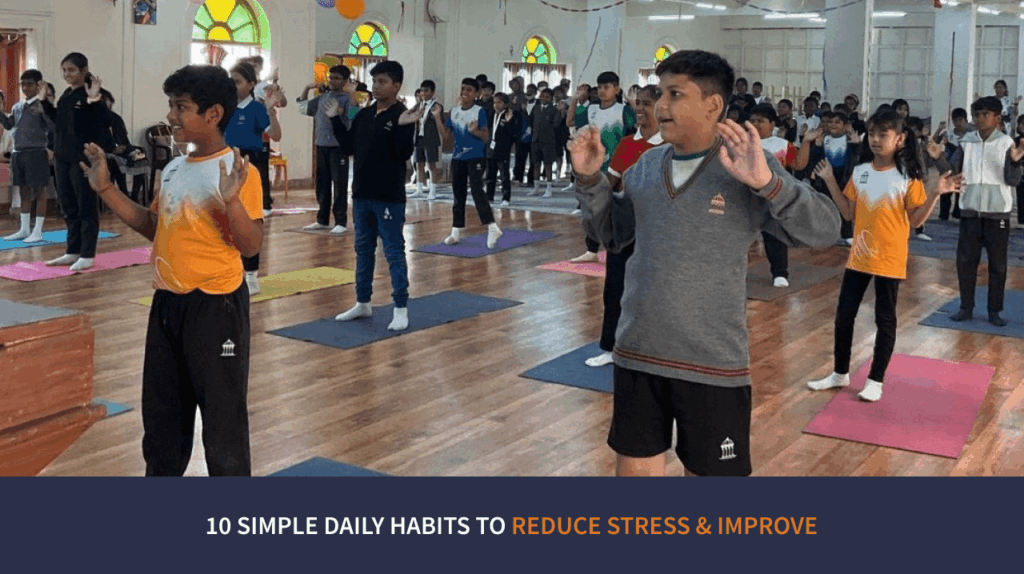
Academic pursuit requires focus, alertness and sharpness of mind. Students must be physically fit and mentally adept to ingrain increasingly complex concepts. Often the idea of mental fitness or positive mental health takes a backseat compared to physical health. However, for comprehensive growth as a scholar, it is very important for students to also hone in habits and routines that aid them in developing and maintaining a good mental health quotient. Mental health should be prioritized within the daily routines of students. Some of the time-tested methods known to bring positive mental health outcomes for all age groups can be applied as easily to young adults and teenage students and even to very young student groups. Some of these healthy daily routines for students involve the following: Morning Schedule Mornings set the tone for the rest of the day. A positive affirmation upon waking up goes a long way in initiating the day in the right direction. Other things like drinking water, stretching, going out into the sunlight, walking or meditating are immensely helpful too. Avoiding screen time in the morning saves precious time for activities like reading, getting ready in time for school and being punctual. The international baccalaureate PYP programs include morning prayers and meditation schedules so students start school on a good note. Exercise Exercise is one of nature’s ways to release happy hormones. They are better than tea and coffee and the best stress busters and health promoters known to humankind. Regular exercise can reduce stress, improve focus, build muscle and keep at bay chronic illnesses later in life. The best daily routine for students can have an ideal mix of yoga, jogging, running, or walking in a park. These do not require expensive equipment and can be done at home or outside. The best ICSE schools in Pune, as also other schools in India, lay emphasis on exercise in the form of yoga and sports within their co-curricular activities. Mindfulness Being present in the moment helps a person reap the best benefits of creative ideas, doing tasks on time, being organized and keeping stress free. Some practical ways to achieve mindfulness are preparing a to-do list for the day the night before, doing meditation or deep breathing exercises, indulging in an activity such as Sudoku or reading books, connecting with nature and doing small chores such as watering the plants etc. Playing with pets is also a good way to be mindful, as is spending time with the family in activities of mutual interest. The best IB schools in Pune, such as MIT Gurukul, have mandatory meditation, book reading etc, in their daily and weekly schedules as the first set of activities in the school timetable. Healthy Eating Food affects not only our bodies but our mind as well. Healthy food leads to healthy neural connections and keeps the mind sharp and ready to acquire knowledge. Starting the day with a nutritious breakfast, having plentiful fruits and vegetables and adequate amounts of water throughout the day helps build a fit body and mental faculties. Within the busy schedule of students, some easy snack ideas can be dry fruits or fresh fruits, multigrain flour bread with protein-rich filings and salads. Traditional home-cooked food is the best option as against eating food from outside or buying junk food. MIT Gurukul, like the other IB boarding schools in India, ensures that its hostel students are given well-balanced and nutritionally rich food to concentrate on their studies. Sleep A good night’s sleep is the best way to wake up fresh, be happy and efficient throughout the day, and maintain optimum mental health levels. Sleep helps dispel both physical and mental fatigue, repairs body cells and maintains the body’s rhythm. The sleep needs to be good quality as well as of optimum length. About seven to eight hours of undisturbed sleep daily is a must for students. A fresh mind can imbibe classroom learning easily. Eating two hours before sleep, avoiding screen time an hour before bedtime, and scheduling bedtime routines are good ideas for sound sleep. Breaks Taking breaks throughout the day between study times gives the students time to relax and return to their studies with renewed vigour. These breaks, which should ideally be technology-free, also help reduce strain on eyes and stress; and improve focus. Spending time with family or friends, playing games, helping the mother in the kitchen, talking to one’s grandparents or taking them for a walk are simple yet powerful ways to utilize study breaks. Top international schools in Pune, such as MIT Gurukul, also have games and sports periods, art classes, music and dance training etc., in between the subject classes to give students artistic and sporty ways of distressing and building mental focus. Conclusively we can say that maintaining mental health for better focus and educational success results from consistent routines and good habits. The school and parents can both play an important role in encouraging and supporting students to develop such habits. We welcome parents to meet our psychology and academic counsellors to understand ways to help their child in such habit formation. To set up a meeting, parents can write to us at counsellor@www.www.mitgurukul.com
Six Tips for Establishing Good Homework Habits in Your Child
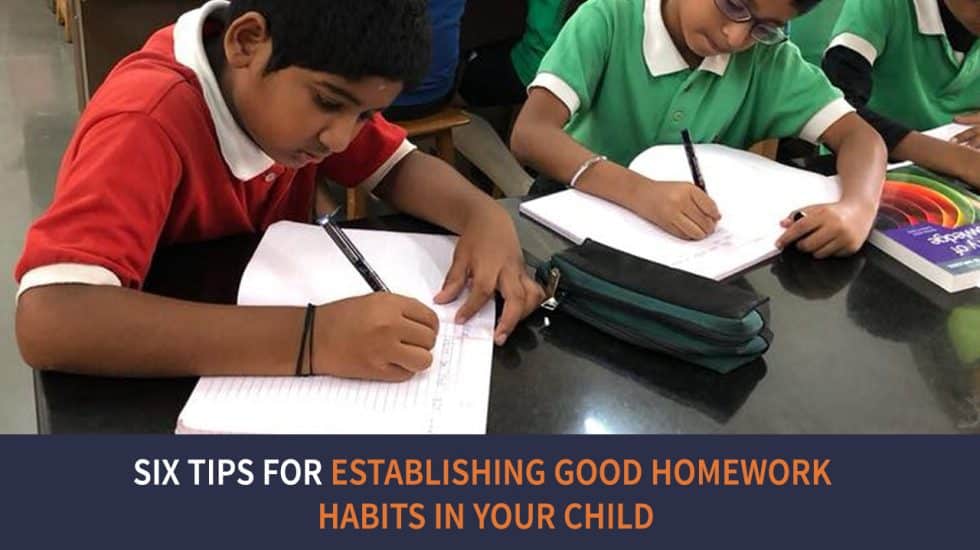
Mastering knowledge is best achieved when concepts are taught, revised, and reinforced to ensure student comprehension. By developing a profound understanding of the material and absorbing its contents completely, learning can reach its maximum potential. A combination of attentive classroom learning and doing regular homework to practice the learnt topics again is thus a powerful way to further the students’ knowledge. To make children take an active interest in doing homework, there are some simple measures one can take as a parent to establish good homework habits. This will help them avoid homework fatigue, stay focused on their studies, and spark their interest in learning further. What are these tried and tested methods? To know, read on! 1. Set a homework routine and schedule breaks If you set a homework schedule, your child will understand that it is a regular part of the day. This will end the daily disagreements between you and your child. Allow them to take a few breaks as well and schedule those breaks. This practice will let your child relax for a few minutes in between tackling different subject assignments and then completing their homework on time. 2. Fix a suitable homework space Establishing a regular homework space makes your child consistent in their studies. At MIT Gurukul, one of the best schools for pre-primary education in India, we ensure our students learn in a positive and suitable place. You can do the same by finding the area in your house where your child is comfortable and attentive. If your child is an older student, you may select a large desk with all the necessary supplies. Younger children may require more help from you and enjoy studying in a communal space in the house, such as the dining hall. 3. Help your tiny tots when they struggle An important part of creating good homework habits is deciding how much help your child needs. Avoid being tempted to complete their homework on their behalf when they feel perplexed. Let them challenge their potential and work it out. You can help them by: Encouraging and praising them when they make a step in the right direction Asking what your child remembers from their class might help them Discussing your child’s difficulties and setbacks with the teacher Asking your child if they want your help to understand any concept 4. Pay attention to what your child wants to express Discipline and consistency are vital in establishing proper homework habits for kids. Yet parents must be flexible when needed. Your child may want to rest before diving into their homework after returning from school. They may perform better with some special supplies, music or white noise. Make your child feel valued and heard; the results will surprise you. 5. Stay positive and calm If you stay positive and calm during the homework process, your child will enjoy doing their homework as they will also start imbibing being calm and relaxed during their home work schedule. They will also take your example and emulate these values in the classroom. MIT Gurukul, one of the best international schools in Pune, strives to bring joy to the learning experience through ideally paced classwork assignments that children can complete without rushing. We encourage parents to do the same when their children sit down with their homework. 6. Praise your child for their hard work IB program schools like MIT Gurukul focus on the all-round development of a child. We give positive feedback even for the attempts children make and not necessarily always only on accomplishing tasks. This keeps students motivated to try and try again. We request that you too praise your child not only when they answer a question correctly but also when they do not give up on their learning process or struggles with learning and make another attempt at it. For example, if your child is weak in a particular subject, praise their effort and dedication when they try to complete their homework related to that subject. This will boost their confidence and build their perseverance. Good homework habits create a lifelong aptitude of scholarly interest. On the other hand, bad homework habits in kids can create a negative attitude towards learning. Thus it is imperative that an enabling home atmosphere is created for the children to thrive in and make a good association in their minds with regard to homework routines. We hope that this article sheds light on some easily implementable practices and that with these, you see delightful changes in your children. A good dose of consistency and patience is surely the key to success. MIT Gurukul is happy to partner with the parents through discussions and brainstorming ideas on developing good homework habits among children. To speak with our academic coordinator or your child’s class teacher, please book an appointment by sending a note in your child’s almanac.
5 Smart Ways to Incorporate Problem-Solving and Critical Thinking Skills in Students
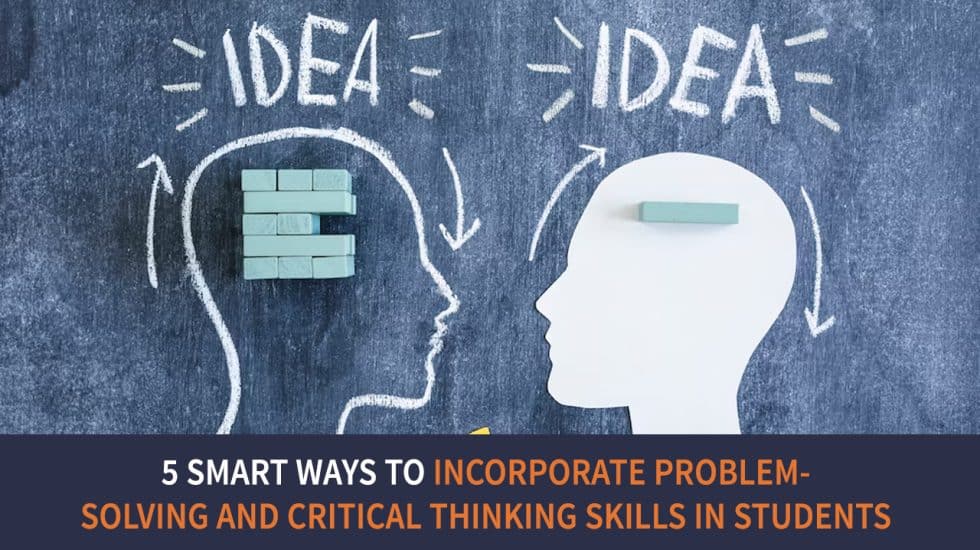
Critical thinking is the ability to think clearly and logically by understanding the connection between ideas, events, processes, cause and result, and actions and consequences. It is an important life skill to master. Combined with a creative aptitude and a problem-solving attitude, it can transform the student into an informed learner, a socially aware person, and an innovator with leadership potential. Within the academic domains, students who think critically and can solve problems are hungry to learn and grow their intellectual quotient. They are strong decision-makers, think outside the box to come up with innovative ideas, are organized, focused and ready to thrive. So here are five smart ways to incorporate problem-solving and critical thinking skills in students: 1. Encourage Active Learning Students must be active learners to develop critical thinking skills. If they study a concept in haste, they will not think deeply about it or link it with what they already know. Critical thinking is crucial to analyze information and delve deeper into the subject. Therefore critical thinking skills for students are best developed when theoretical learning is combined with real-life experiences. If this is done frequently in the classroom and at home, students will become active learners with strong critical thinking skills. MIT Gurukul, one of the best schools in Pune, believes in providing experiential learning opportunities to its students. 2. Use Real-World Problems and Scenarios When students are encouraged to look at real-world problems that impact their immediate surroundings, they enhance their ability to understand the related cultural, geographical, regional, legal and socio-psychological aspects. They also deliberate and come up with solutions and thus become adept at leading and managing situations in their higher education and professional years. At MIT Gurukul, one of the best schools in Pune, we bring opportunities for our students to find connections in their learning. Students are encouraged to find associations between different subject elements and real-life situations that match the topic. It takes their minds out of the four walls of a classroom and teaches them to look at the outside world. They become better global citizens and impactful leaders in the process. 3. Foster Independent Thinking and Exploration Grow the seed of hunger in the minds of your children and you will see wonders! Asking open ended questions that require the students to think up the answer rather than just say yes or no helps them to exercise their thought process, logical analysis and critical thinking. MIT Gurukul, one of the best schools in Pune, encourages students to ask meaningful questions on their own too within our classes, especially as they reach our middle years program and progress to the senior years. To foster their independent thinking and exploration, we often ask them some of these questions: Could you give me an example to support your answer? Could you elaborate further on that point? Do we need to consider another point of view here? Will you provide some more details? Is there another way we can approach solving this issue? 4. Teach Problem-Solving Strategies If a student develops problem-solving skills at a young age, they will bring out the best in every opportunity. It will equip them with confidence, intelligence and perseverance. You can give your students a hypothetical problem and ask them to find solutions through critical and creative thinking. Here are a few examples that may come in handy, and many of which we utilize at MIT Gurukul for interaction with our students within the classroom settings: You have two important assignments and both are due next week. How will you make sure to complete both? Your friend has failed an exam. How do you support them? Your city is getting polluted day by day. Suggest some measures you can take starting from your home to help solve this environmental problem. 5. Encourage Group Work and Collaboration Group work and collaboration can build skills of leadership, cooperation, empathy and inclusion in the young minds; and nurture such qualities as the students grow older. Some of the ways to foster group work are debates, team based quizzes, group projects and presentations, buddy programs, volunteering and organizing events in teams. In the classroom, a teacher may give a debate topic to the students and divide them into two groups, one for the notion and the other against it. The topic may be based on a new scientific discovery, current affairs, use of art for expressing emotions or ideas, moral dilemma, political situation, or a groundbreaking technological development. MIT Gurukul, being one of the top ICSE schools in India, allows students to bring their ideas to the table, discuss with each other and get introduced to fresh perspectives. Assigning an impromptu creative project is another interesting way to develop team spirit and problem-solving skills. As we reach the end of this article, we cannot reiterate enough the importance of critical thinking and problem-solving skills for students in the classroom and beyond. We urge the parents to also encourage these qualities amongst their wards and encourage and support them through positive reinforcement as they traverse their journey to hone their ability for thinking critically, asking questions, and to never stop learning. We urge and request parents to incorporate activities in their child’s daily routine that help them develop critical thinking, leadership qualities and the skill to solve problems.