


Explain the main features of the IB MYP in simple terms
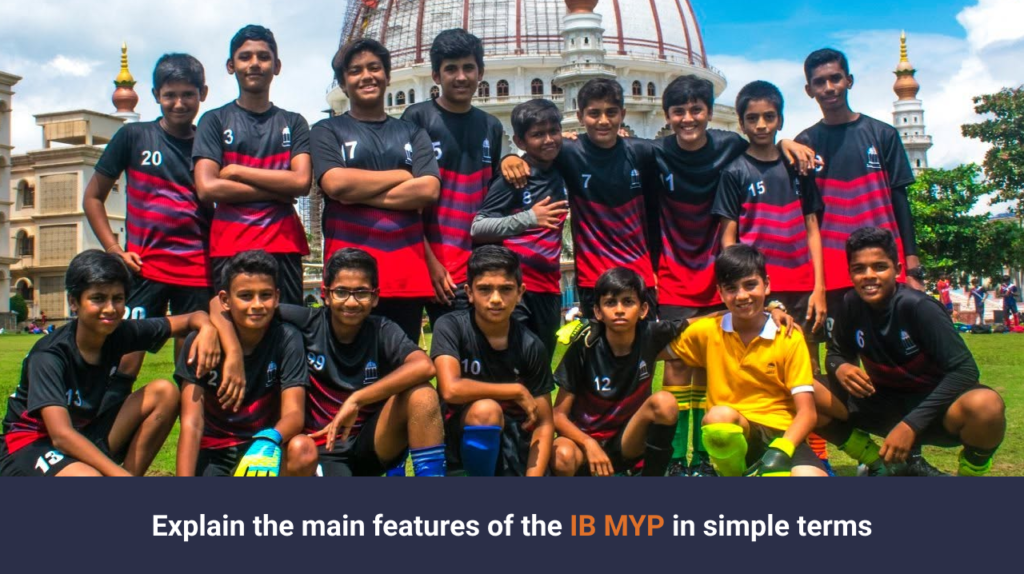
If you are doing any research on international schooling in India, chances are you have stumbled across the term IB MYP more than once and probably wondered what all the fuss is about. Well, wonder no more. The IB Middle Years Programme is one of the most forward-thinking academic frameworks available to students. Designed by the International Baccalaureate, the MYP is built on a simple but powerful premise: schools should prepare students for real life, not just for the next exam. It builds the skills, habits of mind and personal qualities that actually matter, both academically and beyond. This guide breaks down the main features of the IB MYP, so you know precisely what you are signing your child up for. What Is the IB MYP? So, what is IB MYP, really? Here is the quick version: it stands for the International Baccalaureate Middle Years Programme, a five-year curriculum framework for students in Grades 6-10. It is the middle chapter of the full IB journey, sitting between the Primary Years Programme (PYP) and the prestigious IB Diploma Programme (IBDP). Here is what defines it: Middle School Programme by IB Designed for students aged 11-16 (Grades 6-10) Acts as a bridge between primary learning (PYP) and diploma studies (DP) Focus on Real-World Learning Students learn concepts that connect to everyday life and global issues Encourages deep understanding over memorisation Balanced Education Approach Covers academics, creativity, physical education and personal development Helps students grow holistically and not just in examinations Prepares for Higher Studies Builds strong foundations for the IBDP and other senior-secondary pathways Develops study habits, academic discipline, and long-term research skills Encourages Independent Thinking Students are encouraged to ask questions and explore their own answers Focus is firmly on “how to learn” rather than simply “what to learn” Main Features of the IB MYP (Explained Simply) Interdisciplinary Learning: Subjects are not siloed. A Science lesson might connect with real-world environmental issues, while a Humanities class might draw on data analysis. Everything links. Inquiry-Based Learning: Rather than passively receiving information, students learn by asking questions, investigating topics and drawing their own conclusions. Teachers guide; students discover. Concept-Based Curriculum: Big ideas like change, systems, identity and relationships anchor every subject; helping students grasp deeper meaning, not just surface-level facts. Strong Focus on Skills Development: The MYP deliberately builds critical thinking, communication, collaboration, and research skills. These are not soft extras, but they are core to the programme and directly useful in further education and careers. IB MYP Assessment System: Rather than depending on a single high-stakes exam, the IB MYP assessment system uses continuous evaluation through projects, portfolios, and criterion-based grading. Students are assessed on what they can do with their knowledge, a far more accurate picture of ability than an end-of-year test. How IB MYP Is Different from Traditional Schooling Feature IB MYP Traditional Schooling Learning Style Inquiry-based and interactive Mostly textbook-based Focus Concepts and skills Memorisation and exams Subjects Interconnected learning Separate subjects Assessment Projects accompanied with continuous evaluation Mainly written exams Student Role Active learner Passive learner Skill Development Communication, creativity, thinking Academic knowledge Why Parents Prefer IB MYP Schools? Almost 41% of parents believe that traditional education will not secure their kids’ future. When families search for the best IB MYP Schools in Pune, they are not just looking for a prestigious badge on a school gate. They are looking for a proven system that genuinely transforms how their child learns and grows. Here is why the MYP consistently wins parents over: Better Skill Development: Students in inquiry-based learning environments consistently develop stronger communication and analytical skills than peers in rote-heavy systems. Reduced Exam Pressure: Continuous assessment across the year means learning is spread out and stress is significantly lower than in single-exam systems. Holistic Growth: Equal importance is given to academics, sport, the arts, and emotional development through programmes like Beyond Academics and Student Leadership. Prepares for Future Education: With an overall 44% jump, the number of IB schools in India has increased from 192 (in 2020) to 276 (in 2025). The MYP builds a seamless pathway into the IB Diploma Programme and positions students competitively for international universities. “The MYP is not just a curriculum, it is a framework for developing the kind of thinkers, communicators, and global citizens that today’s world genuinely needs. At MIT Vishwashanti Gurukul, we see every day how this approach transforms not just academic outcomes, but the confidence and character of our students.” Give Your Child a Head Start with IB MYP at MIT Gurukul. Apply now! FAQs What is the IB MYP? The IB Middle Years Programme (MYP) is a five-year international curriculum for students aged 11-16, offered by the International Baccalaureate. It focuses on inquiry-based, interdisciplinary learning and builds skills like critical thinking, communication and collaboration rather than simply rewarding memorisation. How is IB MYP different from CBSE or ICSE? While CBSE and ICSE are primarily exam-focused and subject-specific, the IB MYP connects subjects to real-world concepts, uses continuous assessment instead of single high-stakes exams and places equal emphasis on skills, creativity and character development alongside academic knowledge. Does IB MYP have exams? The IB MYP assessment system is primarily continuous and criterion-based, using projects, presentations, portfolios and ongoing assessments rather than a single final examination. In Year 5 (Grade 10), students can opt for externally assessed e-Assessments for an official MYP certificate. What skills does IB MYP develop? The MYP develops a comprehensive set of Approaches to Learning (ATL) skills, including critical thinking, creative thinking, communication, collaboration, and research. These skills are woven into every subject and are directly transferable to higher education, careers, and everyday life.
What qualifies a student for the IBDP?
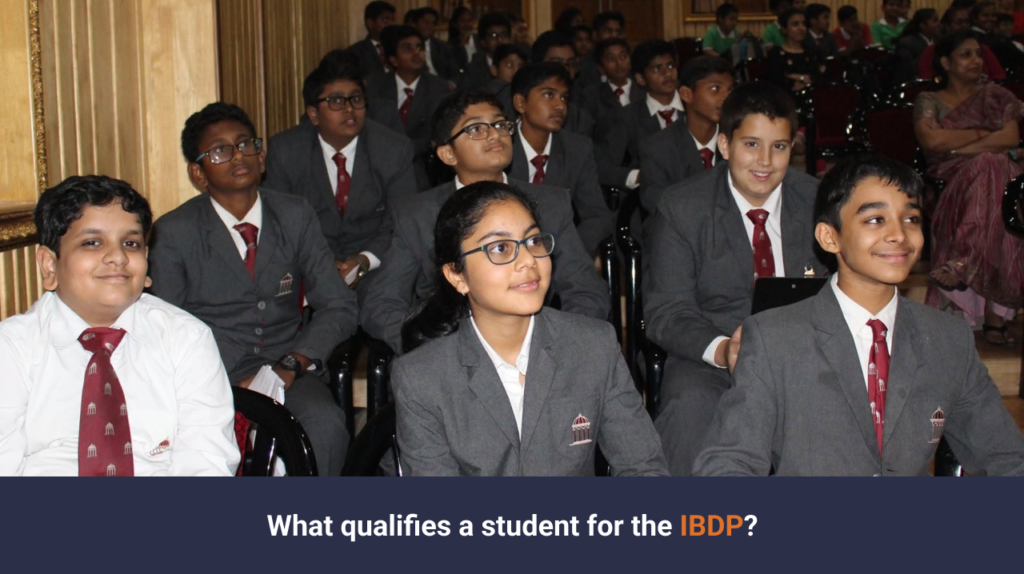
Let’s be honest, the IBDP has a reputation – academically rigorous, globally respected and the qualification that university admissions offices across three continents genuinely get excited about. But if you are a student in Grade 10, you have probably had one burning question: am I actually eligible? Here is what most people don’t realise: IBDP eligibility isn’t just about marks. It’s about academic readiness, the right learning mindset, and a genuine willingness to engage with the world beyond the textbook. In this guide, let us explore what you need to know about IBDP admission requirements. What Is the IBDP? Before jumping to eligibility, it helps to understand what you’re actually signing up for. The IBDP is not a subject; it’s a complete educational framework for Grades 11 and 12. Here is how it’s structured: International Academic Programme for Grades 11–12: The IBDP sits within the International Baccalaureate’s broader framework for pre-university education, designed specifically for students preparing for competitive global universities. Balanced Curriculum Structure: Students study six subject groups, spanning languages, sciences, humanities, mathematics, and the arts; alongside three core components: Theory of Knowledge (TOK), Extended Essay (EE), and Creativity, Activity, Service (CAS). Emphasis on Holistic Development: Academic performance is important but so is emotional maturity, ethical awareness, and the ability to think independently. The IBDP is deliberately designed to develop the whole student, not just the exam-taker. University Preparation Programme: The IBDP’s global recognition is significant. It is observed that IBDP graduates have higher university acceptance rates and stronger academic performance. Flexible Subject Selection: Students select subjects based on interest and future career direction; choosing three at Higher Level (HL) and three at Standard Level (SL). This personalised pathway is one of the IBDP’s most compelling features and a key reason why IBDP schools in Pune attract students from a wide range of academic backgrounds. Academic Qualifications Required for IBDP Admission Understanding the IBDP admission requirements clearly is the first step. Here’s what schools typically look for: Completion of Grade 10: Successful completion of Grade 10 or its equivalent is a baseline requirement. This applies to students from any recognised board like CBSE, ICSE, or state boards. Minimum Academic Performance: Schools generally look for a solid overall academic record in Grades 9 and 10, especially in core subjects such as Mathematics, Science, and English. Subject-Specific Readiness: Students choosing Higher Level subjects in sciences or mathematics may need to demonstrate subject aptitude, either through prior grades or a school-administered assessment. Consistency Over Spikes: Schools prefer students with steady academic progress. A sudden jump in marks in Grade 10 after several years of moderate performance is viewed more cautiously than a consistent record of engaged, improving work. English Proficiency: A functional level of English proficiency is essential; not just for language subjects, but for research, writing, and class discussion across all six subject areas. Comparison of Eligibility: IBDP vs Other Curricula (CBSE / ICSE Senior Secondary) Parameter IBDP CBSE (Class 11–12) ICSE / ISC Entry Requirement Grade 10 and school criteria Grade 10 pass Grade 10 pass Academic Rigour High and globally benchmarked Moderate to high High Subject Flexibility High (HL/SL choices) Stream-based Stream-based Assessment Style Internal and external assessments Mainly exams Exams and internal assessments Skill Expectations Critical thinking, research, writing Exam-oriented learning Subject knowledge and analysis University Recognition Global (170+ countries) Primarily India India and some international Why Do Schools Set Eligibility Criteria for the IBDP? This is a fair question and the answer matters more than most people realise. Ensuring Academic Preparedness: The IBDP workload is genuinely demanding. Students balance six subjects, an Extended Essay of up to 4,000 words, TOK coursework, and CAS commitments simultaneously. Schools set criteria to ensure students have the foundational knowledge to handle this without being overwhelmed. Supporting Student Success Rates: Research published by the IB Organisation confirms that students placed into programmes aligned with their academic readiness consistently achieve stronger outcomes than those pushed into a curriculum before they are ready. Eligibility criteria exist to protect students, not gatekeep them. Managing Workload Expectations: Six subjects, core components, and a university-style Extended Essay require genuine discipline. Schools assess whether a student has demonstrated the time management and self-direction needed to thrive; not just survive. Encouraging the Right Learning Mindset: The IBDP rewards students who enjoy inquiry, analysis, and going deeper than the textbook. Students who prefer straightforward exam revision may find the programme’s open-ended, research-heavy style a genuine adjustment. At MIT Gurukul, we believe IBDP eligibility is as much about curiosity and character as it is about academic grades. We look for students who are ready to ask better questions, not just give better answers. IBDP Schools in Pune: What MIT Gurukul Offers Founded in 2006, MIT Vishwashanti Gurukul World School is widely regarded as one of the leading IBDP schools. Rooted in Indian heritage and powered by the IB curriculum, the school offers the full IB continuum from PYP through to IBDP and IBCP, giving students a genuinely coherent educational journey from early years to university entry. MIT Gurukul’s IB Diploma Programme is delivered by IB-trained teachers in a structured, supportive environment that balances academic rigour with pastoral care. Ready to explore the IBDP at one of Pune’s most respected IB World Schools? Apply for Admission at MIT Gurukul! FAQs What is the minimum qualification required for the IBDP? Successful completion of Grade 10 or an equivalent qualification from a recognised board (CBSE, ICSE, or State Board) is the standard baseline. Schools may additionally require academic assessments or interviews as part of their admission process. Do students need high grades to join the IBDP? Schools look for academic stability and genuine subject engagement across Grades 9 and 10 rather than a single high-scoring year. The ability to manage a challenging workload matters as much as raw marks. Is English proficiency important for IBDP admission? Yes! The IBDP is taught and assessed in English, and the Extended Essay and TOK coursework demand strong written and analytical English skills. Can CBSE or
What Eligibility Criteria Do Schools Require for Admission into the IBCP Programme?
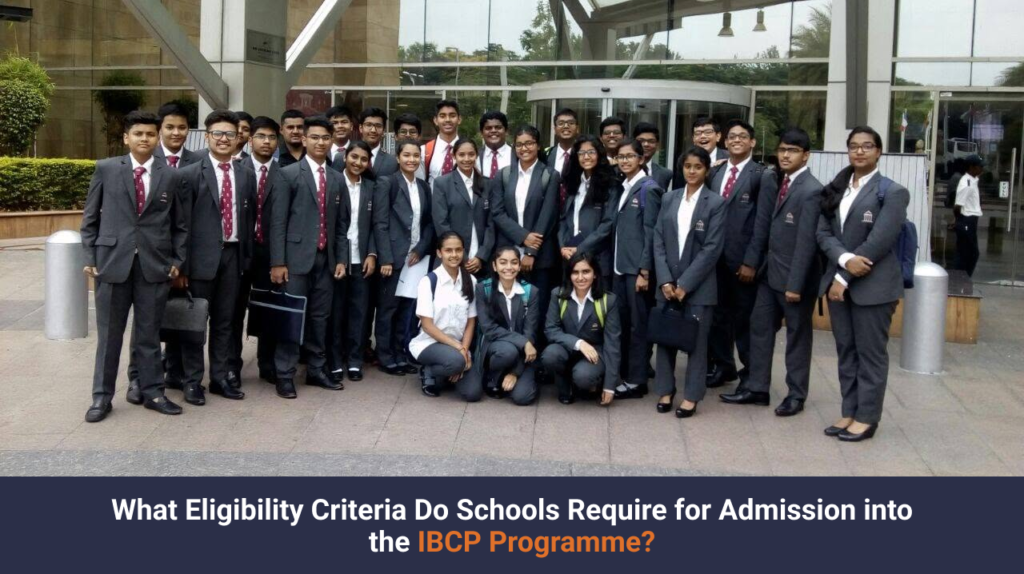
Choosing the right path after Grade 10 can feel like a big decision, and if you are exploring the IB for senior years, you have probably come across the Career-related Programme, or IBCP. Parents searching for Pune IB board schools admission 2026 often want to know one thing first: what does it take to get in? This blog walks you through the eligibility criteria, why they exist, and how the IBCP compares to traditional senior secondary options, so you have a clear picture of what to expect. What Is the IBCP Programme and What Makes Up Its Core? The IB Career-related Programme is designed for students aged 16 to 19 who want to blend academic learning with practical, career-focused study. Unlike the broader IB Diploma Programme, the CP combines at least two IB Diploma Programme (DP) subjects with a career-related study, giving students both intellectual depth and real-world relevance, which is appealing for families considering Pune IB board schools. At the heart of the programme sits the CP core, made up of four interconnected elements: Personal and Professional Skills – building workplace-ready attitudes and strategies. Service Learning – applying classroom knowledge to genuine community needs. Reflective Project – an in-depth exploration of an ethical issue tied to the student’s career interest. Language Development – building proficiency in a language beyond the student’s strongest one. Together, these elements give students a rounded foundation, combining academic rigour with personal growth and practical skills. General Eligibility Criteria for Admission into the IBCP Programme Every IB World School sets its own admission process, but most IBCP admission requirements follow a fairly consistent pattern. Here are five areas schools typically assess: Age and academic stage: Students applying for the IBCP are usually aged 16 to 19 and have completed Grade 10 (or equivalent) from a recognised board such as CBSE, ICSE, or IGCSE. Schools check that the student is academically and emotionally ready for the independence the programme demands. Previous academic performance: Schools generally review the Grade 10 (or 11) report card, looking for consistent performance, especially in subjects related to the chosen career-related study. While there is rarely a single cut-off percentage, a steady record reassures schools that the student can manage two DP subjects alongside the career-related component. Career-related study compatibility: Since the IBCP centres around a career-related study (such as business, design, hospitality, or technology), admission teams look at whether the student’s interests and prior subject choices align with available pathways. This is where the IB CP subject selection criteria come in, ensuring students can realistically commit for two years. Language proficiency: Because Language Development is a compulsory core component, schools assess existing language skills, both in the language of instruction and any additional language studied. International applicants may need to provide proof of English proficiency or take a short assessment. Interview and counsellor recommendation: Many schools include a short interview with the student, and sometimes parents, to understand motivations and readiness for self-directed learning. A reference from the previous school covering attendance, conduct, and engagement is also commonly requested. How Do IBCP Admission Requirements Compare with Traditional Senior Secondary Programmes? To help you see the bigger picture, here is a quick comparison between IBCP admission expectations and what is typically required for traditional senior secondary programmes such as CBSE or ICSE Class 11 and 12. Criteria IBCP Programme Traditional Senior Secondary Programmes Subject combination Minimum two DP subjects plus a career-related study Fixed subject groups based on stream (Science, Commerce, Arts) Core requirements CP core: Personal and Professional Skills, Service Learning, Reflective Project, Language Development No equivalent core component; focus is mainly on board subjects Interview process Often required, to assess career interest and readiness Rarely required; admission largely based on marks Career focus Built-in career-related study aligned with student’s interests General academic preparation, with career exploration left for later Global recognition Recognised by universities and employers in over 90 countries Primarily recognised within India, with some international equivalence under NEP 2020 Why Do Schools Have Eligibility Criteria for the IBCP Programme? Eligibility criteria are not meant to be obstacles. They exist to make sure the IBCP genuinely benefits the student who enrols. Here is why schools take this approach: To match students with the right pathway: The IBCP suits learners who thrive on applied, project-based work, and eligibility checks help schools place students where they will flourish. To maintain academic standards: IBCP students still take rigorous DP courses, so schools need confidence applicants can handle this alongside the career-related study. To support meaningful career exploration: A good fit between a student’s interests and their career-related study leads to deeper engagement throughout the programme. To prepare students for global opportunities: IB schools now form roughly 28 per cent of India’s international school market, and schools want every IBCP graduate genuinely ready for opportunities abroad. India’s IB school numbers have grown from just 11 in 2003 to 245 in 2025, a clear sign that families increasingly recognise the long-term value of this kind of preparation. Conclusion The IBCP rewards curiosity, commitment, and genuine interest in a chosen field. The eligibility criteria may seem detailed, but they are really about setting your child up for success, academically, personally, and professionally. If you are exploring Pune IB board schools admission 2026 and want to understand how the IBCP could work for your family, our admissions team at MIT Gurukul would be glad to guide you, from IBCP admission requirements to career-related study options that suit your child’s strengths. Reach out today to book a campus visit or counselling session. Frequently Asked Questions What is the minimum qualification required for admission into the IBCP programme? Students generally need to have completed Grade 10 (or equivalent) from a recognised board, with the academic maturity to manage two DP subjects alongside a career-related study and the CP core components. Do students need specific grades to join the IBCP? There is no universal cut-off percentage, but schools look for consistent performance, particularly in subjects related to
What Is the IB Primary Years Programme (PYP) and How Is It Different from CBSE or ICSE?
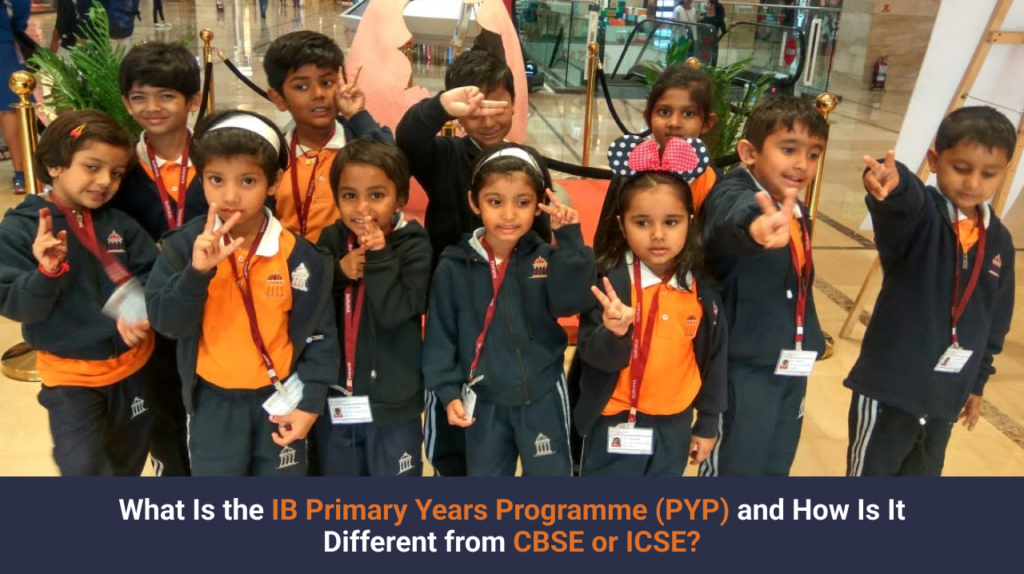
If you’re a parent in Pune weighing up schooling options, you’ve likely heard the term IB more than once. Specifically, the IB Primary Years Programme in Pune is gaining real attention among families who want their children to think independently, ask questions, and grow into confident, curious learners. With so many boards, philosophies, and buzzwords floating around, it’s easy to feel overwhelmed when planning your child’s early education. But how does the IB PYP actually compare to CBSE or ICSE, the boards most of us grew up with? Let’s break it down in plain language, with real comparisons and facts, so you can make a choice that genuinely fits your child and your family’s vision for the years ahead. What Is the IB PYP and What Makes It Different? The IB PYP curriculum is the first stage of the International Baccalaureate continuum, designed for children aged 3 to 12. Introduced in 1997, it has become a globally respected framework for early education. Rather than focusing purely on textbooks, the PYP centres on inquiry. Children explore six transdisciplinary themes, such as “Who We Are” and “How the World Works”, which connect maths, science, and language in ways that feel natural rather than forced. A defining feature is the “learner profile”, ten attributes such as thinker, communicator, and risk-taker, that guide a child’s personal growth. Teachers act as guides rather than lecturers, helping children build understanding through questions, hands-on projects, and real-world connections. Instead of simply being told an answer, a child might spend a week investigating it themselves, with the teacher nudging their thinking along the way. This shift from passive listening to active exploring is often what parents notice first when they walk into a PYP classroom. Key features include: Inquiry-based learning that lets children shape their own questions Transdisciplinary units that connect subjects rather than isolating them The Learner Profile, building traits like curiosity and open-mindedness Continuous, portfolio-based assessment instead of exam-only evaluation Early action and service, encouraging empathy from a young age Global mindedness woven into everyday lessons At MIT Gurukul, this approach is paired with strong Indian cultural roots, helping children stay grounded while thinking globally. How Do IB PYP, CBSE, and ICSE Compare? Choosing between boards often comes down to philosophy. Each board has its own strengths, and what works wonderfully for one child may not suit another. Here’s a quick comparison to help you understand where each one stands: Aspect IB PYP CBSE ICSE Learning approach Inquiry-based, concept-driven Structured, syllabus-driven Detailed, content-heavy Assessment style Continuous, portfolio-based Periodic tests and exams Exams with internal assessments Focus area Holistic development Core academics Strong language skills Curriculum flexibility High Moderate Low Global recognition Very high High in India Moderate To put this in perspective, India currently has more than 27,000 CBSE-affiliated schools, making it the most widespread board in the country. By contrast, only around 270 schools offer the full IB Continuum (PYP, MYP, and DP), showing how specialised an IB curriculum for primary school really is. How Does the IB PYP Support Holistic Development? One of the biggest draws of the IB PYP is that academics and character grow together, intentionally. It is not a case of squeezing in a value-education period once a week. Instead, every unit of inquiry is designed to develop the whole child, intellectually, socially, emotionally, and physically, all at once. Here’s how this plays out daily: Emotional intelligence through regular reflection activities Social skills via group inquiries and teamwork Physical wellbeing built into the timetable through play and movement Creative expression woven into core units, not kept separate Cultural awareness blending Indian traditions with global perspectives Independent thinking, encouraging children to ask why and how This balance means children leave primary school academically capable and emotionally grounded. In a residential setting like MIT Gurukul, this foundation shapes friendships, routines, and resilience, setting children up well for the IB Primary Years Programme in Pune experience and beyond. Why Choose MIT Gurukul for Your Child’s IB Journey? Choosing a curriculum is one of the most important decisions you’ll make for your child’s early years, and it’s natural to want to get it right. The IB PYP curriculum offers a globally respected approach that nurtures curiosity, character, and confidence from the start, while still leaving room for the values and traditions that matter to your family. At MIT Gurukul, we bring this approach to life within a residential setting that blends rigorous academics with deep-rooted Indian values, giving children a sense of belonging alongside a genuinely global outlook. If you’d like to see this approach in action, reach out to MIT Gurukul today to book a campus visit, speak with our admissions team, or ask any questions about our curriculum and residential life. Our team is happy to walk you through how a typical day looks for a PYP learner, what the transition into our community feels like, and how we support every child as an individual. Your child’s journey towards becoming a confident, curious global citizen could start right here in Pune. Frequently Asked Questions What is the IB Primary Years Programme (PYP)? The IB PYP is an international curriculum for children aged 3 to 12, focused on inquiry-based learning and developing well-rounded, globally minded young learners through connected themes. How is the IB PYP different from CBSE and ICSE? The IB PYP emphasises inquiry and continuous assessment, while CBSE and ICSE follow structured, syllabus-driven approaches with exam-based evaluation and less flexibility. Does the IB PYP prepare students for higher education? Yes, it builds strong foundations in critical thinking, research, and communication, preparing children smoothly for the Middle Years Programme and beyond. What are the benefits of inquiry-based learning in the PYP? It encourages curiosity, problem-solving, and independent thinking, helping children understand concepts deeply rather than memorising facts. Is the IB PYP suitable for all children? Most children thrive with the PYP’s flexible, exploratory approach, though it suits families who value conceptual learning over rigid, exam-focused structures.
Mit Vishwashanti Gurukul Ib International School Holistic Development Programme
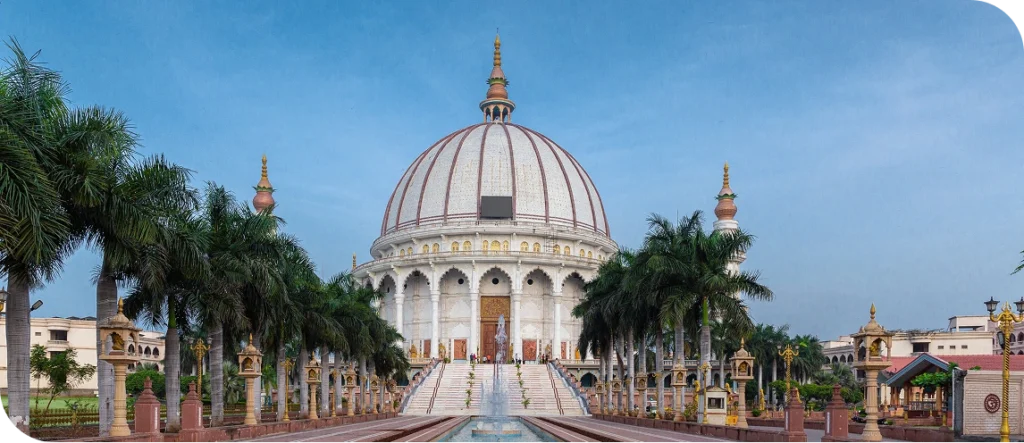
Gurushishya Parampara Gu” means dark and “Ru” means light. So, “Guru” can be roughly translated as darkness to light, or possibly one who leads from darkness to light. The Guru is a teacher who guides the Shishya’s (student’s) life or a spiritual mentor who leads the shishya from blindness or ignorance to bliss, wisdom, and enlightenment.The Guru-Shishya parampara has been an inevitable part of education in ancient Indian culture. This involved the tradition of a living and learning relationship between the Guru and the Student (Shishya), signifying the emotional, intellectual, and spiritual bonding between them.This strong bond between the Guru and the Shishya enables the Guru to become a mentor who leads the Shishya from ignorance to wisdom, and enlightenment. Guru-Shishya proximity thus is not only a part of our social order, but also a milestone in the life of a human being in society. The living science of education i.e. Bio Psycho-Psychic Science in our culture, has been long lost due to ignorance of the people in this era of modernization. The revival of this spirit and its practice in the field of education at all levels is the urgent need of the hour. MAEER strongly believes in the virtues of the Guru-Shishya parampara and has nurtured a dream of molding future citizens by equipping them with the latest instructional technology in the ambience of the Gurukul System.This is the sole aim of establishing the project of Vishwashanti Gurukul, which is akin to an ashram on the beautiful banks of the Mula-Mutha river. Here, immense care has been taken to ensure the emotional, intellectual and spiritual interaction between the students (shishyas) and their respected and revered Guru.A unique blend of the ancient Indian Guru-Shishya Parampara with the modern methodology of instruction amongst the state of the art infrastructure is the essence of Gurukul. Conductive Environment In the lush green lawns of Vishwashanti Gurukul is yet another abode for the students where they will feel at home. This is the boarding home which incorporates girls and boys from ages 4-18 years. Giving due respect to the Guru Shishya Parampara the students at the Vishwashanti Gurukul boarding not only learn academics but absorb life skills under the able guidance of their respective House Masters/Mistresses, Boarding staff and Principals. Discipline at Gurukul MIT’s VISHWASHANTI GURUKUL, an IB World School has a comprehensive set of rules applicable to all the students. In addition, boarders are expected to be well behaved at all times in the hostel complex and abide by the rules laid down by the school authorities.The Rules Laid down by the Authority areStudents are discouraged from bringing any valuables, money, etc.Students carrying cash are expected to hand it over to the House Master for safe -keeping. As and when required, money will be given to the students and they will be expected to account for the same. This is with a view to encourage responsibility and prevent wasteful or undesirable spending.An ethical code of conduct needs to be signed by the Students and Parents at the time of admission.Ragging is not allowed in the school premises. If found guilty of doing so, the student will be expelled from the school.There will be no bullying, smoking, drinking or use of intoxicating drugs in the school and hostel complex.No student will leave the hostel complex, for any reason, without the permission of the House Master / Mistress.The students must co-operate in maintaining the school building and the campus of the school neat and tidy.Parents are requested to inform the House Master / Mistress, two days in advance,if they plan to take their child for an outing/weekend. Information and services to support students (Library) The mission of Gurukul Library is to provide access to information and services to support students and faculty in fulfilling the requirements of IB and IGCSE. It is our goal to help all School community to use all resources and services found in the library to its maximum potential. Library has been located separately on the campus to facilitate a quiet atmosphere for peaceful reading and study. Students and teachers have access to a wide range of resources in different formats in order to meet their teaching and learning needs. Its collection includes books (fiction, non-fiction and reference), newspapers, magazines, computers, online databases, CDs and DVDs.The Library is a place where students can: Borrow the books and other resources Conduct constructive and meaningful research for projects using the Web, databases, and print resources Find great books to read Unlock the research question Can get help in in citation, referencing and bibliographies Find interesting factsVishwashanti Gurukul, now an established school in its 11th year has traditional library facilities which are better equipped than those at many colleges. Libraries have morphed over the years into media centers. Vishwashanti Gurukul boarding school library has the latest technology available, in addition to all the usual print materials. And they will have them in abundance. A 24×7 Wi-Fi campus aids in research study for higher classes without any restraint on the time of the day. Students can make use of this facility to help in their studies.LIBRARY HOURS:8:00 a.m. – 4:00 p.m (Mon – Fri)9:00 a.m. – 5:00 p.m. (Sat & Sun) Students get the experience to live away from homeas a preparation for life. It’s never easy to leave the nest. But, doesn’t it make more sense to make the move a few years before college? Of course it does. Students learn how to cope with life and all its many high and low points within a community of their peers who are going through the same things they are. All of this is happening under the watchful eye of the HMs who, are by themselves experienced teachers and parents in their own capacity Holistic-Development SPORTS ARTS CORE ACADEMICS Vishwashanti Gurukul has amazing sports facilities. The range of sports and teams is mind-boggling. You will find everything like badminton, table tennis, cricket, football, basketball, and archery. To suit the international standards, we have
Best school for Mumbai students MIT Vishwashanti Gurukul
Established 2006 Students 600 Exams Board IB, CIE Co-Education Campus Size 125acres Day & Boarding School K – 12 Sports Education 100% UNIVERSITY PLACEMENT SUPPORT Do you reside in Mumbai? Looking for the best schools in Mumbai or nearby the city for your child? If so, then you should consider MIT Vishwashanti Gurukul. Ranked number 1 in Times Education School Survey in the category of ‘school with international curriculum in Pune’, MIT Vishwashanti Gurukul is the finest school in Maharashtra. It is affiliated to the international board of education and follows value-based education system. Its colossal and well-equipped campus is sited in Pune, which is quite close to Mumbai. The school encourages value-based education and holistic development. It has an ambience that is quite conducive to the students of Mumbai and here, they can develop as well-balanced individuals. What students can get by studying at MIT Vishwashanti Gurukul? MIT Vishwashanti Gurukul has a well-built infrastructure that takes care of the needs of the students and ensures overall development. Here, students get access to traditional based learning blended with technological advancements and best in class facilities. There are a variety of inimitable factors that have made MIT Vishwashanti Gurukul the best choice for the students of Mumbai: International Curriculum MIT Vishwashanti Gurukul is based on international boards of education such as International Baccalaureate (IB) and Cambridge Assessment International Education (CIE). Hence, the school follows international standards of learning. Here, students acquire a global perspective which prepares them to compete in the global scenario. This international curriculum trains the students in understanding and facing global challenges. The school has even started an IB affiliated Diploma Program that facilitates students to get placement in top international universities. Holistic development The education system of the school is designed in such a way that it leads to the physical, intellectual, personal and emotional development of the students. Its development program starts right from the primary classes. There are regular workshops that lead to the development of learning abilities of students. These workshops continue for the kids until the age group of 16years. As the name suggests, MIT Vishwashanti Gurukul has its learning based on the age-old principles of Gurukul. The school emphasizes on inculcating moral values and ethos in students. These values make him/her self-assured and self-disciplined. Activities such as meditation, yoga and exercises are a part of daily schedule of students and promote holistic development. Best in class facilities The school is constructed at 125 acres campus equipped with high-class infrastructure and spacious classes. To maintain decorum in the class and promote efficient learning, the teacher-student ratio of 18:1 is maintained. The school provides air-conditioned buses with GPS tracking to offer a safe and tireless journey of the day scholars. In order to take care of medical issues of day scholars and boarders, there is a 24-hour infirmary with a doctor and an attendant. To handle any kind of critical situation, the school has an ambulance. The school has a huge library that contains all kinds of books, CDs and DVDs as desired by the students. The library even has computers, online databases, newspapers and magazines, and it serves as a resource center for the learners. The school has a well-build boarding house that offers homely environment to the boarders. Regular activities are organized in the hostel for the grooming of students. There is 24-hour surveillance to offer utmost security and comfortable stay. Hence, if you want your child to develop holistically, then send him/her to MIT Vishwashanti Gurukul.
Best international residential school in India for the students of Indonesia
Indonesia is world’s fourth most populous nation with over 200 million people. It is the largest archipelago country of the world constituting more than thousand islands. Different ethnic groups thrive in the country and follow their culture and tradition. In general, Indonesian culture is analogous to the Indian culture in the sense that it is multicultural and rooted to older traditions. The people of Indonesia want their children to imbibe the values and traditions along with education. That is why Indonesian parents choose to sent their children to boarding school in India. Why choose Indian schools? India is renowned as the educational hub of the world as it offers top-notch quality education along with inculcating moral values to the students. Indians schools are known to develop individuals holistically by imparting knowledge, skills, moral values, cultural know-how and life skills. The Indian schools impart global perspective to the students while keeping them rooted to their culture and tradition. Thus, Indian schools are best for students from all over the world as it prepares them for the global scenario. In India, Pune is one of the best cities for the expats. Colloquially known as the oxford of the east, the city of Pune is flooded with myriads of primary and secondary schools. In addition to that, Pune is one of the safest cities in India. So, if you are planning to send your child to a residential school in India, then you should choose Pune. Looking for top boarding school in Pune? Then, your search ends at MIT Vishwashanti Gurukul. Top residential school in India- MIT Vishwashanti Gurukul Built at a sprawling campus of 125 acres in Pune, MIT Vishwashanti Gurukul is one of the top boarding schools in India. The school houses adequate facilities and amenities for the boarding students. It is an international school that is affiliated to International Baccalaureate (IB) and Cambridge Assessment International Education (CIE). Thus, the school follows global standards of learning which makes it an ideal choice for the expats. The school follows a value-based education system whereby students are encouraged to gain knowledge along with acquiring moral values. Here, students are encouraged to participate in extracurricular activities, sports, games, etc, along with their studies. It aims at developing the students physically, mentally and spiritually. Why choose MIT Vishwashanti Gurukul? When looking for the best residential schools in India, MIT Vishwashanti Gurukul is the best choice. The school offers an array of facilities that makes it the best choice for the expats. The follows global standards of learning. It has a colossal library and interactive classrooms that contain advanced tools for enhanced learning. MIT Vishwashanti Gurukul offers world-class infrastructure and a homely ambience for the boarders. In the boarding house, the students are served with healthy food through its hygienic refectory. There is an infirmary to take care of the health of students. An ambulance is also available 24/7 for tackling emergencies. In order to provide a safe environment, there is 24/7 surveillance and security. The parents are kept updated on the progress of their children.
Boarding Schools in Himachal Pradesh – MIT VishwashantiGurukul
Himachal Pradesh is one of the most scenic states in the Indian province. The English translation of the name of the state is the snow-laden province. The meaning is true in every way, as the state is surrounded by breathtaking mountain ranges. Himachal Pradesh is surrounded by Jammu and Kashmir and Ladakh in the northern side of the state. The predominant means of earning is agriculture and tourism. Ninety per cent of the population resides in the rural part of the state. Although with almost 83%, the literacy rate is high in the state of Himachal Pradesh. Parents have a big concern about the quality of education. The Boarding Schools in Himachal Pradesh also does not impart overall knowledge to their students As agriculture and tourism are the major contributors to the state’s economy and growth. Some parents are apprehensive about their children’s future. There are many big industries like Cipla, Larsen & Toubro, Dr Reddy’s, Ranbaxy, ACC, Ambuja Cements are few of the companies which have its facility in the state of Himachal Pradesh. All these famous companies have their manufacturing unit in the state; hence the job opportunity is more labour intensive. Parents have an expectation that their children would not be doing a labour-intensive job. In order to do that the children, need to have a good educational background. MIT Vishwashanti Gurukul is the answer to the parents who are wondering where to take admission in order to give their child a holistic development and ensuring a bright future. The reason why MIT Vishwashanti Gurukul is one of Top Boarding school in Pune is due to the following reasons The MIT Vishwashanti Gurukul believes in giving a global perspective to the students The students of MIT Vishwashanti Gurukul, unlike the Boarding Schools in Himachal Pradesh, believe in giving the students a global perspective while inculcating the knowledge. By educating the students in terms of the global perspective, it gives an edge over other students who are unaware of the things happening globally. By incorporating the global perspective, the students are well equipped and aware while interacting with people, as well as they have an added advantage while trying to get admission in the universities abroad. MIT Vishwashanti Gurukul gives value-based education to the students The faculty of MIT Vishwashanti Gurukul understands the concern of the parents. Hence, the institute strives to give value-based education to its students. The objective of MIT Vishwashanti Gurukul is to make their student physically healthy, mentally alert and spiritually elevated. This type of overall development is one of the main objectives of MIT Vishwashanti Gurukul. One of the things that stands MIT Vishwashanti Gurukul as compared to the boarding schools in Himachal Pradesh is that the institute which insists on practising the Indian Values, ethos and traditions. Along with following the Indian practices, the students are nurtured in becoming the future global citizens. MIT Vishwashanti Gurukul practice integrated learning and holistic development to their students in order to ensure that along with education, students develop life-skills, participate in sports and reach their full potential.
IGCSE v/s CBSE: Which board should you choose for your child
A common dilemma that all parents face today is choosing between an international board and a national board for the schooling of their child. The parents are aware of various educational systems that are available at student’s disposal and they look for a board that prepares the child to earn a decent living in the competitive world. So, the decision regarding the selection of education system is crucial as it impacts the overall development of the child. The selection would determine the kind of exposure that the child would receive as well as the knowledge and traits that child will gain over time. Generally, the available choices for the parents include IB, IGCSE, CBSE, ICSE and state boards. CBSE board is quite common and popular in India for several decades. However, international boards like IGCSE and IB are also becoming popular nowadays. Each board has its methodology and education system that determines its effectiveness. Here’s a comparison between IGCSE and CBSE so that you can choose the right education system for your child: Subjects/ Streams In the case of CBSE board, English is a compulsory subject while students can choose between the specialization of science, commerce and arts. The mode of instruction and assessment paper may be bilingual (Hindi and English). On the other hand, students can choose from 70 subjects and combine any subjects. English is the only medium of study in IGCSE schools. Approach In the case of CBSE board, the key focus is on Maths and Science. On the contrary, the IGCSE board focuses equally on Commerce, Humanities, Maths and Science. It aims at establishing the intrusive approach on all the subjects so that the students can gain knowledge of various niches. Complexity and Detail The curriculum of CBSE covers all the concepts at the basic level and is designed to be just with all types of students with different intelligence level. The students are required to pass the annual examination to advance to the next standard. On the contrary, the IGCSE curriculum is challenging and the students are even required to submit an assessment related to all the topics covered along with regular assessment. Criteria for Assessment The IGCSE students are assessed through practical applications of the classroom learning and on the basis of assignments submitted by the students on each topic. On the other hand, the students have to clear annual examinations and even submit assignments to be assessed in CBSE school. Textbooks All the CBSE schools follow the textbooks prescribed by NCERT. On the contrary, there are no prescribed textbooks for IGCSE students. The students are free to read and follow any book that covers their syllabus. Medium of Instruction The medium of instruction in all the India board is both English and Hindi while the medium of instruction in IGCSE is only English. Suitability CBSE’s curriculum is suitable for the students who wish to clear competitive examinations like AIIMS, JEE, NIT etc as it focuses on Maths and Science. On the other hand, the IGCSE curriculum is suitable for those students who wish to go abroad as it follows the Cambridge curriculum. Conclusion The comparison clearly accentuates that both education systems have its significance. However, if you want to train your child for the global scenario and you yearn for the holistic development of your child, then you should choose the IGCSE board. MIT Vishwashanti Gurukul is among the best IGCSE schools in India. It is a residential school that trains the students in a conducive learning environment and follows a value-based education system. It has world-class infrastructure and it uses cutting-edge technology as well as advanced tools to disseminate knowledge to its students. Here, students are encouraged to study and to pursue their passion. Thus, if you want your child to be molded as a well-balanced individual and an all-rounder, then send him/her to MIT Vishwashanti Gurukul.
MIT Vishwashanti Gurukul Best Residential School in Pune
Are you looking for the best residential school in Pune? If so, then your search ends here! According to the Times Education School Survey, MIT Vishwashanti Gurukul is entitled as the best International School and Boarding School of Pune. The school has captured the top ranking three times in a row starting from 2016. Its world-class education, student-centric learning pedagogy, top-notch quality amenities and facilities, outstanding infrastructure and value-based education system facilitated it to clinch the numero uno spot in the rankings. In addition to this, the school is a member of the Boarding Schools’ Association (BSA). MIT Vishwashanti Gurukul is a fragment of the reputed MIT Group of Institutions. It is an international school in Pune that is affiliated to International Baccalaureate (IB) board. The school trains all its students under a value-based education system where the students gain knowledge under International standards while they are also accustomed to the Indian ethos. Apart from learning, the students are encouraged to participate in extracurricular activities for their holistic development. In this way, MIT Vishwashanti Gurukul brings the best of two worlds- Indian principles and International learning methods. The school is known for its top-class education model where the educators give individual attention to each student and a conducive learning environment is fostered. The classes are equipped with a host of sophisticated amenities that cater to the needs of modern-day learners. MIT Vishwashanti Gurukul has preserved the true essence of a Gurukul as it follows the concept of ‘Guru Shishya Parampara’. Under this concept, Guru mentors his shishyas and takes them from ignorance to wisdom. Guru serves as the source of learning for all his shishyas. A guru enlightens the students with subjective knowledge, life skills, culture, moral values and principles. This concept is an inevitable part of school’s premises as well as the hostel life. Residential facilities at best boarding school in Maharashtra MIT Vishwashanti Gurukul is not just the top-rated school of Pune, but it is regarded as the top residential school in Maharashtra. The school is known for its best in class boarding facilities that gives a home-like feeling to all the boarders. In boarding, the students are molded under the guidance of boarding coordinators, housemaster and house parents. The students are motivated to bond with each other and to enhance their social quotient. The students are encouraged to be self-reliant, disciplined, understanding, fearless, adaptive and confident. In this way, they are trained for their adult life. Some of the key features of its boarding facilities are mentioned below: The hostel has excellent infrastructure and is equipped with all the modern amenities that ensure a comfortable stay and homely environment There is a fixed schedule for every boarder that trains the child to be disciplined in life Every morning, a 10-minute meditation session is organized to enhance the concentration of the students Morning prayers are also included in the daily schedule to inculcate values and a character in every child Weekend activities like trips, excursions, outings and many inter-hostel activities are organized to constructively engage the students and to give them the much-needed exposure A residential doctor and nurses are available to take care of the health of all the students. An ambulance is available 24*7 for emergency The parents are updated of the status of their wards on a weekly basis So, what are you waiting for? If you want your child to develop into a well-balanced individual then send him/her to MIT Vishwashanti Gurukul.