

Success is not just measured by grades. Academic excellence today relies on a combination of discipline, good health, and effective interpersonal skills. Schools and parents play a vital role in guiding these behaviours, but students must actively participate in shaping their routines.
Let’s explore essential habits that contribute to long-term achievement.
1. Why are Sports and Physical Activities Essential for Building Healthy and Confident Students?
Physical activity is one of the most effective ways to support overall student development. In fact, nearly 81% of adolescents worldwide do not meet recommended physical activity levels, highlighting the growing need to encourage active lifestyles early. (World Health Organization, 26 June 2024)
Sports help with:
- Stamina
- Fitness
- Brain function
- Memory
- Peace of mind
- Balanced soul
Still pondering how sports help in student development? Physical activity directly impacts academic performance and builds emotional resilience.
Regular participation in sports also contributes to improved emotional balance among students. Physical activity releases endorphins, which help reduce stress and create a positive mindset for learning. Students who are actively involved in sports often display better classroom behaviour and stronger peer relationships. Over time, these benefits extend beyond school, helping individuals develop a disciplined and goal-oriented approach to life.
How do Sports Activities Shape Student Development?
School sports programmes create a new horizon of opportunities for future growth. Sport competitions encourage participation, discipline, and teamwork.
With sports, pupils gain knowledge about:
- Leadership
- Task delegation
- Teamwork
- Following rules and regulations
- Perseverance
- Hard work
- Confidence
- Satisfaction of achieving goals
Thus, you can see the importance of sports in school life. These activities make students become well-rounded individuals. Participation in games and structured activities builds resilience that extends into academic challenges.
Adding some other fun physical activities also benefits students. Yoga, exercise, and playtime help them stay engaged without the pressure of competition and winning. The balance between structured and unstructured activity helps maintain both physical health and mental sharpness.
2. How is Public Speaking a Way for Students to Express Themselves?
Public speaking is a powerful tool that shapes confidence and clarity. Students who develop strong speaking skills are more likely to excel in presentations, interviews, and collaborative environments.
Public speaking activities assist in:
- Better articulation
- Ideas and brainstorming
- Critical thinking skills
- Confidence in social settings
Teachers and educators need to take time to explore the best English speech topics for students. With public speaking, kids learn to organise their thoughts logically and respond thoughtfully. Learners develop patience, resilience, and the ability to think on their feet, which are essential skills for real-world situations. Habitual exposure to speaking opportunities also boosts memory retention.
What are Some Popular and Compelling English Speech Topics for Students?
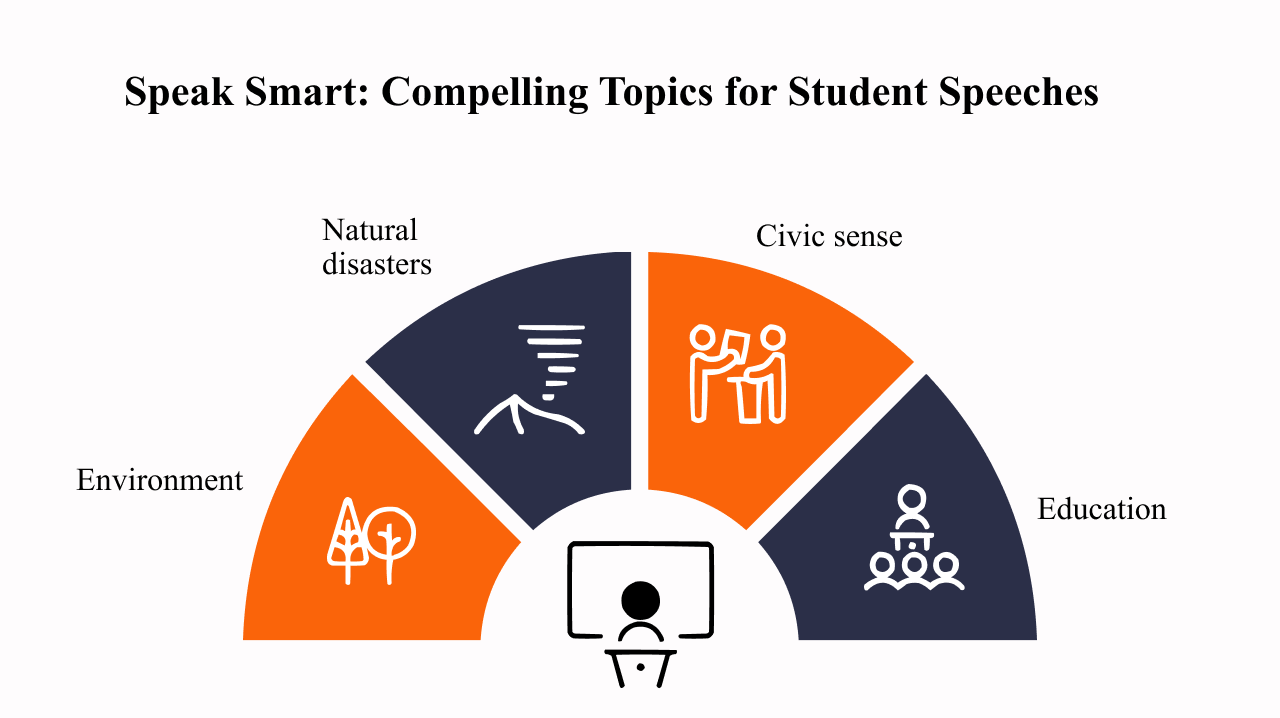
Students can build confidence by speaking about:
- Environment
- Natural disasters
- Civic sense
- Education
- Technology and more!
Schools help with communication by giving interesting English speech topics for students. By integrating speech activities into the curriculum, institutions often see improved participation and engagement.
The ability to speak confidently prepares students for real-world situations. Early exposure helps students overcome hesitation and express their thoughts with clarity. Over time, this builds a strong foundation for leadership and decision-making skills.
3. What are the Benefits of Mobile Phones in Education, and how can they be used Responsibly?
The use of digital devices in education continues to grow worldwide. Approximately 74% of the global population is now using the Internet (International Telecommunication Union, 17 Nov 2025). With the increase in the percentage of people who are accessing the World Wide Web, it’s necessary to guide students in using technology responsibly to enhance their educational experiences.
The advantages of mobile phones in classrooms include:
- Instant access to information
- Exposure to digital learning platforms
- Improved research capabilities
Technology, used properly, supports modern education by making learning more interactive and accessible.
Why Should Mobile Phones Be Used in Classrooms?
The use of phones in classrooms often sparks debate, but the idea itself is fairly straightforward. Like any useful tool, their value depends on how they are used. When introduced thoughtfully, they can support modern learning in meaningful ways.
The benefits of mobile phones in classrooms are most visible in environments that already embrace digital methods. With the right structure in place, students tend to participate more actively and become comfortable with technology that is now a part of everyday life.
That said, balance is key. Without clear boundaries, even helpful tools can become distractions. Teachers and parents need to work together to set expectations and encourage mindful use. When students understand when and how to use their devices, they are more likely to stay focused and make the most of their learning experience.
| Advantages | Concerns / Responsible Use |
| Real-time collaboration | Potential distractions in class |
| Access to educational apps | Overuse and excessive screen time |
| Personalised learning experiences | Reduced attention span if misused |
| Time-saving for tasks and research | Risk of non-academic usage |
What Should be Done to Avoid the Disadvantages that Can Be Harmful by Using Mobile Phones?
Overuse of mobile phones and unrestricted access to the internet lead to:
- Distractions
- Low attention span
- Disturbed sleep cycle
- Weak mental health
- Chances of early addiction
The disadvantages of mobile phones for students are many if not properly controlled and monitored. The broader drawbacks of mobile phones for students show the need for discipline and controlled usage.
Students must learn to use technology as a means—not a distraction. Screen time management leads to better attention and productivity. Developing self-control in technology usage also contributes to better sleep patterns and improved mental well-being. These habits, when practised consistently, support a balanced and healthy student lifestyle.
5. Why does Nutrition Matter for Students to Fuel the Body and Mind?
Nutrition plays a direct role in academic performance.
A nourishing diet:
- Improves concentration and memory
- Provides sustained energy throughout the day
- Supports physical and mental development
This leads to a healthy lifestyle for students, ensuring they are consistent in academics and extracurricular activities.
Proper nutrition also shapes long-term cognitive and emotional development. Nutrient-rich meals support brain functions such as memory retention, problem-solving, and decision-making, while also promoting emotional stability and resilience to stress. Healthy eating habits cultivate self-discipline and mindfulness, laying the groundwork for a strong well-being in adulthood.
Junk Food vs Healthy Food: How Does It Work?
Students often face choices between convenience and nutrition. The healthy food vs junk food debate does not have too fine a line.
| Junk food | Healthy food |
| High sugar content | Nutrient-rich |
| Unhealthy, harmful fats | High in vitamins |
| The ability to make you tired soon | Helpful for enhanced brain function |
| A negative impact on focus | The capability to boost energy |
Maintaining regular meal timings is equally important. Encouraging students to develop consistent eating habits ensures that their bodies receive the necessary nutrients throughout the day. Over time, these habits contribute to improved health and sustained academic performance.
6. Why Should Communication Skills Be Inculcated in Students?
Good communication skills are one of the essential student success habits.
Great communication brings:
- Thought focus
- Clarity in expression
- Better peer relationships
- Better bonding with teachers and educators
- Good teamwork
- Collaborative efforts
Communication skills for students are key to academic triumph and personal growth. This includes listening, understanding, and responding appropriately. Active listening leads to mindful, meaningful discussions. An interactive learning environment is where ideas are openly shared. Strong communication skills resolve conflicts and build positive relationships.
How Can Learners Develop and Improve Communication Skills?
Students can improve their communication by:
- Taking part in classroom discussions
- Competing in debates
- Presenting topics in front of their classmates
- Consciously listening in casual conversations
These practices enhance conviction and clarity, preparing students for future obstacles. Activities such as group projects, storytelling sessions, and peer interactions allow students to practise expressing themselves in different contexts. These experiences help students become more adaptable and confident in various situations, preparing them for future academic and professional challenges.
How can a Strong Daily Routine help Students Build Healthy, Disciplined, and Successful Lives?
Building the right habits early can shape a student’s entire journey. A balanced mix of physical activity, clear communication, proper nutrition, and mindful use of technology helps create not just better learners, but well-rounded individuals.
Consistency is the thumb rule. A proper daily routine for students has the right time allotted for academics, physical activity, and rest.
Powerful routines include time for:
- Academics
- Sports
- Recreation
- Sleep
- Rest
Mastering time management tips for students helps prioritise tasks and lower stress levels. Techniques such as goal setting, planning, and avoiding procrastination can significantly improve productivity.
Students who manage time are more confident, organised, and prepared for academic challenges. This reduces last-minute stress and allows them to approach tasks with greater clarity. Over time, effective time management builds self-discipline and improves overall productivity.
If you are exploring ways to support a student’s overall growth, it may be worth taking a closer look at how a balanced learning environment can make a difference. MIT Gurukul nurtures confidence, discipline, and life skills alongside academics. Its approach blends modern education with holistic development to help students thrive in all areas.