


How to Build Confidence in English Speaking: Step-by-Step Approach?
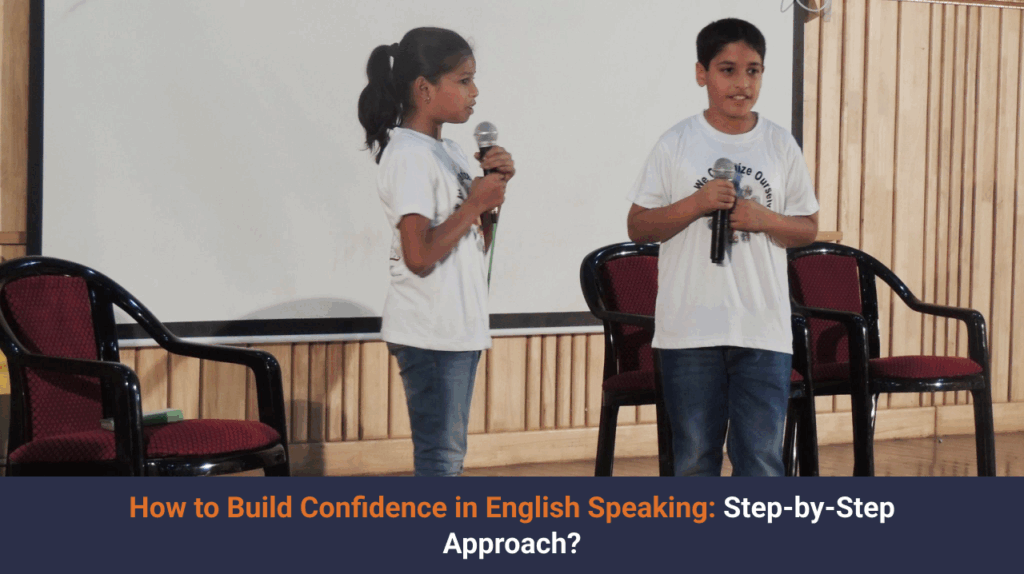
Do you often find yourself hesitating when speaking in English? Let’s be honest; speaking English in front of others can feel daunting to many people. While all eyes are on you, your heart races, your mind blanks and suddenly, even a simple conversation feels like a tongue twister. Sounds familiar? For millions around the world, English speaking skills are a gateway to better careers, richer experiences and broader communication. Yet, speaking confidently remains one of the biggest hurdles. The good news? Confidence in English speaking isn’t something you are only born with; it is something you build. Today, confidence in speaking English isn’t just a nice skill to have; it is a game changer. Why does confidence in English speaking matter so much? Well, in the globalised world, English isn’t just a subject; but it is a powerful tool that opens doors to success. From classroom discussions and presentations to making new friends or even nailing the job interviews, strong spoken English boosts your chances of success. It is like having a superpower that connects you with people across the globe and helps you express yourself clearly. The impact of confident English speaking goes beyond academics. It builds self-esteem, encourages participation and helps children and adults become active, engaged learners and communicators in everyday life. Whether it is sharing ideas, asking questions or expressing yourself, speaking English confidently can transform your performance and create future opportunities. This guide is especially for students who want to speak English without fear, parents to support their kids and educators to guide the next generation. Through fun and easy-to-follow steps, let us discover how to improve English speaking skills for students. Turn those shaky beginnings into bold conversations. Ready to start? Let us make English speaking an exciting adventure for students to discover! The Psychology Behind Confidence in Speaking English Ever tried speaking in English and suddenly forgot every word you have ever learned? You are not alone. The biggest obstacle to speaking English is not the vocabulary or grammar, but it is what is going on in your head. Most people struggle with common fears like “What if I make a mistake?” “What if they laugh?” “What if I sound stupid?” These fears not only block your thoughts but also act like a stop sign for your voice. But here is the truth: these fears are totally normal and everyone makes mistakes, even the native speakers. The difference is that the confident speakers don’t let fear stop them. They mess up, make a mistake, laugh it off and keep going. Your mindset is your superpower. If you believe you can improve and speak confidently, you will. Start replacing your negative thoughts with positive thoughts and ideas. This is called positive reinforcement and is one of the practical ways to speak English fluently, as it encourages your brain to succeed. The more you encourage your brain, the stronger it gets. Every time you speak English, even if you make a mistake or fumble, your confidence grows just a little more. It is like building a bridge where each brave attempt adds a plank that helps you grow from fear to fluency. The fear of mistakes may seem big, but once you face it, the fear shrinks. Mistakes are not failures, but they are proof and reflection of the fact that you are trying to learn and improve. And that is how growth begins. So, give yourself permission to be imperfect and be kind to yourself. Celebrate every word spoken, every sentence formed and every conversation started. With the right mindset and positive awareness, it becomes easier to turn your nervousness into natural confidence. Before you even know it, speaking English will feel less like a challenge and more like an exciting thing. Step-by-Step Guide to Speak English Confidently Are you ready and keen to improve your spoken English skills? Let us break it down into some simple and fun steps to turn you from a shy speaker to a confident communicator in no time. Start with the Basics: Reading and Listening Think of reading as a secret weapon for your brain to learn new words, build vocabulary and fluency. The more you read, whether books, stories, articles, blogs or even comic strips and memes, the more English words you will learn without trying. English will sound more natural in your head. Pair it with listening to English podcasts, songs or watching movies and you will soon start thinking in English! Practice Speaking Regularly Practice makes perfect! Don’t wait for the perfect moment; create it. Try talking to yourself in the mirror; it may sound funny, but it really works. Pretend like you are giving a speech, read aloud like a news anchor or just chat with a friend. Speaking regularly is the secret sauce to fluency, as it helps you get comfortable with pronunciation and rhythm. Learn from Writing Are you aware of the benefits of writing in English for speaking? Writing is like a rehearsal for speaking. It helps you organise your thoughts, build better sentences and translate ideas into words. This helps in making speaking English feel easier and smoother. It also develops the skills that power up your speaking confidence. Using Proverbs to Enrich Conversations Want to sound smart, wise, witty and interesting? Use some proverbs like “Better late than never” or “Practice makes perfect.” These little sayings add colour to your conversations and help you easily connect with the listeners. This also makes your speech memorable. Preparing a Strong Self-Introduction First impression always counts! Craft an impressive self-introduction using the self-introduction in English tips. Make it short, sharp, simple and full of confidence. Practicing this will give you a boost whenever you meet new people. It is your opening act; make it shine! Follow these steps and watch your confidence soar while speaking English! Fun and Practical Ways to Practice English Speaking Who said learning English has to be boring? The truth is, the more fun you make it,
The Complete Parent’s Guide to International Baccalaureate (IB) Education
Parents are more invested than ever in finding their children’s educational path in today’s fast-changing world. Globalization and technological advances have shifted how we view learning and development. As a result, IB education—or International Baccalaureate—has gained widespread attention for its unique and forward-thinking approach. More and more families across the globe are choosing IB schools because the IB curriculum offers a comprehensive, inquiry-based, and globally relevant education. If you’re wondering why parents choose IB education or what makes it so special, this guide will walk you through everything, from the basic framework to the benefits and give you the best IB schools selection guide! 1. Understanding the IB Framework 1.1 What is International Baccalaureate education? The International Baccalaureate (IB) was founded in 1968 in Geneva, Switzerland, by international educators aiming to develop a challenging, holistic educational framework that prepares students for a globalized world. The IB’s mission is to cultivate inquiring, knowledgeable, and caring young people who help create a better and more peaceful world through intercultural understanding and respect. Today, the IB programme is offered by over 5,000 authorized IB schools in more than 150 countries, making it one of the most respected international educational models. Its global reach reflects the growing importance of cross-cultural competence and lifelong learning in the 21st century. IB education focuses not just on academic excellence but also on developing critical thinking, creativity, and social-emotional skills—preparing children not only for university but for life itself. 1.2 Key Features of IB Curriculum At the heart of the IB curriculum is inquiry-based learning, where students ask questions and explore concepts rather than memorizing facts. This approach encourages curiosity and fosters deep understanding. Multilingualism is another key feature. IB programmes encourage students to learn multiple languages, enhancing communication skills and cultural awareness. Moreover, the IB programme promotes a global mindset. We wonder how children learn in IB PYP. They are taught to see issues from multiple perspectives with practice, making them empathetic and open-minded global citizens. The curriculum is divided into different stages and programmes that span ages 3 to 19, ensuring consistent educational growth: IB PYP (Primary Years Programme) for ages 3–12 IB MYP (Middle Years Programme) for ages 11–16 IB DP (Diploma Programme) for ages 16–19 This structure ensures a coherent progression, focusing on developing conceptual understanding, critical thinking, and intercultural respect. 🔗 Read more: Importance of International Education 2. Why IB is a Smart Choice for Your Child 2.1 Five Reasons Why Parents Should Consider IB Choosing the right education is one of the most important decisions parents make. Here are five compelling reasons why IB education stands out: Conceptual and Critical Thinking Unlike traditional rote learning, IB emphasizes conceptual learning. Students engage with ideas, develop critical thinking skills, and apply knowledge creatively to solve problems. Holistic Development The IB programme nurtures every aspect of a child’s intellectual, emotional, social, and physical growth through a balanced curriculum that integrates academics with arts, sports, and community service. University and Career Readiness Leading universities globally recognize the IB Diploma Programme. The skills gained, such as research, writing, and self-management, prepare students for higher education and career success. Global Citizenship IB students become aware of global issues and cultural diversity, making them responsible and empathetic citizens. This fosters an open-minded outlook crucial for today’s interconnected world. Inquiry-Based and Student-Centered Learning The inquiry model encourages curiosity and fosters independence. Students learn to ask questions, explore, and reflect, developing a love for lifelong learning. 🔗 Read more: Decoding the IB Curriculum: Why Is It Good for Your Child 3. Inside the IB Curriculum 3.1 Overview of PYP, MYP & DP The IB PYP MYP DP structure provides a seamless, progressive learning experience: PYP (Primary Years Programme): Designed for young learners, the PYP emphasizes inquiry and exploration across six transdisciplinary themes. It aims to develop well-rounded, enthusiastic learners aware of themselves and their community. MYP (Middle Years Programme): Bridging primary and secondary education, the MYP encourages students to connect academic subjects with real-life contexts. It focuses on developing critical thinking, communication, and intercultural understanding. DP (Diploma Programme): The final stage, the DP, is a rigorous two-year curriculum that prepares students for university. It includes six subject groups and core elements: Theory of Knowledge (TOK), Creativity, Activity, Service (CAS), and the Extended Essay. Together, these programmes form a coherent educational journey emphasizing inquiry, reflection, and active learning. 🔗 Read more: Decoding the IB Curriculum: Why Is It Good for Your Child 3.2 How Children Learn in PYP Understanding how children learn in the IB PYP is key for parents. The PYP employs inquiry-based and experiential learning, with students engaging in hands-on activities that promote discovery and critical thinking. Teachers act as facilitators rather than mere knowledge dispensers. They encourage students to ask questions, collaborate in groups, and reflect on their learning process. The learning is thematic and transdisciplinary, meaning subjects are integrated, helping children make meaningful connections. Assessment is ongoing and formative, designed to guide and support individual growth. 🔗 Read more: How Do Children Learn in IB PYP? 3.3 Top 5 Elements of PYP Here are the core elements that define the PYP experience: Learner Profile: Describes attributes IB hopes to develop—thinkers, communicators, principled, open-minded, caring, and more. Transdisciplinary Themes: These broad themes transcend subjects, such as “Who We Are” and “How the World Works,” encouraging integrated learning. Approaches to Learning (ATL): Skills like research, self-management, communication, social, and thinking skills that help students learn effectively. Concept-Based Learning: Encourages understanding of big ideas and concepts, not just memorization. Student Action: Students are encouraged to act on their learning and make a positive difference in their communities. 🔗 Read more: Top 5 Elements of Primary Years Program 4. The Holistic Advantage of IB Education 4.1 Do IB Schools Facilitate Holistic and Better Learning? One of the most significant IB advantages is its emphasis on holistic education. IB schools promote academic achievement, emotional intelligence, social responsibility, and physical well-being. Students engage in co-curricular activities like sports, arts, and community
International Schools: Top Five Differentiating Characteristics – Copy

As a parent, we know that you aspire for the best educational opportunities for your child. Thus you must select a school that prepares your child for the dynamically evolving international scenario of educational, cultural, and businesses paradigms. In this context international schools prepare students for the global citizenry and equip them with leadership, vision, and future-looking technological, scientific, and social skills. They adopt the globally relevant International Baccalaureate syllabus and provide experiential and immersive education. With a growing demand for international schools in India, there are five differentiating factors that classify a good international school. Consideration of these would aid you in enrolling your ward in an institution suitable to your child’s educational and vocational requirements. Accreditation and Affiliation Accreditation gives an institution the stamp of quality. It helps them maintain globally recognized standards of education and claim their validity in standardized and time-tested pedagogy. Council of International Schools (CIS), Accreditation Service for International Schools (ASIC), and International Baccalaureate (IB) are some of the leading accreditation institutions. They represent high-quality programs, best practices, and training support to schools. Among the good residential schools in Pune, MIT Gurukul can substantiate its claim to being internationally accredited. Teaching Methodology The role of a school is not just limited to impart academics. It also provides social, intellectual, emotional, creative, and leadership skills to the students. A research-based education, optimal teacher-to-student ratio, and periodic assessments with regular feedback are also essential for affirmative action. Qualified and well-trained teachers are a must to provide the best results. MIT Gurukul, imparting the International Baccalaureate syllabus has ensured all these points are implemented in word and in spirit. Infrastructure A good international school must have ventilated classes, proper lighting, and comfortable student furniture for a good learning experience. It must also have multimedia facilities, state-of-the-art labs, and outstanding libraries with hard copy and digitized books that promote co-learning, and group-based projects. Additionally, a good residential school will also incorporate world-class sports facilities, gym, auditorium, meditation halls, and cafeteria to keep the holistic needs of students met adequately. An international school also provides a home-away-from-home to students with safe on-campus accommodations and security arrangements. MIT Gurukul satisfies all these infrastructural requirements. [INSERT_ELEMENTOR id=”5216″] Experience The way students, their parents, teachers, and the school management collectively experience the institution’s ethos is a key indicator of mutual trust and confidence. It reflects on the international school’s awards and accolades, and the outstanding achievements of its alumni. A sound process is the hallmark of a good international school. Led by visionary management, MIT Gurukul boasts of an inclusive and multicultural educational ethos. Healthy Environment for Learning Environment plays a pivotal part in how well the students can focus, thereby bringing out their best potential. It is a joint partnership between the parents, teachers, and students. It promotes enthusiasm, honesty, and integrity, leading to the overall satisfactory development of students. A good international and residential school thus epitomizes the global IB curriculum, holistic learning, progressive mindset, stimulating environment, and safety. One among such league of international schools in the outstanding institution of MIT Vishwashanti Gurukul. Based in Pune, India, with over 15 years of educational experience, MIT Gurukul is dedicatedly focused on providing quality education to its students. To know more about MIT Gurukul’s educational offerings please visit https://www.mitgurukul.com/
CAS Integration Through Nukkad Natak: “E-Waste Unplugged”

Inspiring Change Through Student-Led CAS Initiatives Nukkad Natak is a powerful medium for raising awareness about critical social issues, and our DP students recent performed titled “E-Waste Unplugged” was no exception. This play, brought to life by our talented DP students, focused on the escalating problem of electronic waste (e-waste) and served as both an engaging spectacle and an impactful educational tool. The play was thoughtfully crafted to highlight the environmental and health hazards posed by the improper disposal of electronic waste. Through a series of compelling vignettes, the narrative unfolded across different settings—’Dhalao’ (dump yard), ‘Nadi’ (river), ‘Kheti’ (farm), ‘Jungle’ (forest), and ‘Gaon’ (village). Each vignette vividly portrayed the consequences of e-waste mismanagement in these environments, effectively driving home the importance of responsible e-waste disposal. “E-Waste Unplugged” also integrated the principles of Reuse, Reduce, and Recycle, encouraging the audience to take action in their own lives. By showcasing the harmful effects of e-waste and promoting sustainable practices, our students not only entertained but also educated, leaving a lasting impact on all who watched. This performance was a prime example of CAS (Creativity, Activity, Service) in action, where students used creativity to communicate important messages and served the community by raising awareness of environmental issues. Congratulations to all the performers and facilitators for their hard work and dedication! Apply Now
Teacher’s Day Celebration: A Tribute to Our Educators
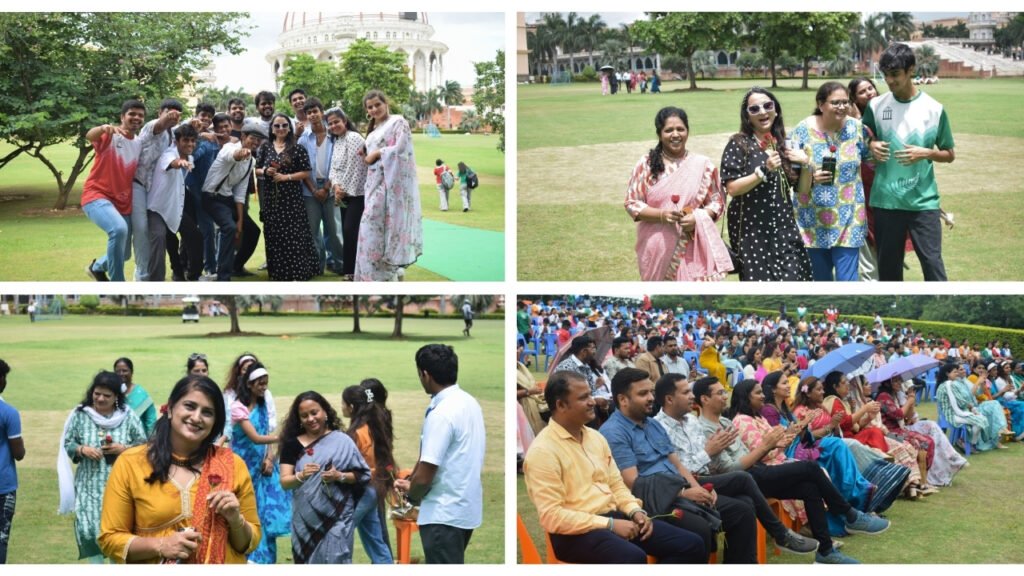
Teacher’s Day Celebration: A Tribute to Our Educators On September 5th, 2024, our school celebrated Teacher’s Day with a vibrant “Retro Carnival” theme. The day was filled with joy, gratitude, and memorable moments as we honored our amazing teachers. Carnival Spirit and Flipped Classrooms The celebration kicked off with a lively carnival atmosphere, as teachers donned retro outfits, adding a nostalgic touch to the event. The amphitheater, adorned with colorful banners, hanging stars, and a photo booth, set the tone for a day of fun and festivity. The morning included a flipped classroom experience, where Diploma Program (DP) students took on teaching roles for younger grades, giving them insight into the dedication required to be a teacher. Meanwhile, teachers enjoyed a special awards ceremony celebrating their unique qualities and contributions. Cultural Performances and Activities The student-organized cultural program began with a graceful prayer dance by the Early Years Program (EYP) and Primary Years Program (PYP) students, followed by vibrant dance and music performances from Middle Years Program (MYP) and DP students, showcasing their immense talent and creativity. A memorable highlight was a spontaneous sing-along by both teachers and students when a technical glitch occurred during an EYP dance, embodying the spirit of unity and support. The festivities continued with fun games for teachers, including the “Guess the Teacher” challenge and a dance-based version of Chinese whispers, sparking laughter and joy. Sports Competitions The day concluded with exciting sports competitions, including an intense cricket match and a spirited tug-of-war, where teachers and students competed head-to-head, displaying true sportsmanship and teamwork. The afternoon wrapped up with a special lunch, where everyone shared stories and laughter, celebrating the joy and camaraderie of the day. A Heartfelt Tribute This year’s Teacher’s Day was a sincere tribute to the bond between students and teachers—a day filled with gratitude, admiration, and appreciation for the educators who guide and inspire us every day. Here’s to our wonderful teachers—thank you for everything! Happy Teacher’s Day! — By Arnav Kathale and Kristina Sabarna
Investiture Ceremony – A New Chapter of Leadership

On the 10th of August, Vishavashanthi Gurukul World School witnessed an event that marked a new beginning—a day where leadership, responsibility, and unity took centre stage. The Investiture Ceremony for the academic year 2024-2025 was a momentous occasion, celebrating the election of our new student leaders and prefects. The event was not just a formal affair, but one filled with pride, purpose, and harmonious music that resonated throughout the school. As our young leaders, a mix of experienced individuals and new faces eager to make their mark, marched confidently towards the stage, each step symbolized a promise—a promise to serve, lead, and inspire. The presentation of badges was a significant moment, marking the transition from students to leaders, each now carrying the responsibility of guiding their peers and contributing positively to the school community. Our Head Boy and Head Girl delivered speeches that captivated the audience, inspiring every student to approach their duties with pride, compassion, and dedication. They spoke of leadership as not just a position of power, but as an opportunity to make a meaningful impact on those around them. Their words served as a reminder that the journey ahead will be filled with challenges, but with resilience, unity, and determination, these challenges can be turned into opportunities for growth and success. The ceremony was a celebration of the ethos of Vishavashanthi Gurukul, where leadership is nurtured, and each individual is encouraged to rise to their full potential. The Head Boy Rohan emphasized the power of teamwork and the strength that comes from unity. His words highlighted the importance of working together to achieve common goals and reminded us that true leadership lies in the collective effort of the group. The Head Girl Shreya Katariya focused on the qualities of resilience and kindness, urging everyone to be leaders not just in name, but in action. She emphasized that leadership is about lifting others, showing compassion, and facing challenges with courage. Her words resonated deeply, encouraging all to support one another and create an environment of mutual respect and growth. Our proud houses—Agni, Prithvi, Jal, and Vayu—each played an essential role in this ceremony, embodying the core values of the school. Agni House, represented by the Phoenix, symbolizes resilience and rebirth. Their motto, “Arise, Awake & Stop Not Till the Goal is Reached,” reflects their unwavering dedication to achieving success. Prithvi House stands for peace and prosperity. Their motto, “Shanti Samridhi itihi haritaha rangaha,” embodies the spirit of the Earth, nurturing growth and tranquility. Jal House represents compassion and healing, akin to the element of water. Their motto, “Flowing towards excellence,” encourages a path of love, forgiveness, and continuous improvement. Vayu House symbolizes internal strength and intuition. Their motto, “Nil Desperandum,” meaning “Never give up,” represents their determination to overcome any obstacle with hope and faith. The elected student council members of these houses are ready to take on the challenges of the year ahead, guiding the student body with passion and commitment. As we reflect on this significant day, we are filled with confidence in our new leaders. The Investiture Ceremony marked the beginning of a joyful and productive academic year at Vishavashanthi Gurukul World School, a year where every student will have the opportunity to grow, lead, and make a difference. Let us continue to nurture the future leaders of tomorrow, ensuring that every individual has the opportunity to shine. Here’s to a year filled with learning, leadership, and the joy of coming together as a strong, united school community. MIT Vishwashanti Gurukul World School Prefect Council 2024-25 Head Boy : Rohan George Head Girl : Shreya Katariya School sports captain – Male : Omraj Karle School sports captain – Female : Kanishka M Maniya School cultural captain – Male : Eshaan Khandelwal School cultural captain – Female : Kristina Sabarna Jal Vayu Agni Prithvi House Captain – Male Ketul Borda Taran Parikh Pratyush Anand Arnav Somvanshi House Captain Female Priya Patel Kavya Ajitsaria Shaivi Mistry Kanira Adlakha House Sports Captain – Male Darshil Bhadiyadra Rayhaan Khurshid Manjra Shauryaveeersinh Shivam Tejpal Gupta House Sports Captain – Female Naina Fernandes Anwesha Mukherjee Khushi Mehtani Vanshita House Cultural Captain – Male House Cultural Captain – Female Deputy House Captain – Male Chaitya Aditi Lodha SIddhant Navin Melant Rohan Choudhari Nivaan Shroff Tonjour Hiya jain Naksh Bablani Arnav Nilesh Kutte Sharva Yelnoorkar Mahi Shah Devansh Indalkar Deputy House Captain – Female Lavanya Charan Harsifat Kaur Akshata Sinha Rucha Bagade Deputy House Sports Captain – Male Aditya Kumar Om Arora Abhiraj Kurade Aman Mundada Deputy House Sports Captain – Female Aparna Sharma Preesha Rajgor Mahek Hindocha Anum Pande Deputy House Cultural Captain – Male Venkatesh Kore Arnav Kathale Luca Nikhil Gautam Deputy House Cultural Captain – Female Shriya Rajesh Jennifer Leslie Trisha Gaikwad Arohi Mundada MYP 5 Raj Punjabi Shaurya Bagrecha Pranjal Patidar Arindum Gai MYP 4 Rayan Moksha Ranawat Upaasna Kothari Aarya Waikar MYP 3 Moulik Maji Ivaan Modi Kavish Bansal Aananya Thakur MYP 2 MYP 1 Rachana Bagade Ojasvi Khandelwal Sharayu Kalbhor Nivaan Kalra Khloee Sayed Sarmalkar Paavni Kathale Aaliya Rahim Aleesha Gupta PYP-House Captain Harshdip H.Pawar Aarnav Ronav Stambhampelli Kiaash S.Sharma PYP-House Captain Zoe G. Wadekar Neyasa A. Bansode Shivanjali V.Bhosale Pavni Josh PYP-Sports Captain Kabir Agrawal Aradhya D. Zara G. Wadekar Mhaske Shlok M.Karopady PYP-Cultural Captain Avika V.Mangeshkar Yajas Manware Vishvayanraj A. Kotkar Viaan Singh
Empowering Future Leaders: CPR Workshop at Vishwashanti Gurukul World School

At Vishwashanti Gurukul World School, Loni Kalbhore, Pune, recognized as one of the Best Day and Residential Schools in India and an IB World School, our commitment to holistic education extends beyond academics, preparing students for real-life challenges. As one of the top IB residential schools in Pune and the Best International School, we ensure that our students are equipped with essential life skills. On the 8th and 9th of August, our IBDP1 and IBDP2 students, who are part of one of the best IB schools in Pune for 11th and 12th, participated in a transformative Cardio Pulmonary Resuscitation (CPR) workshop that aligns seamlessly with their CAS (Creativity, Activity, Service) initiatives. By fostering essential values such as empathy, responsibility, and proactivity, we are nurturing a generation of individuals ready to make a difference—one heartbeat at a time. In collaboration with Vishwaraj Hospital, this comprehensive CPR training was led by the esteemed Dr. Vitthal Shendage, an American Heart Association-certified instructor and distinguished anaesthesiologist. Dr. Shendage, with his qualifications including MBBS, DNB, and DA, provided our students with top-tier training in this critical life-saving procedure. Cardiac arrest remains a leading cause of death worldwide, claiming millions of lives annually due to the lack of timely emergency interventions like CPR. This workshop aimed to bridge that gap by educating our students on the importance of early recognition and intervention during cardiac emergencies. Through detailed demonstrations and hands-on practice, they learned to identify symptoms of cardiac arrest, perform CPR, and provide crucial life-saving support until professional medical help arrives. This training session was more than just a theoretical lecture; it was an engaging, interactive experience that allowed students to practice CPR techniques and gain confidence in applying these methods in real-life scenarios. In a world where unexpected medical emergencies can arise at any moment, equipping our younger generation with CPR skills is not only a valuable educational tool but also a moral imperative. As students from one of the top residential schools in Pune, they are now better prepared to create a caring and empowered community, ready to make a positive impact on society.
9 Ways to Fostering creativity and curiosity in IB classrooms
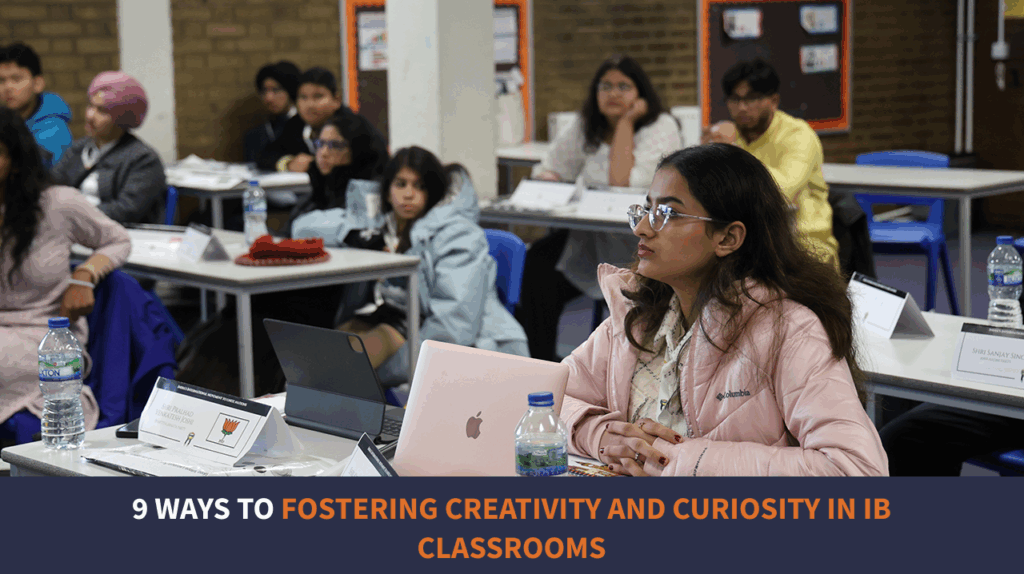
Are you an educator in IB classrooms who struggles with your creative students? While some students are well-suited to the world of academia, others struggle. Their creativity is a gift, but it may cause them to feel under-stimulated and unfulfilled in a conventional classroom environment. Inspiring students to express themselves and learn in their own ways is part of your job. Are you up to the challenge? If you’re ready to commit to improving your IB classroom, keep reading to learn all about how you can make your classroom friendlier to unconventional thinkers and encourage creativity. 1.Allow “Outside of the Box” Thinking Depending on the age of the students you’re teaching, you may feel inclined to encourage only one way of thinking. The delivery of facts and figures is difficult and daunting. As a teacher, you know that students will have to think inside of the box most of the time. 2.Encourage Independent Problem-Solving Some children never develop good problem-solving skills because they have answers fed to them by teachers or other students. It’s important to encourage students to collaborate, but one of the best teaching strategies to encourage creativity is to incorporate independent problem-solving. 3.Don’t Discourage Doodles Many teachers get frustrated when they notice a child who is doodling or writing non-academic things in the margins of their schoolwork. While it’s important that your students do all of their work, a student who is doodling while listening, thinking, or after their work is done should be encouraged, not discouraged. Doodling is often the first step on a child’s path toward being an artist. It’s often what leads to powerful stories, movies, and comics. 4.Focus on Strengths Speaking of allowing doodles, make sure that you teach each student’s strengths. This is difficult when you have many students. It requires flexibility and unique lesson plans. The extra effort will make a huge difference in each child’s life. There’s a saying that goes “Everyone is a genius. But if you judge a fish by its ability to climb a tree, it will live its whole life believing that it is stupid.” While this quote is often misattributed to Einstein, it has some truth behind it. 5.Set Up a Flexible Classroom What does your classroom layout look like? If you’re like many teachers, children are either in pods or individual desks. You may rearrange seats every so often, but overall, students remain in their own spots. There are benefits to this. If you know that some students can’t work together or can’t stop talking to each other, it’s helpful to keep them apart. That said, is it really the best option? 6.Hands-On Learning Matters How many opportunities do your students have to engage in hands-on learning? Many children learn by doing or by engaging in unique experiences. While reading a book is good enough for some students, others will flex their creativity muscles when they have the opportunity to be more interactive with their lessons. 7.Create Unconventional Lesson Plans Speaking of hands-on learning, it’s your job as an educator to create unique and unconventional lesson plans to support and encourage creative students. Lecturing or reading to students is easy. For new teachers, this is often the most obvious way to adapt to a teaching environment. That said, these approaches aren’t simulating for creative children. By teaching in unconventional ways, you’re making students think in unconventional ways. 8.Use Visual Aids If you want your children to feel confident when they’re expressing their creativity, consider using more visual aids in the classroom. Most assignments in conventional classrooms aren’t stimulating. They may cause students to feel bored and uninspired. By adding examples and items to handle, manipulate, and examine more closely you may spark some creative responses. 9.Follow Your Students’ Lead When you’re not sure how to support students who need more creative education strategies, try to follow their lead. You can’t put children in charge of their education, but you can watch them learn what they need. A lot of the teaching process is trial and error, so test out new strategies with your creative students and see what works best for them. Conclusion Inspiring students is one of the best and most fulfilling aspects of being an educator of an IB classroom. You’re molding and shaping young minds and preparing these children for the real world. While academic education is important, supporting creative students and encouraging their creativity will change their lives and outlooks. You might be helping a future creator. Are you ready to make some much-needed changes to your teaching strategies and educational style? Why not pursue new and unconventional possibilities? MIT VGS is committed to fostering positive learning environments for all students in.
How To Know If Your Child Is Ready For Preschool
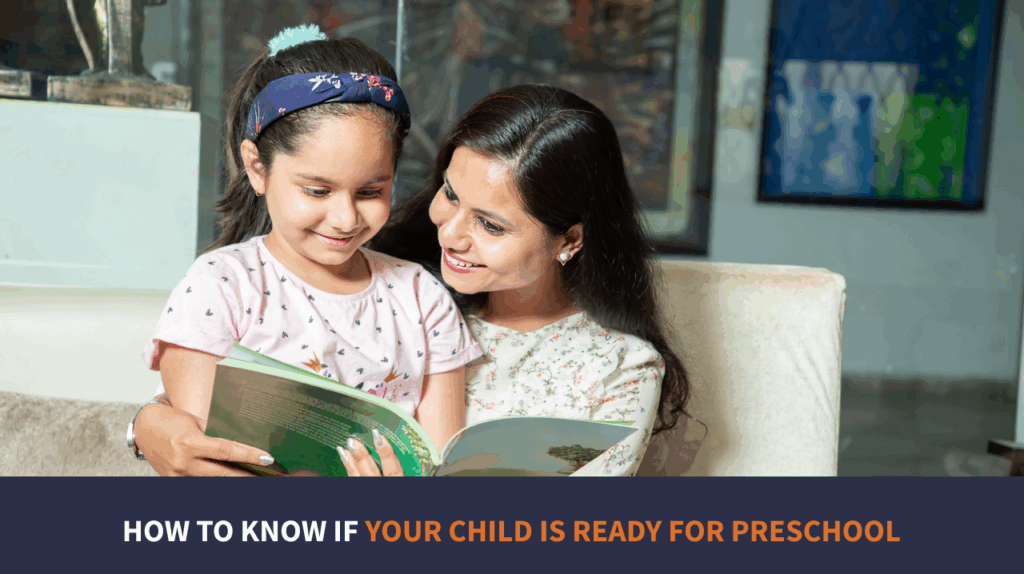
There isn’t an fixed list of must-have skills children need to begin preschool. That is because small kids have different rates of learning and understanding things. However, there are a few regions you can take a gander at to check whether your kid is prepared for bunch learning. And keeping in mind that you might feel overwhelmed to send your kid to school, have confidence that they will acquire many advantages from preschool, from further developing socialization to widening their insight. All kids develop at their own speed, however there are a couple of pointers to assist you with deciding if your kid is getting ready for preschool. What Is the Right Age for Preschool? Most preschoolers are between the ages of 3 and 5. Nonetheless, the perfect opportunity to enlist your kid in preschool will fluctuate since each kid grows differently. Preschool is still up in the air by your youngster’s development, which can be impacted by factors like social-emotional development, capacity to deal with taking care of oneself undertakings and other physical and scholastic skills. Signs Your Kid Is Getting Ready for Preschool 1.They Are Potty Trained Numerous preschools expect understudies to be potty trained before enlistment. Youngsters at preschool age should likewise have some taking care of oneself skills, including cleaning up, pulling up and affixing their jeans, and putting on their shoes and coat. A few schools just require youngsters 3 years and more established to be potty trained before preschool. Just sit back and relax if your youngster has a mishap or needs assistance tidying up. It’s normal at this stage! 2.They Can Deal with Separation There are a couple of emotional variables you should search for while thinking about whether your kid is prepared for preschool. The fundamental one is having the option to express farewell to a parent or guardian without encountering a lot of anxiety. While it’s not unexpected to feel apprehensive, kids who cry over the course of the day subsequent to isolating from their folks probably won’t be prepared for a full preschool program. Many children cry on their most memorable day or get emotional all through the primary week. After some time, these sentiments frequently die down, and an emotionally prepared youngster will probably be anxious to learn and make companions in preschool. 3.They Follow Directions Preschoolers should likewise have the option to follow basic directions. While numerous preschools aren’t excessively severe about rules, a few projects will request that the youngsters tidy up, follow nibble techniques, stroll in accordance with their cohorts and complete other grouped jobs. If you feel your kid might battle with a portion of these necessities, you can begin showing them simple errands at home first. Thoughts incorporate preparing the table for supper or going with you to acquire the mail. Laying out these schedules can be compelling in setting them up for preschool obligations, so pick basic tasks that can be finished consistently. 4.They Impart Clearly Three-year-olds aren’t supposed to have wonderful discourse. As a matter of fact, most preschoolers just talk in sentences of three to five words. In any case, your youngster should know how to communicate their thoughts clearly so new grown-ups can figure them out. It’s fundamental that they can get their sentiments and needs across, whether through discourse, communication via gestures, motions or with the assistance of innovation. The most effective method to Set up Your Kid for Preschool As a rule, you won’t need to successfully set up your kid for preschool since these skills are ones that most children foster normally around 3-5 years of age. Nonetheless, you could set them up by checking on fundamental preschool skills like collaborating with kids their age, following directions, utilizing the washroom and cleaning up a couple of months prior to enlisting them in a preschool program, particularly if you notice they are behind on any of these skills. Conclusion All kids merit a protected, drawing in an educational environment where they can develop mentally, emotionally, and socially. While you’re searching for preschools in Pune, India, look no farther than the MIT VGS. Their early learning projects can assist with setting up your kid for success in kindergarten and past by supporting their imagination, assisting them with working in a friendly way of behaving and expanding taking care of oneself skills.
5 Justifications How Online Education Is Changing The Way We Learn in 2024

Traditional education has changed drastically inside the most recent few years. Figure out why online learning is an incredible decision for getting a quality education at whatever point and any place you want. The idea of traditional education has changed drastically inside the most recent few years. Being truly present in a classroom isn’t the main learning choice any longer — not with the ascent of the web and new advancements, at any rate. These days, you approach a quality education at whatever point and any place you want, as long as you can get online. We are presently entering another period — the insurgency of online education. Continue to pursue to learn five additional motivations behind why you should engage in online education! 1.Online Education is flexible. Online education empowers the instructor and the understudy to set their own learning speed, and there’s the additional adaptability of setting a timetable that accommodates everybody’s plan. Subsequently, utilizing an online educational stage takes into consideration a superior equilibrium between work and studies, so there’s a compelling reason to surrender anything. Concentrating on online shows you indispensable time usage skills, which makes finding a decent work-concentrate on balance more straightforward. Having a typical plan between the understudy and instructor can likewise provoke the two players to acknowledge new liabilities and have more independence. 2.Online Education offers a wide choice of programs. In a space as huge and wide as the web, there are boundless skills and subjects to educate and learn. A developing number of colleges and advanced education schools are offering online renditions of their programs for different levels and trains. From music synthesis to quantum material science, there are possibilities for each sort of understudy. Concentrating on your program online is likewise an incredible choice for getting an authority certificate, diploma, or degree without genuinely going to a college grounds. These days, individuals get certificates that assist them with prevailing in their expert professions; the great ones are particularly the monetary certifications with the best return for money invested.“ 3.Online Education is accessible. Online education empowers you to study or instruct from anyplace on the planet. This implies there’s a compelling reason to commute starting with one spot then onto the next, or follow an inflexible timetable. What’s more, in addition to the fact that you save time, however you likewise set aside cash, which can be spent on different needs. The virtual classroom is likewise accessible anywhere there’s a web association, and an effective method for exploiting this is to travel. For instance, if you’re concentrating abroad and want to find a new line of work, online education is an incredible decision. There’s not a great explanation to abandon working or examining while at the same time investigating new and intriguing spots. 4.Online Education takes into consideration a customized learning experience. We’ve referenced before how adaptability can assist you with setting your own review pace. In any case, online education is additionally flexible for every understudy’s singular necessities and level of capacity. Online classes will quite often be more modest than traditional class size. More often than not, online learning stages just permit each understudy in turn, and in practically all cases, this considers more prominent communication and more criticism among you and your mentor. There’s in many cases admittance to exceptionally different material like recordings, photographs, and digital books online too, and coaches can likewise coordinate different arrangements like gatherings or conversations to work on their illustrations. Furthermore, this additional substance is accessible at any second from anyplace, which will offer you a more powerful and customized education. 5.Online Education is more cost-effective than traditional education. Dissimilar to in-person education techniques, online education will in general be more reasonable. There’s likewise frequently an extensive variety of installment choices that let you pay in portions or per class. This takes into consideration a better budget for the board. Large numbers of you may likewise be liable to limits or scholarships, so the cost is seldom high. You can likewise set aside cash from the commute and class materials, which are frequently accessible for nothing. That, yet there are additionally a lot of scholarships accessible for online examinations nowadays. At the end of the day, the money related venture is less, yet the outcomes can be preferable over different choices. Conclusion These are a couple of motivations to pick an online education, and why 90% of students today believe that online learning is something similar or better than the traditional classroom experience. Each understudy should survey what is happening and choose as per their needs and objectives, and keeping in mind that this option in contrast to traditional education isn’t ideal for everybody, it’s as yet a helpful choice with essentially vast choices for global students everywhere.