

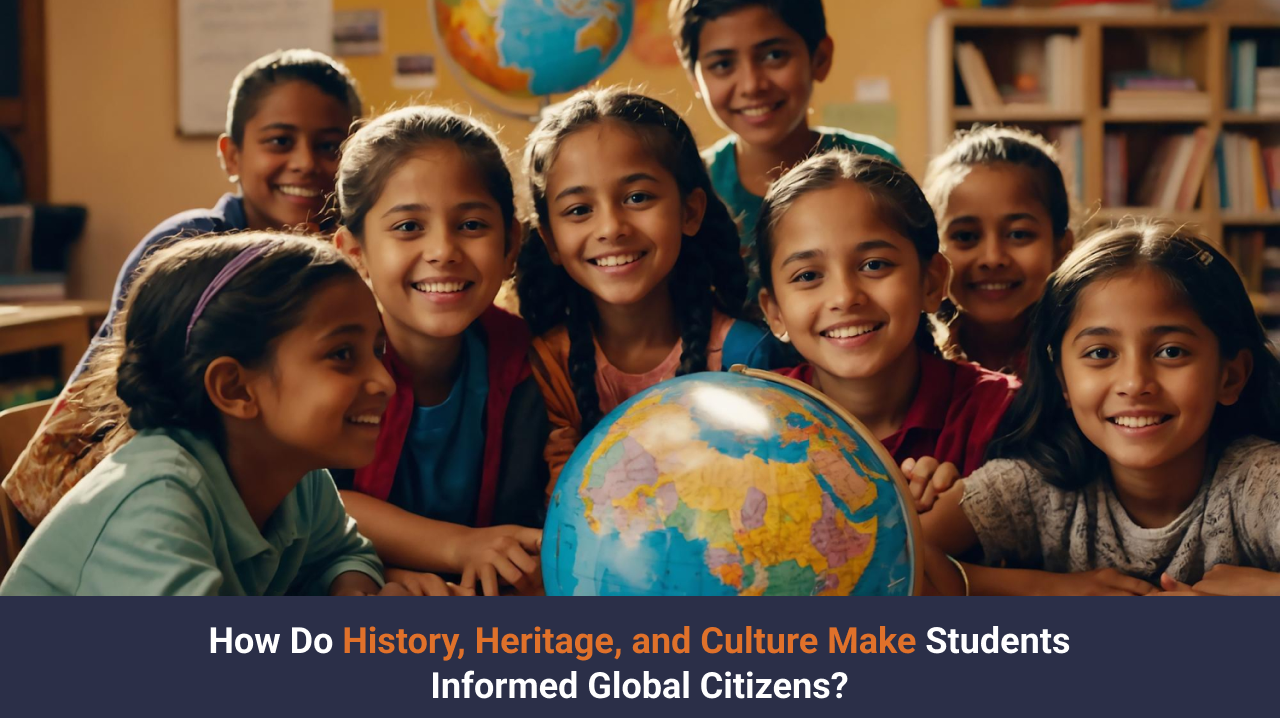
Learning about history plays a vital role in shaping individuals who can think critically and act responsibly in a globalised world. Learners get a clear sense of identity by understanding where they come from and how the nation has evolved. Indian history for students connects them to the reality of the past, helping them better understand culture, literature and our rich heritage.
Cultural awareness for students further strengthens this foundation by exposing them to diverse traditions, beliefs, and ways of life. It encourages respect for differences and helps students become more open-minded in their interactions.
Heritage education adds yet another important dimension. Kids, with impressionable minds, open up to an avenue of stories, values, and achievements of past generations. They appreciate the richness of their roots while understanding the importance of protecting cultural legacies. This connection to heritage builds a sense of responsibility towards society and future generations.
General knowledge for students plays a crucial role in broadening their perspective beyond academic subjects. It equips them with awareness about the world, helping them make informed decisions and participate actively in discussions. This guide explores key areas of history and culture learning, including literature, freedom movements, global heritage, governance, monuments, and traditions.
How Does Literature Help Students Understand Culture Through Words?
Literature reflects the soul of a society. Through stories and poetry, learners develop language skills, creativity, and emotional intelligence. Poetry, in particular, captures the essence of cultural identity. It expresses social realities, philosophical ideas, and human emotions in a way that resonates deeply with readers. Students build their imaginations and interpret complex ideas.
Who Are Some Famous Indian Poets, and What Were Their Significant Contributions?
Exploring famous poets in India and their contributions gives students a bird’s-eye view of the rich literary heritage India cultivated for numerous centuries. Here are a few:
| Poet | Greatest work (of many) |
| Rabindranath Tagore | Geetaanjali |
| Mirza Ghalib | Diwan-e-Ghalib |
| Kalidasa | Abhijnaanashaakuntalam |
| Subramania Bharati | Kuyil Pattu |
| Faiz Ahmed Faiz | Dast-e-Saba |
| Mahadevi Varma | Yama |
Their poetry addresses themes like spirituality, freedom, love, and social reform. These works continue to influence education and cultural understanding to this day. Sadly, some revolutionary poems seem relevant for the present too.
Students studying Indian poets and literature learn about:
- The power of expression
- The strength that can be imbued from storytelling
- Cultural values and morals
- Philosophical ideas and ethics
- Historical and social contexts via an artistic lens
- The artistic energy exuded by poetry
- The daring nature of poets to influence through words
Why do Educators Find it Crucial for Students to Read About Freedom Fighters?
Understanding the freedom fighters of India and their roles allows students to connect with the country’s journey towards independence. It builds a sense of patriotism and civic responsibility.
Freedom fighters represent courage, resilience, and leadership. Their sacrifices highlight the importance of standing up for justice and equality. Pupils must comprehend that change, especially positive, can come through collective effort and strong moral conviction. They reflect on their responsibilities within society and understand the value of active participation in civic life.
Who Are the Notable Freedom Fighters of India?
Learning about key figures such as Mahatma Gandhi, Bhagat Singh, and Subhas Chandra Bose helps students appreciate the diversity of leadership styles and ideologies.
Through studying the Indian freedom fighters list, students gain insights into:
- Major independence movements
- Strategies used in the freedom struggle
- The importance of unity and perseverance
These lessons are highly relevant in modern life, encouraging students to become responsible citizens who contribute positively to society.
Why is it Necessary for Students to be Aware of Global Heritage?
Learning about world heritage connects subjects like history, geography, and culture. It helps students understand how civilisations developed and interacted over time. Worldly knowledge allows students to see patterns and connections between different regions, helping them appreciate both similarities and differences across cultures. Students begin to understand how global developments influence local realities and everyday life.
This approach to learning is increasingly recognised at a global level. UNESCO has consistently emphasised that when cultural elements are meaningfully included in education, they help nurture critical thinking, empathy, and a deeper understanding between communities.
Should Students Be Taught About the Seven Wonders of the World?
The 7 wonders symbolise human achievement, architectural grandeur, and have immense cultural significance. Through the wonders of the world facts, students discover:
- History
- Human strife
- Culture
- Tradition
- Architecture
- Legacy
- Inspiring stories
- And much, much more!
One can see that it’s not just about memorising the names of the seven wonders of the world. It’s about teaching young people to appreciate the beauty in human diversity.
Why Should Students Understand Leadership and Governance in India?
Understanding governance and politics helps students become informed citizens. It introduces them to democratic values, decision-making processes, and leadership responsibilities.
Political awareness also encourages students to stay updated with current affairs and understand the impact of policies on society. Students can form balanced opinions and engage in discussions with clarity and confidence. They understand how institutions function and why accountability and transparency are essential in any system of governance.
What Is the List of Prime Ministers of India and Their Contributions?
Studying the list of Prime Ministers of India in order provides a chronological understanding of leadership in the country.
Each prime minister has contributed to India’s growth in their own tactful, unique way. The Indian Prime Ministers timeline highlights:
- Key policies and reforms
- Economic and social development
- Evolution of governance in India
| Prime Minister | Held office |
| Jawaharlal Nehru | 1947-1964 |
| Gulzarilal Nanda | 1964 |
| Lal Bahadur Shastri | 1964-1966 |
| Gulzarilal Nanda | 1966 |
| Indira Gandhi | 1966-1977 |
| Morarji Desai | 1977-1979 |
| Charan Singh | 1979-1980 |
| Indira Gandhi | 1980-1984 |
| Rajiv Gandhi | 1984-1989 |
| V. P. Singh | 1989-1990 |
| Chandra Shekhar | 1990-1991 |
| P. V. Narasimha Rao | 1991-1996 |
| Atal Bihari Vajpayee | 1996 |
| H. D. Deve Gowda | 1996-1997 |
| Inder Kumar Gujral | 1997-1998 |
| Atal Bihari Vajpayee | 1998-2004 |
| Manmohan Singh | 2004-2014 |
| Narendra Modi | 2014-present |
This knowledge helps students understand how leadership shapes a nation’s direction.
Why are Historical Monuments Important in Education?
Monuments are living examples of history. They offer a tangible connection to the past, allowing students to experience history beyond textbooks. Studying monuments improves knowledge of architecture, art, culture, and heritage. It also promotes experiential learning through visits and exploration.
Which Monuments of India are Significant to Teach Students About?
Exploring famous Indian monuments such as the Taj Mahal, Qutub Minar, and Red Fort helps students understand India’s diverse heritage.
These structures tell stories of different eras, rulers, and cultural influences. Students learn:
- Architectural styles and innovations
- Historical events associated with monuments
- Cultural significance and preservation efforts
This fosters respect for heritage and encourages its protection for future generations.
How Do Festivals and Traditions Frame a Student’s Cultural Identity?
Festivals are celebrations observed at specific times, often associated with religion or history. Traditions are practices passed down through generations.
Both play a significant role in shaping identity and community values. They create opportunities for shared experiences, strengthening bonds within families and communities. Through participation, students gain a better understanding of customs and practices, allowing them to connect more deeply with their cultural surroundings.
Is New Year’s Day a Festival or a Tradition?
New Year’s Day can be seen as both. It is celebrated globally as a festival marking the start of a new year, but the customs associated with it vary by culture.
Learning about traditions encourages respect for differences and promotes inclusivity.
In some areas, people ring bells or light fireworks. In others, quiet reflection or symbolic foods take the centre stage. These little rituals reveal how people welcome change. Exploring them can make students more curious, and perhaps even inspire their own meaningful ways to begin anew.
How Can Learning Build Informed Global Citizens?
A versatile education includes literature, history, global heritage, leadership, and cultural practices. Together, these areas create a strong foundation for personal and intellectual growth.
Students who dedicate the time and energy to engage with these topics develop:
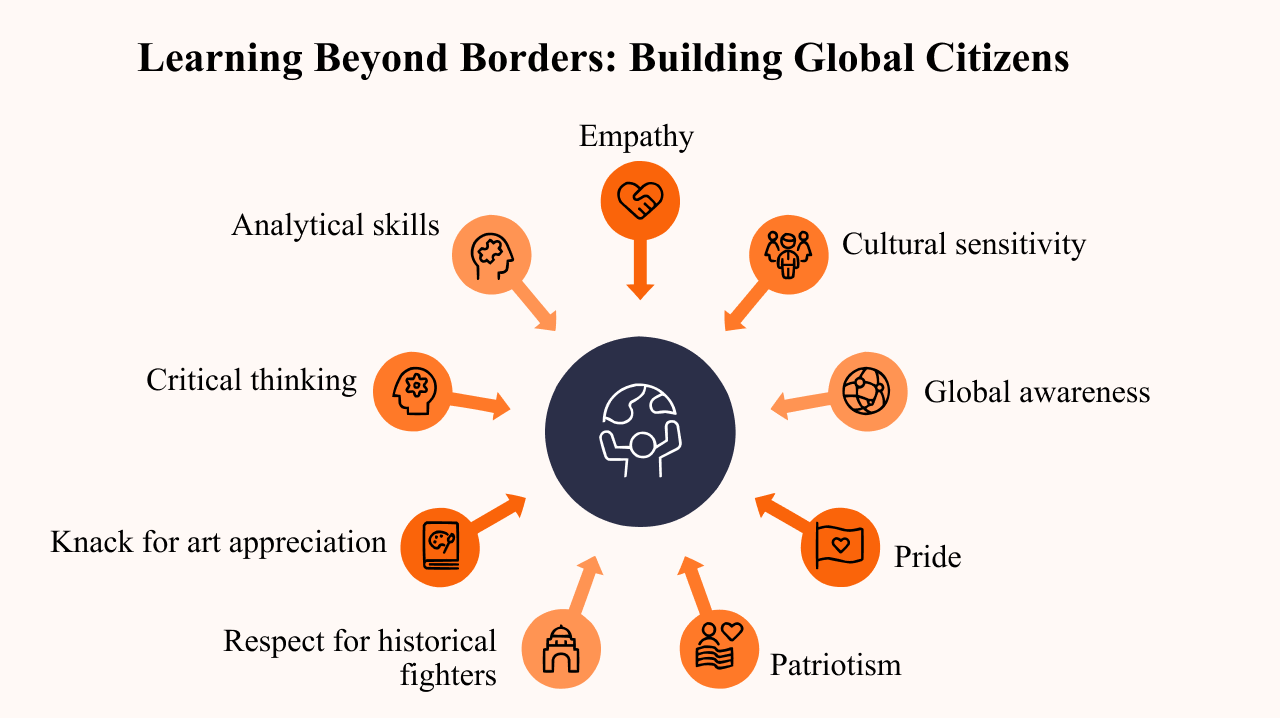
- Empathy
- Cultural sensitivity
- Global awareness
- Pride
- Patriotism
- Respect for historical fighters
- Knack for art appreciation
- Critical thinking
- Analytical skills
Analytical thinking remains the top core skill for employers, with seven out of 10 companies considering it as essential (World Economic Forum’s Future of Jobs Report, 2025). Teachers and educators are preparing students for future challenges and a plethora of opportunities. With their curiosity piqued, they might just be willing to learn about more and more throughout their lifetime.
How Can Students Continue Their Journey of Holistic Learning?
Exploring history, heritage, and culture allows students to grow beyond academics and develop a deeper understanding of the world. A learning environment that nurtures curiosity, values, and global awareness can make a meaningful difference in a student’s journey.
The journey of learning often takes shape through the environments students are part of, influencing how they think, interact, and understand the world over time. Subtle experiences, meaningful exposure, and a balanced approach to education can make all the difference in how knowledge is absorbed and applied.
Exploring how MIT Gurukul brings together academics with a wider perspective may offer a closer look at what such a learning experience can feel like.