


Personal growth is a lifelong journey that involves developing our skills, knowledge, and emotional intelligence. One of the most effective ways to foster this growth is through reading. Studies have shown that reading narratives improves brain connectivity, particularly in the left temporal cortex, which is associated with language reception.
Book readers live 23 months longer on average and have a 20% lower mortality rate than non-readers, according to Yale University research
At MIT Gurukul, we encourage students and parents alike to embrace the habit of reading, recognising its profound impact on personal development. In this blog, we will explore the benefits of reading books for students and why books are important in our life.
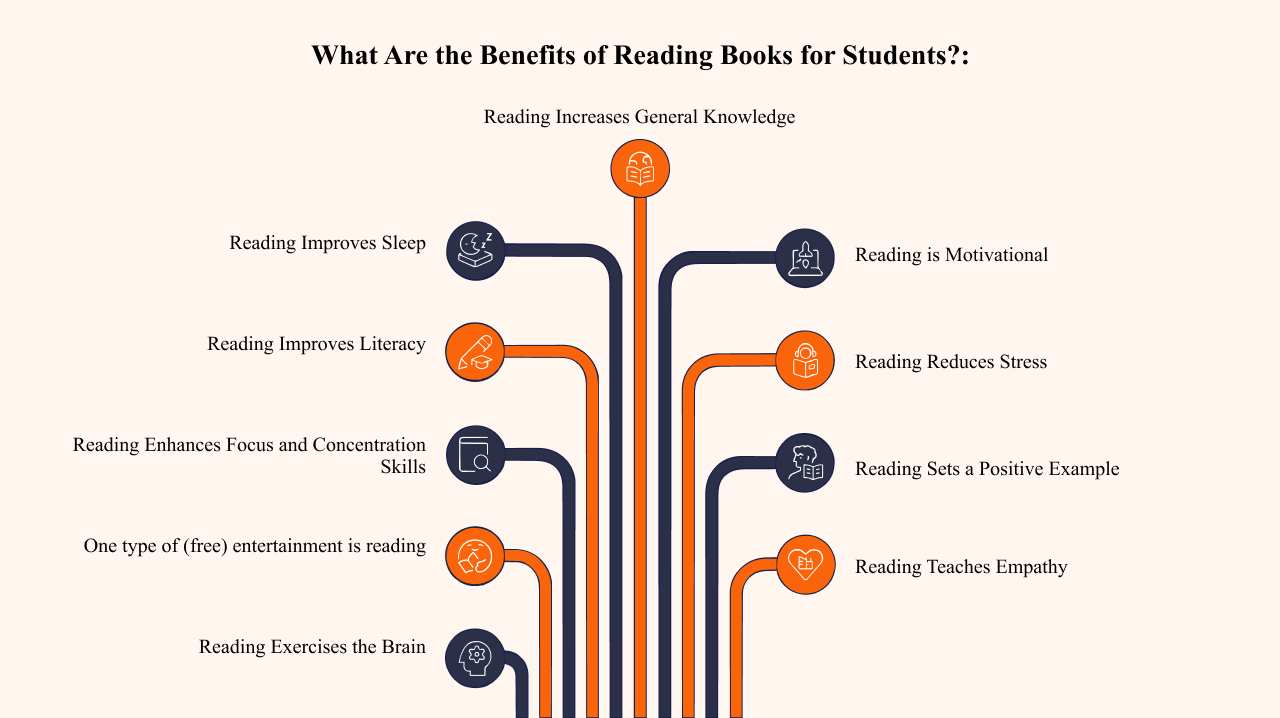
What Are the Benefits of Reading Books for Students?
-
Reading Exercises the Brain
-
One type of (free) entertainment is reading
-
Reading Enhances Focus and Concentration Skills
-
Reading Improves Literacy
-
Reading Improves Sleep
-
Reading Increases General Knowledge
-
Reading is Motivational
-
Reading Reduces Stress
-
Reading Sets a Positive Example
-
Reading Teaches Empathy
Reading is like a workout for the brain. It engages various cognitive functions, enhancing memory and critical thinking skills. Studies show that regular readers build cognitive reserve, which helps maintain brain health as we age. This mental stimulation keeps the mind sharp and agile, essential for academic success and lifelong learning.
Whether it’s fiction, non-fiction, or poetry, reading can transport you to new places and experiences. This form of entertainment not only enriches your imagination but also provides a healthy alternative to screen time.
Engaging with a book helps improve concentration skills, which can benefit students in their studies and daily tasks. The ability to focus on one task at a time is crucial for academic performance and personal productivity.
Regular reading enhances vocabulary and language skills, making it easier for students to express themselves effectively. Exposure to diverse writing styles and genres helps develop better writing skills, which are essential for academic success across all subjects.
Your body will know it’s time to wind down if you establish a reading pattern before bed. Unlike screens that emit blue light and disrupt sleep patterns, reading a physical book can promote relaxation and improve sleep quality.
Books are treasure troves of information. By reading widely, students can expand their knowledge base, which not only aids in academic pursuits but also fosters informed discussions on various subjects in everyday life.
Inspirational books can ignite passion and ambition in students. Biographies of successful individuals or self-help books provide valuable insights into overcoming challenges and achieving goals, encouraging readers to pursue their dreams.
Diving into a good book can be an excellent way to escape from daily stressors. Research indicates that just six minutes of reading can significantly reduce stress levels more effectively than other activities like listening to music or taking a walk.
When parents read regularly, they set a positive example for their children. This behaviour encourages kids to develop their own reading habits, fostering a culture of learning within the family.
Fictional narratives allow readers to experience life from different perspectives. This exposure fosters empathy by helping students understand diverse human experiences and emotions—an essential skill in today’s interconnected world.
Conclusion
The importance of reading books cannot be emphasised enough. As we encourage our children to embrace reading as a vital part of their lives, we equip them with tools that will serve them well throughout their journeys. At MIT Gurukul, we believe that fostering a love for reading is key to nurturing well-rounded individuals who are prepared for the challenges ahead. So let’s make reading an integral part of our daily routines—pick up a book today and unlock the endless possibilities that come with it! Remember, every book you read is a step toward becoming the best version of yourself!