


Benefits of Morning Exercise for Kids at School: 8 Ways to Help Them Get Started!

A fit, energetic, stress-free, calm and focused person is more successful than others, happier than most, and able to utilize their full potential throughout life. Amongst the many things that promote both, good physical and mental health, is exercise, especially when done in the morning. Thus inculcating a morning exercise habit among children is a powerful way to create a lifelong beneficial routine for them. This is a valuable investment for their positive heart health, emotional well-being, and general fitness. Morning exercise is also known to help deal with anxiety and trigger the release of dopamine and serotonin, which are called happy hormones! It is never too late nor ever too early to start this life-changing exercising habit. Here are 8 wonderful ways to get the children started on exercise: Encourage them to walk to school When it comes to morning exercise for students, walking to school is one of the easiest options. You may walk with your child to school, enjoy the fresh air and motivate your child to have a great day ahead. If you live too far away to walk, you may consider driving part way, parking and then walking with your child the rest of the way. Ask them to cycle to school If your child is old enough to ride a bicycle safely, cycling to school can lead to a mini adventure every day. Find the best and safest route to cycle between your home and the school. Ensure your child has protective gear, teach them the necessary signals and help them understand the basic safety rules. After a few practice runs, they are ready to get, set and go! Teach them yoga The benefits of yoga on physical and mental health have made it a popular choice among classroom exercises for students. Yoga sessions can be held at home too, and will help make your child attentive and calm. Interesting storybooks on yoga or guided yoga videos often enhance this experience. Encourage them to walk the dog An innovative and fun method of physical exercise for students can involve their furry friends. Your child can take your dog for a morning walk or walk your neighbor’s dog if permitted. This helps them not only exercise but also develop a strong sense of responsibility and compassion towards animals. Enroll your child in extracurricular activities and sports School life should never be restricted to textbooks, notes and exams. Many schools with International Baccalaureate Programme work towards the all-around development of students. For example, at MIT Gurukul, our IB PYP syllabus boosts the academic interests of students, and our extracurricular activities keep them healthy, happy and strong. It is highly recommended to encourage your kids to participate in physical extracurricular activities and sports events organized by the school and to have designated hobby and play time for them at home. [INSERT_ELEMENTOR id=”5216″] Make the best of school trips and family vacations Children love short trips and long vacations, don’t they? Day trips arranged by the top ICSE schools in Pune and other parts of the country help the students stay active, run around and make some new friends. During the school holidays, you may lack the motivation to find options for daily exercise for students. In this case, you can take them on a family vacation. Choose a place involving hiking, cycling, trekking and other fun activities so your child is physically involved in diverse activities. Motivate the child for recess play Have you heard of exercise buddies? An exercise buddy can help your child stay motivated, work out together and drive the boredom away during lunch breaks in schools. Similarly, when children play together or run around with their friends during recess, they can stay fit and have fun with each other. So encourage your kids to be active during recess and make the most of it. At MIT Gurukul, one of the top ICSE schools in Pune, our students walk, run, dance and laugh with their friends during designated breaks in between classes and make memories of a lifetime. Arrange affordable and durable exercise equipment When the weather outside is not so great, jumping on an indoor trampoline is a fun way to start the day. For older students, treadmills can be a great tool for fitness. Be aware of the risks posed by the equipment and make sure it is safe and age-appropriate for the physical exercise for students and they start these activities first under the supervision of an elder. Choose the equipment that will work best for your children and will last long to be used by the second child at home. At MIT Gurukul, an IB PYP curriculum school, we prioritize your child’s health and fitness and ensure joyful learning, exercise, yoga and dance experiences as part of our fitness initiatives. We encourage parents to include morning exercise for their children, even if it is a light and short duration activity. If you are interested in finding out how best to help your ward with various exercise options, you can meet our sports and fitness coaches and yoga experts by appointment. You may write to www.www.www.mitgurukul.com to fix a schedule for your meeting.
Importance Of Parent Teacher Meetings at School

Parent-Teacher Meetings (PTM) are a routine part of the school’s yearly calendar and play a huge role in shaping a child’s educational journey and future academic success. Parents know their children’s habits, difficulties and skills like no other. Teachers act as children’s second parents and observe them for hours every day in the classroom. When teachers and parents develop a strong bridge to help the child excel, it can create wonders. A parent-teacher meeting is a perfect way to discuss the child’s progress, the best ways to help the child, and exchange insights and thoughts about the child’s developmental milestones and academic progress. Here is a list of five reasons that explain these parent-teacher meeting importance: They bring children closer to their parents. With parents and teachers regularly collaborating in the educational development of their children, it provides an assurance to young minds that they have access to reliable support. These meetings help children to understand how deeply their parents care about them and are committed to their well-being. In addition, if parents and their children are going through a rough patch at home, teachers may discuss the problem in a non-judgmental manner and bring them closer through counselling and guidance. At MIT Gurukul, one of the best international schools in India, we believe in strengthening the bond between parents and their little ones at all stages and hold parent-teacher meetings every three months. Also Read The Finest Practices Followed by Best Preschool in Pune to Make Communication Effective With Children. Can Teachers and Parents Work Together to Facilitate the best learning Experience for Kids. 5 Reasons Why You as a Parent Should Consider IB Education for Your Child Such meetings help control difficult situations. [INSERT_ELEMENTOR id=”5216″] Teachers can easily identify potential issues during parent-teacher meetings before they escalate into severe problems. They listen to parents talk about their children in their home environment and understand their daily habits and behavioral patterns. Educators have the capability to comprehend the source of particular issues their students are facing, including mental health struggles and any behaviors that may be detrimental. They can discuss this thoroughly with the parents and devise ways to tackle such a situation. Similarly, communication with teachers about their children’s behavior in school can help parents to understand why children may act or misbehave in certain situations at home and how they can react appropriately. It helps to create positive change in the lives of children and improve their emotional well-being. A child’s talents and areas of strength can be explored through meetings. A wise educator tries to find students’ strong points and discuss the same with their parents during parent-teacher meetings. For example, if a student is found to have a great knack for dancing, a teacher may ask the parents to enroll them in a dance class to explore this talent. If a child is an adept Maths problem solver, a PTM allows the teacher to suggest how they can participate in Maths competitions and sharpen their skills. Many schools providing pre-primary education in India, such as MIT Gurukul, aim to enhance student’s talents and special skills right from their childhood and ensure to include such discussions with parents during the meetings. These are known to lead to better academic performance. When teachers communicate with parents and get to know each student better, they can make well-informed choices about what and how to teach the student. Teachers can receive information regarding the learning pattern, academic difficulties and room for improvement. This certainly boosts the academic interest of students. It leads to better grades and a deeper knowledge of the subjects they study. Similarly, parents can pick up teaching techniques that work well for their child in the classroom and duplicate them at home to reinforce the child’s learning. Meetings between teachers and parents facilitate the students to excel. Parent-teacher meetings encourage students to work on themselves, improve their academic performance and widen their skills. They get a sense that their teachers and parents are observing them closely and rooting for their best performance, academically and in extracurricular pursuits. When parents and teachers appreciate them, discuss their performance, try to solve their difficulties, and give them special attention, they are more likely to progress by leaps and bounds. From the above, we can conclude that the importance of parent-teacher meetings is something that all educators and parents must keep in mind. At MIT Gurukul, one of the top residential schools in Pune with a rigorous International Baccalaureate program, parents are encouraged to participate in our PTM meetings actively. This helps our teachers and parents to know one another better and work for the benefit of the students. We urge and encourage all parents to attend the PTM schedules regularly. To check the PTM schedules, please look up the child’s almanac or visit our website https://www.mitgurukul.com/
Top 6 Questions Every Parent Should Ask before Filling out the School Admission Form

School admission process in India is a multi step process, starting with a physical or online application and culminating with an interview process. Some of the best schools in India conduct interviews to understand the child’s unique qualities, and the parents’ motivation to enrol the child in their school. During the interview however, it need not be a one way question asking session. As a parent, you may also prepare some questions to ask the school authorities. Here is a list of the top 6 questions every parent should ask before filling out the school admission form and making a final decision towards getting their child admitted to a particular school: 1. What are the core values taught by the school? Whether you are looking up “international boarding school near me” on the internet or asking other parents about the best international schools in India, you must look for a school with strong values. Your child will observe the core values in the school and emulate them while growing up. Therefore, it is important to ask: How does the school encourage children to help underprivileged people? How are values such as politeness, discipline and honesty imbibed in children who study here? 2. What is the student-teacher ratio? The best schools in India, such as MIT Gurukul, understand the significance of limiting class sizes to ensure students receive a quality education. The top international schools in Pune embrace this approach to ensure that each student receives the attention they deserve. Consequently, make sure to inquire about the size of each class with school administrators. 3. What is the fee structure, and are there additional charges? Schools levy a fee that includes the components of tuition fee, uniforms, textbooks, food, short trips and transportation. Asking about these additional charges helps parents to plan and budget carefully. Moreover, if you’re Googling “international boarding school near me“, look up the fees and confirm the same during the interview. [INSERT_ELEMENTOR id=”5216″] 4. How is technology used in the school for teaching purposes? The best international schools in India, such as MIT Gurukul, have incorporated technology in the classroom, lab, within the art, creative pursuits and even sporting sections. Here are a few questions that parents can ask about the school’s use of technology: What tech savvy features are included in daily lessons? Do they have new technology courses included in the co-curricular teaching? Are extra coaching in tech tools available through outside providers? Do the library, art room, music room and sporting arena have digital resources? 5. What does a typical school day look like? The best way to get a clear idea of whether your child will fit in at a particular school is to ask what a typical school day looks like. Here are some important questions in this area: When does the school day start and end? What are the Tiffin timings, and what are the breakfast and lunch options? Which transportation options are available? May I observe a few classes to understand how they function? 6. What extracurricular options are available? If you want your child to make new friends, build confidence and explore their talents, extracurricular activities can help a long way. Some of the questions you may ask are: Does the school take children on picnics and educational trips? What are the languages taught here? Which extracurricular activities are taught in the school? What are some of the cultural events that take place in the school? At MIT Gurukul, one of the top international schools in Pune, we prioritise the questions and expectations of parents regarding their children’s learning experience. We understand that during the admission process for your tiny tots, you may be too busy and anxious with long application forms, limited seats and a variety of school options. But remember, your child will spend their most formative years in the school you select. This makes it imperative to understand the goals and values of the institution and whether it is the right fit for your little one who is stepping out into the world of learning. To understand the admission process at MIT Gurukul, which we have made child and parent friendly, please look at our website https://www.mitgurukul.com/
Five Best Ways to Make Learning Fun and Exciting for your students

Learning is a lifelong process. Assimilating facts, analyzing them and using the learning in one’s educational and professional pursuits forms an important part of any person’s life. Learning should thus be effortless, positive, and fun. When associated with fun-filled activities, the learning is better, concepts are retained over a long period, and there is no anxiety or stress related to the education process. This holds even truer for young students aged 4 to 6 starting their primary years at schools or play centres. The teachers must organize activities to draw the child’s attention and interest. Here are a few ways to achieve fun learning activities for kindergarten. 1. Give the students choices and break up the lessons. Fun learning starts with giving the young ones a sense of ownership and choice. The teachers can present a few alternate activities to the students and let them choose the one they want to do on a particular day. The student can then be divided into teams based on the chosen activity. Also, breaking up the activity or the lesson into periods of five to ten minutes at a time will help the students since children have a limited attention span. The instructional lessons can be interspersed with movement, poetry, dance, enacting what they have learnt, and choosing the mode they want to use to enact the learning. 2. Create fun group learning activities Making students work together provides them avenues to communicate with each other, develop social skills, find solutions together and feel confident in the process. Keeping group activities time-bound and assigning a specific role to every student in the group also clears the roles and responsibilities for them. Making student team leaders also gives them a feeling of being acknowledged for their qualities and strengths. [INSERT_ELEMENTOR id=”5216″] 3. Do hands-on learning Also known as active learning can include activities like clay modelling, number games, arts and craft work, etc. Hands-on activities break the monotony of formal lessons and give the students a unique opportunity to do things that they can talk about at home. Fireless cooking activities, like making a sandwich or decorating muffins with sweet toppings and candy, are also great ways to engage in hands-on learning. Some of the best pre schools in Pune, of which MIT Gurukul is one, incorporate some hands-on activities in nursery and kindergarten. 4. Schedule field trips Planning a visit to a museum, an animal farm, a park, historical places, a fair, or a circus are great ways to let children learn in ways that cannot be done within the confines of a class. These visits help children connect with their country’s heritage, enjoy rides, watch a clown performing acrobatics, or see why there is a need to keep farm animals healthy and safe just like humans. Such field trips encourage children to ask questions and develop general knowledge from a young age. 5. Utilize technology for lessons International schools in Pune and other cities in India are increasingly incorporating technology to make lessons more interesting. Through YouTube shorts, young scholars can learn basic concepts such as hygiene, alphabet letters, numerical values, and shapes. Using tablets with only educational apps can also ensure that the students learn online while being kept safe and protected. Cartoons are also a powerful tool for teaching students, and these can also be accessed through technology. In conclusion, incorporating fun activities and experiential learning methods boost children’s learning potential and create a positive attitude towards education. We invite the parents to discuss with the class teachers and the academic coordinators at MIT Gurukul the other techniques they can incorporate at home to make learning fun for their children.
9 Tips to Overcome Board Exam Stress and Anxiety – MIT Gurukul
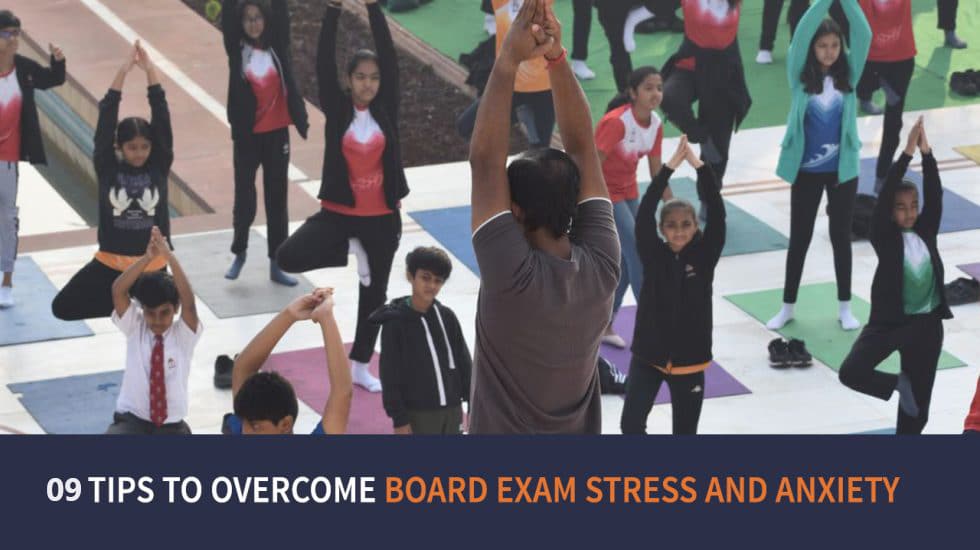
Board exams are crucial milestones in an Indian student’s academic journey. The two nationally conducted exams in grades 10th and 12th are seen as the hallmark of a student’s intellectual capacity and form the basis on which admissions to higher educational institutions is sought. Overseas universities and colleges also view these two exam results while considering admissions for Indian students to their undergraduate courses. Whichever curriculum the student is studying, including the IB international baccalaureate, the 10ty and 12th exams hold importance for them. Thus, these exams cause anxiety, concern and often fear among many students since the pressure to perform well in them is huge. The expectation of the family and school are other reasons that may increase the anxiety in students. This can lead to lack of sleep, confusion in learning and ultimately forgetfulness, negatively impacting the board result. To overcome the anxiety and be able to focus and score well in the board exams, students can follow few steps that will help them ace the educational concepts and obtain marks to their satisfaction. Some of these are outlined below: Begin the revision early – The syllabi for the 10th and 12th grades are completed by schools in a manner that leaves enough time for students to revise them before the board exam. An early revision schedule will facilitate the student to go through the entire syllabus, read it multiple times and devote more time to concepts that he/she fins difficult. This will also give them opportunity to take personal mentoring by the teachers in the last few weeks before the board exams. Setting a timetable – Making a time table with allotted number of hours for each subject is a good way to score well in the board exams. By marking chapters and their revision hours on the timetable, a student can do justice to every subject and get an overall high score. Planning study hours for each day – Breaking down the study timetable as per hours and days of the week will help the student track the revision progress. The student can also mark necessary break times in the study schedule that are a must for the student to relax, rejuvenate, and return to study with a fresh mind. Nutritious meals and some meditation can also be planned and these too help boost the mental capacity to retain the learnt concepts. Use active learning methodologies – Flash cards and memory cards, pie charts, diagrams and brain road maps are good ways to learn effectively. These paint a visual image of the concepts and make learning fun too. Co-learning with peers and holding friendly quizzes especially for the short and one word answers also form good ways to learn fast. Top CBSE schools in Pune and IB schools use these memory tools even as part of their regular teaching methods. Also Read Meditation in School: 10 Tips, Techniques and Benefits to help you get started! 10 Significant & Meaningful English Proverbs That Are Helpful For Students Top 10 Impressive & Interesting English Speech Topics for Students Get enough sleep – Quality sleep for seven to eight hours is a must for s student preparing for the board exams. Sleep freshens up the mind as well as the body, makes a student alert and sharp, which helps in fast learning. Sleep is like nature’s medicine that boosts positive mood and optimum health too. Lack of sleep can actually interfere with good learning. Exercise – Exercise makes the body secrete positive hormones, builds body and mind agility, removes toxins from the body, and increases focus and concept retention. A good exercise schedule is therefore a facilitator of learning well and scoring high in the board exams. Avoid social media distractions – The best schools in India, such as the MIT Gurukul, emphasise throughout their academic year about the ills of excessive social media usage and advise students to refrain from it. This holds true even for students preparing for the board exams. Constant distraction in social media, or WhatsApp chats with others makes the learning process ineffective, and the student needs to keep going back to the same concepts many times to learn them. An attentive study schedule away from social media distractions is the best way to ace the board exams. Speak with someone – In the case of an episode of anxiety or excessive fear, the best way is to reach out to one’s loved ones including family and friends, or to the school teachers and counsellors to discuss one’s anxiety issues. By speaking about it and seeking advice and guidance, a student can get back with renewed confidence to the study and score well. Pray – Prayer can be a great morale booster, builder of confidence and connection to a higher power in whom the student has faith. Prayer can be done with a positive intent and one can pray for oneself as well as one’s friends, which also builds a sense of belonging and peace. The above is a list of things that students can follow and help themselves with while studying for their board exams. The list is not exhaustive; students can add things to the list per their choice and what best suits their personality and study styles. Accomplishing good grades can also be achieved with the school teachers and parents’ love, help and cooperation. While the teachers are always there to solve doubts, teach the concepts once more and help formulate answers for the exams, parents can help by constant encouragement and showing faith in their child’s abilities. Ensuring a nutritious diet, fun family time and listening empathetically to the child can also be done by the family. We at MIT Gurukul are always available to students and their parents for a friendly discussion or a session whenever there is a need to boost the self confidence of our students who may be facing exam anxiety. Please contact the respective class teachers to fix such discussion schedules.
Check Out The Top 50 Simple GK Questions and Answers: Best General Knowledge Q&A For Kids

Knowledge comes in many forms. Classroom learning, research and experimentation, internships and jobs, community work, extracurricular and artistic interests, travel and reading, and co-learning with peers are fantastic ways to imbibe knowledge. Another way to increase one’s understanding about different aspects of life, environment, society, and every possible topic is through gaining what is termed ‘General Knowledge’ or GK. It refers to the process of increasing one’s knowhow on multitude of areas, subject domains, real life happenings, history, science and technology, astronomy, marine biology and so on. The list of topics covered under general knowledge is long and perhaps endless. Yet a person with good general knowledge can become an informed and intelligent conversationalist and connect with various people in the process. Gaining general knowledge should ideally start early in life, made into a fun filled activity, and should be age appropriate. A simple and effective way to help children increase their general knowledge is By putting together a list of questions Answers on many different subjects. The GK questions for kids can be included as part of the pedagogy in schools, and as part of family bonding time at home. Flash cards, charts, folded paper slips etc. can be used to make GK question answer in English, which is the most common language of instruction in schools. [INSERT_ELEMENTOR id=”5216″] To give some ideas on the kind of topics and types of questions one can use for general knowledge activities, here are a few examples that will help the teachers, students and their parents: Literature 1. In which book is the fictional town of Malgudi mentioned? Show Answer 2. Name an Indian author who has won Man Booker prize. Show Answer 3. Who wrote the Jungle Book? Show Answer 4. During which century did the famous saint and poet Kabir live? Show Answer Science 5. Which element is the diamond made of? Show Answer 6. At what temperature is the density of water the maximum? Show Answer 7. What does the ozone layer protect us from? Show Answer 8. Which gas is known as the laughing gas? Show Answer Wildlife 9. Which is the bird that can fly backwards? Show Answer 10. Which bird lays a hundred eggs at one time? Show Answer 11. Name the largest mangrove forest in India. Show Answer 12. Which is the largest wildlife sanctuary in India? Show Answer Sports 13. Name the national sport of India. Show Answer 14. What is the beginning level in Karate? Show Answer 15. Who is known as the flying Sikh of India? Show Answer 16. Which country is known to have started sports? Show Answer Geography 17. Which Indian river also flows through China? Show Answer 18. Which is the deepest ocean? Show Answer 19. Name the city that is located on two continents. Show Answer 20. What type of rock is granite? Show Answer Indian History 21. When did India attain freedom from the British rule? Show Answer 22. Who is called the father of the nation? Show Answer 23. Who was the first President of India?. Show Answer 24. When was the National Council of Education established? Show Answer Country/State/Capital 25. Which is the smallest country in the world? Show Answer 26. Which is the capital city of Greenland? Show Answer 27. Which is the largest state in India by size? Show Answer 28. Which country is known as the land of a thousand lakes? Show Answer Awards & Nominations 29. Who is the youngest Nobel Prize winner? Show Answer 30. Which is India’s highest civilian award? Show Answer 31. Which are the most famous awards for international cinema? Show Answer 32. Which award is given to Indian sports persons? Show Answer With the above examples we can see that world of General Knowledge can be interest9ng and informative for not only children but also for adults. Within IB schools, helping the students to develop their general knowledge skills is given a lot of emphasis. At MIT Gurukul, a leading IB program school, the GK is enhanced by encouraging students To read books Browse informative websites Discuss on a variety of topics Participate in debates Quizzes. We also urge the parents to talk to their wards on diverse topics and indulge in learning GK during the play time also.
10 Significant & Meaningful English Proverbs That Are Helpful For Students

Children learn in many ways, both in formal and informal settings. They memorise texts, experiment with hands-on activities, research, visit sites and take exams. These make for a comprehensive and holistic learning approach. An important part of such activities, especially in the academic domain, is learning through proverbs, which are well-known sayings stating a general truth, insight, or advice. They can be fun to understand and beneficial in class and at home. They help children imbibe values, aptitudes, and personal qualities without making the learning formal and monotonous. Proverbs are also called axioms, old saws, sayings or adages. Some of the proverbs outlined below could be used by teachers and parents to interact with children and help their intellectual growth: 01 A journey of a thousand miles begins with a single step Through this proverb, children learn that to achieve any goal or destination, one needs to start with the first step. However daunting the task may be, taking the first step initiates the process to ultimate success. 02 Always put your best foot forward It inculcates the children the will and ability to do their best in any activity or endeavor they undertake. It advises that while undertaking any assignment, one must give it the best shot and put in all efforts required. 03 An apple a day keeps the doctor away Enumerating on developing healthy eating habits and outlining the benefits of consuming fruits, the proverb is an interesting way to impart nutritional knowledge in chilkdren. When started early in life, good eating habits go a long way in promoting well-being. Most international schools in Pune, of which MIT Gurukul is a premier institution, prescribe healthy tiffin habits in children and keep fruit days once a week to promote good nutrition. 04 An idle brain is the devil’s workshop It is important for students to build a good purpose in life and develop a robust character. For this the proverb proves useful as it means that a person who does not indulge in meaningful activities will think mischief and cause harm. Thus it is important to keep busy with purposeful work. 05 Clothes do not make the man This proverb is a great way to teach children that they should respect everyone irrespective of their social status and that the true character of a person cannot be judged by their outward appearance. This helps the children become wise in judging people and respectful to others irrespective of their monetary capability. 06 Every cloud has a silver lining The importance of this proverb lies in its empowering role in helping children grasp that even behind seeming failures or setbacks, there is always hope to recover, improve and reattempt something. Also, difficult situations are transitory and temporary, and will pass to let the good times in. This facilitates the development of a positive mindset and the resilience to overcome challenges. 07 God helps those who help themselves One of the greatest lessons in life is in understanding the value of hard work and not depending upon a stroke of luck to achieve something. Through this proverb children grow to be responsible persons who take accountability for their decisions and work and not blame destiny or outward factors for their successes or failures. 08 A stitch in time saves nine By outlining the meaning of this proverb children can be taught that any problem tackled and resolved as soon as it is identified does not become too large and troublesome. The lesson from this proverb tells the children that they should communicate about a small challenge or problem, discuss its possible solutions and tackle it there and then so it does not escalate to large proportions. 09 A friend in need is a friend indeed An apt way to teach social relations and the importance of honesty and loyalty, the proverb outlines that even if one has a large circle of acquaintances, the person who helps them in the time of difficulty or need is their true friend. This grows the wisdom in children to identify those who they can trust and depend on. 10 All work and no play makes Jack a dull boy This is the best way to inculcate in children that a balance between academic pursuits and extracurricular activities is a must to develop a healthy and all-rounded personality and that only spending time studying will take away the spark in a person and cause burnout quickly. This is especially important for the long-term success of students in a globally connected world. Conclusively, we can say that proverbs contain old age wisdom. They contain cultural teachings and a strong ethos in themselves, and they impart profound insights and teaching to children in a light hearted and fun way. At MIT Gurukul, a top international school in Pune, we encourage teachers to include proverbs to reinforce good values amongst the students. We urge and request parents to utilise them in their conversations and daily interactions with their children at home.