


5 Common Myths About Boarding Schools
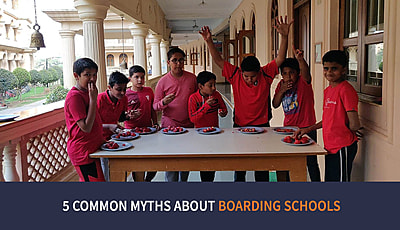
Intro: About Boarding School in India Based on the Reference Links Briefly explain 5 Myths – write up should be like these are just myths Conclusion / call to Action Introduction Boarding schools in India are a growing norm, and with many of them established in different cities and towns, students have an alternate option available for living and studying in residencies. These schools have become popular since many parents have overseas work attachments, transferrable jobs, or want their children to become independent from a young age. Being a crucial decision to enrol one’s ward in a residential boarding school in India, many times parents are exposed to certain myths about such schools. This blog attempts to bust some of these myths and present the facts about the best boarding schools in India. Myth 1: Boarding schools are meant only for rich people’s children. Though there is an additional cost to the stay, board and lodge in a boarding school, the best IB boarding schools in India are within the financial reach of a large number of parents. Thus the student population in a residential school is drawn from different parts of the country and from families of varying financial standing. At MIT Gurukul with our affordable fee we attract children from all parts of India and overseas. Myth 2: Boarding Schools are for students with behaviour problems The reality is far from the often cited reason for some parents to feel uncomfortable sending their children to boarding schools. With good pastoral care services available in boarding schools, and their location away from city centres, the home away from home atmosphere of boarding schools ensures a higher rate of motivation and long-term success for students. As per recent research done by the EF academy, 78% of boarding school students reported positive peer influence as compared to 49% in non-residential schools. Most students do not ever have any disciplinary issues and the rest are minor, growing-up phases that are addressed easily. In day schools this figure stands at 82% thus confirming that boarding schools’ structured residencies actually help develop disciplined students. Also, most boarding schools are for students with no behaviour problems. In some overseas countries, some boarding schools are specially set up for children with adjustment issues. [INSERT_ELEMENTOR id=”5216″] Myth 3: It is hard to keep in contact with the family: With the advent of technology and instruments like handheld mobile phones, internet, zoom calls and other such platforms, the students are able to keep in regular contact with their family. Within the educational calendar of the school, designated times are set for students to call their families, or for the families to contact them. There are also days every month when the parents can visit the school and meet with their wards. Myth 4: There is little or no free time for students to relax and find their individual time Students are given time within daily schedules to pursue their own interests, just sit and read or do nothing to take a break from studies and activities. This helps them find quiet periods to rest, spend time with other residency students and strengthen their friendship bonds, pursue a hobby, or connect with their families. Myth 5: All boarding and residential schools follow international curriculums Different boarding and residential schools, especially the best international schools in Pune, offer different curriculums based on student profiles and parents’ demands. MIT Gurukul offers the IB curriculum since most students aspire to study abroad after school and the curriculum helps them transition to foreign education seamlessly. Other common myths related to residential schools include the fact that all students from such schools go overseas to study, or opt for only science subjects, or that parental involvement is very less due to distance etc. In reality, students choose institutions in India and overseas for their bachelor’s, study science, commerce and humanities, and parents are encouraged to participate in school initiatives. The residential schools are excellent educational institutions that help develop future leaders and give holistic input to their students. MIT Gurukul has a comprehensive curriculum, optimal extracurricular facilities, a relaxed yet disciplined residential life and a family kind of loving and caring atmosphere. To know about the residential facilities and interact with the pastoral staff at MIT Gurukul, we invite the parents to visit the campus on open days and parent orientation programs.
Find the Best Boarding School in India in 3 Simple Steps- Blog
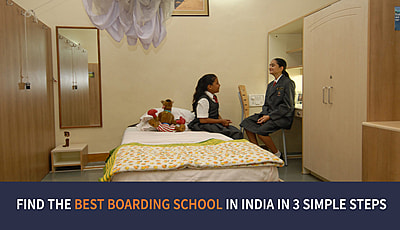
Residential schools refer to educational institutions where students study, lodge and board. These schools have emerged in the education scenario against demand from parents who have transferable jobs, overseas postings and extensive travelling work profiles. Boarding schools ensure that the children of such parents get a home away from home, learn in safe environments and develop social skills by living with other students from multicultural backgrounds. Selecting an ideal boarding school for one’s child can be a daunting task, one that involves careful consideration of many factors. Some of the important criteria that parents can use to find the most suitable residential boarding schools in India are: What does it mean if you go to boarding school? Attending a boarding school means living and studying in the same campus environment, away from home, with fellow students and teachers forming a close-knit community. It is more than just academics; it is about developing independence, discipline and resilience. Boarding life encourages time management and leadership through daily routines, sports, cultural events and peer interactions. With guidance from mentors, students learn responsibility while also building lifelong friendships. Though it may sound daunting at first, most boarders describe the experience as transformative. Boarding schools often become a second home, where learning is holistic; blending academic skills and personal growth under one roof. 1. The board that the school affiliates with: Parents can have a preference for the curriculum of a particular board they want their child to study. The main choices in India are between CBSE, ICSE, and state-specific boards. Increasingly the International Baccalaureate and the Cambridge Assessment curriculums are also becoming popular choices since most students aspire to study overseas after school. These two curriculums offer a seamless transition into the overseas education systems. Keeping this in mind, MIT Gurukul, a premier boarding school in Pune, has instituted the IB curriculum for its students. 2. School location: A residential boarding school must be built in a suitable location, preferably away from the city centre. This will enable it to offer a quiet, peaceful and safe place for students to concentrate on their studies. The location should also be accessible easily to parents through public or personal transport, so they can meet their children on designated days of the month within the school’s mandate. [INSERT_ELEMENTOR id=”5216″] 3. Safety readiness of the school: Leaving one’s ward in the hands of a school requires the parent to be sure of the safety aspects of the school. For this, one can note if the school has all safety aspects such as emergency exit plans, fire extinguishers, trained personnel and guards for safeguarding the school premises, and student-safe classrooms and labs. The residential hostel facilities should also be accessible only through student cards, and entry to any unauthorised person should be banned. Safe drinking water, hygienic food preparation facilities etc. form other aspects of the school’s safety preparedness. Among the IB syllabus schools, MIT Gurukul is considered a leading institution that prioritises student safety. 4. Other selection criteria Among some other criteria that the parents may employ to select a residential boarding school in India, they could be the choice of a same-sex or a co-ed school, fee structure, qualifications of the teachers and the certification of the hostel warden and other staff, and the overall infrastructure and facilities in the school.Making an informed choice for a residential school, where a child will spend the formative years of their life, is important for the long-term success of the child. With all intent to provide the best in the residential educational opportunity to its students, MIT Gurukul, one of the best boarding schools in india organises open days where parents can come enquire about the fees, view the campus facilities and hostel blocks.We invite prospective parents to visit our website https://www.mitgurukul.com/, register for the open days and visit our school and the on-campus hostel.
Journey of Right Learning Begins with the Right Preschool
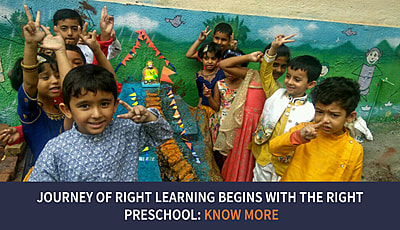
Early life experiences play a crucial role in a child’s life. Like social, emotional and psychological learning, an educational base formed at an early age is also very important. Fulfilling this need are the pre-schools, the concept of which has caught up with educationists and parents alike in the present times. A pre-school is a play-way method learning institution, generally for children between the ages of 2 years to 5 years. These are meant for foundational learning in developing basic awareness of surroundings, working with simple motor skills and laying the base for social interactions and emotional development. Preschools are the first step in a student’s long educational journey. As the initial milestone in their life outside of the home, the pre-school plays a very important part in shaping the cognitive, creative and conceptual aspects of young children. Understanding this, most Indian schools, but especially the best IB boarding schools in India, have pre-school as part of their educational offering. MIT Gurukul has one of the best preschools among comparable IB schools in India. A space allotted with appro[riate study materials, play equipment, lively classrooms and audio-visual technology have been set to attract the students’ attention to the first steps in learning. Loving teachers and benevolent care takers form the efficient teams at the preschool. Importance of Studying at a Pre-school There are many advantages of studying at a pre-school, some of which include: 01. Consistent Structure and Routine Going to preschool instils in children the habit of following a daily routine, and to learn in a structured manner. These form the basis of good habits during teen years and in adulthood. 02. Enabling Learning Environment Pre-schools provide an enabling learning environment with the right tools and equipment. The brightly decorated classrooms, play pens, child safe building blocks, colouring notebooks and audio-visual mechanisms arouse the interest in children to learn while enjoying the learning itself. 03. Teaching through variety of resources Whether it is storytelling, dancing or singing, making animal shapes with play dough, colouring and drawing, visiting a zoological park, pre-schools shape the learning behaviour, curiosity and the desire to imbibe information from multiple sources in children. This early base forms useful strengths for later research and inquiry. 04. Trained teachers and caretakers The learning of pr-schoolers is strengthened under the guidance of teachers specifically trained for preschool curriculums. They employ methodologies that make concepts very simple for the young learners. The caretaker is similarly trained in child hygiene and emotional aspects and certified for the work they do. This ensures that the children are looked after and made to feel secure. [INSERT_ELEMENTOR id=”5216″] How to select a preschool for your kid? While looking for the best pre-schools in Pune, the following will be helpful. 01. School Hours Young children should be initiated into learning at a comfortable pace. For this, it is important that the school hours at a preschool do not exceed two and a half to three hours. The duration should include some study, some play, break and rest to mimic the schedule that children have been used to at home. 02. Distance from home Young children should be made to travel a little distance to reach the school without compromising on the quality of education. This distance should be traversed in school buses specially designed for young travellers with an attendant in the bus at all times. 03. School Infrastructure School campuses should be safe for the young learners. The furniture should be ergonomic, play equipment should be painted in non toxic colours, low level taps should be installed at strategic points. Ramps must be installed for easy evacuation in case of emergency Emergency Services A doctor on call and the presence of a trained nurse at pre-schools can provide a sense of assurance to parents that the children will be taken care of in any medical requirement. Similarly, fire extinguishers and the presence of security guards at the school gate are other factors one can consider while selecting a preschool. Talking to other parents regarding their experience with a pre-school, avenues for parent involvement, access to teachers to get one’s queries answered in time, visiting the school premises to see facilities first-hand are some methods that parents can employ while looking for nursery schools in Pune and other cities of India. To see the facilities present at the MIT Gurukul preschool, and to understand the teaching methods, we encourage the parents to visit the preschool during our open days and interact with the teachers. Also Read Catch Them Young: The Importance of Early Childhood Education How do children learn in IB PYP? Benefits of Extracurricular Activities in Child Development Best Ideas to Keep Your Child Stay Organised Can Teachers and Parents Work Together to Facilitate the best learning Experience for Kids. The Art Scenario at MIT Gurukul – Developing the Creativity Index
Study Abroad Advising – The How and Why of it
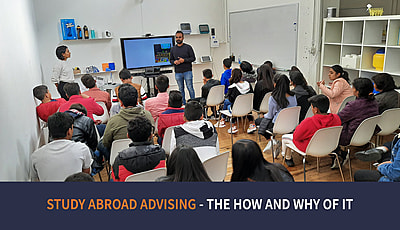
Studying abroad is an important decision in the life of students and their families. As students start thinking about options for studying in an overseas university or college, they have numerous questions and queries. They also would want to know about course and country options, choice of institutions, funding, admissions criteria etc. They look for authentic and timely information to help their successful admits. Study abroad advising is about bringing forth the natural talents and aptitudes of students through discussions and psychometric tests. This is where the role of study abroad advisors comes handy, wherein they help match the students’ strengths with possible career paths. Thereafter to suggest the ideal study destination, right fit institution, course specialisation and curriculum details. One of the best residential boarding schools in India, MIT Gurukul is a premier institution with a study abroad cell on their campus to facilitate such advising processes in-person. Advising for study abroad helps the students decide the if, when, where and why of study abroad, as well as the length of the program one must undertake to realise one’s career aspirations. By helping students’ navigate the admissions process and related aspects such as student loans, scholarships and visas, a study abroad advisor facilitates ease of understanding the steps in the admissions process. This leads to the students successfully obtaining confirmed admissions from institutions of choice. The advisor also ensures that the long term goals of the student are matched with the offerings of a particular program at a certain institution. [INSERT_ELEMENTOR id=”5216″] IB Syllabus schools are traditionally meant for students who plan to start their bachelor’s studies overseas. It is more important for such students to gain the right guidance since their career foundation is defined by the choices they make while selecting subjects in high school. The function of the study abroad advisor for such students is to also help them decide the combination of subjects that will transition them seamlessly into their bachelor’s studies. Overall the steps included in a study abroad advising process are: Finding the student’s strengths and aptitude Discussing possible and suitable career paths Understanding the parents’ budget Selecting country, university and course Looking for specialisations while selecting courses Guiding students to take English language proficiency tests Undertaking the admissions process by submitting applications Applying for scholarships and available funding Applying for student loans if needed Applying for student visas Guiding for student travel cards, foreign exchange etc. MIT Gurukul understands the importance of the correct guidance and advising for its students, to build their future paths with planned transition into higher studies. Being one among the top residential schools in Mumbai, Pune and the rest of Maharashtra,MIT has a dedicated cell with a professionally qualified study abroad advisor on its team. The advisor has more than a decade of experience in international higher education and provides a 360 degrees view of the university and course choices for the students’ benefit. This establishes a discussion process between the students, their parents and the advisor and leads to the best admission outcome for the students. We encourage the parents of students in grades 10, 11 and 12 to seek an appointment with our study abroad division and write to Ms. Parul Khurana at parul.k@mitgurukul.ccom for a personalised advising session.