


Mastering English for Students: Speaking, Writing & Vocabulary
Let’s be honest. Most students across India can read English, but the moment they have to speak up in class or write an essay under pressure, confidence takes a back seat. Sound familiar? You are not alone. The good news is that mastering English for students is absolutely achievable, and this guide will show you exactly how. Whether you are a parent looking for the right learning path for your child, or a student eager to sharpen your skills, this guide covers everything from English speaking skills and English writing skills to English vocabulary for students. Let us get into it. Here is something worth knowing: only about 10% of India’s population speaks English, despite it being an official language taught from primary school. That gap between learning English and actually using it confidently is precisely what this guide aims to close. Why Do English Communication Skills Matter for Students Today? English communication skills have become one of the most in-demand abilities in academics, competitive exams, and careers. From IB assessments and college applications to job interviews, how well you express yourself in English shapes opportunities. Strong English skills help students in three key areas: Academic performance: essays, reports, presentations, and debates all require clear expression. Global readiness: English is the working language of universities and multinational organisations worldwide. Self-confidence: students who can communicate well in English tend to participate more actively in class. How to Improve English Speaking Skills for Students? It is one of the most searched questions by parents and learners alike, and the answer lies in daily, deliberate practice. Here are approaches that actually work: The biggest barrier to speaking English is the fear of making mistakes. Start small. Practise speaking in front of a mirror for five minutes every day. Narrate your daily activities, describe what you see around you, and gradually build from sentences to paragraphs. Structured speaking activities such as debates, group discussions, and storytelling exercises are highly effective. For students looking for a starting point, working on English speech topics for students such as environmental issues, technology, or social values can build both vocabulary and confidence simultaneously. Another practical step is listening. Podcasts, audiobooks, and TED Talks in English train your ear to the rhythm of the language. When you understand how fluent speakers naturally stress words and pause, your own speaking improves faster. You can also explore our detailed guide on how to speak English confidently for step-by-step strategies. How to Improve English Writing Skills? Writing is where most students struggle the most because it demands clarity of thought, not just language. English writing skills grow when you practise writing regularly and read widely. Follow these steps to see noticeable improvement: Read every day: Reading quality content, whether books, newspapers, or articles, builds sentence sense naturally. Research consistently shows a strong link between reading habits and writing ability. Explore how reading skills enhance your child’s communication skills for a deeper understanding. Write with purpose: Keep a daily journal, write short paragraphs on topics you enjoy, and gradually move to structured essays. Focus on one improvement at a time, such as sentence variety or paragraph organisation. Learn from feedback: A teacher’s correction is a gift. Understand why something is wrong, not just that it is wrong. For a comprehensive breakdown, read our guide on how to improve English writing skills covering structure, grammar, and style tips. Which English Vocabulary Building Techniques Actually Work? Building a strong vocabulary is a gradual process. The key to English vocabulary building techniques that last is context, not rote memorisation. Here is a comparison of common approaches: Technique How It Works Best For Contextual Reading Learn words through stories and articles Long-term retention Flashcards (Spaced Repetition) Review at increasing intervals Exam preparation Word Journal Write new words with meaning and a sentence Active learners Proverbs and Idioms Understand cultural expressions Advanced communication Proverbs are particularly powerful tools. They are memorable, culturally rich, and teach nuanced usage. Our collection of 10 meaningful English proverbs helpful for students is a great place to start. Also, aim to use new words in conversation within 24 hours of learning them. This habit alone dramatically improves retention. What Role Does Self-Introduction Play in Building English Confidence? One of the first real-world situations where students use English under pressure is introducing themselves. A well-prepared self-introduction in English builds poise and sets a positive first impression in school assemblies, interviews, and group activities. Practice your introduction regularly. Include your name, your school, your interests, and your goals. Keep it natural and conversational. Read our guide on self-introduction in English for students for templates and tips tailored for different occasions. According to a study, 98.5% of employers assess candidates’ English competency, and 50% offer higher starting salaries to those with strong English skills. For Indian students aiming at global careers, this is a significant motivator. How to Put It All Together: A Simple Weekly Practice Plan Here is a practical weekly plan for mastering English for students across all three areas: Day Speaking (10 min) Writing (15 min) Vocabulary (10 min) Monday Mirror talk on a topic Journal entry 3 new words in context Wednesday Debate with a friend Short paragraph writing Flashcard review Friday Read aloud a passage Rewrite a paragraph Learn one proverb Weekend Watch a TED Talk Write a letter or email Play a word game Small, consistent efforts outperform occasional cramming every time. Stick to this plan for eight weeks and the results will speak for themselves. A Final Word Strong English skills open doors that talent alone sometimes cannot. Whether you are a student preparing for exams or a parent guiding your child’s learning journey, the strategies in this guide give you a clear, practical roadmap. At MIT Gurukul, an international IB residential school in Pune, English communication is woven throughout the learning experience. Students engage in debates, creative writing, presentations, and critical discussions that
Experiential Learning in Schools: Bridging Classroom Knowledge with Real Life
Think back to your own school days. Which lessons do you actually remember? Chances are, it wasn’t the ones where you sat quietly copying notes from a blackboard. It was the science experiment that went unexpectedly wrong, the debate where you had to argue a side you disagreed with, or the field trip that brought a chapter in your textbook to vivid life. That is experiential learning in schools at its most powerful, and it has been shaping how children truly learn for decades. As parents and educators begin to question the limits of rote memorisation, there is a growing recognition that children need more than the ability to recall facts. They need the confidence to apply knowledge, solve problems, collaborate with peers, and adapt to an ever-changing world. This guide walks you through what experiential learning in schools really means, why it matters, and how it can be thoughtfully woven into a child’s educational journey. What Is Experiential Learning, and Why Does It Matter in Schools? Experiential learning is a teaching approach where students gain knowledge and skills through direct experience and reflection, rather than passive instruction. The concept was formalised by education theorist David Kolb, whose learning cycle describes a four-stage process: concrete experience reflective observation abstract conceptualization active experimentation In simple terms, students do something, think about what happened, draw conclusions, and then test those conclusions in new situations. The importance of experiential learning in schools lies in how it mirrors the way the human brain is wired to learn. Research consistently shows that people retain approximately 75% of what they learn by doing, compared to just 5% from lectures alone. For children navigating a complex, skills-driven world, this difference in retention and application is significant. How Does Experiential Learning Differ from Traditional Classroom Teaching? It helps to see the two approaches side by side. Traditional teaching places the teacher at the centre, with students as recipients of information. Experiential learning flips this dynamic; the student becomes the active participant, and the teacher becomes a facilitator and guide. Aspect Traditional Teaching Experiential Learning Student Role Passive listener Active participant Focus Memorisation of facts Application and reflection Assessment Exams and tests Projects, portfolios, presentations Teacher Role Authority and lecturer Mentor and guide Real-world Connection Limited Central to learning This shift is what makes real-life learning in education so compelling. When a student studies ecosystems by planting a school garden rather than reading a diagram, the learning is richer, more memorable, and far more connected to the real world. You can read more about this approach in our detailed piece on the real-life application of education. What Are the Key Benefits of Hands-On Learning for Students? The case for experiential learning goes well beyond better exam results. Here is what research and classroom practice consistently show: Deeper understanding: When students engage with material through doing, they develop conceptual clarity that textbooks rarely provide on their own. Stronger critical thinking: Hands-on tasks require students to question assumptions, analyse outcomes, and revise thinking, skills that are at the core of 21st-century readiness. Greater motivation and engagement: Active participation is inherently more engaging. Students who enjoy what they are doing are more likely to persist, ask questions, and connect ideas. Development of social skills: Many experiential activities involve collaboration, communication, and shared problem-solving, building the interpersonal skills children will use throughout life. Improved self-confidence: Successfully completing a real-world challenge, whether a community project or a science investigation, builds a child’s belief in their own abilities. These experiential learning benefits extend far beyond academic performance. A child who learns to cook a recipe from scratch, manage a school stall, or build a working model is also learning budgeting, time management, communication, and resilience. This is what a holistic education approach truly looks like in practice. Our guide on holistic education and developing leaders beyond classrooms explores this connection in greater depth. What Are Some Examples of Experiential Learning Activities in Schools? One of the most common questions parents ask is: what does this actually look like in a school setting? The answer varies by age group and subject, but the principle remains consistent across all of them. Subject Area Activity Skill Developed Science Conducting experiments and field investigations Inquiry, observation, analysis Mathematics Running a mock market stall Numeracy, budgeting, decision-making Social Studies Community heritage walks or interviews with elders Empathy, research, cultural awareness Language Arts Debates, storytelling, and public speaking Communication, confidence, persuasion Environmental Studies School garden or composting project Responsibility, ecology, teamwork Arts and Culture Theatre, visual art installations, and music performance Creativity, self-expression, discipline These examples of experiential learning activities illustrate that the approach is not a single method. It is a philosophy of learning that can be applied across every subject and every age group. The key is that the student is always at the centre, actively engaged with an authentic task that connects to the wider world. How Can Schools and Parents Support Experiential Learning at Home and Beyond? Experiential learning does not have to stop at the school gate. Parents play a meaningful role in extending and reinforcing these experiences. Here are some practical ways to support your child: Involve children in household tasks such as cooking, budgeting, or planning a trip, framing them as learning opportunities. Encourage curiosity through questions rather than answers. Ask “what do you think would happen if…” rather than providing solutions immediately. Visit museums, nature reserves, community events, and cultural spaces. These informal learning environments are invaluable. Allow children to fail and recover. Resilience is built through navigating real challenges, not avoiding them. Discuss current events, local issues, and global topics as a family. This connects classroom learning to the world beyond it. Schools, for their part, can use experiential learning in schools more consistently by training teachers in facilitation rather than instruction, building partnerships with local organisations and businesses, designing assessments that reward applied thinking, and ensuring that digital
How Do History, Heritage, and Culture Make Students Informed Global Citizens?

Learning about history plays a vital role in shaping individuals who can think critically and act responsibly in a globalised world. Learners get a clear sense of identity by understanding where they come from and how the nation has evolved. Indian history for students connects them to the reality of the past, helping them better understand culture, literature and our rich heritage. Cultural awareness for students further strengthens this foundation by exposing them to diverse traditions, beliefs, and ways of life. It encourages respect for differences and helps students become more open-minded in their interactions. Heritage education adds yet another important dimension. Kids, with impressionable minds, open up to an avenue of stories, values, and achievements of past generations. They appreciate the richness of their roots while understanding the importance of protecting cultural legacies. This connection to heritage builds a sense of responsibility towards society and future generations. General knowledge for students plays a crucial role in broadening their perspective beyond academic subjects. It equips them with awareness about the world, helping them make informed decisions and participate actively in discussions. This guide explores key areas of history and culture learning, including literature, freedom movements, global heritage, governance, monuments, and traditions. How Does Literature Help Students Understand Culture Through Words? Literature reflects the soul of a society. Through stories and poetry, learners develop language skills, creativity, and emotional intelligence. Poetry, in particular, captures the essence of cultural identity. It expresses social realities, philosophical ideas, and human emotions in a way that resonates deeply with readers. Students build their imaginations and interpret complex ideas. Who Are Some Famous Indian Poets, and What Were Their Significant Contributions? Exploring famous poets in India and their contributions gives students a bird’s-eye view of the rich literary heritage India cultivated for numerous centuries. Here are a few: Poet Greatest work (of many) Rabindranath Tagore Geetaanjali Mirza Ghalib Diwan-e-Ghalib Kalidasa Abhijnaanashaakuntalam Subramania Bharati Kuyil Pattu Faiz Ahmed Faiz Dast-e-Saba Mahadevi Varma Yama Their poetry addresses themes like spirituality, freedom, love, and social reform. These works continue to influence education and cultural understanding to this day. Sadly, some revolutionary poems seem relevant for the present too. Students studying Indian poets and literature learn about: The power of expression The strength that can be imbued from storytelling Cultural values and morals Philosophical ideas and ethics Historical and social contexts via an artistic lens The artistic energy exuded by poetry The daring nature of poets to influence through words Why do Educators Find it Crucial for Students to Read About Freedom Fighters? Understanding the freedom fighters of India and their roles allows students to connect with the country’s journey towards independence. It builds a sense of patriotism and civic responsibility. Freedom fighters represent courage, resilience, and leadership. Their sacrifices highlight the importance of standing up for justice and equality. Pupils must comprehend that change, especially positive, can come through collective effort and strong moral conviction. They reflect on their responsibilities within society and understand the value of active participation in civic life. Who Are the Notable Freedom Fighters of India? Learning about key figures such as Mahatma Gandhi, Bhagat Singh, and Subhas Chandra Bose helps students appreciate the diversity of leadership styles and ideologies. Through studying the Indian freedom fighters list, students gain insights into: Major independence movements Strategies used in the freedom struggle The importance of unity and perseverance These lessons are highly relevant in modern life, encouraging students to become responsible citizens who contribute positively to society. Why is it Necessary for Students to be Aware of Global Heritage? Learning about world heritage connects subjects like history, geography, and culture. It helps students understand how civilisations developed and interacted over time. Worldly knowledge allows students to see patterns and connections between different regions, helping them appreciate both similarities and differences across cultures. Students begin to understand how global developments influence local realities and everyday life. This approach to learning is increasingly recognised at a global level. UNESCO has consistently emphasised that when cultural elements are meaningfully included in education, they help nurture critical thinking, empathy, and a deeper understanding between communities. Should Students Be Taught About the Seven Wonders of the World? The 7 wonders symbolise human achievement, architectural grandeur, and have immense cultural significance. Through the wonders of the world facts, students discover: History Human strife Culture Tradition Architecture Legacy Inspiring stories And much, much more! One can see that it’s not just about memorising the names of the seven wonders of the world. It’s about teaching young people to appreciate the beauty in human diversity. Why Should Students Understand Leadership and Governance in India? Understanding governance and politics helps students become informed citizens. It introduces them to democratic values, decision-making processes, and leadership responsibilities. Political awareness also encourages students to stay updated with current affairs and understand the impact of policies on society. Students can form balanced opinions and engage in discussions with clarity and confidence. They understand how institutions function and why accountability and transparency are essential in any system of governance. What Is the List of Prime Ministers of India and Their Contributions? Studying the list of Prime Ministers of India in order provides a chronological understanding of leadership in the country. Each prime minister has contributed to India’s growth in their own tactful, unique way. The Indian Prime Ministers timeline highlights: Key policies and reforms Economic and social development Evolution of governance in India Prime Minister Held office Jawaharlal Nehru 1947-1964 Gulzarilal Nanda 1964 Lal Bahadur Shastri 1964-1966 Gulzarilal Nanda 1966 Indira Gandhi 1966-1977 Morarji Desai 1977-1979 Charan Singh 1979-1980 Indira Gandhi 1980-1984 Rajiv Gandhi 1984-1989 V. P. Singh 1989-1990 Chandra Shekhar 1990-1991 P. V. Narasimha Rao 1991-1996 Atal Bihari Vajpayee 1996 H. D. Deve Gowda 1996-1997 Inder Kumar Gujral 1997-1998 Atal Bihari Vajpayee 1998-2004 Manmohan Singh 2004-2014 Narendra Modi 2014-present This
Health, Communication, and Daily Discipline – How are These Smart Practices for Student Success?
Success is not just measured by grades. Academic excellence today relies on a combination of discipline, good health, and effective interpersonal skills. Schools and parents play a vital role in guiding these behaviours, but students must actively participate in shaping their routines. Let’s explore essential habits that contribute to long-term achievement. 1. Why are Sports and Physical Activities Essential for Building Healthy and Confident Students? Physical activity is one of the most effective ways to support overall student development. In fact, nearly 81% of adolescents worldwide do not meet recommended physical activity levels, highlighting the growing need to encourage active lifestyles early. (World Health Organization, 26 June 2024) Sports help with: Stamina Fitness Brain function Memory Peace of mind Balanced soul Still pondering how sports help in student development? Physical activity directly impacts academic performance and builds emotional resilience. Regular participation in sports also contributes to improved emotional balance among students. Physical activity releases endorphins, which help reduce stress and create a positive mindset for learning. Students who are actively involved in sports often display better classroom behaviour and stronger peer relationships. Over time, these benefits extend beyond school, helping individuals develop a disciplined and goal-oriented approach to life. How do Sports Activities Shape Student Development? School sports programmes create a new horizon of opportunities for future growth. Sport competitions encourage participation, discipline, and teamwork. With sports, pupils gain knowledge about: Leadership Task delegation Teamwork Following rules and regulations Perseverance Hard work Confidence Satisfaction of achieving goals Thus, you can see the importance of sports in school life. These activities make students become well-rounded individuals. Participation in games and structured activities builds resilience that extends into academic challenges. Adding some other fun physical activities also benefits students. Yoga, exercise, and playtime help them stay engaged without the pressure of competition and winning. The balance between structured and unstructured activity helps maintain both physical health and mental sharpness. 2. How is Public Speaking a Way for Students to Express Themselves? Public speaking is a powerful tool that shapes confidence and clarity. Students who develop strong speaking skills are more likely to excel in presentations, interviews, and collaborative environments. Public speaking activities assist in: Better articulation Ideas and brainstorming Critical thinking skills Confidence in social settings Teachers and educators need to take time to explore the best English speech topics for students. With public speaking, kids learn to organise their thoughts logically and respond thoughtfully. Learners develop patience, resilience, and the ability to think on their feet, which are essential skills for real-world situations. Habitual exposure to speaking opportunities also boosts memory retention. What are Some Popular and Compelling English Speech Topics for Students? Students can build confidence by speaking about: Environment Natural disasters Civic sense Education Technology and more! Schools help with communication by giving interesting English speech topics for students. By integrating speech activities into the curriculum, institutions often see improved participation and engagement. The ability to speak confidently prepares students for real-world situations. Early exposure helps students overcome hesitation and express their thoughts with clarity. Over time, this builds a strong foundation for leadership and decision-making skills. 3. What are the Benefits of Mobile Phones in Education, and how can they be used Responsibly? The use of digital devices in education continues to grow worldwide. Approximately 74% of the global population is now using the Internet (International Telecommunication Union, 17 Nov 2025). With the increase in the percentage of people who are accessing the World Wide Web, it’s necessary to guide students in using technology responsibly to enhance their educational experiences. The advantages of mobile phones in classrooms include: Instant access to information Exposure to digital learning platforms Improved research capabilities Technology, used properly, supports modern education by making learning more interactive and accessible. Why Should Mobile Phones Be Used in Classrooms? The use of phones in classrooms often sparks debate, but the idea itself is fairly straightforward. Like any useful tool, their value depends on how they are used. When introduced thoughtfully, they can support modern learning in meaningful ways. The benefits of mobile phones in classrooms are most visible in environments that already embrace digital methods. With the right structure in place, students tend to participate more actively and become comfortable with technology that is now a part of everyday life. That said, balance is key. Without clear boundaries, even helpful tools can become distractions. Teachers and parents need to work together to set expectations and encourage mindful use. When students understand when and how to use their devices, they are more likely to stay focused and make the most of their learning experience. Advantages Concerns / Responsible Use Real-time collaboration Potential distractions in class Access to educational apps Overuse and excessive screen time Personalised learning experiences Reduced attention span if misused Time-saving for tasks and research Risk of non-academic usage What Should be Done to Avoid the Disadvantages that Can Be Harmful by Using Mobile Phones? Overuse of mobile phones and unrestricted access to the internet lead to: Distractions Low attention span Disturbed sleep cycle Weak mental health Chances of early addiction The disadvantages of mobile phones for students are many if not properly controlled and monitored. The broader drawbacks of mobile phones for students show the need for discipline and controlled usage. Students must learn to use technology as a means—not a distraction. Screen time management leads to better attention and productivity. Developing self-control in technology usage also contributes to better sleep patterns and improved mental well-being. These habits, when practised consistently, support a balanced and healthy student lifestyle. 5. Why does Nutrition Matter for Students to Fuel the Body and Mind? Nutrition plays a direct role in academic performance. A nourishing diet: Improves concentration and memory Provides sustained energy throughout the day Supports physical and mental development This
Essential Life Skills for Students: Building Confidence & Character
Let’s begin with a simple truth: marks alone do not define success. In today’s fast-changing world, academic excellence without adaptability, resilience and communication skills is incomplete. That is why essential life skills for students are no longer optional; they are fundamental. The importance of life skills in school education has grown significantly. Universities and employers alike value leadership, empathy, confidence and collaboration just as much as grades. Strong and relevant student life skills shape responsible decision-makers, emotionally intelligent individuals and confident communicators. True personal growth for students happens when confidence and character develop alongside academic achievement. Building confidence in students and encouraging character development for students ensures long-term success; and not just examination results. At MIT Gurukul; holistic development is not just a buzzword; it is a lived philosophy. Rooted in values and guided by structured programmes such as CBSE life skills education, the institution focuses on nurturing well-rounded individuals prepared for life beyond classrooms. Reading: The Foundation of Confidence & Intellectual Growth Why Reading Builds Character? The importance of reading books can’t be overstated. Books introduce students to ideas, cultures and perspectives beyond their immediate environment. This exposure strengthens empathy, moral reasoning and personality development for school students. How Reading Improves Personality Development? You may wonder; how reading improve personality development? It enhances vocabulary, strengthens communication skills and builds clarity of thought. Students who read regularly express themselves more confidently and thoughtfully. Reading also fosters emotional intelligence. Fiction allows children to step into others’ experiences, building compassion and self awareness. Non-fiction sharpens analytical skills and independent thinking. From critical thinking to self reflection; books quietly shape identity. For deeper insight, explore: 10 reasons why reading books is essential for personal growth. At MIT Gurukul; reading is encouraged not merely as an academic requirement but as a lifelong habit that strengthens character and confidence. Hobbies: Unlocking Creativity & Self-Discovery Why Hobbies Are Essential Life Skills? The importance of hobbies in personal growth is often underestimated. Hobbies nurture creativity, patience and discipline. Whether painting, playing music or coding; these help students discover strengths beyond textbooks. Types of Hobbies That Support Growth Creative hobbies enhance imagination. Physical activities like sports build resilience and teamwork. Intellectual hobbies such as chess improve strategic thinking. Hobbies also support mental well-being. In a competitive academic environment, they offer healthy stress relief. Over time, these interests become powerful contributors to student life skills and self-confidence. At MIT Gurukul, extracurricular programmes are carefully designed to complement academics, ensuring that personal growth for students happens naturally through exploration and practice. Self Confidence: The Core of Student Success Self-belief is not a luxury for young learners; it is a necessity. True confidence empowers students to attempt new challenges, speak up in class and handle setbacks with resilience. It directly influences academic achievement, friendships and overall well-being. If you are wondering how to build self-confidence in teenagers; begin with encouragement. Celebrate effort, not just outcomes. Create opportunities for leadership and participation. Understanding Self-Confidence Confidence is often misunderstood. It is not about being the loudest voice in the room; it is about trusting your abilities while remaining open to learning. Confidence Arrogance Believes in personal abilities while acknowledging scope for improvement Assumes superiority and ignores the need for growth Listens to feedback and uses it constructively Dismisses feedback and resists correction or improvement Encourages others and celebrates shared success Seeks attention and individual recognition Remains calm and secure even during failures Becomes defensive or blames others when challenged or face failures Why Confidence Impacts Academic and Social Performance? Confident students participate more, ask questions without fear and build healthier peer relationships. They are better at decision-making and problem-solving because they trust their judgement. Practical Ways to Build Confidence in Students Set achievable goals: Small successes create lasting belief. Encourage participation: Debates, sports and clubs build exposure. Promote positive self talk: Replace I cannot with I will try and succeed. Celebrate effort: Recognising progress and celebrating efforts matter more than the perfect scores. Communication Skills and Overcoming Stage Fright Strong communication is not just about speaking fluently; it is about connecting meaningfully. Developing this skill early helps students succeed both inside and outside the classroom. It shapes leadership presence and also enhances peer relationships. However; many students struggle with nervousness. Understanding how to overcome stage fright in school is essential. Why Communication is a Critical Life Skill? Expressing ideas clearly: Students who can express their thoughts confidently perform better in presentations, interviews and group discussions. It prevents misunderstandings and also; builds academic credibility. Building leadership presence: Effective communicators naturally influence and inspire others. The confidence to communicate with clarity and conviction strengthens leadership qualities from a young age. Improving peer relationships: Good communication fosters empathy, active listening and mutual respect, helping students build healthier friendships and resolve conflicts maturely. Understanding Stage Fright in School Students Common causes of fear: Fear of judgement Lack of preparation and Low self-confidence often triggers anxiety before speaking publicly. Signs of nervousness: Shaking hands, a trembling voice, rapid heartbeat or avoiding eye contact are common indicators. Identifying these signs early is the first step towards managing and overcoming stage fright effectively. Schools play a crucial role in adapting practical steps for how to overcome stage fright. At MIT Gurukul; regular assemblies, presentations and cultural programmes provide safe platforms to practise public speaking. Teamwork: Learning Leadership Through Collaboration The importance of teamwork in school life extends far beyond group assignments. Teamwork teaches students that success is rarely a solo journey. Working together nurtures responsibility, empathy, patience and mutual respect. Why Teamwork Builds Character? When students collaborate, they learn to respect diverse perspectives. They understand that leadership sometimes means listening more than speaking. This helps them understand: why teamwork is important for success; because real-world challenges are rarely solved alone. Developing empathy and cooperation: When students collaborate; they learn to understand others’ strengths and challenges, building compassion alongside shared accountability. Respecting diverse perspectives: Exposure to different opinions encourages open-minded thinking and prepares students for real world diversity. Conflict resolution
How IB Education Builds Future-Ready, Globally Competent Students
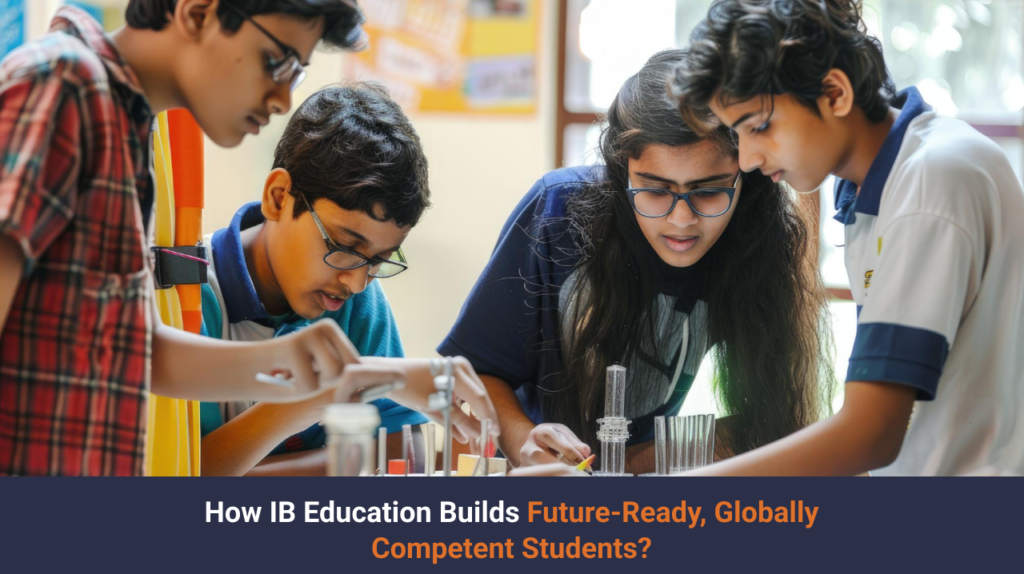
Remember how we studied back in school? Memorise chapters, write exams, repeat. That world is gone. Your child is growing up with AI, remote work, and global challenges we never imagined. Good marks still matter, but they aren’t enough. Universities and employers now look for something deeper. They want kids who can think, adapt, and understand different cultures. That’s why more Indian parents are exploring international curricula. The International Baccalaureate (IB) offers this exact approach. It builds skills that last a lifetime, not just until the next test. If you’ve noticed more conversations about this shift, we’ve written about why IB education in India is gaining momentum. What Makes IB Education Different? You might ask, “How is IB actually different?” The short answer: it changes how your child learns. Instead of sitting quietly and taking notes, they ask questions. They explore topics that interest them. They connect classroom lessons to real life. The philosophy is simple. Learning should come from curiosity, not fear of exams. When a child wonders why something works, they remember the answer forever. That’s inquiry-based learning at its core. Teachers guide, but students drive their own discovery. The IB curriculum benefits show up in how your child thinks. They learn to look at problems from multiple angles. They ask better questions. They research answers on their own. They explain their thinking clearly. This builds internationally minded learners. Your child understands that the world is bigger than their city or country. They learn to respect different viewpoints and work with people from all backgrounds. In today’s connected world, that matters more than any textbook fact. Holistic Learning Approach The IB balances tough academics with real skills. Your child reads challenging books and solves complex problems. But they also learn to manage their time, reflect on their mistakes, and work in teams. It’s about growing the whole person. We go deeper into how this builds lifelong learners in our piece on the topic. IB and Personal Growth: Beyond Academics Let’s talk about the IB CAS programme. CAS stands for Creativity, Activity, Service. It’s a core part of the IB experience. And it might be the most valuable thing your child does in school. Through CAS, your child starts a project they care about, like teaching music to younger kids. They join a sport or learn a new physical skill. They volunteer in the community, cleaning a park or helping at an old-age home. These aren’t just activities to fill time. They build character. When your child organises a fundraiser, they learn project management. When they struggle to learn a new instrument, they build resilience. When they serve meals at a shelter, they develop empathy. This is how IB CAS enhances personal growth in ways no textbook can. Your child discovers their strengths. They learn to lead. They understand that their actions can help others. These lessons stick with them forever. You can read more about how CAS shapes character in our detailed guide. Preparing Students for Life Beyond School Here’s what parents really want to know. Will my child be ready for the real world? The answer with IB is a confident yes. How IB prepares students for global careers starts with everyday skills. Your child learns to speak up in discussions and defend their ideas. They work with classmates who think differently. They research topics deeply, not just skim Wikipedia. They manage multiple deadlines without parents reminding them. These skills transfer directly to university and work. Think about it. In college, professors expect you to think for yourself. In jobs, managers want people who can solve problems without hand-holding. IB students arrive already comfortable with this independence. The classroom feels different, too. Teachers treat students like young adults. They ask for opinions. They encourage debate. Your child builds confidence to speak in front of others, a skill many adults still struggle with. We’ve explored this transition in more detail here: How IB Education Prepares Students for Life Beyond School. Career Readiness Through the IB Diploma Programme When your child reaches Grades 11 and 12, they enter the IB Diploma Programme (DP). This is serious preparation for what comes next. The IB Diploma Programme advantages go deep. Three things make it special. First, the Extended Essay. Your child writes a 4,000-word research paper on a topic they choose. This teaches them how to structure arguments, cite sources, and manage a long project. In university, this skill sets them apart from peers who never wrote anything longer than five pages. Second, Theory of Knowledge. This course asks big questions. How do we know what’s true? Can we trust what we read? Your child learns to think critically about information. In an age of fake news and social media bubbles, this is invaluable. Third, the programme builds global education for students through its international perspective. Your child studies literature from different cultures. They discuss global issues in science and politics. They graduate with a worldview that helps them connect with people anywhere. Universities notice this. Admissions officers know that IB students handle college work better. They arrive prepared, confident, and ready to contribute. Our article on career readiness covers these advantages more thoroughly. Opening Doors to Global Higher Education Here’s a fact that matters. The IB opens doors everywhere. Universities in the US, UK, Canada, Australia, Singapore, and Europe all welcome IB students. Many give them advanced standing or course credit for high scores. Why do universities value IB so much? Because they’ve seen the results. IB students write better essays. They participate more in class discussions. They handle the freedom of college life responsibly. They bring diverse perspectives to campus. The recognition is official and widespread. Your child’s IB diploma is understood and respected from Mumbai to Massachusetts. This gives them options. They can study in India or abroad. They can change their mind later. The door stays open. The global higher education opportunities available to IB students are real. Your child can aim for top universities, knowing their preparation matches what those schools expect. We’ve written extensively about how the IB creates this pathway.
Building Trust & Success: The Power of Teacher-Student Relationships
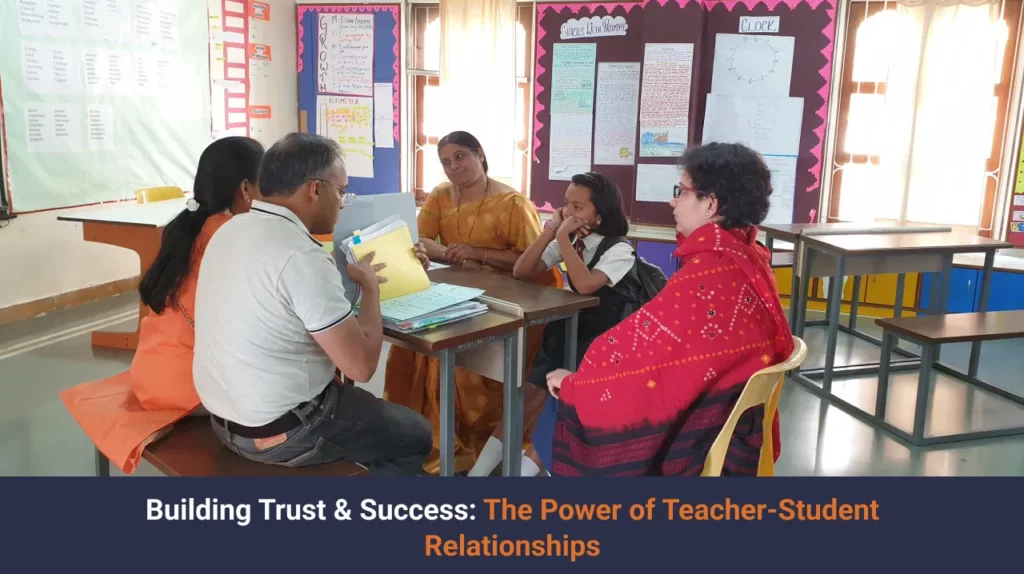
It is the supreme art of the teacher to awaken joy in creative expression and knowledge– Albert Einstein This beautiful quote by one of the greatest scientists, Albert Einstein, rightly reflects how important it is to have a good teacher for a child. It is not just about the knowledge that one receives and applies in life, but also the creative expression that a child develops over the schooling years, which will help him/her in emotional development and make wiser decisions later in life. But the give and take of knowledge can not be possible without the strong bond between teachers and students. While academic achievements are often measured in grades and scores, the importance of the teacher-student relationship goes beyond this as it incorporates virtues, values and habits of lifelong learning of the students. Also, a positive student-teacher bonding makes them feel safe, supported, and inspired to put in their best effort. Much educational research has indicated that positive teacher-student interaction examples – little efforts of encouragement, attention, and personalised direction, often lead to a long-term impact on student engagement. This guide will highlight why the teacher-student relationship matters in education so much in the first place, and describe how trust, communication, and motivation are the driving forces of both academic and personal development. The Core of a Strong Teacher-Student Relationship 1.1 Trust and Mutual Respect Trustworthiness is considered to be one of the highest virtues behind a successful teacher-student relationship. Trust allows a student to be more open and freely experiment in learning. Whereas mutual respect keeps the classroom environment welcoming and interactive. It is essential to understand that both trust and mutual respect go hand in hand and promote a healthier relationship between the two. It promotes students to feel freer to express themselves and inquire, as opposed to fearing being judged. Trust is something that develops over time when the teacher shows consistency with fairness and kindness among students, and when trust develops, respect automatically follows. For teachers, it is essential to have an understanding that forceful disciplinary acts often restrict the students’ responses and inhibit their curious minds. Whereas a positive classroom environment enriches the lives of both the teacher and students as they start viewing education as a cooperative journey and not a one-sided process. So, mutual respect and building trust in the teacher-student relationship have benefits beyond academics as it helps a child learns to value fairness and empathy. 🔗 Read more: Importance of Discipline in Education 1.2 Communication and Understanding Communication in the teacher-student relationship is the bridge between knowledge and empathy. An active listening teacher makes students feel important. For instance, rather than ignoring the emotional and academic doubts of a student when a teacher actively listens and understands the reasons why the student is actually struggling, it develops a sense of care that is beyond the textbook. Active listening in a classroom not only allows teachers to understand where a student lacks academically, but also helps them understand the student’s emotional needs. Similarly, empathy in teaching builds a supportive environment for students in which they feel free to share their challenges, be it related to studies or emotional well-being. So, it is no longer a hidden fact that there are multiple benefits of good communication between teachers and students. As it leads to a less stressful environment, it further promotes motivation and increased interest in learning among students. When they feel that teachers are easily accessible, they will be likely to engage better, ask questions, and understand the subjects well. 🔗 Read more: Role of Social Media in Education 1.3 Consistent Encouragement The encouragement of a teacher may change the life perspective of a student. In the process of positive reinforcement in education, students begin to see themselves as capable of succeeding in different arenas of life. Words of gratitude, such as “Well done,” or “You are improving,” create self-belief in a student. A teacher boosts the morale of a student, a concept deeply etched in student life. Teachers feed into persistence by rewarding big and small efforts. Encouraging students in the educational process boosts the students’ confidence, participation, and willingness to take on challenges. Even an introverted or hesitant learner most of the time blooms under successive support and feedback from that teacher. Academic Benefits of Healthy Relationships 2.1 Improved Learning Engagement How a teacher bonds with their students has a direct relation to the active student engagement in learning. Students who feel connected engage willingly, ask questions, and share ideas. This builds classrooms where learning is active, not passive. The importance of the teacher-student relationship in learning is apparent in the way it induces curiosity in education. When encouraged, students transcend memorisation to authentic comprehension. Teachers employing interactive methods render classes engaging and stimulate student involvement in class. In this kind of environment, students not only grasp concepts better but also start relating learning to fun, an element imperative to sustained academic interest. 2.2 Better Academic Performance Teacher support and academic performance have been well accounted for in the literature. Supportive teachers fill in the guidance necessary to work through more challenging topics and to motivate students when the drainage conditions seem to be too easy tasks. Teachers have always had better success and performance backed by partnership and trust from the students’ assessments and projects. Constructive feedback and mentoring from a teacher will be quite direct in affecting matters related to their academic growth. Sometimes, good professors can mean the difference between average and superior performances. A strong teacher-student relationship in academic success factors is priceless and therefore shapes both immediate results and long-term career aims. 2.3 Development of Critical Life Skills The classroom is a place where learning beyond academics takes place, and a conducive environment plays a crucial role in developing life skills among students. Things like group projects, preparing presentations, and classroom discussions over different topics help students learn teamwork, understanding and accepting different views and develop problem-solving skills in students.