

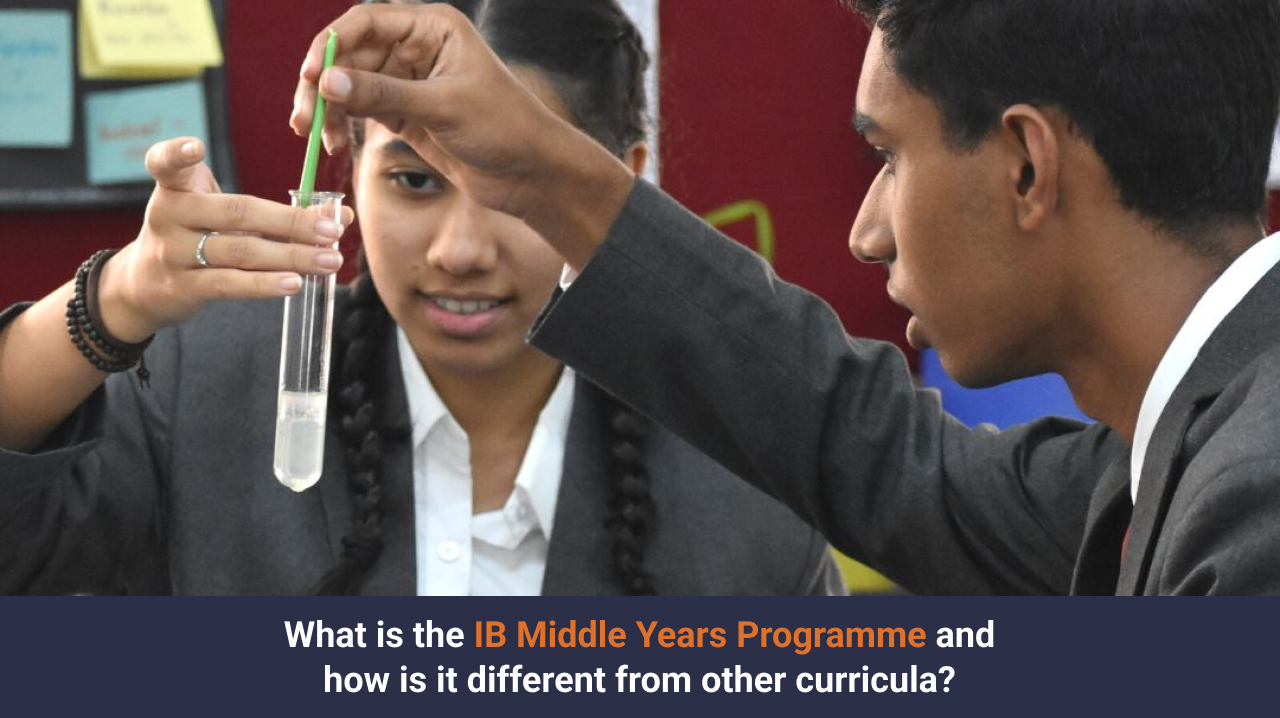
The IB Middle Years Programme is a globally recognised framework for students aged 11 to 16.
It focuses on:
- Building thinking skills
- Real-world understanding
- Academic readiness
Furthermore, it supports students in developing curiosity. At the same time, it also prepares them for higher education pathways.
Do you know why this kind of learning approach matters in today’s age? It matters because parents today are not looking only at marks. They are looking at how well a curriculum prepares a child for real-life learning and future opportunities. That is where understanding what is IB MYP becomes important before comparing it with other options.
What is IB MYP (Middle Years Programme)?
The IB Middle Years Programme is created to connect classroom learning with real-world situations so students understand why they are learning something. This approach builds clarity and confidence over time.
To comprehend how the programme works in practice, here is a simple breakdown of its structure:
- The programme is designed for students aged 11 to 16, covering Grades 6 to 10.
- Learning is concept-based. This means students focus on understanding ideas. They do not just memorise facts.
- Subjects are connected to real-world contexts. It helps students apply knowledge beyond the classroom.
- Service-as-Action projects encourage students to take part in community work and develop a sense of responsibility.
- Interdisciplinary learning allows students to link subjects and solve problems from different angles.
Because of this structure, the IB MYP helps students build strong thinking habits early. Such habits support both academic growth and personal development. This approach is now being adopted by many schools, including those offering the IB Middle Years Programme Pune. They aim to create a more balanced learning experience.
To understand how this learning approach works in practice, it helps to look at the key features that shape the programme.
Key Features of the IB MYP Curriculum
The IB MYP curriculum focuses on how students learn. Each feature is designed to build real skills that connect directly to academic and real-world situations.
-
Inquiry-Based Learning
Students learn to approach new ideas with questions. For this, they investigate topics through guided research. This helps them understand concepts more deeply.
-
Concept-Based Curriculum
Learning is centred around big ideas such as systems, change, and relationships. This helps students apply the same concept across different subjects without confusion.
-
Interdisciplinary Learning
Subjects are linked through shared themes. For example, science and geography may be combined to study environmental issues, helping students see real-world connections.
-
Service-as-Action
Students take part in community-based projects. These activities build responsibility and help them understand how their actions affect society.
Each feature builds on the other, creating a connected and practical learning experience. So, once you see how these elements come together, the difference in approach becomes easier to notice when compared with other curricula.
How Does the IB MYP Differ From Other Curricula?
| Parameter | IB MYP | National Curriculum | International Curriculum (Non IB) |
| Learning Approach | Inquiry-based and concept-driven | Content-focused | Mix of content and skills |
| Skill Development | Critical thinking and research | Exam-oriented knowledge | Academic competency |
| Global Perspective | Strong global context | Mostly national focus | Moderate global exposure |
| Assessment Style | Projects and coursework | Standardised exams | Exams with some coursework |
| Community Learning | Service learning included | Limited exposure | Optional |
This comparison shows that the IB MYP curriculum emphasise how students think, while other systems often focus on what students remember. When this difference becomes clear, it is easier to understand why more schools are now adopting this model.
Why Are More Schools Adopting the IB MYP?
The shift towards IB MYP is driven by clear changes in educational needs worldwide.
Growth of International Education
The IB programme is now offered in more than 160 countries across 6100 schools [International Baccalaureate, 2026]. This shows how widely accepted the framework has become.
Demand for Skills-Based Learning
According to the World Economic Forum’s Future of Jobs Report 2025, analytical thinking is the most sought-after skill, followed by resilience, flexibility, and agility. The IB MYP develops these skills through inquiry-based learning, preparing students for future roles.
Parent Preference for Global Curricula
Parents are increasingly choosing the IB MYP curriculum for its support of global exposure and flexible learning. This shift is linked to the growing demand for international university pathways and career mobility.
As one experienced educator explains, “The IB Programme helps students develop strong thinking skills and adaptability. These skills are essential for both university and future careers.”
FAQs
1. What age group is the IB Middle Years Programme designed for?
The IB Middle Years Programme is for students aged 11 to 16. It usually covers Grades 6 to 10 and serves as a bridge between primary education and advanced programmes such as the IB Diploma. This stage focuses on building thinking skills, research ability, and confidence in learning.
2. How is the IB MYP different from CBSE, ICSE, or other national curricula?
The IB MYP focuses on inquiry-based learning and real-world application, while CBSE and ICSE emphasise on structured content and exams. This means IB students develop skills such as critical thinking and research early, whereas national curricula place greater emphasis on subject knowledge and exam performance.
3. What is the Personal Project in the IB MYP?
The Personal Project is an independent research project completed by students in the final year of the IB MYP. It allows students to explore a topic of interest in depth while developing research, planning, and presentation skills. This project reflects how well students can apply what they have learned.
4. Is the IB MYP beneficial for students planning to study abroad?
Yes, the IB MYP supports students who plan to study abroad by building global awareness, research skills, and independent learning habits. These skills align closely with international university expectations, which makes the transition to higher education smoother and more manageable.