

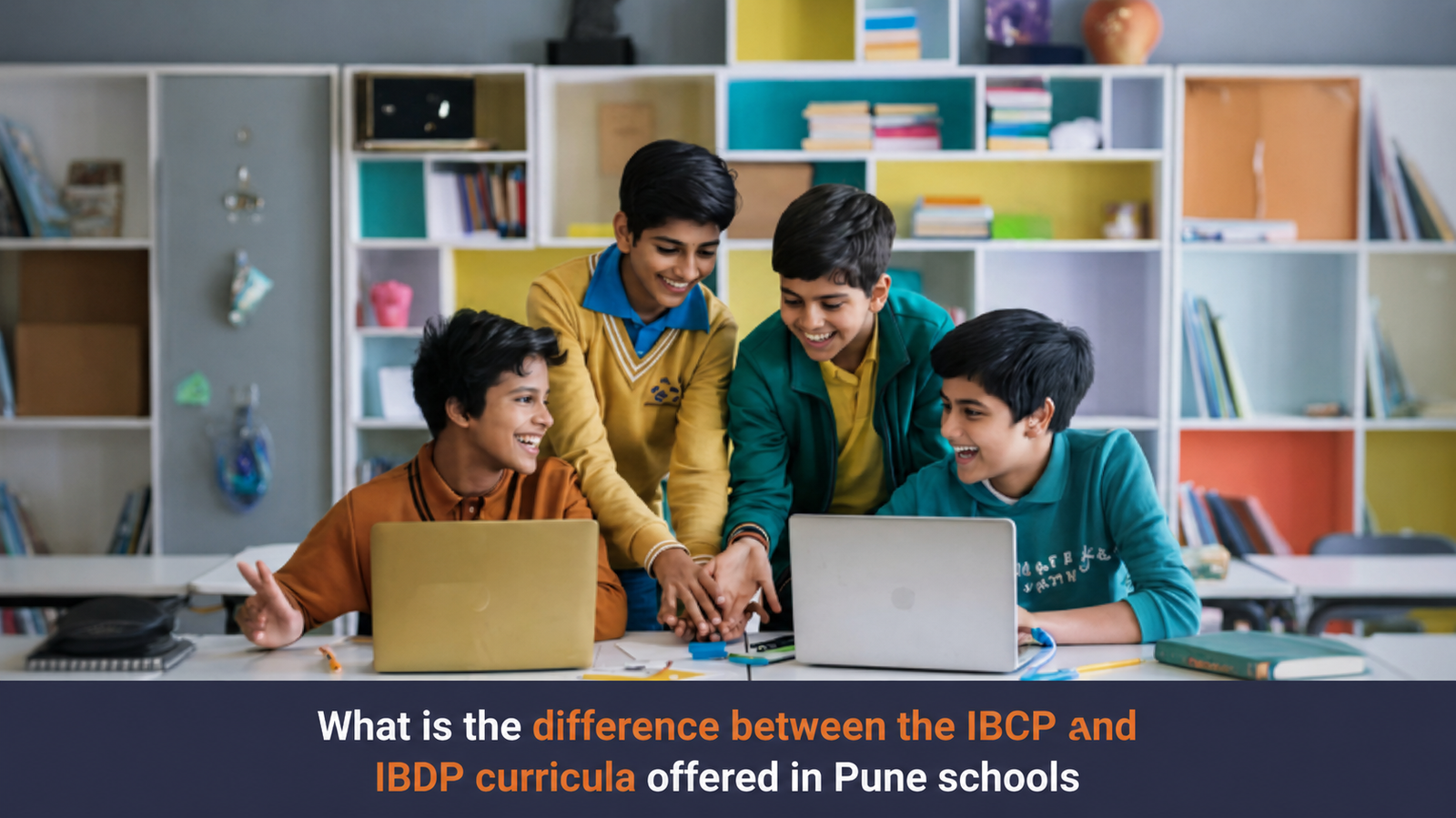
The difference between IBCP and IBDP lies in how each programme is structured to support different learning paths. One focuses on career-related development, and the other focuses on academic progression. Both are part of the International Baccalaureate framework, which is known for its global recognition as well as structured approach to education.
Because of this, the choice between the two becomes important when students complete Grade 10 and begin choosing a path that aligns with their interests and plans.
While both programmes are offered in many IBDP schools in Pune, the way they guide students through learning feels different in practice. This is why understanding how each programme works helps clarify the decision and make it more relevant to individual goals.
To begin with, let us look at how the career-related pathway is structured and what it offers students in real situations.
What is the IB career-related programme and how does it work?
The IBCP curriculum is designed for students who want a learning path that connects academics with real-world skills and career-focused knowledge. This structure allows students to stay engaged with studies while also building practical understanding.
To understand how this programme works, here are its core components explained:
-
Age group 16 to 19 years
The programme is designed for senior secondary students, which allows them to focus on future pathways at the right stage.
-
Career-related studies
Students choose a specific field such as business or technology, which helps them gain subject knowledge connected to real industries.
-
Personal and Professional Skills
Students develop communication, teamwork, and problem-solving skills. These are useful in everyday work environments.
-
Service learning
Students engage in activities that connect them with communities, which builds responsibility and awareness.
-
Reflective project
Students complete a structured project that encourages research and deeper understanding of a chosen topic.
-
Language development
Students continue to build language skills, which support communication in global settings.
This combination allows students to advance both their academic knowledge and applied skills, keeping learning connected to real-world situations. Once this structure is clear, it becomes easier to understand how the two programmes differ in their approach to learning.
What are the key differences between the IBDP and IBCP curriculum?
1. Academic orientation
The IBDP curriculum focuses on structured academic study that prepares students for university-level education. The IBCP focuses on linking academics with career-related learning that connects directly with practical applications.
2. Curriculum structure
The IBDP includes six subject groups. Along with that, it also has core components that guide academic depth. The IBCP combines selected diploma subjects with career-related studies that align with specific fields.
3. Learning approach
The IBDP builds understanding through research, writing, and analytical thinking. The IBCP supports applied learning through projects and real-world contexts.
4. Student pathway
The IBDP suits students who plan to continue their studies at a higher level. The IBCP suits students who want to develop skills linked to specific career areas while continuing academic learning.
5. Assessment style
The IBDP uses structured exams and coursework. The IBCP includes project-based assessments along with evaluations linked to career learning.
How do the IBDP and IBCP compare in structure and outcomes?
The structure becomes easier to understand when both programmes are viewed side by side, as each one follows a different pathway while still maintaining IB standards. This comparison also helps clarify IBCP vs IBDP in more practical terms, especially when students are deciding which path suits them better.
| Parameter | IBDP | IBCP |
| Primary Focus | Academic preparation | Career-focused learning |
| Subject Structure | Six subjects with core components | Diploma subjects with career studies |
| Learning Style | Research-based | Applied learning |
| Career Preparation | University progression | Industry-aligned skills |
| Assessment | Exams and coursework | Projects and practical evaluation |
| Recognition | Widely recognised globally | Growing global recognition |
Looking at both programmes in this way brings out how learning is shaped in each case. This also gives a clearer reason behind the rising interest in IB programmes across Pune.
Why are IB programmes becoming more popular in Pune?
The growing interest in IB programmes is linked to changing education needs worldwide and to how students are preparing for future opportunities.
Growth of international education
As of March 2026, IB programmes are offered to over 1.95 million students across more than 160 countries, with over 6,100 schools worldwide delivering them. This steady expansion shows how widely the framework is being adopted across regions, including India.
University acceptance and progression
IB Diploma students continue to receive strong acceptance from leading universities across the UK, US, and Europe.
According to the International Baccalaureate, IB students had a 57% more chance of attending one of the top 20 UK universities, with 46% entering top 20 institutions compared with 33% of A Level students.
Preparation for modern career paths
A report by the OECD highlights that education systems that focus on problem-solving and adaptability better prepare students for future roles [OECD Education Outlook]. IB programmes are designed around these abilities, making them relevant to evolving career paths.
As educational leaders explain, “Education today needs to equip learners with the capability to think independently and apply knowledge in unfamiliar situations,” which reflects the direction IB programmes are built around.
FAQs
1. What is the main difference between IBDP and IBCP?
The main difference lies in how each programme supports student learning. The IBDP focuses on academic study and university preparation. At the same time, the IBCP connects academic subjects with career-related learning rather than allowing students to select a path that aligns with their interests and plans.
2. Which programme is better for university admissions?
The IBDP is widely recognised by universities worldwide, making it suitable for students planning higher education. The IBCP also supports university entry in many cases, especially when combined with strong academic performance and relevant subject choices.
3. Can IBCP students apply to international universities?
Yes, IBCP students can apply to international universities, especially when their subject choices align with the course requirements. Many universities accept IBCP students, and the recognition continues to grow globally.
4. Do IB schools in Pune offer both IBDP and IBCP?
Yes, many IB schools in Pune offer both programmes, which allows students to choose based on their interests and learning goals. This flexibility helps students select a pathway that fits their academic and career plans more effectively.