

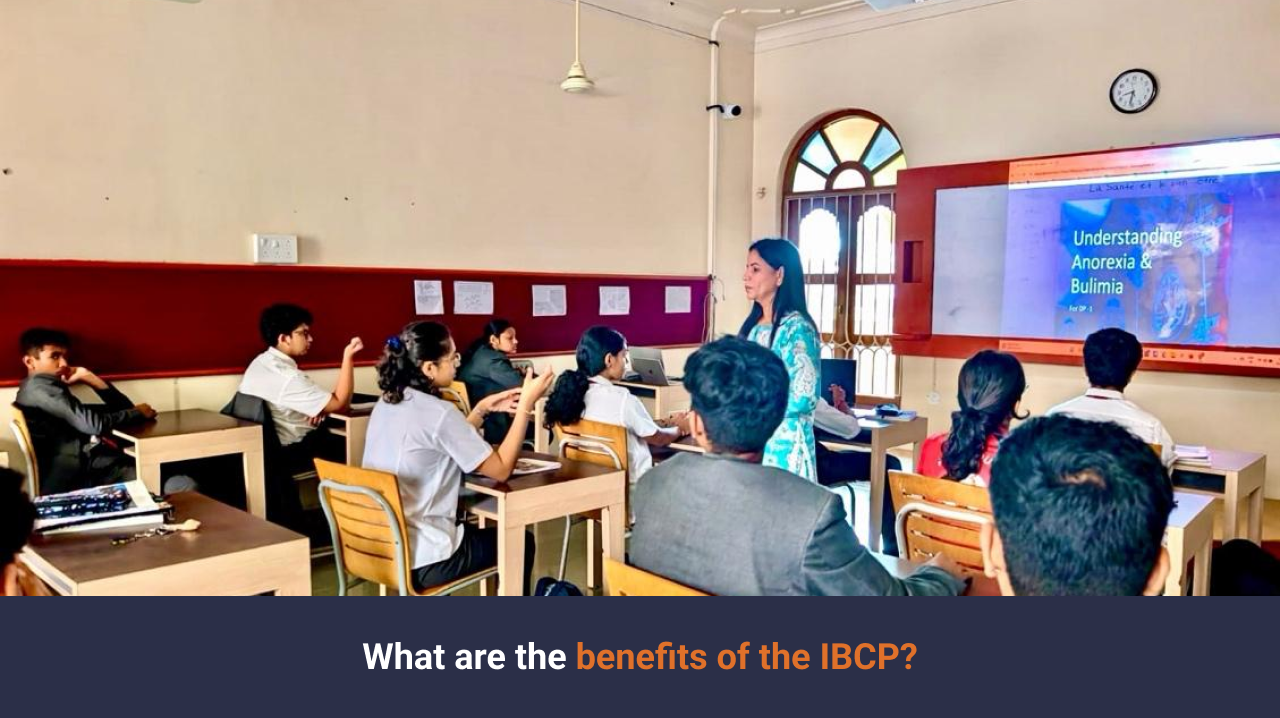
The IB Career-related Programme supports students who want to study academic subjects while preparing for real career paths. It is designed to keep learning connected to how knowledge is actually used, which makes the experience more meaningful and easier to apply in the future.
To understand what is IB career-related programme, it helps to look at how this pathway brings together structured academic learning and career-focused development within a single programme. This combination allows students to stay engaged in their studies while also building skills useful beyond school. As this structure becomes clearer, the programme’s benefits become more evident in how students learn and grow over time.
How does the IBCP support student growth in real situations?
The impact of the IB Career Programme becomes easier to understand when you follow how the programme is structured, as each part of it builds a specific skill while still connecting to the overall learning experience.
1. Learning that connects subjects with real applications
Students study selected Diploma Programme subjects alongside career-related studies, which helps them see how academic concepts apply in practical settings. This connection makes learning feel more relevant, which improves engagement over time.
2. Skill development that builds confidence gradually
As students move through the programme, they take part in projects and structured activities that require communication, teamwork, and problem-solving. These skills develop step by step, allowing students to become more confident in their use.
3. Personal growth supported through structured guidance
The Personal and Professional Skills component helps students manage time, set goals, and reflect on their progress. This fosters a sense of responsibility, supporting both academic learning and personal development.
4. Recognition that supports multiple future pathways
The programme is recognised by universities and employers, enabling students to progress to higher education or career-focused options aligned with their interests. This flexibility helps students make decisions that feel aligned with their goals.
As each of these elements builds on the previous one, the programme creates a steady learning experience where skills and knowledge develop together.
What are the core elements that shape the IBCP experience?
Once the overall structure is clear, it becomes easier to understand how the programme is organised in practice, as each component contributes to the learning process in a specific way.
- Career-related study introduces students to fields such as business or technology, which helps them understand industry contexts early
- Selected Diploma Programme subjects maintain academic depth, which keeps students prepared for further education
- The Personal and Professional Skills course supports decision-making and communication, which are used in everyday learning
- Service learning allows students to take part in community-based activities, which builds awareness and responsibility
- Language development strengthens communication skills, which support global interaction
- The reflective project encourages students to explore ethical questions, which helps them think more deeply about their chosen field
As these components work together, they create a connected system in which students do not switch between subjects but build a continuous learning experience.
How does the IBCP fit within career-focused education pathways?
After understanding how the programme is structured, it is useful to see how it fits within broader education pathways, as this provides a clearer view of how it supports both academic and career development.
| Parameter | IBCP | Traditional Vocational Education | Academic Only Curriculum |
| Core focus | Academic and career integration | Skill-based training | Academic theory |
| Learning style | Applied and structured | Practical training | Concept-based |
| Skill development | Professional and analytical skills | Technical skills | Subject knowledge |
| Community learning | Service learning included | Limited exposure | Optional |
| Future pathways | University and career readiness | Industry-focused roles | Academic progression |
This view helps clarify how the programme brings together different aspects of learning, allowing students to move forward with a clearer sense of direction.
Why does the IBCP matter for future career readiness?
Once the structure and positioning of the programme are clear, it becomes easier to see how it aligns with current expectations in education and employment.
Growing need for multiple skill sets
According to LinkedIn’s Future of Recruiting 2025 report, 93% of talent professionals say assessing candidate skills is crucial for quality hiring, which shows employers are placing greater importance on practical abilities developed through structured, skill-focused learning environments.
Workplace expectations are evolving
Reports from McKinsey highlight that adaptability and the ability to handle diverse work are becoming essential skills. Learning through projects and applied tasks helps students develop this adaptability early, which supports future roles.
Confidence in independent learning
Students who work on structured projects and reflective tasks often develop stronger research habits. This allows them to manage complex assignments more effectively when they move into higher education.
As the International Baccalaureate Organisation highlights, career-related programmes help students develop non-negotiable skills such as communication, collaboration, and independent thinking, which are essential for both higher education and employment (ibo.org).
As these skills are built through continuous practice, students gradually become more confident in applying what they learn in different situations, which supports them as they move into university or professional environments.
FAQs
1. What is the IBCP programme?
The IBCP is an International Baccalaureate programme designed for students aged 16 to 19. It combines academic subjects with career-related studies, which allows students to develop both knowledge and practical skills. This structure supports both higher education and career pathways.
2. How is IBCP different from the IB Diploma Programme?
The IBCP includes career-focused learning along with selected academic subjects, while the IB Diploma Programme follows a fully academic structure. This allows students to choose a pathway based on how they want to approach their learning and plans.
3. Does IBCP help students get into universities?
Yes, the IBCP supports university applications, especially when students perform well in their academic subjects and choose relevant career-related studies. Many universities recognise the programme and consider its structure during admissions.
4. What types of careers can students pursue after IBCP?
Students can explore careers in business, technology, hospitality, and the creative industries. The programme builds skills that support both further study and entry into professional environments.