

Key Takeaways
- The IB Primary Years Programme (PYP) builds foundational skills through inquiry, exploration, communication and holistic development.
- The IB Diploma Programme (IBDP) prepares students aged 16 to 19 for higher education through six subject groups, Theory of Knowledge (TOK), the Extended Essay (EE) and Creativity, Activity, Service (CAS).
- The Middle Years Programme (MYP) bridges the PYP and IBDP by developing conceptual understanding and interdisciplinary learning.
- Completing the IB journey in the same school can provide curriculum continuity, a familiar environment, established friendships and progressive skill development.
- Students develop critical thinking, research, communication, collaboration, problem-solving, independence and reflection throughout the IB pathway.
- PYP supports early learning through curiosity, student agency, inquiry-based activities and real-world connections.
- Parents should evaluate programme availability, curriculum continuity, teaching methods, student support, fees, extracurricular activities and university guidance before choosing a school.
- MIT Vishwashanti Gurukul offers the PYP, MYP, DP and CP on its Pune campus, alongside sports, clubs, community service and university counselling.
- The right IB school should support a child’s academic progress, social development and personal needs while preparing them for future education.
Choosing IB PYP to IBDP in the Same School means a child follows the International Baccalaureate journey from early years to Grade 12 under one roof. The benefits come from continuity in curriculum, learning approach, teachers, peers and personal development, so skills build step by step instead of restarting at every transition.
MIT Gurukul is an IB school with an international learning environment, and families there can follow the full continuum from the Primary Years Programme to the Diploma Programme. The sections below explain each stage and why staying put can help.
What Is the IB PYP?
What is the IB PYP?
It is the IB Primary Years Programme, designed for students aged 3 to 12 years. At MIT Gurukul it runs from Nursery to Grade 5.
What Does PYP Stand For?
PYP stands for Primary Years Programme of the International Baccalaureate. It is intended for young learners and focuses on inquiry, exploration, communication and holistic development.
What Is the IB PYP Curriculum?
Learning is inquiry-based, conceptual and transdisciplinary. What is IB PYP curriculum in practice? Students build understanding through questions, student agency, communication, collaboration, reflection and critical thinking.
What Is the IBDP?
What Does IBDP Stand For?
IBDP stands for International Baccalaureate Diploma Programme, designed for students aged 16 to 19. It is a two-year programme.
What Is the IBDP Curriculum?
- Six subject groups
- Theory of Knowledge (TOK)
- Extended Essay (EE)
- Creativity, Activity, Service (CAS)
- Independent research and critical thinking
How Does the IB Journey Progress From PYP to IBDP?
The pathway runs PYP to MYP to IBDP. The PYP builds curiosity, the MYP develops conceptual and interdisciplinary understanding, and the IBDP builds academic depth, independent research and university readiness.
| Feature | IB PYP | IB MYP | IB DP |
| Typical age | 3-12 | 11-16 | 16-19 |
| Main focus | Inquiry and foundations | Conceptual learning | Academic depth |
| Learning approach | Inquiry-based | Inquiry and interdisciplinary | Subject-focused and independent |
| Key skills | Curiosity, communication | Analysis, collaboration | Research, critical thinking |
| Outcome | Strong learning foundation | Broader conceptual understanding | University preparation |
Why Can Studying from IB PYP to IBDP in the Same School Be Beneficial?
Choosing IB PYP to IBDP in same school brings three main advantages:
- Curriculum continuity: a familiar learning philosophy, consistent expectations, gradual skill growth and easier transitions between programmes.
- A consistent environment: familiar teachers and systems, established friendships, greater confidence and fewer transition challenges.
- Progressive skills: research, communication, collaboration, critical thinking, problem-solving and self-management develop over the years.
How Is PYP Beneficial for Early Learners?
-
- Encourages curiosity
- Develops communication skills
- Promotes inquiry
- Builds collaboration
- Encourages reflection
- Develops student agency
- Connects learning with real-world situations
How Does PYP Shape Early Learning?
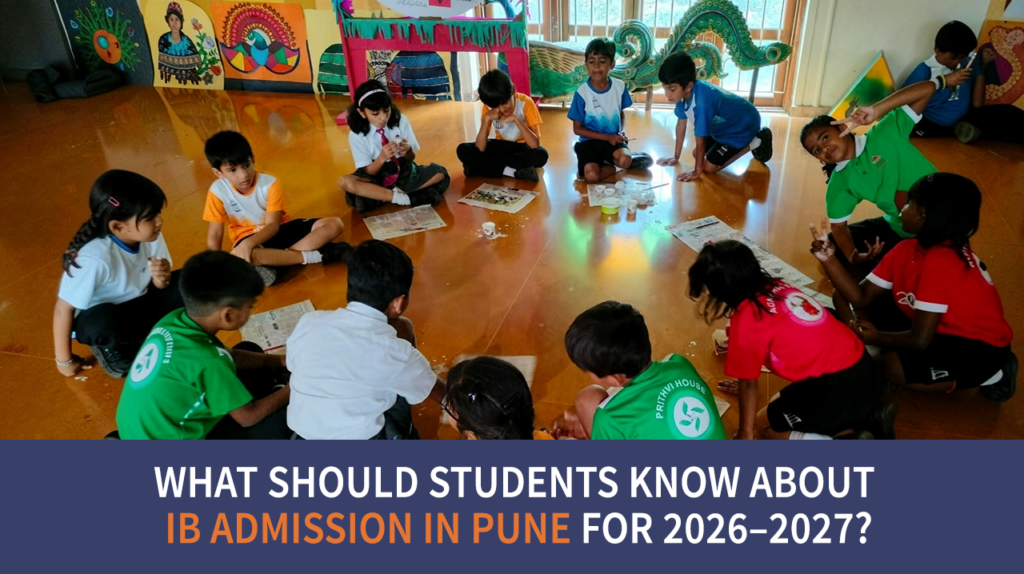
- Inquiry builds curiosity: students ask questions, explore ideas, investigate problems and reflect.
- Student agency builds independence: learners take part actively and make informed choices.
How Does PYP Support Lifelong Success?
Early habits in critical thinking, communication, collaboration, research, self-management, problem-solving and global awareness can support students through later education.
Is PYP Academically Rigorous?
Yes. PYP challenges students through inquiry, conceptual understanding, research, application, reflection and problem-solving rather than relying only on memorisation. Assessment is continuous and collaborative, not limited to pen and paper.
Does PYP Only Benefit International Students?
No. Its skills transfer across cultures, curricula and future pathways, so local students, international students, expat families and students moving between education systems can all benefit.
What Are the Benefits of Completing PYP to IBDP in the Same School?
- Greater curriculum continuity
- Consistent learning philosophy
- Stronger academic progression
- Familiar school environment
- Long-term peer relationships
- Better understanding of student development
- Progressive skill building
- Stronger confidence
- Integrated academic and extracurricular growth
- Preparation for higher education
What Skills Can Students Develop From PYP to IBDP?
| Skill | PYP Development | IBDP Development |
| Critical thinking | Questioning and exploration | Analysis and evaluation |
| Research | Basic investigation | Independent research |
| Communication | Sharing ideas | Academic communication |
| Collaboration | Group activities | Collaborative projects |
| Problem-solving | Exploring solutions | Complex problem-solving |
| Independence | Student agency | Self-directed learning |
| Reflection | Reflecting on learning | Academic and personal reflection |
How Can MIT Gurukul Support an IB Learning Journey?
MIT Gurukul combines an international learning environment with inquiry-based learning and holistic development, offering the PYP, MYP, DP and CP on one residential campus in Pune. Academic and extracurricular activities, including over 21 sports, clubs and community service, support personal growth, and its university counselling begins in Grade 8. Families seeking a long-term IB pathway can confirm current programme details with the school.
What Should Parents Consider When Choosing an IB School From PYP to IBDP?
- Does it offer the required IB programmes, with curriculum continuity?
- How does it support transitions, and how are students assessed?
- What teaching methods, activities and student support are provided?
- What are the admission requirements and current fees?
- What university preparation is available?
What Are the Key Facts About the IB PYP and IBDP?
Parents asking what is ibdp curriculum content should note these facts:
- PYP is designed for learners aged 3 to 12.
- IBDP is designed for students aged 16 to 19.
- PYP uses inquiry-based and concept-driven learning.
- IBDP includes TOK, the Extended Essay and CAS.
- Both programmes emphasise skills beyond subject knowledge.
What Are the Main Takeaways for Parents?
- PYP builds a strong foundation for inquiry-based learning.
- MYP bridges foundational and advanced learning.
- IBDP provides academic depth and independent learning.
- Staying in one school gives greater continuity.
- Verify the programmes a school currently offers.
- Match the school to the child’s academic, social and personal needs.
Conclusion
Studying from PYP to IBDP in one school offers continuity, confidence and progressive skill building. MIT Gurukul is one option for families who want to follow the full IB continuum in an international, residential community in Pune.
Frequently Asked Questions About IB PYP to IBDP in the Same School
What is IBDP?
The IB Diploma Programme for students aged 16 to 19.
What is the IBDP curriculum?
Six subject groups plus TOK, EE and CAS.
How is PYP beneficial for students?
It builds curiosity, communication and inquiry.
How does PYP shape early learning?
Through inquiry and student agency.
How does PYP support lifelong success?
By building transferable skills early.
Is PYP academically rigorous?
Yes, through inquiry, research and reflection.
Does PYP only benefit international students?
No, its skills transfer across systems.
What are the benefits of studying from PYP to IBDP in the same school?
Continuity, familiarity and progressive skill building.
How does curriculum continuity benefit IB students?
It eases transitions and builds skills gradually.
Can students move from PYP to IBDP in the same school?
Yes, where the school offers both programmes.
How does PYP prepare students for future IB programmes?
It builds inquiry, research and self-management habits.
What skills do students develop through the IB pathway?
Critical thinking, research, communication and collaboration.
What should parents consider when choosing an IB school?
Programmes offered, continuity, support, fees and university guidance.