

Which Are the Leading IB Schools in Pune?
Choosing among the many IB schools in Pune starts with a harder question underneath it: do you actually understand what makes IB different, or are you comparing schools on reputation alone? Before you tour another campus, it helps to know exactly what you’re evaluating, because the IB framework works nothing like the exam-driven boards most of us grew up with, and a tour alone rarely surfaces that difference.
What IB Actually Changes in the Classroom
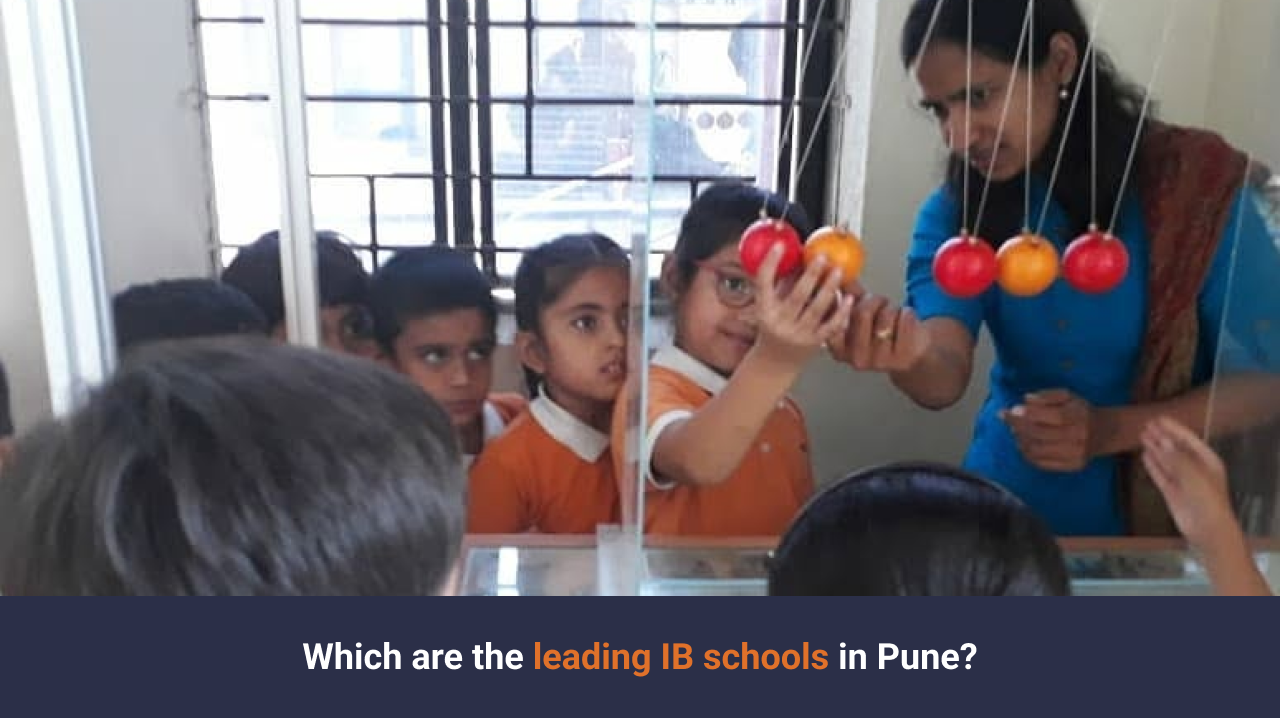
The International Baccalaureate isn’t a single fixed syllabus; it’s a framework that best IB schools in Pune adapt through inquiry rather than rote instruction. Concepts are taught to be applied and questioned, not memorised and repeated:
- Assessment happens through projects, presentations, and portfolios, not just periodic exams
- Teachers are trained specifically in IB methodology and undergo ongoing professional development
- Classrooms are structured around student-led inquiry rather than teacher-led lecture
- Interdisciplinary units connect subjects instead of teaching them in isolation
The practical effect shows up in how your child talks about school. Instead of describing what they memorised, they’ll usually describe what they investigated, argued, or built, a shift that takes some getting used to if you’re accustomed to report cards built around test scores alone.
The Four Programmes You’ll Actually Choose Between
Every one of the IB board schools in Pune offers some combination of four programmes, and knowing which stage applies to your child matters more than a school’s overall reputation:
- Primary Years Programme (PYP) – ages 3 to 11, built on play and structured inquiry
- Middle Years Programme (MYP) – ages 11 to 16, introduces interdisciplinary units and an independent Personal Project
- Diploma Programme (DP) – ages 16 to 19, the internationally recognised pre-university qualification
- Career-related Programme (CP) – ages 16 to 19, blends academic subjects with career-oriented learning
IB Versus the Boards You Already Know
For families weighing a switch, the practical differences usually come down to how learning is taught and assessed:
| Feature | IB | CBSE | ICSE |
| Learning Style | Inquiry-based | Structured, teacher-led | Detailed subject learning |
| Assessment | Continuous, project-based | Exam-based | Exams plus projects |
| Global Perspective | Strong | Limited | Moderate |
| Student-Centred | Yes | Limited | Partial |
Why the Recognition Behind IB Actually Matters
This isn’t a matter of taking a school’s word for it. The IB sends transcripts to roughly 4,500 universities across 110 countries, and in India specifically, the Association of Indian Universities has recognised the IB Diploma as equivalent to a Class 12 qualification since 1983, a recognition it extended to the Career-related Programme in 2021. In practice, that means a DP graduate can apply to Indian and international universities without a separate conversion process in most cases.
It’s worth understanding why universities value it beyond the paperwork. The Diploma Programme’s core , Theory of Knowledge, the Extended Essay, and Creativity, Activity, Service push students toward independent research and reflective thinking well before they reach undergraduate study. Admissions officers at competitive universities frequently note that this combination signals readiness for self-directed academic work, which is precisely what first-year university students are expected to demonstrate, whereas secondary schooling often doesn’t.
What to Check Before You Enroll
Reputation aside, confirm these directly with the admissions office rather than assuming:
- Official IB authorisation status: verify it; don’t just take the prospectus at face value
- Which of the four programmes are actually offered on campus
- Student-teacher ratio and counselling support available
- How the school supports a transition if your child is switching from CBSE or ICSE
It’s also worth asking how the school handles students who join mid-programme rather than at the natural entry points. Transitions into Grade 6 (the start of MYP) tend to be smoothest, while later entry points may require an assessment of readiness; a well-run admissions team should be upfront about this rather than promising a seamless fit regardless of timing.
The schools that stand out among Pune’s top IB schools tend to share one trait: they make the IB philosophy visible in daily teaching, not just a line in marketing copy. MIT Vishwashanti Gurukul World School, for instance, is an authorised IB World School offering the full continuum, PYP through DP, on a single residential campus, which gives you a concrete track record to examine rather than a promise to take on faith.