


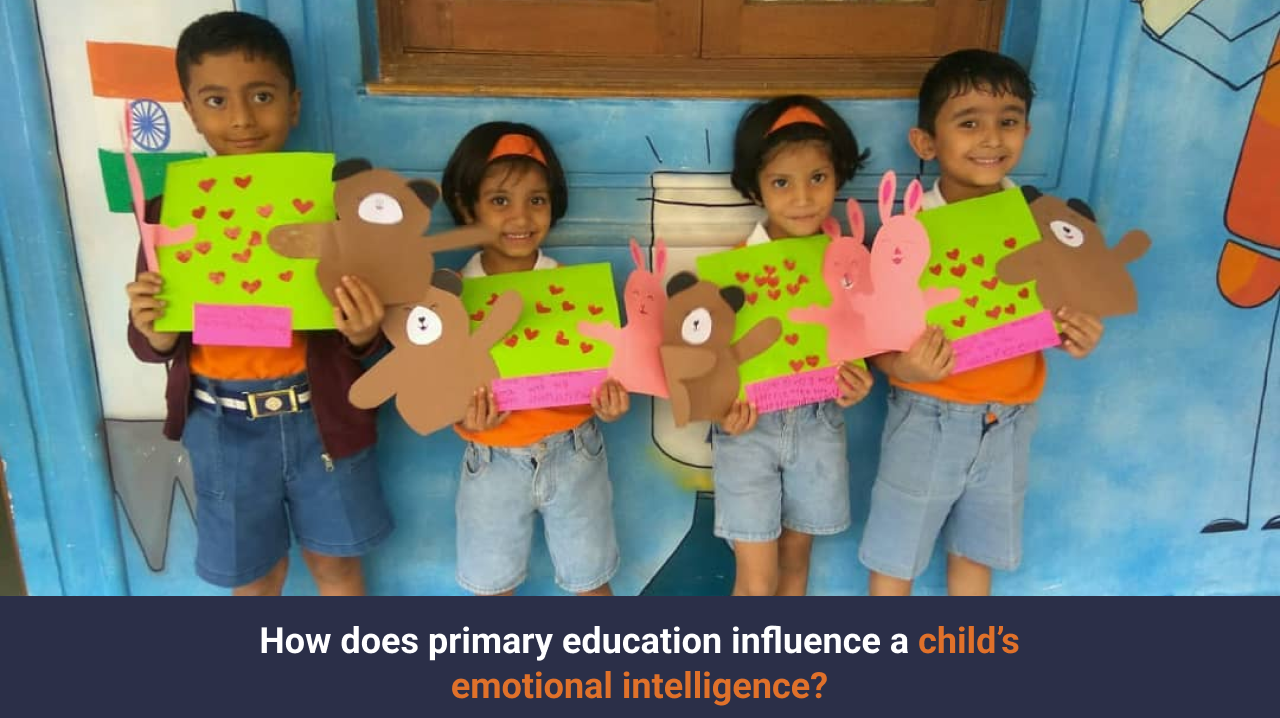
Ever noticed how some children handle tricky situations, express clearly and bounce back after a setback, while others struggle? That difference comes down to one powerful skill known as Emotional Intelligence.
Marks matter and so do emotions. Success is not just about academics; it is about understanding people, managing feelings and building strong relationships. That is where emotional intelligence in early childhood emerges as a game changer.
The early years (ages 3-12) are not just about ABCs and numbers; they are where children learn how to feel, react and connect. This is exactly why parents exploring the best primary schools in Pune now look beyond academics. They want schools that shape confident and emotionally aware individuals. So, how exactly does primary education influence emotional intelligence?
What is Emotional Intelligence in Children?
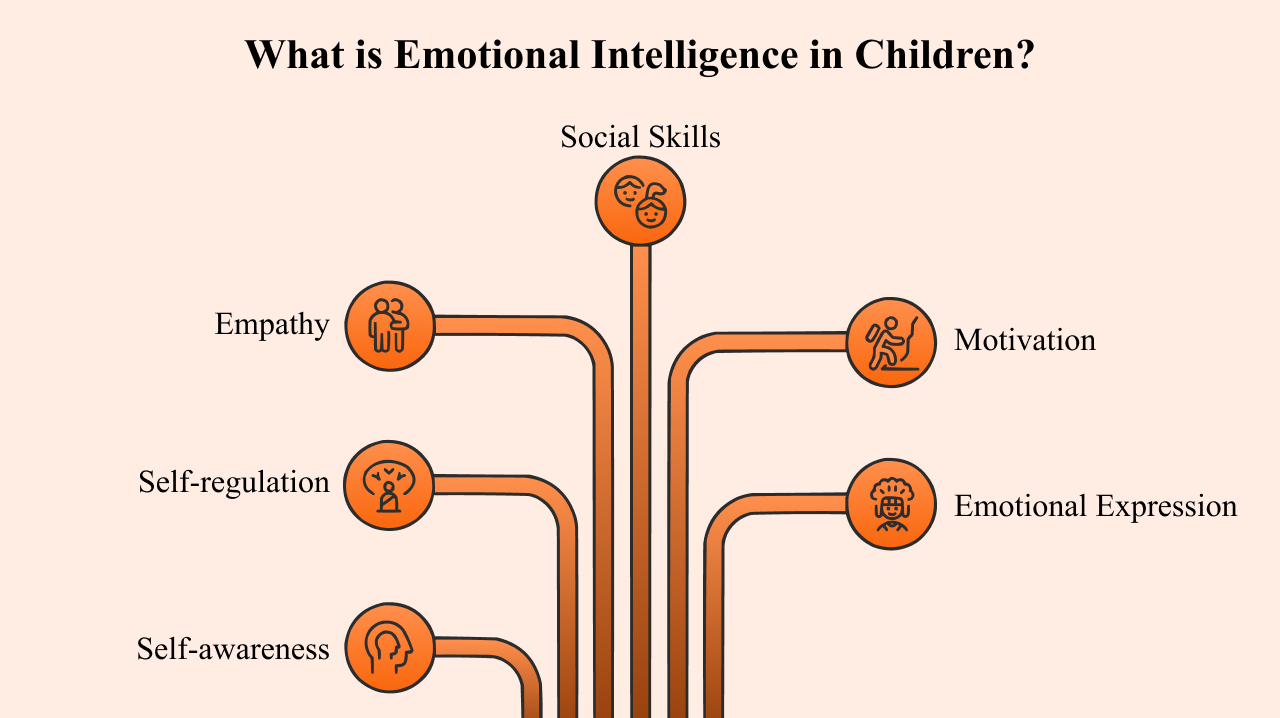
At its core, emotional intelligence (EI) is the ability to understand, feel and manage emotions of their own and of others. In the context of emotional intelligence in early childhood, it forms the foundation of how children interact with the world. Here is what it includes:
- Self-awareness: Children learn to recognise their emotions, whether they feel happy, sad, angry, or excited and understand why.
- Self-regulation: They learn to manage emotions instead of reacting impulsively. Think fewer tantrums, more thoughtful responses.
- Empathy: Children begin to understand how others feel and respond with kindness and respect.
- Social Skills: They build friendships, communicate effectively and learn teamwork.
- Motivation: EI helps children stay positive, resilient and eager to learn, even when things get tough.
- Emotional Expression: They learn to express feelings clearly and appropriately instead of bottling them up.
In simple terms, EI helps children become emotionally smart humans and not just academically smart students.
How Primary Education Supports Emotional Intelligence Development?
Primary education plays a massive role in shaping these skills. The right environment transforms how children understand emotions. Here is how schools make it happen –
- Social Interaction in Classrooms: Daily interactions teach children how to share, collaborate and resolve conflicts. These real-life moments build emotional awareness naturally.
- Teacher Guidance and Mentorship: Teachers act as role models. Their behaviour shows children how to respond calmly, communicate respectfully and handle emotions positively.
- Play-Based and Experiential Learning: Activities like storytelling, role-play, and group games allow children to explore emotions in a fun, safe way. This is one of the key early childhood education benefits that boosts emotional growth.
- Safe and Supportive Environment: When children feel supported and safe, they open up. An encouraging classroom environment motivates them to express feelings without fear.
- Communication and Language Development: Schools help children put feelings into words. Instead of frustration, they learn to express their concerns.
- Value-Based Education: Lessons in empathy, kindness, respect, and responsibility become part of everyday learning.
This is why parents researching the best primary schools often prioritise institutions that blend academics with emotional development.
How Does Emotional Intelligence Development Differ Across Learning Environments?
Not all learning environments shape emotional intelligence in the same way. Here is a quick comparison:
| Parameter | Holistic Primary Education | Traditional Education | Other Learning Approaches |
| Learning Approach | Child-centric and experiential | Teacher-led | Mixed approach |
| Emotional Development | Strong focus on EI and SEL | Limited focus | Moderate |
| Social Skills | Encouraged through collaboration | Less emphasis | Balanced |
| Classroom Environment | Supportive and inclusive | Structured | Varies |
| Student Expression | Open and encouraged | Restricted | Moderate |
Schools that focus on holistic learning like many International Primary Schools Pune tend to nurture emotional intelligence more effectively.
Why Is Emotional Intelligence Important in Early Education?
Let’s talk about facts. Emotional intelligence plays an impactful role in a child’s future.
- Impact on Academic Performance: Research shows that emotional intelligence significantly influences academic performance, with studies indicating up to an 8.4% improvement in student achievement through social-emotional learning programmes.
- Early Brain Development: According to neuroscience and early childhood development research, the first 1,000 days of a child’s life are critical for brain development; highlighting how early years strongly shape emotional and social growth. This makes primary education a critical stage.
- Better Social Relationships: Children with strong EI build healthier friendships often communicate better and handle conflicts more effectively.
- Improved Mental Well-being: Emotionally aware children handle the challenges better, which reduces anxiety and boosts their confidence.
- Future-Ready Skills: Employers today value soft skills like communication, adaptability and teamwork.
When schools nurture emotional intelligence early, they empower children to become confident and compassionate individuals.
Conclusion
Selecting the right school is not just about academics; it is about shaping who your child becomes. The right primary education builds knowledge with confidence, empathy and resilience.
When you explore international primary schools, look for environments that prioritise emotional intelligence in early childhood alongside academics. Those early years truly define how children think, feel, and connect with the world. At MIT Gurukul, the focus goes beyond textbooks. The aim is to nurture emotionally strong, self-aware and socially confident individuals who are ready to thrive in every aspect of life.
FAQs
1. What is emotional intelligence in children?
Emotional intelligence in children refers to their ability to understand, manage and express emotions effectively. It includes skills like empathy, self-awareness and communication which help children navigate social situations, build relationships and respond to challenges in a balanced and thoughtful way.
2. Why is primary education important for emotional development?
Primary education lays the foundation for emotional growth by exposing children to social environments, guided learning and structured experiences. During these formative years, children develop essential life skills like empathy, self-control and communication which shape their personality and behaviour in the long run.
3. How do schools help develop emotional intelligence?
Schools create opportunities for interaction, collaboration and guided learning through activities such as group work, storytelling and play. Teachers mentor students, encourage expression and model positive behaviour, helping children understand emotions, resolve conflicts and build meaningful relationships with peers.
4. Can emotional intelligence impact academic success?
Yes, emotional intelligence significantly influences academic performance. Children who manage emotions well tend to stay focused, handle stress better and remain motivated. These skills improve learning outcomes, classroom participation and overall academic achievement while also supporting long term personal and professional growth.