


Let’s be honest. Most students across India can read English, but the moment they have to speak up in class or write an essay under pressure, confidence takes a back seat. Sound familiar? You are not alone. The good news is that mastering English for students is absolutely achievable, and this guide will show you exactly how.
Whether you are a parent looking for the right learning path for your child, or a student eager to sharpen your skills, this guide covers everything from English speaking skills and English writing skills to English vocabulary for students. Let us get into it.
Here is something worth knowing: only about 10% of India’s population speaks English, despite it being an official language taught from primary school. That gap between learning English and actually using it confidently is precisely what this guide aims to close.
Why Do English Communication Skills Matter for Students Today?
English communication skills have become one of the most in-demand abilities in academics, competitive exams, and careers. From IB assessments and college applications to job interviews, how well you express yourself in English shapes opportunities.
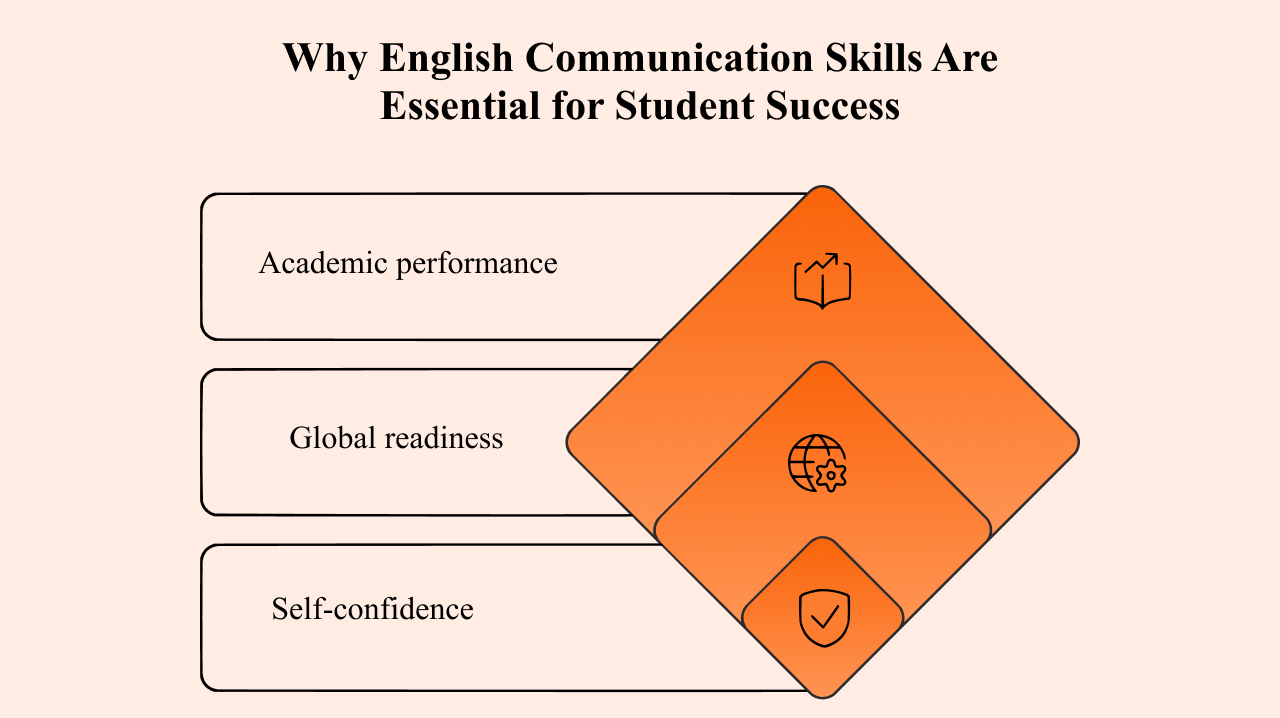
Strong English skills help students in three key areas:
- Academic performance: essays, reports, presentations, and debates all require clear expression.
- Global readiness: English is the working language of universities and multinational organisations worldwide.
- Self-confidence: students who can communicate well in English tend to participate more actively in class.
How to Improve English Speaking Skills for Students?
It is one of the most searched questions by parents and learners alike, and the answer lies in daily, deliberate practice. Here are approaches that actually work:
- The biggest barrier to speaking English is the fear of making mistakes. Start small. Practise speaking in front of a mirror for five minutes every day.
- Narrate your daily activities, describe what you see around you, and gradually build from sentences to paragraphs.
- Structured speaking activities such as debates, group discussions, and storytelling exercises are highly effective.
- For students looking for a starting point, working on English speech topics for students such as environmental issues, technology, or social values can build both vocabulary and confidence simultaneously.
- Another practical step is listening. Podcasts, audiobooks, and TED Talks in English train your ear to the rhythm of the language. When you understand how fluent speakers naturally stress words and pause, your own speaking improves faster.
You can also explore our detailed guide on how to speak English confidently for step-by-step strategies.
How to Improve English Writing Skills?
Writing is where most students struggle the most because it demands clarity of thought, not just language. English writing skills grow when you practise writing regularly and read widely.
Follow these steps to see noticeable improvement:
- Read every day: Reading quality content, whether books, newspapers, or articles, builds sentence sense naturally. Research consistently shows a strong link between reading habits and writing ability. Explore how reading skills enhance your child’s communication skills for a deeper understanding.
- Write with purpose: Keep a daily journal, write short paragraphs on topics you enjoy, and gradually move to structured essays. Focus on one improvement at a time, such as sentence variety or paragraph organisation.
- Learn from feedback: A teacher’s correction is a gift. Understand why something is wrong, not just that it is wrong.
For a comprehensive breakdown, read our guide on how to improve English writing skills covering structure, grammar, and style tips.
Which English Vocabulary Building Techniques Actually Work?
Building a strong vocabulary is a gradual process. The key to English vocabulary building techniques that last is context, not rote memorisation. Here is a comparison of common approaches:
| Technique | How It Works | Best For |
| Contextual Reading | Learn words through stories and articles | Long-term retention |
| Flashcards (Spaced Repetition) | Review at increasing intervals | Exam preparation |
| Word Journal | Write new words with meaning and a sentence | Active learners |
| Proverbs and Idioms | Understand cultural expressions | Advanced communication |
Proverbs are particularly powerful tools. They are memorable, culturally rich, and teach nuanced usage. Our collection of 10 meaningful English proverbs helpful for students is a great place to start.
Also, aim to use new words in conversation within 24 hours of learning them. This habit alone dramatically improves retention.
What Role Does Self-Introduction Play in Building English Confidence?
One of the first real-world situations where students use English under pressure is introducing themselves. A well-prepared self-introduction in English builds poise and sets a positive first impression in school assemblies, interviews, and group activities.
Practice your introduction regularly. Include your name, your school, your interests, and your goals. Keep it natural and conversational. Read our guide on self-introduction in English for students for templates and tips tailored for different occasions.
According to a study, 98.5% of employers assess candidates’ English competency, and 50% offer higher starting salaries to those with strong English skills. For Indian students aiming at global careers, this is a significant motivator.
How to Put It All Together: A Simple Weekly Practice Plan
Here is a practical weekly plan for mastering English for students across all three areas:
| Day | Speaking (10 min) | Writing (15 min) | Vocabulary (10 min) |
| Monday | Mirror talk on a topic | Journal entry | 3 new words in context |
| Wednesday | Debate with a friend | Short paragraph writing | Flashcard review |
| Friday | Read aloud a passage | Rewrite a paragraph | Learn one proverb |
| Weekend | Watch a TED Talk | Write a letter or email | Play a word game |
Small, consistent efforts outperform occasional cramming every time. Stick to this plan for eight weeks and the results will speak for themselves.
A Final Word
Strong English skills open doors that talent alone sometimes cannot. Whether you are a student preparing for exams or a parent guiding your child’s learning journey, the strategies in this guide give you a clear, practical roadmap.
At MIT Gurukul, an international IB residential school in Pune, English communication is woven throughout the learning experience. Students engage in debates, creative writing, presentations, and critical discussions that naturally build English speaking skills, English writing skills, and English vocabulary for students as part of everyday learning. If you are looking for a school environment that takes holistic language development seriously, learn more about MIT Gurukul.
Frequently Asked Questions
1. What is the fastest way to improve English speaking skills for students?
Daily practice with real intent is the most effective approach. Speak in English for at least 10 minutes a day, even if it is just narrating your thoughts or daily activities. Combine this with listening to English audio content to improve fluency faster.
2. How can I build my English vocabulary for students at home?
Read widely in English, keep a word journal, and practise using new words in your own sentences. Proverbs, idioms, and reading fiction are excellent ways to learn vocabulary naturally in context.
3. How long does it take to see improvement in English communication?
With consistent daily practice of 30 to 45 minutes, most students notice meaningful improvement within six to eight weeks. The key is regular use, not just study.