

Remember how we studied back in school? Memorise chapters, write exams, repeat. That world is gone. Your child is growing up with AI, remote work, and global challenges we never imagined. Good marks still matter, but they aren’t enough. Universities and employers now look for something deeper. They want kids who can think, adapt, and understand different cultures.
That’s why more Indian parents are exploring international curricula. The International Baccalaureate (IB) offers this exact approach. It builds skills that last a lifetime, not just until the next test. If you’ve noticed more conversations about this shift, we’ve written about why IB education in India is gaining momentum.
What Makes IB Education Different?
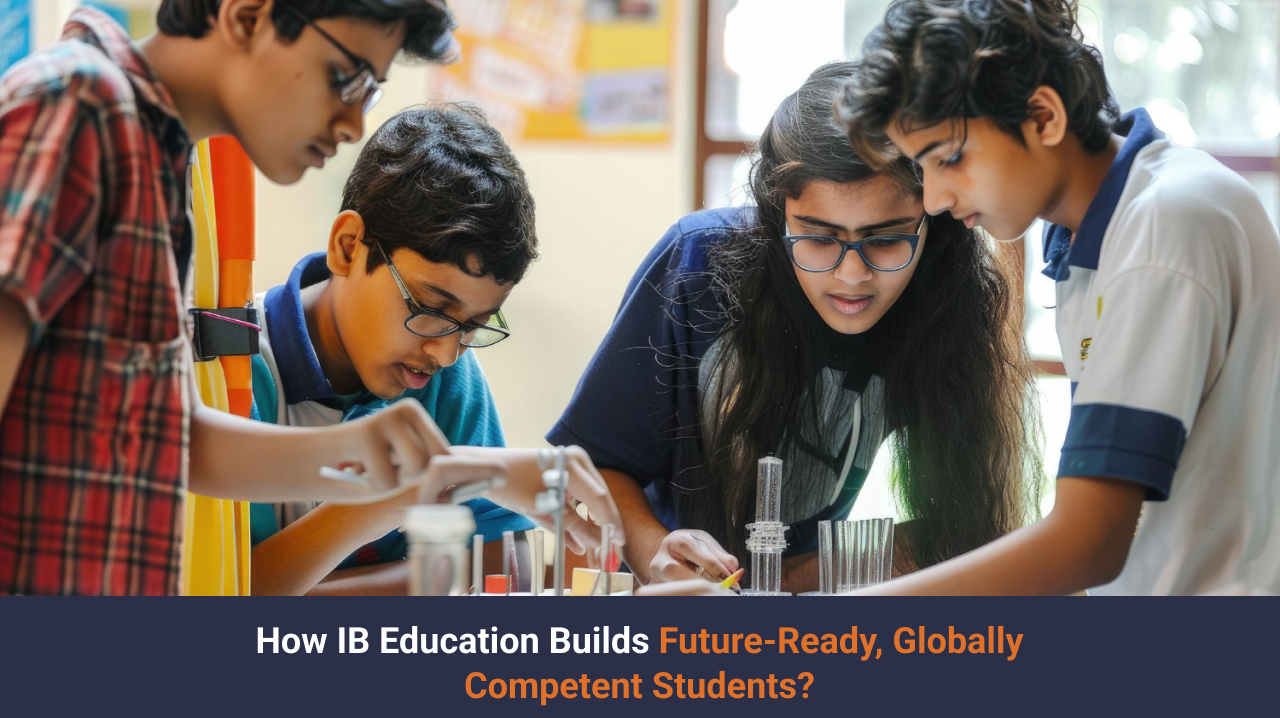
You might ask, “How is IB actually different?” The short answer: it changes how your child learns. Instead of sitting quietly and taking notes, they ask questions. They explore topics that interest them. They connect classroom lessons to real life.
The philosophy is simple. Learning should come from curiosity, not fear of exams. When a child wonders why something works, they remember the answer forever. That’s inquiry-based learning at its core. Teachers guide, but students drive their own discovery.
The IB curriculum benefits show up in how your child thinks. They learn to look at problems from multiple angles. They ask better questions. They research answers on their own. They explain their thinking clearly.
This builds internationally minded learners. Your child understands that the world is bigger than their city or country. They learn to respect different viewpoints and work with people from all backgrounds. In today’s connected world, that matters more than any textbook fact.
- Holistic Learning Approach
The IB balances tough academics with real skills. Your child reads challenging books and solves complex problems. But they also learn to manage their time, reflect on their mistakes, and work in teams. It’s about growing the whole person. We go deeper into how this builds lifelong learners in our piece on the topic.
IB and Personal Growth: Beyond Academics
Let’s talk about the IB CAS programme. CAS stands for Creativity, Activity, Service. It’s a core part of the IB experience. And it might be the most valuable thing your child does in school.
Through CAS, your child starts a project they care about, like teaching music to younger kids. They join a sport or learn a new physical skill. They volunteer in the community, cleaning a park or helping at an old-age home.
These aren’t just activities to fill time. They build character. When your child organises a fundraiser, they learn project management. When they struggle to learn a new instrument, they build resilience. When they serve meals at a shelter, they develop empathy. This is how IB CAS enhances personal growth in ways no textbook can. Your child discovers their strengths. They learn to lead. They understand that their actions can help others. These lessons stick with them forever. You can read more about how CAS shapes character in our detailed guide.
Preparing Students for Life Beyond School
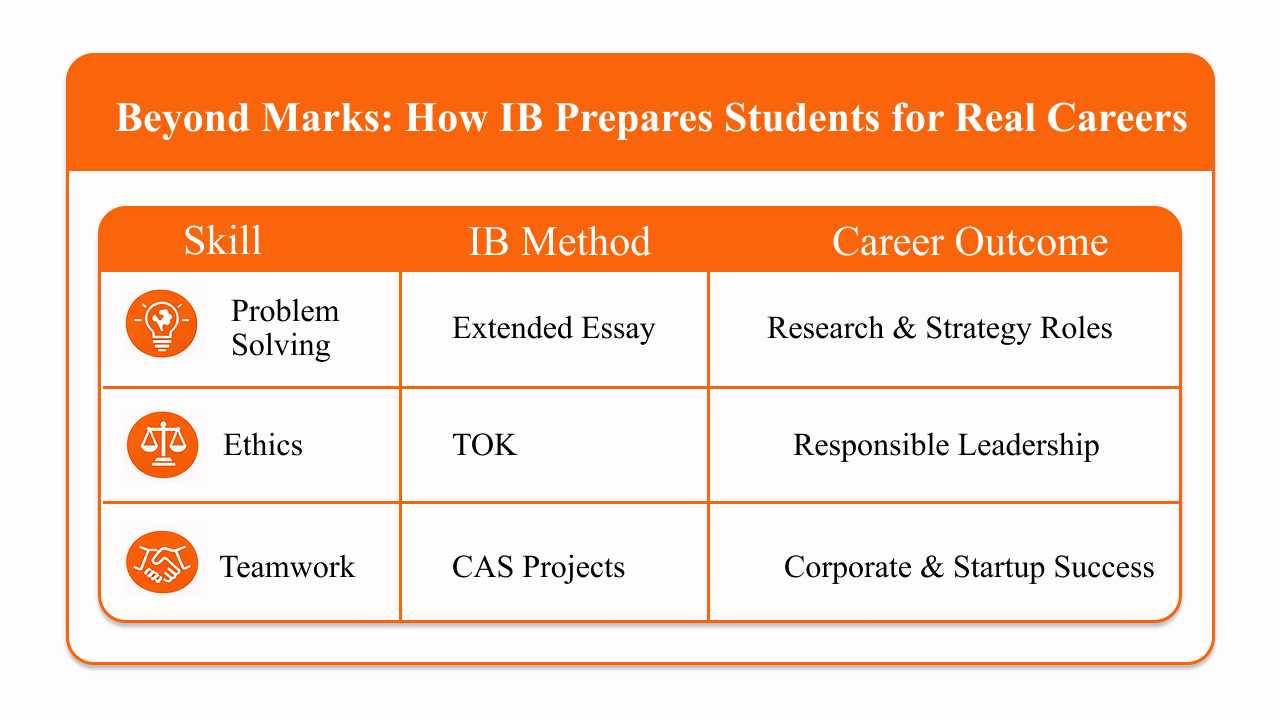
Here’s what parents really want to know. Will my child be ready for the real world? The answer with IB is a confident yes.
How IB prepares students for global careers starts with everyday skills. Your child learns to speak up in discussions and defend their ideas. They work with classmates who think differently. They research topics deeply, not just skim Wikipedia. They manage multiple deadlines without parents reminding them.
These skills transfer directly to university and work. Think about it. In college, professors expect you to think for yourself. In jobs, managers want people who can solve problems without hand-holding. IB students arrive already comfortable with this independence.
The classroom feels different, too. Teachers treat students like young adults. They ask for opinions. They encourage debate. Your child builds confidence to speak in front of others, a skill many adults still struggle with. We’ve explored this transition in more detail here: How IB Education Prepares Students for Life Beyond School.
Career Readiness Through the IB Diploma Programme
When your child reaches Grades 11 and 12, they enter the IB Diploma Programme (DP). This is serious preparation for what comes next. The IB Diploma Programme advantages go deep.
Three things make it special.
First, the Extended Essay. Your child writes a 4,000-word research paper on a topic they choose. This teaches them how to structure arguments, cite sources, and manage a long project. In university, this skill sets them apart from peers who never wrote anything longer than five pages.
Second, Theory of Knowledge. This course asks big questions. How do we know what’s true? Can we trust what we read? Your child learns to think critically about information. In an age of fake news and social media bubbles, this is invaluable.
Third, the programme builds global education for students through its international perspective. Your child studies literature from different cultures. They discuss global issues in science and politics. They graduate with a worldview that helps them connect with people anywhere.
Universities notice this. Admissions officers know that IB students handle college work better. They arrive prepared, confident, and ready to contribute. Our article on career readiness covers these advantages more thoroughly.
Opening Doors to Global Higher Education
Here’s a fact that matters. The IB opens doors everywhere. Universities in the US, UK, Canada, Australia, Singapore, and Europe all welcome IB students. Many give them advanced standing or course credit for high scores.
Why do universities value IB so much? Because they’ve seen the results. IB students write better essays. They participate more in class discussions. They handle the freedom of college life responsibly. They bring diverse perspectives to campus.
The recognition is official and widespread. Your child’s IB diploma is understood and respected from Mumbai to Massachusetts. This gives them options. They can study in India or abroad. They can change their mind later. The door stays open.
The global higher education opportunities available to IB students are real. Your child can aim for top universities, knowing their preparation matches what those schools expect. We’ve written extensively about how the IB creates this pathway.
Why IB Education Is Growing in India?

Walk into any parenting group today, and you’ll hear people talking about IB education in India. More families are choosing this path. Why?
Parents see the world changing. They want their children prepared for it. The old system focused entirely on exam scores. But today’s parents want more. They want their kids to be confident, curious, and kind. They want holistic development in IB programmes.
There are practical reasons too. Families are more mobile now. Parents move for work. Children might study abroad someday. An IB education works everywhere. Your child doesn’t start over when you move cities or countries.
The demand for international pathways keeps growing. Parents want their children to have choices. They don’t want to close doors too early. IB keeps every option available.
If you’re thinking about how to choose the right IB school, look for one that balances global standards with Indian values. You want a place where your child feels at home while preparing for the world. MIT Gurukul IB school offers this balance. We blend international rigour with the warmth and traditions Indian families value.
Empowering Globally Competent Leaders
As you think about your child’s future, the choice of education is the most powerful gift you can give. The IB pathway offers a clear advantage. It nurtures academic excellence and personal growth in equal measure. It builds young people who are curious, confident, and kind.
The long-term advantage of an internationally benchmarked curriculum is that it leaves every option open. Your child can choose to study in India or abroad. They can pursue science, arts, or commerce. They will have the skills to adapt and the wisdom to lead.
The most important thing is to choose a school that aligns with these values. You need a place that feels like a second home, a community that nurtures your child’s unique potential. At MIT Gurukul IB school, we blend the ancient Indian tradition of holistic learning with the world’s most rigorous academic framework. We invite you to come and see it for yourself.
Visit MIT Gurukul | Discover Our IB Learning Environment