


Building Trust & Success: The Power of Teacher-Student Relationships
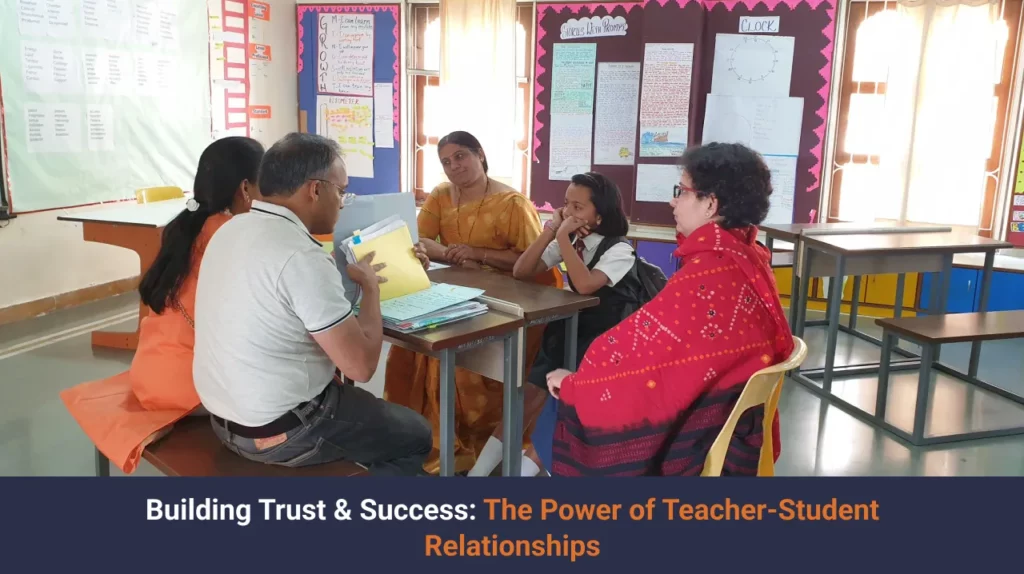
It is the supreme art of the teacher to awaken joy in creative expression and knowledge– Albert Einstein This beautiful quote by one of the greatest scientists, Albert Einstein, rightly reflects how important it is to have a good teacher for a child. It is not just about the knowledge that one receives and applies in life, but also the creative expression that a child develops over the schooling years, which will help him/her in emotional development and make wiser decisions later in life. But the give and take of knowledge can not be possible without the strong bond between teachers and students. While academic achievements are often measured in grades and scores, the importance of the teacher-student relationship goes beyond this as it incorporates virtues, values and habits of lifelong learning of the students. Also, a positive student-teacher bonding makes them feel safe, supported, and inspired to put in their best effort. Much educational research has indicated that positive teacher-student interaction examples – little efforts of encouragement, attention, and personalised direction, often lead to a long-term impact on student engagement. This guide will highlight why the teacher-student relationship matters in education so much in the first place, and describe how trust, communication, and motivation are the driving forces of both academic and personal development. The Core of a Strong Teacher-Student Relationship 1.1 Trust and Mutual Respect Trustworthiness is considered to be one of the highest virtues behind a successful teacher-student relationship. Trust allows a student to be more open and freely experiment in learning. Whereas mutual respect keeps the classroom environment welcoming and interactive. It is essential to understand that both trust and mutual respect go hand in hand and promote a healthier relationship between the two. It promotes students to feel freer to express themselves and inquire, as opposed to fearing being judged. Trust is something that develops over time when the teacher shows consistency with fairness and kindness among students, and when trust develops, respect automatically follows. For teachers, it is essential to have an understanding that forceful disciplinary acts often restrict the students’ responses and inhibit their curious minds. Whereas a positive classroom environment enriches the lives of both the teacher and students as they start viewing education as a cooperative journey and not a one-sided process. So, mutual respect and building trust in the teacher-student relationship have benefits beyond academics as it helps a child learns to value fairness and empathy. 🔗 Read more: Importance of Discipline in Education 1.2 Communication and Understanding Communication in the teacher-student relationship is the bridge between knowledge and empathy. An active listening teacher makes students feel important. For instance, rather than ignoring the emotional and academic doubts of a student when a teacher actively listens and understands the reasons why the student is actually struggling, it develops a sense of care that is beyond the textbook. Active listening in a classroom not only allows teachers to understand where a student lacks academically, but also helps them understand the student’s emotional needs. Similarly, empathy in teaching builds a supportive environment for students in which they feel free to share their challenges, be it related to studies or emotional well-being. So, it is no longer a hidden fact that there are multiple benefits of good communication between teachers and students. As it leads to a less stressful environment, it further promotes motivation and increased interest in learning among students. When they feel that teachers are easily accessible, they will be likely to engage better, ask questions, and understand the subjects well. 🔗 Read more: Role of Social Media in Education 1.3 Consistent Encouragement The encouragement of a teacher may change the life perspective of a student. In the process of positive reinforcement in education, students begin to see themselves as capable of succeeding in different arenas of life. Words of gratitude, such as “Well done,” or “You are improving,” create self-belief in a student. A teacher boosts the morale of a student, a concept deeply etched in student life. Teachers feed into persistence by rewarding big and small efforts. Encouraging students in the educational process boosts the students’ confidence, participation, and willingness to take on challenges. Even an introverted or hesitant learner most of the time blooms under successive support and feedback from that teacher. Academic Benefits of Healthy Relationships 2.1 Improved Learning Engagement How a teacher bonds with their students has a direct relation to the active student engagement in learning. Students who feel connected engage willingly, ask questions, and share ideas. This builds classrooms where learning is active, not passive. The importance of the teacher-student relationship in learning is apparent in the way it induces curiosity in education. When encouraged, students transcend memorisation to authentic comprehension. Teachers employing interactive methods render classes engaging and stimulate student involvement in class. In this kind of environment, students not only grasp concepts better but also start relating learning to fun, an element imperative to sustained academic interest. 2.2 Better Academic Performance Teacher support and academic performance have been well accounted for in the literature. Supportive teachers fill in the guidance necessary to work through more challenging topics and to motivate students when the drainage conditions seem to be too easy tasks. Teachers have always had better success and performance backed by partnership and trust from the students’ assessments and projects. Constructive feedback and mentoring from a teacher will be quite direct in affecting matters related to their academic growth. Sometimes, good professors can mean the difference between average and superior performances. A strong teacher-student relationship in academic success factors is priceless and therefore shapes both immediate results and long-term career aims. 2.3 Development of Critical Life Skills The classroom is a place where learning beyond academics takes place, and a conducive environment plays a crucial role in developing life skills among students. Things like group projects, preparing presentations, and classroom discussions over different topics help students learn teamwork, understanding and accepting different views and develop problem-solving skills in students.