


How to Build Confidence in English Speaking: Step-by-Step Approach?
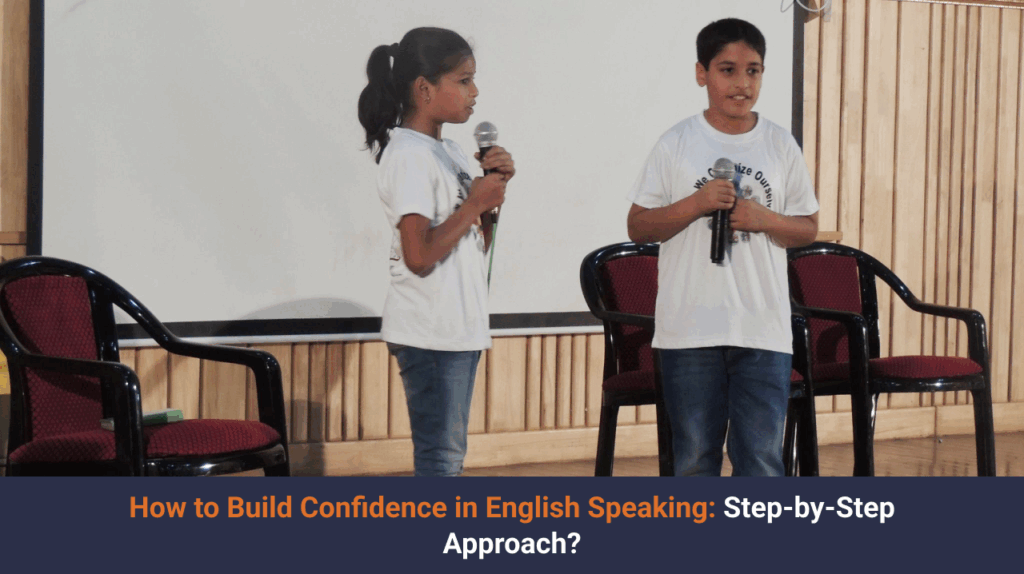
Do you often find yourself hesitating when speaking in English? Let’s be honest; speaking English in front of others can feel daunting to many people. While all eyes are on you, your heart races, your mind blanks and suddenly, even a simple conversation feels like a tongue twister. Sounds familiar? For millions around the world, English speaking skills are a gateway to better careers, richer experiences and broader communication. Yet, speaking confidently remains one of the biggest hurdles. The good news? Confidence in English speaking isn’t something you are only born with; it is something you build. Today, confidence in speaking English isn’t just a nice skill to have; it is a game changer. Why does confidence in English speaking matter so much? Well, in the globalised world, English isn’t just a subject; but it is a powerful tool that opens doors to success. From classroom discussions and presentations to making new friends or even nailing the job interviews, strong spoken English boosts your chances of success. It is like having a superpower that connects you with people across the globe and helps you express yourself clearly. The impact of confident English speaking goes beyond academics. It builds self-esteem, encourages participation and helps children and adults become active, engaged learners and communicators in everyday life. Whether it is sharing ideas, asking questions or expressing yourself, speaking English confidently can transform your performance and create future opportunities. This guide is especially for students who want to speak English without fear, parents to support their kids and educators to guide the next generation. Through fun and easy-to-follow steps, let us discover how to improve English speaking skills for students. Turn those shaky beginnings into bold conversations. Ready to start? Let us make English speaking an exciting adventure for students to discover! The Psychology Behind Confidence in Speaking English Ever tried speaking in English and suddenly forgot every word you have ever learned? You are not alone. The biggest obstacle to speaking English is not the vocabulary or grammar, but it is what is going on in your head. Most people struggle with common fears like “What if I make a mistake?” “What if they laugh?” “What if I sound stupid?” These fears not only block your thoughts but also act like a stop sign for your voice. But here is the truth: these fears are totally normal and everyone makes mistakes, even the native speakers. The difference is that the confident speakers don’t let fear stop them. They mess up, make a mistake, laugh it off and keep going. Your mindset is your superpower. If you believe you can improve and speak confidently, you will. Start replacing your negative thoughts with positive thoughts and ideas. This is called positive reinforcement and is one of the practical ways to speak English fluently, as it encourages your brain to succeed. The more you encourage your brain, the stronger it gets. Every time you speak English, even if you make a mistake or fumble, your confidence grows just a little more. It is like building a bridge where each brave attempt adds a plank that helps you grow from fear to fluency. The fear of mistakes may seem big, but once you face it, the fear shrinks. Mistakes are not failures, but they are proof and reflection of the fact that you are trying to learn and improve. And that is how growth begins. So, give yourself permission to be imperfect and be kind to yourself. Celebrate every word spoken, every sentence formed and every conversation started. With the right mindset and positive awareness, it becomes easier to turn your nervousness into natural confidence. Before you even know it, speaking English will feel less like a challenge and more like an exciting thing. Step-by-Step Guide to Speak English Confidently Are you ready and keen to improve your spoken English skills? Let us break it down into some simple and fun steps to turn you from a shy speaker to a confident communicator in no time. Start with the Basics: Reading and Listening Think of reading as a secret weapon for your brain to learn new words, build vocabulary and fluency. The more you read, whether books, stories, articles, blogs or even comic strips and memes, the more English words you will learn without trying. English will sound more natural in your head. Pair it with listening to English podcasts, songs or watching movies and you will soon start thinking in English! Practice Speaking Regularly Practice makes perfect! Don’t wait for the perfect moment; create it. Try talking to yourself in the mirror; it may sound funny, but it really works. Pretend like you are giving a speech, read aloud like a news anchor or just chat with a friend. Speaking regularly is the secret sauce to fluency, as it helps you get comfortable with pronunciation and rhythm. Learn from Writing Are you aware of the benefits of writing in English for speaking? Writing is like a rehearsal for speaking. It helps you organise your thoughts, build better sentences and translate ideas into words. This helps in making speaking English feel easier and smoother. It also develops the skills that power up your speaking confidence. Using Proverbs to Enrich Conversations Want to sound smart, wise, witty and interesting? Use some proverbs like “Better late than never” or “Practice makes perfect.” These little sayings add colour to your conversations and help you easily connect with the listeners. This also makes your speech memorable. Preparing a Strong Self-Introduction First impression always counts! Craft an impressive self-introduction using the self-introduction in English tips. Make it short, sharp, simple and full of confidence. Practicing this will give you a boost whenever you meet new people. It is your opening act; make it shine! Follow these steps and watch your confidence soar while speaking English! Fun and Practical Ways to Practice English Speaking Who said learning English has to be boring? The truth is, the more fun you make it,
The Complete Parent’s Guide to International Baccalaureate (IB) Education
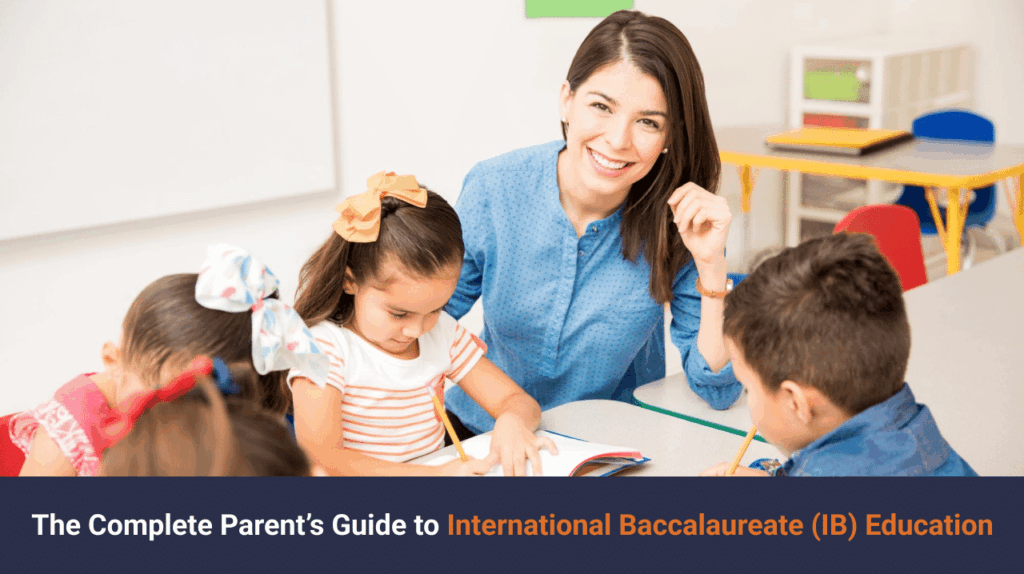
Parents are more invested than ever in finding their children’s educational path in today’s fast-changing world. Globalization and technological advances have shifted how we view learning and development. As a result, IB education—or International Baccalaureate—has gained widespread attention for its unique and forward-thinking approach. More and more families across the globe are choosing IB schools because the IB curriculum offers a comprehensive, inquiry-based, and globally relevant education. If you’re wondering why parents choose IB education or what makes it so special, this guide will walk you through everything, from the basic framework to the benefits and give you the best IB schools selection guide! 1. Understanding the IB Framework 1.1 What is International Baccalaureate education? The International Baccalaureate (IB) was founded in 1968 in Geneva, Switzerland, by international educators aiming to develop a challenging, holistic educational framework that prepares students for a globalized world. The IB’s mission is to cultivate inquiring, knowledgeable, and caring young people who help create a better and more peaceful world through intercultural understanding and respect. Today, the IB programme is offered by over 5,000 authorized IB schools in more than 150 countries, making it one of the most respected international educational models. Its global reach reflects the growing importance of cross-cultural competence and lifelong learning in the 21st century. IB education focuses not just on academic excellence but also on developing critical thinking, creativity, and social-emotional skills—preparing children not only for university but for life itself. 1.2 Key Features of IB Curriculum At the heart of the IB curriculum is inquiry-based learning, where students ask questions and explore concepts rather than memorizing facts. This approach encourages curiosity and fosters deep understanding. Multilingualism is another key feature. IB programmes encourage students to learn multiple languages, enhancing communication skills and cultural awareness. Moreover, the IB programme promotes a global mindset. We wonder how children learn in IB PYP. They are taught to see issues from multiple perspectives with practice, making them empathetic and open-minded global citizens. The curriculum is divided into different stages and programmes that span ages 3 to 19, ensuring consistent educational growth: IB PYP (Primary Years Programme) for ages 3–12 IB MYP (Middle Years Programme) for ages 11–16 IB DP (Diploma Programme) for ages 16–19 This structure ensures a coherent progression, focusing on developing conceptual understanding, critical thinking, and intercultural respect. 🔗 Read more: Importance of International Education 2. Why IB is a Smart Choice for Your Child 2.1 Five Reasons Why Parents Should Consider IB Choosing the right education is one of the most important decisions parents make. Here are five compelling reasons why IB education stands out: Conceptual and Critical Thinking Unlike traditional rote learning, IB emphasizes conceptual learning. Students engage with ideas, develop critical thinking skills, and apply knowledge creatively to solve problems. Holistic Development The IB programme nurtures every aspect of a child’s intellectual, emotional, social, and physical growth through a balanced curriculum that integrates academics with arts, sports, and community service. University and Career Readiness Leading universities globally recognize the IB Diploma Programme. The skills gained, such as research, writing, and self-management, prepare students for higher education and career success. Global Citizenship IB students become aware of global issues and cultural diversity, making them responsible and empathetic citizens. This fosters an open-minded outlook crucial for today’s interconnected world. Inquiry-Based and Student-Centered Learning The inquiry model encourages curiosity and fosters independence. Students learn to ask questions, explore, and reflect, developing a love for lifelong learning. 🔗 Read more: Decoding the IB Curriculum: Why Is It Good for Your Child 3. Inside the IB Curriculum 3.1 Overview of PYP, MYP & DP The IB PYP MYP DP structure provides a seamless, progressive learning experience: PYP (Primary Years Programme): Designed for young learners, the PYP emphasizes inquiry and exploration across six transdisciplinary themes. It aims to develop well-rounded, enthusiastic learners aware of themselves and their community. MYP (Middle Years Programme): Bridging primary and secondary education, the MYP encourages students to connect academic subjects with real-life contexts. It focuses on developing critical thinking, communication, and intercultural understanding. DP (Diploma Programme): The final stage, the DP, is a rigorous two-year curriculum that prepares students for university. It includes six subject groups and core elements: Theory of Knowledge (TOK), Creativity, Activity, Service (CAS), and the Extended Essay. Together, these programmes form a coherent educational journey emphasizing inquiry, reflection, and active learning. 🔗 Read more: Decoding the IB Curriculum: Why Is It Good for Your Child 3.2 How Children Learn in PYP Understanding how children learn in the IB PYP is key for parents. The PYP employs inquiry-based and experiential learning, with students engaging in hands-on activities that promote discovery and critical thinking. Teachers act as facilitators rather than mere knowledge dispensers. They encourage students to ask questions, collaborate in groups, and reflect on their learning process. The learning is thematic and transdisciplinary, meaning subjects are integrated, helping children make meaningful connections. Assessment is ongoing and formative, designed to guide and support individual growth. 🔗 Read more: How Do Children Learn in IB PYP? 3.3 Top 5 Elements of PYP Here are the core elements that define the PYP experience: Learner Profile: Describes attributes IB hopes to develop—thinkers, communicators, principled, open-minded, caring, and more. Transdisciplinary Themes: These broad themes transcend subjects, such as “Who We Are” and “How the World Works,” encouraging integrated learning. Approaches to Learning (ATL): Skills like research, self-management, communication, social, and thinking skills that help students learn effectively. Concept-Based Learning: Encourages understanding of big ideas and concepts, not just memorization. Student Action: Students are encouraged to act on their learning and make a positive difference in their communities. 🔗 Read more: Top 5 Elements of Primary Years Program 4. The Holistic Advantage of IB Education 4.1 Do IB Schools Facilitate Holistic and Better Learning? One of the most significant IB advantages is its emphasis on holistic education. IB schools promote academic achievement, emotional intelligence, social responsibility, and physical well-being. Students engage in co-curricular activities like sports, arts, and community