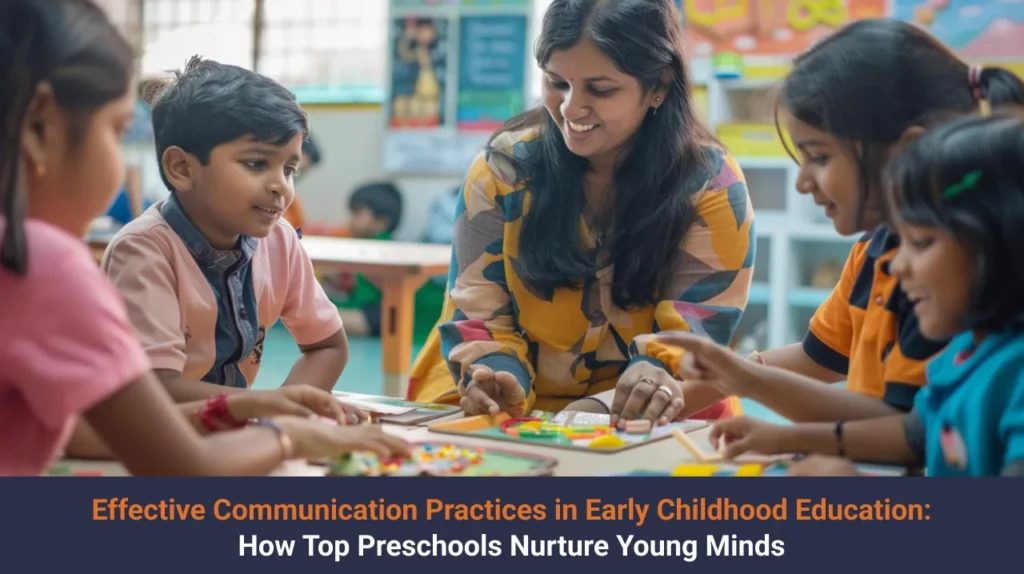


It is the supreme art of the teacher to awaken joy in creative expression and knowledge– Albert Einstein
This beautiful quote by one of the greatest scientists, Albert Einstein, rightly reflects how important it is to have a good teacher for a child. It is not just about the knowledge that one receives and applies in life, but also the creative expression that a child develops over the schooling years, which will help him/her in emotional development and make wiser decisions later in life. But the give and take of knowledge can not be possible without the strong bond between teachers and students.
While academic achievements are often measured in grades and scores, the importance of the teacher-student relationship goes beyond this as it incorporates virtues, values and habits of lifelong learning of the students. Also, a positive student-teacher bonding makes them feel safe, supported, and inspired to put in their best effort. Much educational research has indicated that positive teacher-student interaction examples – little efforts of encouragement, attention, and personalised direction, often lead to a long-term impact on student engagement.
This guide will highlight why the teacher-student relationship matters in education so much in the first place, and describe how trust, communication, and motivation are the driving forces of both academic and personal development.
The Core of a Strong Teacher-Student Relationship

1.1 Trust and Mutual Respect
Trustworthiness is considered to be one of the highest virtues behind a successful teacher-student relationship. Trust allows a student to be more open and freely experiment in learning. Whereas mutual respect keeps the classroom environment welcoming and interactive. It is essential to understand that both trust and mutual respect go hand in hand and promote a healthier relationship between the two. It promotes students to feel freer to express themselves and inquire, as opposed to fearing being judged.
Trust is something that develops over time when the teacher shows consistency with fairness and kindness among students, and when trust develops, respect automatically follows. For teachers, it is essential to have an understanding that forceful disciplinary acts often restrict the students’ responses and inhibit their curious minds. Whereas a positive classroom environment enriches the lives of both the teacher and students as they start viewing education as a cooperative journey and not a one-sided process. So, mutual respect and building trust in the teacher-student relationship have benefits beyond academics as it helps a child learns to value fairness and empathy.
🔗 Read more: Importance of Discipline in Education
1.2 Communication and Understanding
Communication in the teacher-student relationship is the bridge between knowledge and empathy. An active listening teacher makes students feel important. For instance, rather than ignoring the emotional and academic doubts of a student when a teacher actively listens and understands the reasons why the student is actually struggling, it develops a sense of care that is beyond the textbook.
Active listening in a classroom not only allows teachers to understand where a student lacks academically, but also helps them understand the student’s emotional needs. Similarly, empathy in teaching builds a supportive environment for students in which they feel free to share their challenges, be it related to studies or emotional well-being.
So, it is no longer a hidden fact that there are multiple benefits of good communication between teachers and students. As it leads to a less stressful environment, it further promotes motivation and increased interest in learning among students. When they feel that teachers are easily accessible, they will be likely to engage better, ask questions, and understand the subjects well.
- 🔗 Read more: Role of Social Media in Education
1.3 Consistent Encouragement
The encouragement of a teacher may change the life perspective of a student. In the process of positive reinforcement in education, students begin to see themselves as capable of succeeding in different arenas of life. Words of gratitude, such as “Well done,” or “You are improving,” create self-belief in a student.
A teacher boosts the morale of a student, a concept deeply etched in student life. Teachers feed into persistence by rewarding big and small efforts. Encouraging students in the educational process boosts the students’ confidence, participation, and willingness to take on challenges. Even an introverted or hesitant learner most of the time blooms under successive support and feedback from that teacher.
Academic Benefits of Healthy Relationships
2.1 Improved Learning Engagement
How a teacher bonds with their students has a direct relation to the active student engagement in learning. Students who feel connected engage willingly, ask questions, and share ideas. This builds classrooms where learning is active, not passive.
The importance of the teacher-student relationship in learning is apparent in the way it induces curiosity in education. When encouraged, students transcend memorisation to authentic comprehension. Teachers employing interactive methods render classes engaging and stimulate student involvement in class. In this kind of environment, students not only grasp concepts better but also start relating learning to fun, an element imperative to sustained academic interest.
2.2 Better Academic Performance
Teacher support and academic performance have been well accounted for in the literature. Supportive teachers fill in the guidance necessary to work through more challenging topics and to motivate students when the drainage conditions seem to be too easy tasks.
Teachers have always had better success and performance backed by partnership and trust from the students’ assessments and projects. Constructive feedback and mentoring from a teacher will be quite direct in affecting matters related to their academic growth. Sometimes, good professors can mean the difference between average and superior performances. A strong teacher-student relationship in academic success factors is priceless and therefore shapes both immediate results and long-term career aims.
2.3 Development of Critical Life Skills
The classroom is a place where learning beyond academics takes place, and a conducive environment plays a crucial role in developing life skills among students. Things like group projects, preparing presentations, and classroom discussions over different topics help students learn teamwork, understanding and accepting different views and develop problem-solving skills in students. Also, developing a growth mindset is one of the benefits of teacher-student bonding.
Life skills like critical thinking and perseverance develop through learning collaboration in the classroom, which further helps them in later life. So, the importance of collaboration and problem-solving in student development is something that will benefit them in the long run and help them cope with difficult situations in life.
- 🔗 Read more: Essential Life Skills for Students
Emotional and Social Impact on Students

3.1 Building Self-Esteem
All types of words of affirmation count, but teachers who acknowledge the improvement of students make an even greater impact on their development of student self-esteem. Positive reinforcement in education builds self-worth, inspires students to keep trying, even when they fail.
The affective payoffs of the teacher-student relationship are noticeable in the confidence and positivity students bring to their new challenges. Teachers begin a cascading vortex of student empowerment by providing positive feedback that students will carry with them for the rest of their lives. In fact, the worth of teacher validation in building student self-esteem is most often referenced by alumni as the number one aspect of their school life.
3.2 Creating a Support System
A supportive school environment acts as an emotional anchor in a student’s life. Teachers who establish teacher-student trust create a buffer against stress, bullying, or self-doubt.
The value of teacher-student trust for learning achievement is that it will allow students to feel safe enough to make mistakes, take risks, and seek help. The system of emotional safety in school will keep students from worrying about fear, but rather about growth. Once students know that they are supported by teachers who will stand with them, they are less likely to retreat and more likely to face challenges with bravery.
3.3 Inspiring Lifelong Learning
The greatest long-term impact of a teacher is inspiring students to learn. When teachers model right behaviours, they inspire students to continue learning throughout their lives.
The role of a teacher in a student’s life goes far beyond the confines of the classroom. Motivation by teachers tends to adopt an attitude of flexibility, perseverance and lifelong learning for students. The benefits of fostering a continuous learning mindset are more relevant in the competitive world today, where flexibility and accepting different views is the key to progress in a diverse society.
How Parents Can Support Teacher-Student Bonds
4.1 Encouraging Respect at Home
When respect is encouraged at home, it further promotes the teacher-student relationship. Parents help in cultivating respect by doing kind, patient, and compassionate things, and when a child is taught to value respect, they show the same type of respect in their school premises. So, it strengthens their relationship and also creates a cycle of good behaviour in different spheres of life. Also, an ideal parent who models and instils respect at home ensures their child will, naturally, show that value in their relationships in the classroom.
4.2 Maintaining Healthy Communication with Teachers

Parent and teacher collaboration guarantees student success. Parent-teacher communication is a way that helps keep both on the same page while dealing with academic strengths and weaknesses.
The benefits of student growth through collaboration between parents and teachers are more timely problem-solving, personalised support and shared responsibility for the child’s growth. When parents actively participate in family-teacher meetings, they form a learning partnership that potentially improves student learning outcomes. Conversations can assist in dealing with miscommunication and give the child reassurance from both sides.
4.3 Celebrating Student Effort Together
Effort needs celebration as much as success. Rewarding effort in school and at home is crucial to students’ motivation. When teacher and parent identify a student’s effort, they send a powerful message that hard work matters. The power of affirming a positive educational experience is the increased level of confidence, increased resilience, and a long-term habit of persevering. Whether applauding handwriting improvement or a debating victory, these points of affirmation leave an indelible mark.
Conclusion
The importance of the teacher-student relationship goes beyond the classroom years. This unique bond helps in building the foundation of academics, the emotional quotient of students and essential life skills for students. Virtues like trustworthiness and communication are pillars of strong teacher-student relationships that further help in nurturing students’ personalities in the long run.
It is very important for parents, teachers and students themselves to appreciate the role of a teacher-student relationship for future success. Where respect, trust and support exist, students will excel in both academic and personal ways. In a world defined by learning and knowledge that is constantly changing, this type of relationship will always facilitate qualities like adaptability and resilience and promote other skills that can benefit students throughout their lives.
At MIT Gurukul, this ideology becomes the guiding principle of teaching. Focusing on individual attention, care, and motivation, the school guarantees each child receives support in both his/her studies and overall development. Combining old values with contemporary pedagogy, we prepare not only exam-ready students but also students equipped to face real challenges of the future.