Introduction
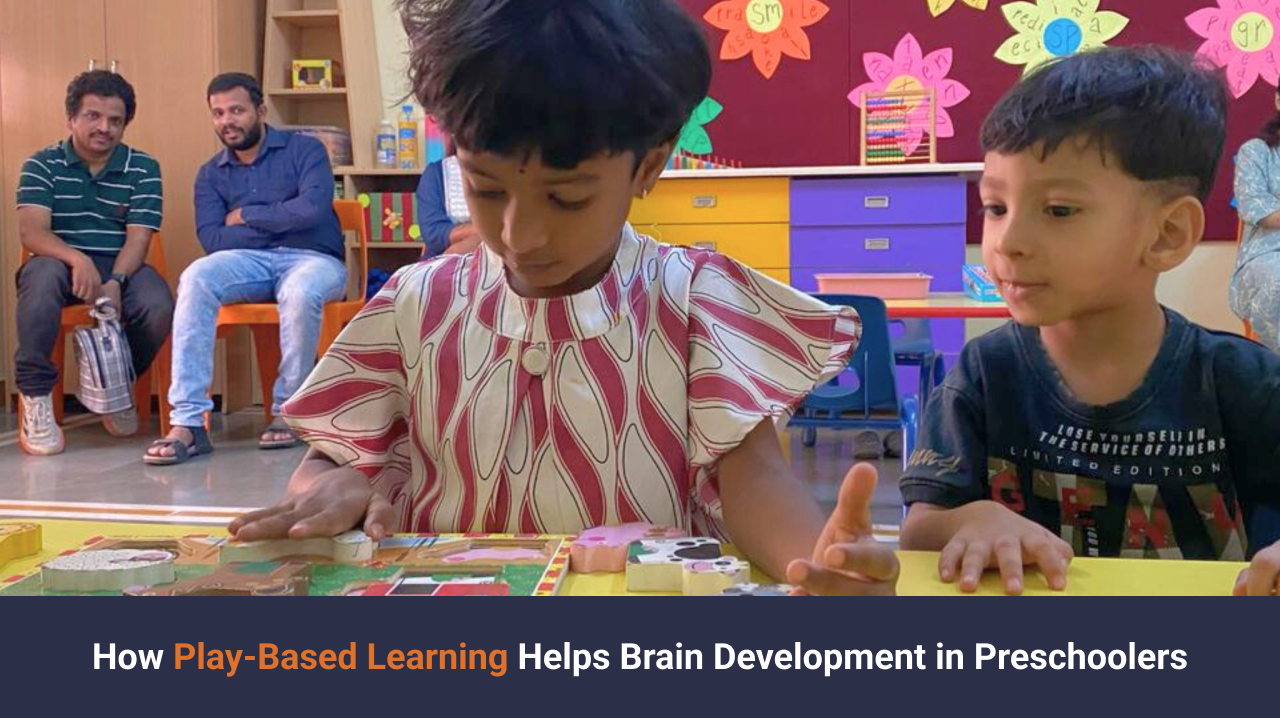
Play-based learning is an activity-based approach where children learn in a way that is natural, fun, and significant. Rather than being desk-bound, mere recipients of worksheets, children explore, imagine, build, question, and discover through playful means. Such an approach is exceptionally noteworthy for preschools in Pune, as it develops curiosity and aids in early childhood brain development. It is during these tender years of life that children learn basic aspects such as thinking, feeling, communication, and problem-solving, which makes the role of early education so important.
What is Play-Based Learning?
Play-based learning revolves around exploration, sensory experiences, imagination, and hands-on interaction with the environment. They can touch and feel different materials, act out a scenario from everyday life, or indulge in a sensory and mentally stimulating playful experience. There are two types of play: one is structured, and the other is unstructured. The former includes puzzles and building blocks, while the latter may be guided by the child’s own imagination or creativity, such as in games or free drawing. Child development professionals mostly recommend this method as it not only helps but also takes into account the natural ways of learning of the children, thus giving respect to their different paces. According to early childhood teachers and researchers, a play-based program not only brings more fun but also better learning results.
How Play Stimulates Brain Development in Preschoolers
Enhances Cognitive Skills
Play teaches the child to find patterns, solve simple problems, and remember things. Children can develop their logical thinking and concentration abilities using puzzles, sorting games and building blocks.
Improvements in Language and Communication
Narration and interactive games are the means by which children actively communicate, hear, and express feelings. This not only increases their vocabulary but also makes them more capable of expressing themselves. The findings of Indian ECCE studies have been that learning through fun and activities leads to a considerable increase in oral language and even literacy development.
Strengthens Social and Emotional Intelligence
Playing teaches children to share, to wait for their turn, and to help each other. Aside from this, they get to understand the feelings of others, control their emotions, recognise social interactions and cues, and respond accordingly while playing with their friends.
Development of Fine and Gross Motor Skills
The activities of running, jumping, and climbing not only help in the development of strength but also enhance coordination, while drawing and working with clay provide the necessary hand control and precision for writing.
Benefits of Play-Based Learning Beyond Preschool Years
Long-Term Academic Readiness
Children who participate in a play-based method of instruction will have an enhanced attitude towards formal education as they tend to develop curiosity, focus, and an overall positive view of learning.
Better Social Behaviour and Emotional Resilience
Regular playful interaction helps children develop good social contacts and cope with their emotions more healthily, hence making them more confident in any new environment.
Growth in Executive Functions: Attention, Planning, Self-Control
Playing according to the rules hones a child’s capacity to concentrate and to arrange oneself, which then allows the child to master the control of impulses – a skill that is crucial for success in the long run. A nurturing preschool in Pune builds a solid foundation for these long-term outcomes.
Conclusion
At MIT Gurukul, play is not viewed as a pause from learning; rather, it is seen as a very effective way of making learning occur. The school’s holistic and experiential approach allows children to explore, inquire and develop in a safe and inspiring environment. By combining the carefully selected play-based curriculum for preschool with qualified teachers and a child-centred philosophy, we offer the foundation that transforms confident, skilled and young learners who will be ready to thrive into the future. For more information, visit our official website.