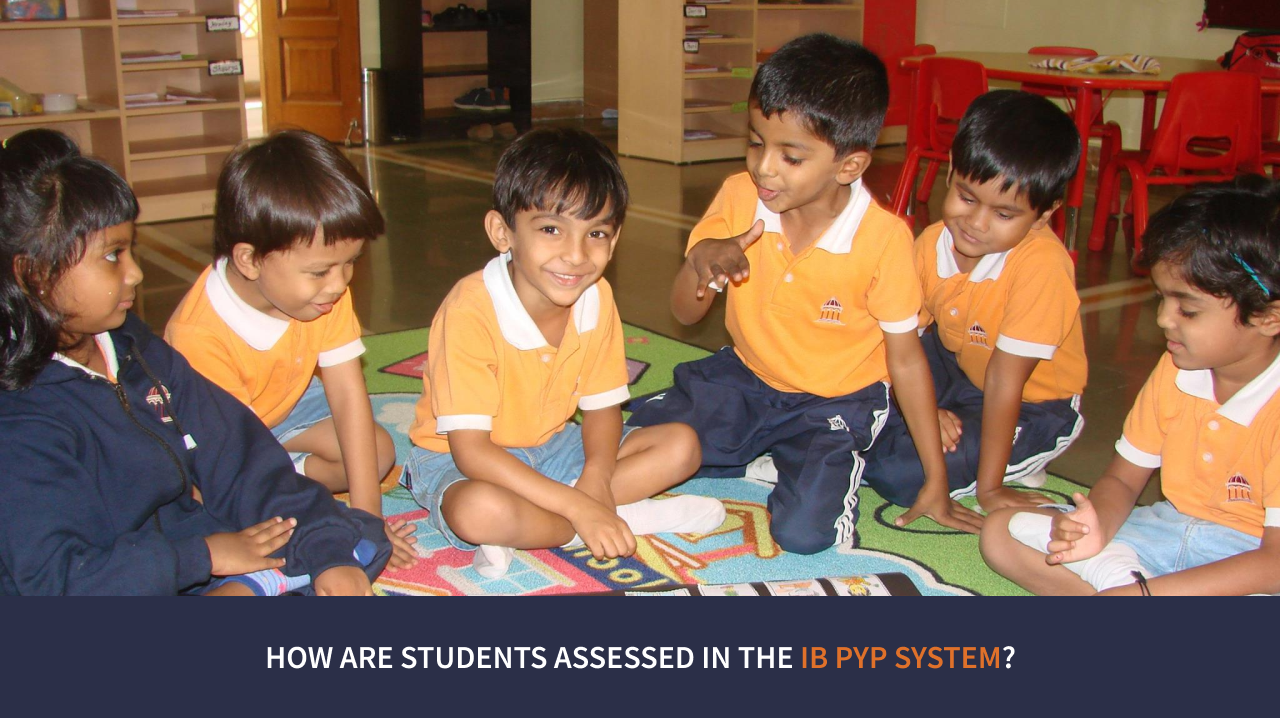
In the traditional education system, the word ‘assessment’ often means silent exam halls, frantic scribbling of pens competing against time, and nervous students. However, the International Baccalaureate Primary Years Programme (PYP) flips this script entirely. For parents exploring the best primary schools in Pune, the IB framework stands out as a holistic alternative to the traditional rote-learning route. The assessment system is widely different as well. Instead of marking answers, it tries to understand a student’s learning journey. Here is everything you need to know about how students are assessed in the IB PYP system.
What Is the IB PYP Assessment System?
The IB PYP assessment system is designed to be integrated naturally into the classroom’s daily life. It views assessment as a powerful tool to support inquiry-based learning. Instead of waiting for the end of a term to see what a child doesn’t know, the system focuses on identifying what they can do, how they think, and how they apply their knowledge. While academic knowledge is important, the PYP also evaluates a child’s social skills, research abilities, and conceptual understanding. Here are some of its standout features explained briefly.
Continuous Assessment in IB PYP
Learning is not linear, and neither is testing. This is why the IB PYP continuous assessment approach is effective. It ensures that a child’s progress is monitored daily, rather than just during ‘exam week’.
This involves constant observation, reflection, and feedback. Teachers might assess a student based on how they solve a complex maths problem using manipulatives, or how they collaborate with peers during a science experiment. This real-time feedback loop allows teachers to adjust their instruction instantly. If a child is struggling with a concept, it is identified and addressed immediately, rather than waiting for a report card to reveal the gap.
Formative and Summative Assessment in IB PYP
To parents new to the IB, technical terms like ‘formative’ and ‘summative’ may seem confusing, but the distinction is quite simple and logical.
- Formative Assessment – These happen during the learning process. It could be a journal entry, a sketch, a quiz, or a discussion. The goal is to help students improve while they are learning. It tells the student and the teacher what needs to be tweaked before the final stage.
- Summative Assessment – This occurs at the end of a unit. However, unlike a standard exam, a summative assessment in the PYP is often a performance of understanding. It could be a presentation, a constructed model, a research project, or a concept map. It gives students a chance to showcase what they have learned.
IB PYP Student Evaluation Methods
The methods used to evaluate are quite diverse. Teachers often use detailed rubrics (scoring guides) that outline what success looks like for a specific task.
The PYP places a massive emphasis on ‘learner agency’. This means students are active participants in their own evaluation. Through self-assessment and peer assessment, children learn to reflect on their own work. They are encouraged to ask, “What did I do well?” and “What can I do better next time?” This fosters a sense of responsibility and independence that serves them well beyond their school years.
Conclusion
Assessment in the IB PYP encourages children to become lifelong learners who are not afraid of making mistakes but see them as opportunities to grow. As you continue your search for the best primary schools in Pune, look for institutions that embrace this nurturing approach. An assessment system that values the process as much as the product is key to unlocking a child’s true potential, preparing them not just for the next grade, but for life. To know more about assessment at the IB PYP level, get in touch with us today for a holistic understanding!